Carmine Galante and the Empire He Destroyed Himself
Article 3 in the Series: “The Blame Game: Mobsters Who Could Never Admit They Were the Problem”
The Cigar, the Restaurant, and the Final Reckoning
On a hot summer afternoon in July 1979, Carmine Galante sat in the backyard of Joe and Mary’s Restaurant in Brooklyn, a cigar clenched between his teeth and a plate of food in front of him. For years, he had lived as though the rules did not apply to him. He had ignored warnings, dismissed rivals, and openly challenged some of the most powerful men in organized crime. When gunmen entered the restaurant and opened fire, they ended more than a life. They ended one of the most reckless reigns in Mafia history.
The photographs that emerged from the assassination became legendary. Galante lay sprawled in his chair, the cigar still hanging from his mouth. To some observers, the image looked almost theatrical, as though he had been frozen in the middle of a performance. In many ways, that photograph perfectly captured the man himself. Carmine Galante spent much of his life projecting an image of fearlessness and power while refusing to acknowledge that his own behavior was creating enemies faster than he could eliminate them.
Like many mobsters, Galante believed that his problems were caused by other people. Rivals were jealous. Subordinates were disloyal. Other bosses were weak. Law enforcement was relentless. Almost everyone around him became a target for blame at one point or another. What Galante rarely seemed willing to consider was that the greatest threat to his survival might be the man staring back at him from the mirror.
A Violent Rise Through the Bonanno Family
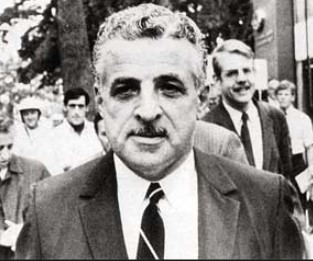
Born in New York City in 1910, Galante entered the criminal world at an early age. Violence was never far from his career. By the time he became a significant figure within the Bonanno crime family, he had already established a reputation as a ruthless enforcer who was willing to use intimidation and murder to achieve his goals. Associates described him as aggressive, ambitious, and often impossible to control. Those qualities helped him climb through the ranks, but they also planted the seeds of future conflict.
The Mafia has always operated on a delicate balance of power. Bosses compete with one another, but they also understand the importance of maintaining order. A criminal empire can generate enormous profits when everyone follows the same rules. It can also collapse into chaos when one leader decides he is entitled to more than his share.
Galante never seemed particularly interested in balance.
| The Man Who Thought He was King: How Joe Bonano Brought down His Own Empire |
The Heroin Empire and the Hunger for Power
During the 1960s and 1970s, international heroin trafficking became one of the most lucrative enterprises in organized crime. The so-called French Connection pipeline generated millions of dollars and transformed the economics of the American Mafia. Galante recognized the opportunity and aggressively positioned himself to control a larger portion of the narcotics trade. In his mind, he was simply taking what he deserved.
The problem was that everyone else saw it differently.
As profits increased, so did Galante’s appetite for power. Rather than working within the traditional framework of organized crime, he increasingly acted as though he were above it. Reports from law enforcement, journalists, and former mobsters suggest that Galante believed he could dominate not only the Bonanno family but potentially influence the direction of organized crime throughout the United States.
That ambition created friction everywhere he went.
| The Godfather of Smack: How Lucky Luciano Built the Global Heroin empire |
When Ambition Became Overreach
Other Mafia leaders grew concerned about his growing influence. Members of his own family worried that his actions were attracting unwanted attention. Some feared that his aggressive pursuit of power would provoke retaliation from rival organizations. Yet Galante largely dismissed these concerns. In his view, criticism was evidence of weakness. Opposition was proof that others feared his success.
This mindset appears repeatedly throughout organized crime history. Leaders who become convinced of their own superiority often develop an inability to process criticism. Every disagreement becomes jealousy. Every warning becomes sabotage. Every rival becomes an enemy.
Galante embodied this tendency.
As federal investigations intensified and rival bosses voiced concerns, he did not adjust his behavior. Instead, he doubled down. He expanded his operations, strengthened his alliances with loyal supporters, and continued acting as though consequences were something that happened to other people.
The irony is that Galante’s enemies were not hidden. They were visible everywhere.
| Five Families: Blood, Power, and the Empire Beneath New York |
Blaming the Government for His Troubles
Within the Bonanno family, resentment was growing. Other crime families viewed him as a destabilizing force. Even some of the people closest to him reportedly questioned the wisdom of his approach. Yet Galante consistently interpreted opposition as evidence that others lacked the vision or courage to do what he was doing.
When problems emerged, he looked outward rather than inward.
Law enforcement became a convenient target. Galante frequently portrayed himself as a victim of government persecution. Certainly, federal authorities devoted substantial resources to investigating him. Yet that attention was hardly arbitrary. His involvement in narcotics trafficking, organized crime, and violent criminal activity made him an obvious target.
The government’s interest in Galante was not the cause of his troubles. It was a consequence of them.
Enemies on Every Side
The same pattern appeared in his relationships with fellow mobsters. Galante often viewed resistance from other bosses as proof of their weakness or envy. He rarely acknowledged that his own actions were making cooperation impossible. The Mafia is built on self-interest, but it also requires a degree of diplomacy. Leaders who consistently humiliate allies, disregard agreements, and pursue power at the expense of everyone else eventually discover that their enemies outnumber their friends.
That lesson was approaching quickly.
By the late 1970s, Galante had become one of the most controversial figures in organized crime. Rumors circulated that he intended to consolidate even greater authority. Whether those rumors were entirely accurate remains a subject of debate, but perception often matters more than reality in the underworld. If enough powerful people believe you are becoming a threat, your actual intentions become irrelevant.
Galante seemed unable or unwilling to recognize this reality.
The Illusion of Being Untouchable
The confidence that had fueled his rise evolved into something more dangerous. It became a belief that he was untouchable. He had survived prison sentences, investigations, rivalries, and decades of violence. Each victory reinforced the idea that he could continue pushing boundaries without paying a price.
History is filled with powerful men who made the same mistake.
The final chapter arrived on July 12, 1979. As Galante dined with associates at Joe and Mary’s Restaurant, gunmen entered the backyard and opened fire. The attack was swift, brutal, and unmistakably professional. Within seconds, one of the most feared figures in organized crime was dead.
The Assassination That Ended the Empire
The assassination has generated endless speculation. Various theories have emerged regarding who approved the hit and why. Yet the broader lesson remains remarkably clear. Galante’s downfall was not simply the result of a conspiracy against him. It was the culmination of years spent alienating allies, provoking rivals, and refusing to recognize the consequences of his own behavior.
His death reflected a reality that many mob bosses struggle to accept. Power creates options, but it does not eliminate consequences. The same ruthlessness that helps a leader rise can also motivate others to remove him. The same ambition that builds an empire can ultimately destroy it.
The Ego Behind the Legend
In the years since his death, Carmine Galante has often been remembered as a fearless gangster who challenged the established order. There is some truth in that description. He was undoubtedly ambitious, intelligent, and willing to take risks that others avoided. Yet those qualities tell only part of the story.
The other part involves ego.
Galante consistently viewed himself as the victim of disloyal associates, jealous rivals, and hostile authorities. He blamed others for creating obstacles while failing to recognize that many of those obstacles were reactions to his own choices. Every warning was dismissed. Every criticism was ignored. Every consequence became someone else’s fault.
That refusal to accept responsibility ultimately proved fatal.
The Man Who Created His Own Enemies
The gunmen who entered the restaurant pulled the triggers, but they were not the true architects of Galante’s downfall. The foundation had been laid years earlier through arrogance, overreach, and an inability to understand how his actions affected the people around him.
That is why Carmine Galante deserves a place in The Blame Game: Mobsters Who Could Never Admit They Were the Problem. His story is not merely about organized crime. It is about the danger of believing that every setback is someone else’s fault. It is about the blindness that accompanies unchecked ambition. Most of all, it is about a man who spent years creating enemies and then seemed genuinely surprised when those enemies finally acted.
In the end, the cigar-smoking boss who believed he was the smartest man at the table never realized that everyone else had already left the game.
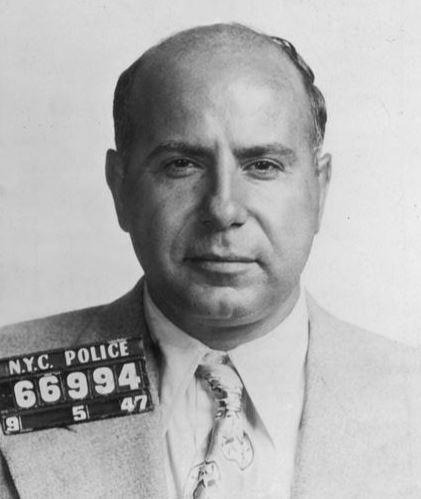
| Carmine Galante |
References:
Bonanno, Joseph. A Man of Honor: The Autobiography of Joseph Bonanno. New York: St. Martin’s Press, 1983.
Capeci, Jerry. The Complete Idiot’s Guide to the Mafia. New York: Alpha Books, 2002.
Raab, Selwyn. Five Families: The Rise, Decline, and Resurgence of America’s Most Powerful Mafia Empires. New York: St. Martin’s Press, 2005.
United States Senate Permanent Subcommittee on Investigations. Organized Crime and Illicit Traffic in Narcotics. Washington, DC: U.S. Government Printing Office, various hearings.
Critchley, David. The Origin of Organized Crime in America: The New York City Mafia, 1891–1931. New York: Routledge, 2009.
Newark, Tim. Mafia Allies: The True Story of America’s Secret Alliance with the Mob in World War II. St. Paul: Zenith Press, 2007.
Lacey, Robert. Little Man: Meyer Lansky and the Gangster Life. New York: Little, Brown and Company, 1991.
Raab, Selwyn. “The Rise and Fall of Carmine Galante.” Various reporting and interviews compiled in Five Families.