Texas Guinan and the Birth of Celebrity Crime Culture
She Wasn’t Just Famous—She Was Useful
PROHIBITION • NEW YORK UNDERWORLD • SPEAKEASY CULTURE
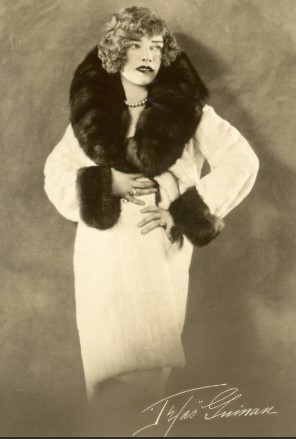
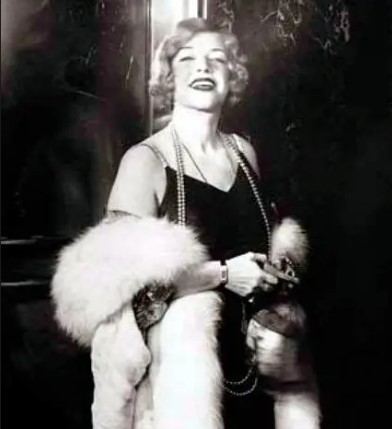
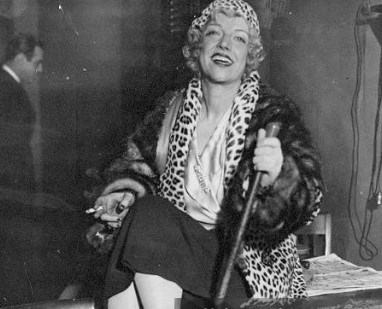
By the time federal agents began raiding her nightclubs, Texas Guinan had already accomplished something few underworld figures could manage: she had turned arrest into entertainment, notoriety into advertising, and an illegal business into a New York institution. She didn’t need a gangster’s reputation for violence. She had something considerably more useful—a personality that could fill a nightclub, sell a newspaper, and make a courtroom look like another stop on the evening’s entertainment circuit.
She was born Mary Louise Cecilia Guinan in Waco, Texas, in 1884, far from the Manhattan nightlife empire she would eventually build. Before becoming the queen of Prohibition’s speakeasies, she pursued a career in entertainment, working as a singer and actress and cultivating the confident, larger-than-life personality that would become her trademark. She had already learned an important lesson about show business: audiences didn’t simply want to watch a performance. They wanted to believe they were part of one.
New York gave her the perfect stage.
When the Eighteenth Amendment ushered in Prohibition in 1920, the manufacture and sale of alcoholic beverages became illegal, but the appetite for drinking did not disappear. Instead, it moved behind unmarked doors, into private clubs, back rooms, hotel suites, and establishments where the champagne flowed more freely than the truth. The resulting underground nightlife created opportunities for bootleggers, racketeers, corrupt officials, entertainers, and ambitious entrepreneurs.
Texas Guinan understood that the new criminal economy needed more than liquor. It needed glamour, publicity, and a personality capable of making an illegal establishment feel like the most desirable address in Manhattan.
She was prepared to supply all three.
| Hello, Suckers! |
A Broadway Queen in a Criminal Kingdom
Guinan’s breakthrough came through New York’s theatrical and nightclub circles. In 1922, producer Nils T. Granlund helped introduce her to Larry Fay, a former taxicab operator who had become a prominent bootlegger and nightclub entrepreneur. Fay wanted a nightclub that could attract wealthy customers, celebrities, and men with money to spend. Guinan was exactly the kind of personality he needed.
Their association brought her to the El Fey Club, one of the notorious establishments of Manhattan’s underground nightlife. Located near Broadway on West 46th Street, the club operated behind an entrance that offered little indication of what waited inside. Patrons climbed a flight of stairs, passed through a guarded doorway, and entered a room where liquor, music, dancing, and theatrical entertainment continued into the early morning hours.
The El Fey was more than a drinking establishment. It was a carefully constructed entertainment operation. Chorus girls performed, musicians played, and Guinan worked the room like a seasoned ringmaster. Among the young performers associated with the club were Ruby Keeler and George Raft, both of whom would eventually find success in entertainment. The establishment attracted an extraordinary mixture of Broadway personalities, wealthy businessmen, celebrities, and underworld figures.
Guinan understood the importance of making every customer feel that something memorable was happening. She moved through the room, delivering insults disguised as jokes, teasing wealthy patrons, and turning the audience into participants in her performance. Her famous greeting, “Hello, suckers!” became a calling card. She also referred to wealthy Midwestern customers as “butter and egg men,” a colorful description of visitors who arrived in New York with money to burn.
The joke was that everyone was a sucker. The business model depended on their willingness to prove otherwise.
The club’s relationship with Fay also placed Guinan within the orbit of men who understood the criminal economics of Prohibition. Fay’s liquor connections were essential to the operation, while the involvement of figures such as Owney Madden in the broader nightclub world demonstrated how entertainment, illegal liquor distribution, and organized crime could overlap. Guinan was not a bootlegging kingpin, but she was no innocent observer of the business surrounding her.
| Celebrity as Legal Buffer |
Owney Madden and the Underworld Behind the Velvet Curtain
One cannot understand Prohibition-era Manhattan nightlife without examining the influence of Owney Madden. A former leader of the Gopher Gang, Madden had become a powerful underworld figure whose interests included illegal liquor, gambling, and nightclubs. His most famous establishment was the Cotton Club in Harlem, which became a showcase for prominent Black entertainers and white society customers.
Madden understood that a nightclub could generate money in several ways. Liquor supplied the immediate profits, but the room itself could become an asset. A successful establishment attracted wealthy customers, generated publicity, created relationships, and offered opportunities for men who preferred to conduct business away from public scrutiny.
Guinan’s world intersected with this criminal environment. Historical accounts of her nightclub career associate Madden and other underworld figures with backing or facilitating some of her later establishments. After her professional relationship with Fay deteriorated, Guinan eventually established her own operation, including the celebrated 300 Club.
The distinction matters. Guinan was not simply a gangster’s employee, nor was she an independent businesswoman operating in a vacuum. Her success depended on a nightlife economy in which liquor suppliers, nightclub operators, entertainers, employees, and criminal intermediaries occupied overlapping territory.
The 300 Club, located at 151 West 54th Street, became one of her best-known establishments. Its name became synonymous with Guinan herself, and its popularity demonstrated that she could attract customers through her own reputation rather than relying exclusively on the name of a male proprietor.
There was something unusual about her position. In an industry dominated by men who frequently used violence, political influence, and intimidation to protect their interests, Guinan exercised a different kind of power. She controlled the atmosphere, commanded the audience, and understood the value of being the person everyone wanted to see.
| The Mob Without the Mob Boss |
The Police Raids Became Part of the Show
The relationship between Guinan and Prohibition authorities was a recurring public spectacle. Her establishments were repeatedly investigated, raided, and closed, forcing her to relocate or find another venue. The revolving doors of Manhattan nightlife became part of her business story.
Guinan was particularly effective at turning these confrontations into publicity. A raid could close a nightclub, but it could also put her name in the newspapers the following morning. Photographers and reporters were drawn to her flamboyant appearance, theatrical responses, and refusal to behave like a frightened defendant.
In February 1927, federal agents raided the 300 Club and arrested Guinan in connection with alleged Prohibition violations. Rather than quietly accepting her circumstances, she reportedly entertained those at the police station by singing “The Prisoner’s Song.” The episode was entirely consistent with her public persona: even when the government put her behind a locked door, she attempted to control the entertainment.
Her legal position was also more complicated than the image of a nightclub queen repeatedly escaping justice. Guinan maintained that she was a hostess rather than the owner responsible for illegal liquor sales. Establishing criminal responsibility was not always straightforward, particularly when prosecutors had difficulty proving who actually controlled a particular establishment. She avoided lengthy imprisonment, and the charges against her were ultimately dismissed or resulted in acquittals.
That did not mean the government was indifferent to her activities. The enforcement campaign against New York’s speakeasies continued, and Guinan remained a highly visible target. Her ability to turn arrests into publicity did not make her immune from the law. It did, however, make her unusually difficult to erase from public attention.
The newspapers had discovered a character who could sell a story almost as effectively as she sold a nightclub experience.
| The First Crime Influencer |
Celebrity, Money, and the Business of Being Seen
What made Guinan particularly interesting was the clientele she attracted. Her establishments brought together people who ordinarily inhabited very different worlds. Broadway performers rubbed shoulders with wealthy businessmen, politicians, athletes, socialites, bootleggers, and men whose fortunes were not always easily explained.
The Mob Museum’s historical account of Prohibition’s nightclub hostesses identifies an impressive collection of personalities who visited Guinan’s clubs, including Babe Ruth, Charlie Chaplin, Rudolph Valentino, Clara Bow, Gloria Swanson, and members of European royalty. The presence of such customers gave her establishments an aura that ordinary speakeasies could never manufacture.
One particularly colorful story involved the Prince of Wales, the future Edward VIII. According to accounts of the El Fey, Guinan supposedly arranged for the royal visitor to put on an apron and pose as a kitchen employee during a police raid. Whether every detail of the anecdote can be independently established is another matter, but it illustrates the kind of mythology that surrounded her clubs.
That mythology was valuable. A wealthy customer did not simply visit a nightclub; he became part of its reputation. A famous entertainer brought attention. A politician brought prestige. An underworld figure brought a different sort of curiosity. Guinan understood that the combination made her establishments attractive to people who wanted to be seen in the right room with the right company.
She was selling an experience, but she was also selling access.
This was celebrity culture operating inside an illegal economy. The nightclub became a meeting ground where respectable society and the criminal underworld could occupy the same tables without necessarily acknowledging how closely their interests sometimes overlapped.
The Woman Who Made the Mob Look Glamorous
Guinan’s influence should not be confused with the power of an organized-crime boss. There is no sound basis for portraying her as a Mafia commander, a major bootlegger, or someone directing criminal operations. Her importance was different, and arguably more unusual.
She demonstrated how a personality could become a valuable commercial asset in a business dependent on illegal distribution. The liquor suppliers needed customers. The nightclub operators needed profitable rooms. The entertainers needed audiences. The wealthy needed places where they could spend money, escape convention, and enjoy the excitement of forbidden nightlife.
Guinan brought those interests together.
Her approach also offered something that many male underworld figures lacked: an ability to attract attention without relying on an openly threatening reputation. She could ridicule wealthy customers, charm reporters, entertain politicians, and make a room full of strangers feel as though they were attending a private performance.
Her influence extended beyond the nightclub doors. In 1927, she appeared in the Broadway revue Padlocks of 1927, turning Prohibition enforcement into theatrical material. She later appeared in the films Queen of the Night Clubs (1929) and Broadway Through a Keyhole (1933), playing characters closely associated with her own public image.
Even her commercial identity was becoming larger than the clubs themselves.
The Final Curtain
The stock market crash of 1929 and the economic collapse that followed changed the environment in which Guinan had built her reputation. The extravagant spending, expensive nightlife, and carefree atmosphere of the Roaring Twenties began to disappear. She continued performing and eventually took her nightclub act overseas, bringing her particular brand of American nightlife entertainment to European audiences.
But she would never see the end of Prohibition.
On November 5, 1933, while in Vancouver, British Columbia, Guinan died following complications from ulcerative colitis and an operation. She was only 49 years old. Prohibition would not officially end until December 5, 1933, exactly one month after her death.
Her funeral in New York attracted approximately 12,000 mourners, an extraordinary turnout that demonstrated just how deeply she had embedded herself in the city’s entertainment culture.
Texas Guinan had spent years building a public identity that could survive raids, arrests, changing club addresses, and the shifting fortunes of the underworld. She had become a recognizable symbol of an era when illegal liquor was served beneath expensive chandeliers and the people drinking it sometimes appeared more respectable than the men supplying it.
Her legacy was not that she invented celebrity or organized crime. Both existed long before her. What she demonstrated was how effectively the two could reinforce one another.
The gangsters supplied the liquor, the money, and sometimes the muscle. The entertainers supplied the spectacle. Texas Guinan supplied the personality that made the entire arrangement irresistible.
She wasn’t the most dangerous person in the room. She didn’t need to be.
In Prohibition-era New York, sometimes the most valuable person behind the velvet curtain was the one holding the microphone.
And when the room filled with gangsters, millionaires, politicians, and curious strangers, Texas Guinan knew exactly what to say.
“Hello, suckers!”
References:
- Björkstén, Drew. “Texas Guinan: Hollywood’s First Cowgirl.” Oxford American, December 23, 2024. https://oxfordamerican.org/oa-now/texas-guinan-california-first-cowgirl.
- Baskerville, Charles. “When Nights Are Bold.” The New Yorker, June 6, 1925. https://www.newyorker.com/magazine/1925/06/13/when-nights-are-bold.
- Long, Lois. “New Night Life—Some Other Notes.” The New Yorker, April 9, 1927. https://www.newyorker.com/magazine/1927/04/16/new-night-life-some-other-notes.
- Rosen, David. “Prohibition New York City: An Interview with David Rosen.” The Gotham Center for New York City History. https://www.gothamcenter.org/blog/prohibition-new-york-city-an-interview-with-david-rosen.
- Texas State Historical Association. “Guinan, Mary Louise Cecilia [Texas].” Handbook of Texas. https://www.tshaonline.org/handbook/entries/guinan-mary-louise-cecilia-texas.
- The Mob Museum. “Queens of the Speakeasies.” Prohibition: An Interactive History. https://prohibition.themobmuseum.org/the-history/the-prohibition-underworld/queens-of-the-speakeasies/.
- Rosen, David. Prohibition New York City: Speakeasy Queen Texas Guinan, Blind Pigs, Drag Balls & More. Charleston, SC: The History Press, 2020.