Gangster Favorite Drinks and What They Signaled About Power
The First Look Was Always the Glass
Before a man spoke, he ordered.
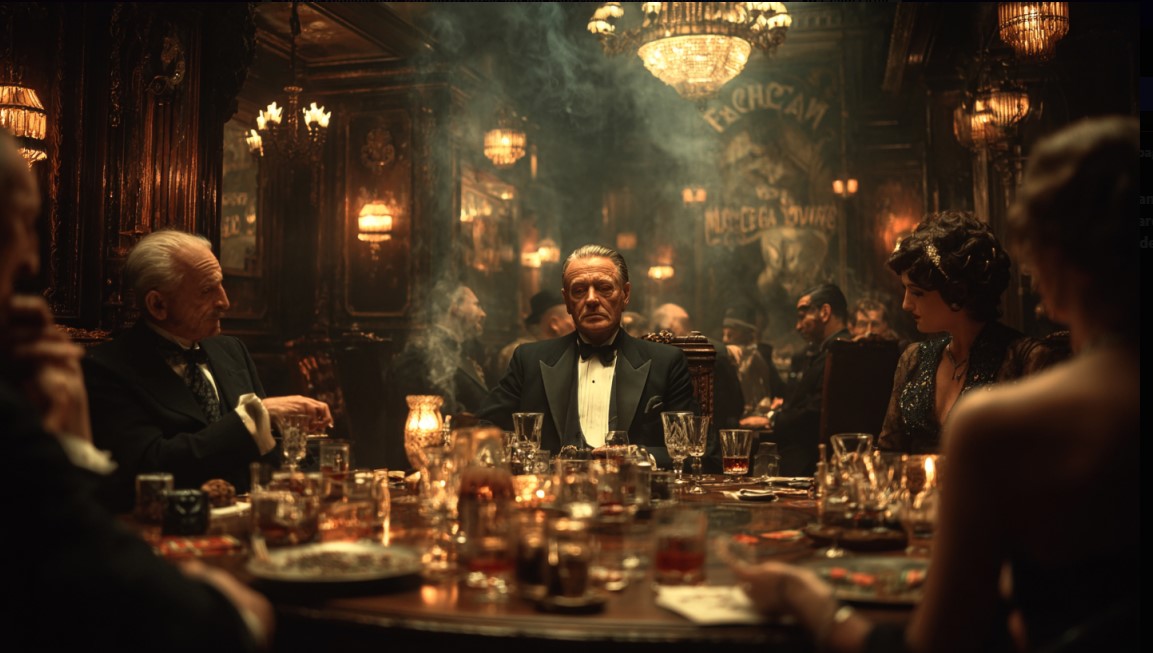
In a mob-run room, introductions were secondary. Names could lie. Reputations could be exaggerated. But a drink—chosen quickly, confidently—rarely did. The glass that landed on the table announced where a man came from, what he could afford, and how he expected to be treated.
Drinking among gangsters was never casual. It was performance. It was posture. It was language spoken without raising the voice.
What a gangster drank mattered. How he drank mattered more.
Scotch vs. Rye: Old World Memory and New World Muscle
Rye was American. Sharp, aggressive, unpolished. It burned fast and hit hard, which is exactly why it became a staple in early Prohibition speakeasies. Rye whiskey was familiar to working-class drinkers and easier to source domestically through illicit distillation.
Scotch was different.
Scotch arrived with distance, expense, and implication. It crossed borders. It carried prestige. Ordering Scotch suggested access—to international routes, to better suppliers, to men who understood patience over force.
Among mob figures, Scotch often signaled aspiration rather than origin. A man raised on rye who switched to Scotch was advertising his rise. He was telling the room he no longer lived hand to mouth. He could wait. He could afford refinement.
The choice wasn’t about taste. It was about narrative.
| Rhy Wiskey – The Working Man’s Edge |
Champagne: The Loudest Quiet Statement
If Scotch whispered, Champagne spoke clearly.
Champagne in a speakeasy was never subtle. It was impractical, expensive, and difficult to move without attention. That was the point. A bottle on the table announced insulation—political, financial, and social.
Champagne signaled that the drinker did not fear raids, shortages, or consequences. It implied protection at a level most men never reached. In mob nightlife, Champagne often appeared when deals were already decided, when alliances were secure, when power felt unchallenged.
It was celebration, but also intimidation.
A man drinking Champagne wasn’t trying to impress you. He was reminding you where you stood.
| Champagne – Untouchable Status |
Cocktails vs. Straight Liquor: Control Over Chaos
Straight liquor was fast. Honest. Brutal.
Cocktails were deliberate.
Gangsters who favored mixed drinks understood timing. Cocktails slowed the night. They created space for conversation. They allowed observation. They hid flaws—in the liquor and in the drinker.
A man ordering an Old Fashioned or a Manhattan was signaling control. He trusted the bartender. He trusted the room. He intended to stay long enough for the drink to matter.
Straight liquor suggested urgency. Cocktails suggested patience.
And patience, in organized crime, was a weapon.
| The Old Fashioned – Controlled Power |
Drinking as Theater
Every movement mattered.
How the glass was held. Whether it was refilled without asking. Whether the drink was tasted or swallowed. Whether ice was stirred or ignored. These gestures formed a silent script played out nightly in mob-run bars.
Drinking too much suggested weakness. Drinking too little suggested caution. Knowing when to stop suggested intelligence.
Men watched each other constantly. A gangster who drank steadily without visible effect earned respect. A man who lost composure lost credibility.
Alcohol wasn’t an escape. It was a stage.
| Scotch – Distance and Aspiration |
The Myth of the Heavy Drinker
Popular culture loves the image of the gangster who drinks endlessly, slurring threats and staggering into violence. Reality was colder.
The most powerful men drank carefully. They paced themselves. They used alcohol to disarm others while remaining sharp themselves. Public drunkenness was tolerated in underlings, not leaders.
To lose control in public was to invite challenge.
The glass was never allowed to win.
| Scotch – Distance and Aspiration |
Power, Image, and the Aftertaste
Gangster drinking culture shaped American expectations long after the mob moved on. The idea that certain drinks connote sophistication, danger, or wealth traces directly back to these rooms.
Even today, ordering Champagne suggests celebration. Ordering Scotch suggests seriousness. Ordering a cocktail suggests intention.
These signals persist because they worked.
The mob understood something fundamental: power isn’t just exercised. It’s performed. And performance needs props.
References:
- Lacey, Robert. Little Man: Meyer Lansky and the Gangster Life
- Luciano, Lucky. The Last Testament of Lucky Luciano
- Kobler, John. Capone
- Repetto, Thomas. The Blue Parade
- Wondrich, David. Imbibe!
- Federal Bureau of Investigation, Organized Crime & Prohibition Files
- Kefauver Committee Hearings, U.S. Senate