Carmine Galante: The Cigar, the Heroin Empire, and the Blood-Soaked Throne
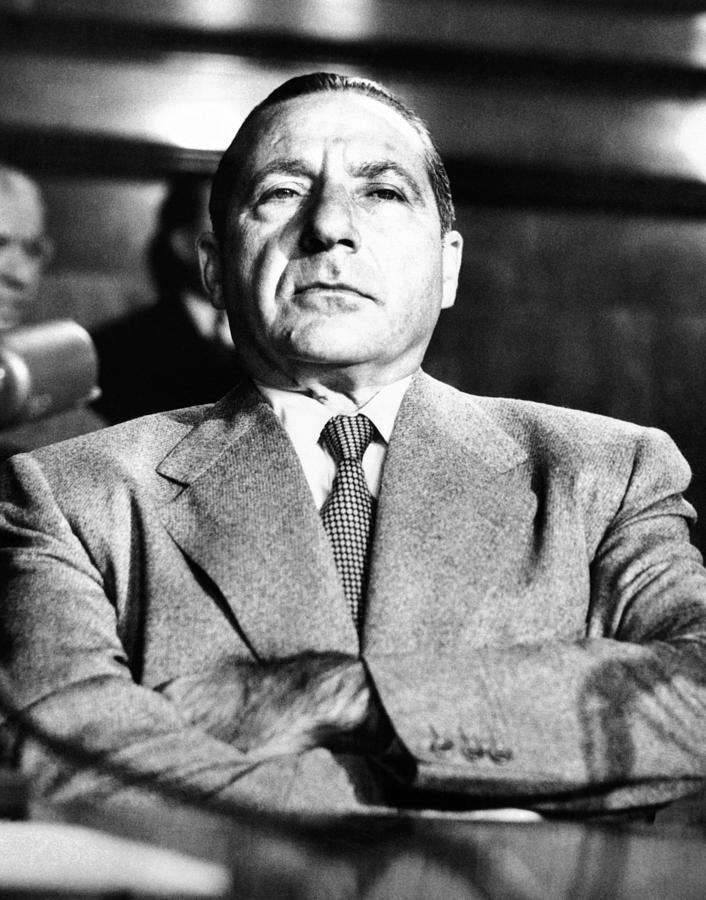
Carmine Galante looked like trouble even standing still.
The heavy-lidded eyes. The permanent cigar hanging from his mouth. The expressionless stare that seemed carved from stone rather than flesh. He projected menace without effort, the kind of cold intimidation that made conversations shorten when he entered a room.
Galante did not cultivate charm like Frank Costello or celebrity swagger like John Gotti.
He cultivated fear.
For decades, Carmine “Lilo” Galante operated as one of the most ruthless and ambitious gangsters in American organized crime. Federal agents believed he played a central role in the international heroin trade flooding narcotics into the United States during the mid-twentieth century. Fellow gangsters viewed him as violent, greedy, and dangerously independent. By the end of his life, even powerful Mafia leaders feared that Galante wanted more than influence.
They feared he wanted absolute control. In the Mafia, ambition without restraint usually ends one way. In blood.
From East Harlem to the Streets
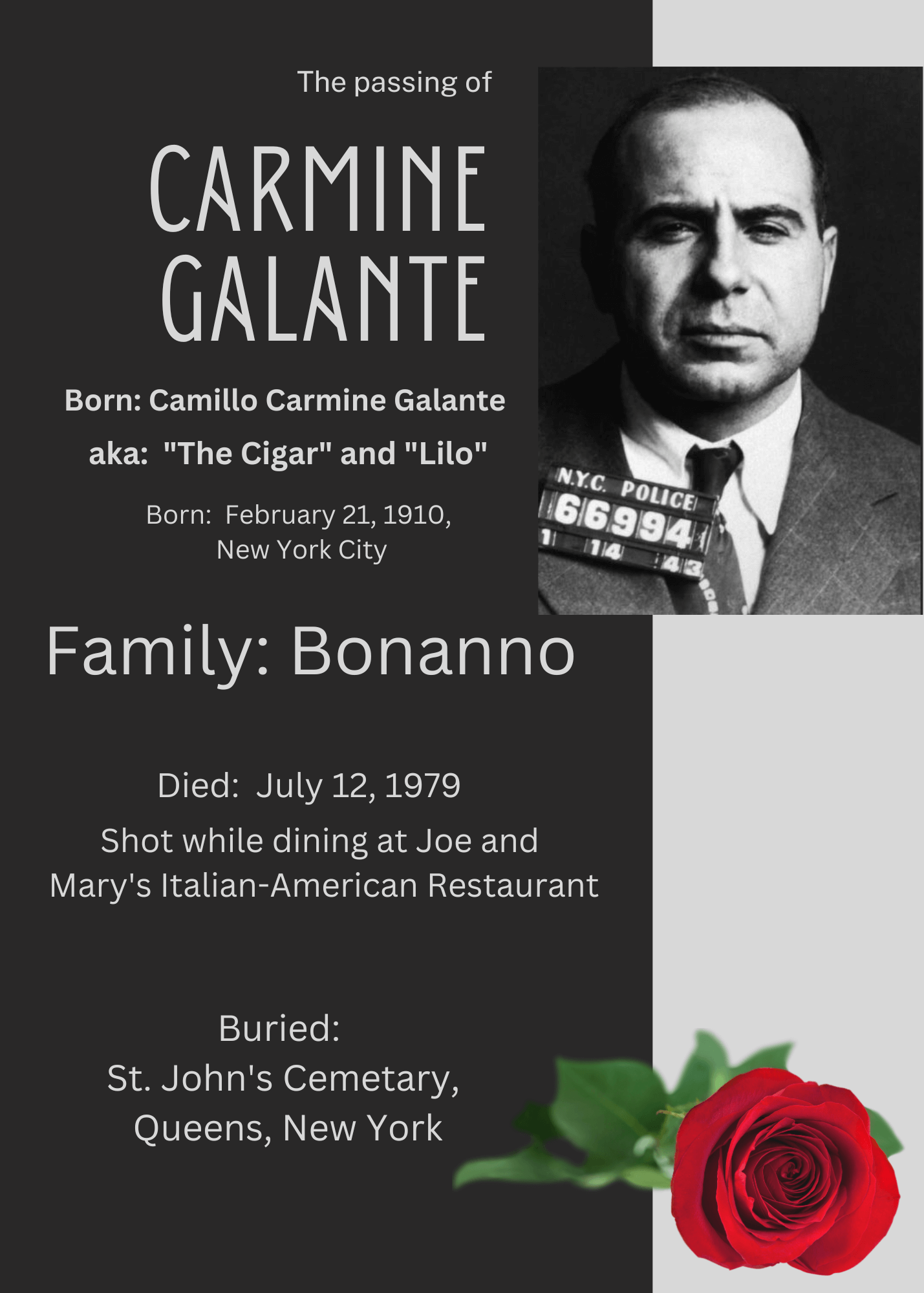
Carmine Galante was born in East Harlem in 1910 to Sicilian immigrant parents. The neighborhood during his childhood overflowed with poverty, gang violence, political corruption, and organized crime influence. Like many future mobsters, Galante grew up in an environment where criminal networks often seemed more powerful than legitimate institutions.
He entered crime early and aggressively.
As a teenager, Galante joined street gangs involved in theft, extortion, and robbery. Arrests came quickly. Reform schools followed. Violence became routine. By adulthood, Galante had already established a reputation as a dangerous enforcer willing to use brutality casually.
The nickname “Lilo” reportedly came from a Sicilian expression referencing cigars. The cigar became part of his image permanently. Photos of Galante almost always showed smoke curling from his mouth like something infernal.
Entering the Bonanno Family
Galante eventually aligned himself with the powerful Bonanno crime family under Joseph Bonanno.
Bonanno valued traditional Sicilian structures and close ethnic loyalty networks. Galante fit naturally into that environment because he maintained strong Sicilian connections and embraced old-world Mafia codes more intensely than many Americanized gangsters of his generation.
But unlike Bonanno, Galante lacked patience. He preferred direct intimidation over diplomacy.
Throughout the 1930s and 1940s, Galante rose steadily through organized crime ranks via loansharking, extortion, gambling operations, labor racketeering, and violent enforcement work. Law enforcement officials repeatedly linked him to murders and narcotics trafficking, though convictions often proved elusive.
Witnesses feared him intensely. Some simply disappeared. Others changed testimony suddenly. Fear protected Galante nearly as effectively as lawyers.
The Heroin Pipeline
By the 1950s and 1960s, federal investigators increasingly associated Galante with international narcotics trafficking networks connecting Sicily, Canada, and the United States.
Heroin became his empire.
At a time when some Mafia leaders publicly discouraged narcotics operations because they attracted law enforcement attention, Galante allegedly embraced the heroin trade aggressively because the profits were enormous.
Federal authorities believed he helped oversee portions of what later became known as the “French Connection,” the international heroin pipeline transporting narcotics from Europe into North America.
The business generated staggering wealth. It also intensified tensions inside organized crime itself.
Many Mafia bosses disliked narcotics not for moral reasons, but because heroin investigations brought relentless federal pressure. Galante seemed unconcerned. He valued profit over caution and increasingly operated with the confidence of a man who believed himself untouchable.
That arrogance alarmed people.
Prison and the Mythology of Violence
In 1962, Galante was convicted on narcotics charges and sentenced to federal prison. Even incarceration failed to diminish his reputation.
Stories circulated constantly about his violence, his temper, and his dominance inside criminal circles. Some tales were undoubtedly exaggerated. Others likely were not. Like figures such as Albert Anastasia, Galante developed a mythology that blurred fact and fear together.
He cultivated the image carefully.
Galante reportedly viewed prison not as humiliation but as temporary interruption. Unlike gangsters who attempted reinvention after incarceration, he remained deeply committed to organized crime identity and Sicilian Mafia tradition.
When he was released in 1974, the underworld landscape had changed significantly. But Galante intended to reclaim power quickly.
The Return to Power
Following his release, Galante returned to a Bonanno family weakened by years of internal conflict, leadership struggles, and government pressure. He moved aggressively. Too aggressively.
Galante reportedly began consolidating influence rapidly, surrounding himself with loyal Sicilian associates sometimes called “Zips”—Italian-born Mafia members imported partly because they were viewed as more trustworthy and less vulnerable to American law enforcement pressure.
The move unsettled American-born Mafia leaders deeply.
Many believed Galante intended to dominate the Bonanno family entirely while expanding narcotics operations aggressively across New York. Worse still, rumors spread that he no longer respected traditional Commission authority.
In organized crime, independent ambition can look dangerously similar to rebellion.
Galante projected the confidence of a man who believed violence alone could secure permanent power. History suggests otherwise.
The Bananas and the Bullets
By the late 1970s, tensions surrounding Galante reached critical levels.
Powerful Mafia figures reportedly concluded that he had become too dangerous, too greedy, and too unstable to tolerate further. His narcotics empire attracted enormous law enforcement attention, while his apparent ambitions threatened existing power balances within organized crime.
The decision came quietly, as such decisions usually do. On July 12, 1979, Galante sat eating lunch on the patio of Joe and Mary’s Restaurant in Brooklyn alongside associates. Then gunmen arrived.
Witnesses later described masked shooters entering calmly before opening fire with shotguns and pistols. Galante died almost instantly, cigar still clenched between his teeth in one of the most infamous crime-scene photographs in Mafia history.
Food scattered across the table. Bananas rested beside blood. The image became pure noir mythology.
Several associates survived the attack suspiciously untouched, reinforcing widespread belief that the assassination had received internal Mafia approval.
No one was ever convicted successfully for orchestrating the murder. Few doubted the message.
The Narcotics Legacy
Galante’s death symbolized more than a power struggle inside one crime family.
It reflected the growing centrality of narcotics within organized crime during the late twentieth century. Older Mafia bosses who once viewed drugs cautiously increasingly lost control over younger or more ambitious gangsters willing to risk federal attention for massive heroin profits.
Galante embraced the narcotics economy earlier and more aggressively than many contemporaries. That decision made him wealthy. It also made him expendable.
The heroin trade intensified violence, federal investigations, informants, and internal distrust across organized crime families nationwide. By the time Galante died, the Mafia was already entering a more unstable and heavily prosecuted era.
The Legacy of Carmine Galante
Carmine Galante remains one of the most feared and controversial Mafia figures of the postwar era.
Unlike smoother operators such as Meyer Lansky or politically connected bosses like Frank Costello, Galante projected raw intimidation. He looked like violence personified—a man permanently surrounded by threat, suspicion, and death.
He represented the darker evolution of organized crime during the heroin era:
More ruthless. More international. More unstable.
Galante believed fear alone could sustain power indefinitely. For years, it nearly did. Witnesses stayed silent. Rivals hesitated. Associates obeyed. But the Mafia ultimately fears one thing more than law enforcement: A man whose ambition threatens everybody else.
Carmine Galante spent decades surviving gunfire, prison, narcotics investigations, and organized crime warfare. In the end, he died the same way many feared gangsters eventually do—suddenly, publicly, and surrounded by the very violence that built his empire.
Click the links below to see where he is buried.