Giuseppe “Joe the Boss” Masseria: The Old King of New York’s Underworld
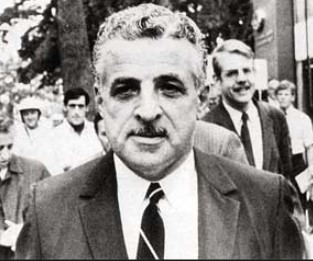
Joe Masseria looked exactly like what he was.
Heavyset. Thick-faced. Suspicious. He carried himself with the blunt confidence of a man who believed fear mattered more than charm and power mattered more than sophistication. Unlike later Mafia bosses who cultivated polished business images or media-friendly personas, Masseria projected old-world authority openly.
He ruled through appetite. For food. For money. For control. And for a time, he ruled more of New York’s underworld than almost anyone else alive.
Before the Mafia became a national syndicate managed through commissions and corporate-style alliances, organized crime in America resembled feudal warfare. Neighborhood bosses fought over territory, tribute, and survival through shifting loyalties and relentless violence. Joe Masseria stood at the center of that brutal transition period.
He represented the old order. Then the future murdered him over lunch.
Sicily and the Street Education
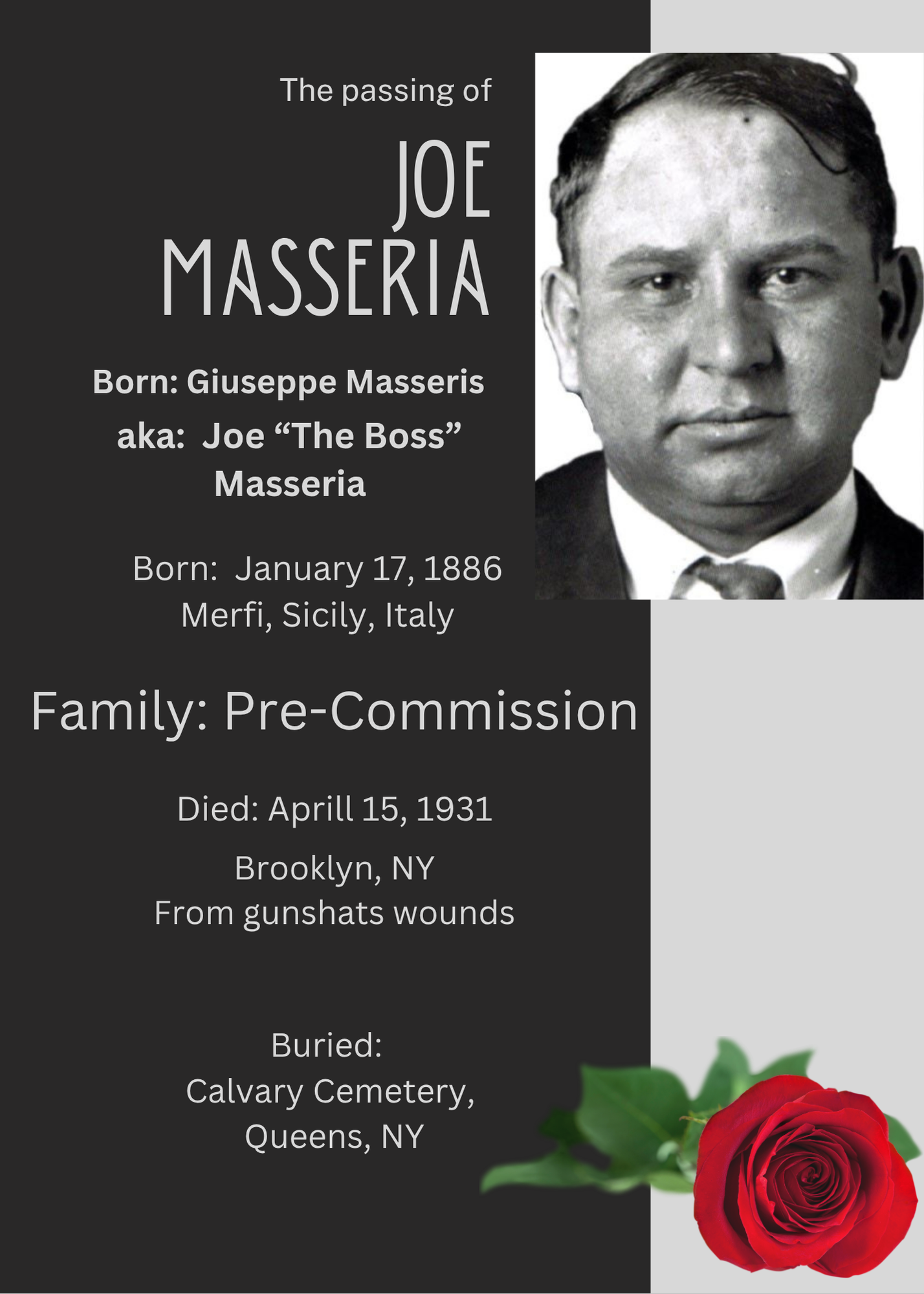
Giuseppe “Joe the Boss” Masseria was born in Sicily in the early 1880s, likely near Menfi, before immigrating to the United States during the massive wave of Italian migration reshaping American cities.
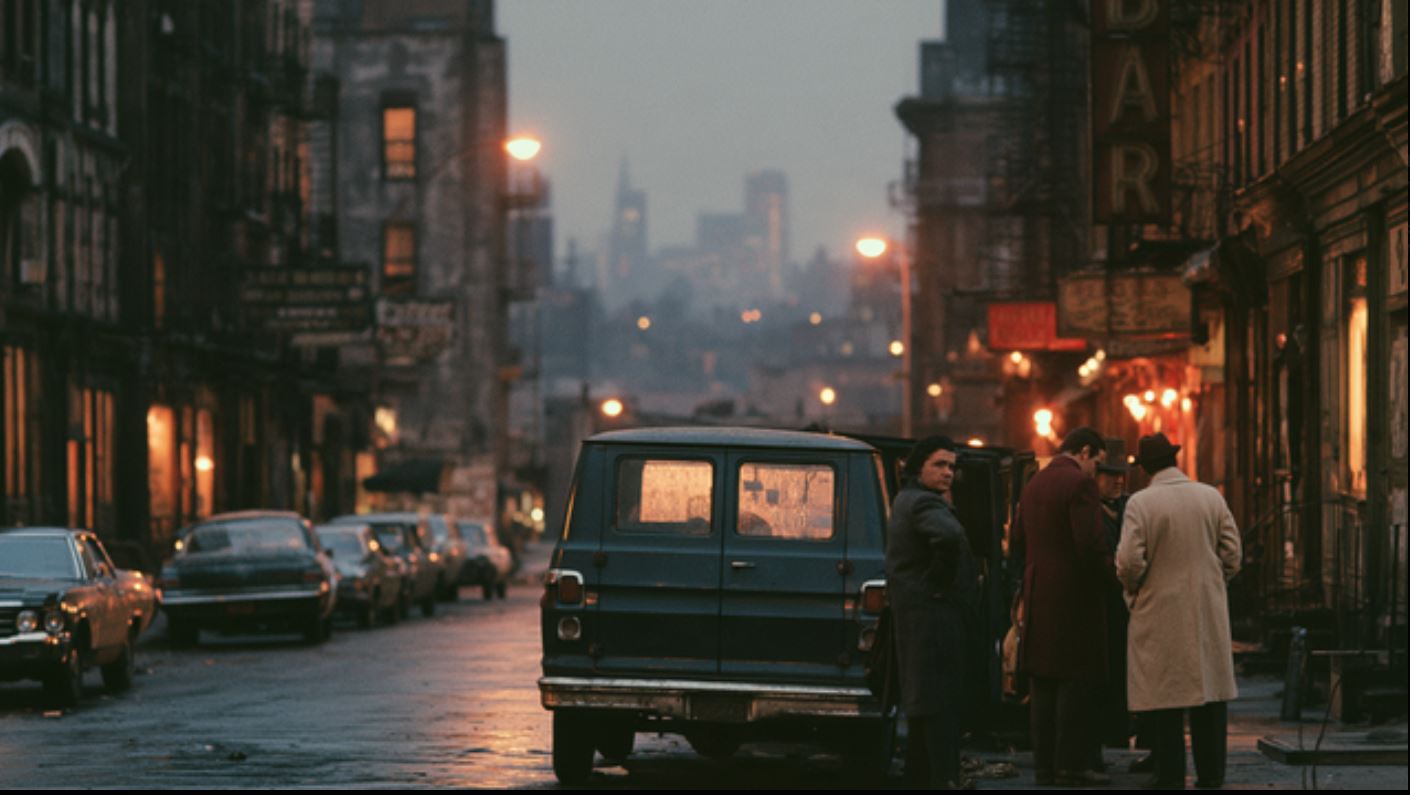
Like many Sicilian immigrants arriving in New York, Masseria entered crowded neighborhoods where poverty, labor exploitation, political corruption, and organized crime existed side by side. The streets offered few clean paths upward. Criminal organizations often functioned as alternative systems of protection, employment, and authority.
Masseria adapted quickly.
By the early twentieth century, he had become involved in extortion, robbery, gambling, and protection rackets tied to New York’s growing Sicilian underworld. Law enforcement officials increasingly associated him with violent criminal operations throughout Manhattan and Brooklyn.
He survived because he understood something fundamental: The streets reward ruthlessness long before they reward intelligence.
The Rise of Joe the Boss
As older Mafia figures disappeared through prison, assassination, or political decline, Masseria expanded aggressively. He earned the nickname “Joe the Boss” because he projected dominance constantly. Unlike quieter operators who preferred subtle influence, Masseria wanted rivals and subordinates alike to understand exactly who controlled territory.
And territory meant everything.
Before organized crime became nationally coordinated, power depended heavily on neighborhood control—gambling dens, labor extortion, protection payments, political relationships, and street-level enforcement. Masseria built influence steadily through violence and strategic alliances while consolidating smaller criminal groups beneath his authority.
By the 1920s, he had become one of the most powerful Mafia leaders in New York City. Then America accidentally made him richer.
Prohibition Changes Everything
The arrival of Prohibition in 1920 transformed organized crime nationwide.
Illegal alcohol generated enormous profits for criminal organizations capable of controlling supply chains, smuggling routes, corrupt officials, and enforcement crews. Gangsters who once operated local rackets suddenly managed industrial-scale criminal enterprises worth millions.
Masseria expanded rapidly into bootlegging.
The money flowing through New York became staggering. Speakeasies multiplied across the city while politicians, police officers, businessmen, entertainers, and ordinary citizens all participated indirectly in the illegal liquor economy.
Crime became infrastructure. Masseria understood the opportunity but struggled with the changing culture surrounding organized crime. Younger gangsters increasingly viewed criminal operations as business ventures requiring cooperation across ethnic and territorial boundaries.
Masseria still thought like a traditional Sicilian warlord. That difference became fatal.
The Younger Generation
During the late 1920s, a younger generation of gangsters emerged beneath Masseria’s authority, including figures like Charles “Lucky” Luciano, Frank Costello, and Vito Genovese.
These younger men admired Masseria’s power but increasingly viewed his methods as outdated.
Masseria distrusted non-Sicilians heavily and maintained rigid old-world loyalties. Luciano’s generation preferred broader cooperation, including partnerships with Jewish gangsters like Meyer Lansky and other criminal groups capable of expanding profits nationally.
The younger gangsters wanted efficiency. Masseria wanted dominance. The conflict between those visions exploded into war.
The Castellammarese War
The Castellammarese War became one of the bloodiest conflicts in American organized crime history. Beginning around 1929, Masseria’s faction battled the rival organization led by Salvatore Maranzano, another powerful Sicilian leader backed by gangsters from Castellammare del Golfo.
The war consumed New York’s underworld. Assassinations multiplied. Gunmen stalked streets. Alliances shifted constantly as gangsters calculated survival against loyalty.
Masseria still believed raw force and traditional authority could secure victory. But Luciano and other younger figures increasingly viewed the war itself as bad business. Endless killings disrupted profits and attracted dangerous law enforcement attention during a period when organized crime had become enormously lucrative.
The younger generation began searching for another solution. One that removed both aging bosses entirely.
Luciano’s Betrayal
By 1931, Luciano secretly concluded that Masseria had become an obstacle rather than an asset. The old boss no longer fit the future of organized crime.
Luciano reportedly opened secret negotiations with Maranzano while preparing to eliminate his own leader. The betrayal carried enormous risk. Mafia culture placed tremendous importance on loyalty and hierarchy. But Luciano understood power more pragmatically.
On April 15, 1931, Masseria met Luciano and associates for lunch at Nuova Villa Tammaro, a restaurant in Coney Island.
The scene became legendary. Cards on the table. Wine flowing. Lunch half-finished. At some point, Luciano excused himself reportedly to use the restroom. Then gunmen entered. Masseria was shot multiple times and killed at the table while his killers vanished into Brooklyn.
The old king died surrounded by food, cards, and betrayal. Noir history rarely writes subtler endings.
The Temporary Victory of Maranzano
With Masseria dead, Maranzano briefly emerged victorious in the Castellammarese War.
But Luciano had no intention of serving another old-world dictator. Months later, Maranzano himself was assassinated after attempting to consolidate power as “Boss of Bosses.”
The younger generation took over. The Commission replaced Mafia monarchy. National coordination replaced feudal warfare. Modern organized crime was born from the bodies of the old bosses. Including Joe Masseria.
The Myth of the Old Mafia Boss
Masseria came to symbolize the fading Sicilian Mafia tradition struggling against modernization inside American organized crime. He believed power flowed downward from a single dominant ruler.
Luciano believed power should be distributed strategically among allied families and criminal enterprises. That philosophical difference mattered more than personality alone. Masseria represented territorial loyalty, old-world suspicion, and authoritarian control.
The new syndicate represented corporate criminal capitalism. The future chose Luciano.
The Legacy of Joe the Boss
Joe Masseria remains one of the defining figures of transitional Mafia history.
Without him, the Castellammarese War never reaches the scale that forced organized crime to reorganize nationally. Without his rigidity, Luciano’s revolution may never have happened so dramatically.
Ironically, Masseria helped create the conditions that destroyed his own version of the Mafia. Unlike later celebrity gangsters such as John Gotti or polished strategists like Carlo Gambino, Masseria belonged fully to an older underworld.
More tribal. More violent. More personal. He ruled New York like a medieval crime lord wandering through the modern city without realizing the city itself was evolving around him.
Then younger men with sharper business instincts decided the old king had become too expensive to keep alive.
Buried at: Calvary Cemetery, Queens, NY