Judith Exner: The Dangerous Woman Who Knew Too Much About the Kennedys and the Mob
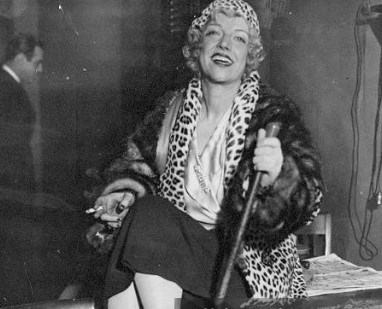
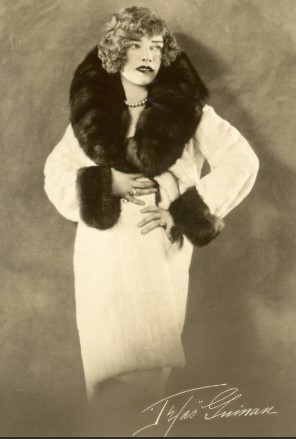
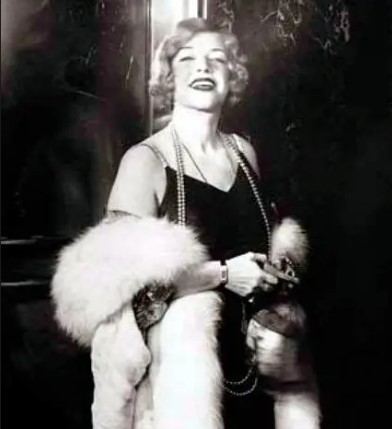
She was the woman who connected a president, a Mafia boss, and the shadowy world of intelligence. But was Judith Exner a manipulative social climber, an opportunist, or a firsthand witness to one of the most extraordinary political and criminal relationships in American history? Authors Mark Allen and Tricia Aurand believe the world got her wrong.
There are secrets that can destroy reputations, secrets that can topple political careers, and secrets that powerful men will go to extraordinary lengths to keep buried. Judith Exner found herself holding some of those secrets, and the price of knowing them would follow her for the rest of her life.
She was beautiful, socially accomplished, and comfortable in the company of influential men. Her romantic associations included President John F. Kennedy, while her connections brought her into the orbit of Chicago Mafia boss Sam Giancana. According to her account, she also served as a go-between in communications involving Kennedy, Giancana, and the CIA’s covert efforts against Cuban leader Fidel Castro.
It was an extraordinary story. It was also one that many people simply did not want to believe.
For decades, Exner’s credibility was questioned, her motives scrutinized, and her character reduced to a collection of unflattering labels. She was portrayed as a party girl, a scheming woman, an attention seeker, and an opportunist who had attached herself to powerful men.
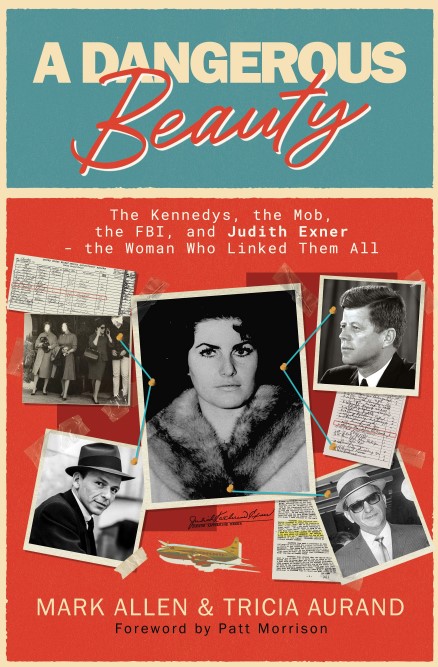
But what if the woman everyone thought they understood was actually one of the most important firsthand witnesses to a remarkable chapter of American history? That is the question explored in A Dangerous Beauty: The Kennedys, the Mob, the FBI, and Judith Exner – The Women Who Linked Them All, by authors Mark Allen and Tricia Aurand.
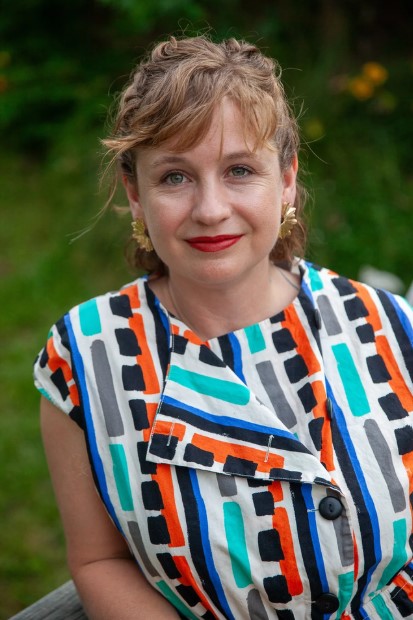
In my conversation with Allen and Aurand, it quickly became apparent that this is not simply another book about the Kennedy family’s complicated private lives or the Mafia’s political connections. It is an attempt to reconsider a woman whose story has been overshadowed by the reputations of the men around her.
And according to Allen, the people who dismissed Exner may have overlooked something very important. “We have a firsthand witness who knows all three people,” he told me. “She is a legitimate firsthand witness to history.”
Those are strong words. But Allen has spent years examining Exner’s story, and he is convinced that she deserves to be taken seriously.
A Researcher Meets a Woman With Secrets
Mark Allen did not begin his relationship with Judith Exner as an unquestioning believer. His background included years of research into the Kennedy assassination and its surrounding controversies. Like many researchers, he initially approached Exner’s claims with skepticism. Her story was extraordinary, and extraordinary stories require extraordinary scrutiny.
His first contact with her came through work on a project with British journalist Anthony Summers. Exner had indicated that she possessed additional information she was willing to disclose. There was also a practical consideration. Exner was living alone and, according to Allen, had no obvious means of independent financial support at the time. She wanted her story told and expected compensation for providing the information. Allen explained the arrangement candidly: “She needed the story to be written, and for her to be compensated for it.”
The two began talking, and a relationship developed over time. But why would a woman who had become so suspicious of the media and public attention trust a researcher with information that could potentially reopen some of the most controversial chapters of her life?
Allen believes it came down to discretion and familiarity with the subject. “I think because I knew the topic, and I was willing to believe her,” he explained. He was careful, however, not to suggest that Exner trusted him completely. “She did trust me, but she never trusted anyone completely.” That observation came with an interesting endorsement. Allen said Exner’s best friend, Felicia, had also told him that she was never entirely trusting of anyone.
Over time, their conversations became more comfortable. Allen understood the subject, took her seriously, and did not immediately turn every private disclosure into a newspaper story.
He described the importance of that relationship: “I think that the fact that I was a very discreet individual, and obviously was very receptive to what she was telling me, and knew my topic, I think those were many things.”
It was not simply a matter of gaining access to a fascinating historical figure. Allen had to convince Exner that he was someone who could be trusted with information she had spent years protecting.
When he finally met her, his first impression was not of a calculating celebrity hanger-on or a woman desperately seeking attention. Instead, he encountered someone who appeared entirely comfortable in sophisticated social settings. He described her as “a very nice lady,” someone with impeccable social graces who could move comfortably “within the halls of power.” She was also, he recalled, “a marvelous conversationalist.”
That first impression would become important as Allen began examining the details of her story.
The Evidence Behind the Allegations
For Allen, believing Exner was not enough. He needed to determine whether her account could withstand serious investigation. One of the most consequential elements of her story involved her alleged role as a go-between in the CIA’s relationship with organized crime during efforts to assassinate Fidel Castro.
Allen explained that by the time Exner disclosed this aspect of her involvement in 1988, he had already come to believe that the Kennedy administration knew about the CIA’s alliance with Mafia figures in the Castro plots. He was therefore inclined to believe her, although not without reservations. “Reluctantly, but I was inclined to believe her,” he recalled.
His greatest concern was not simply whether Exner’s story was interesting. It was whether he could establish that she was telling the truth rather than being taken in by someone with a personal agenda.
He wanted to protect his own professional reputation, too. As he explained, “I cared more than anything about my own reputation. Not looking foolish.” That concern led to extensive research and verification.
Allen believes that he and Aurand have done more than anyone else to check Exner’s account. He was particularly emphatic that the press, television programs, and other Mafia researchers had not undertaken the same level of investigation.
The details mattered.
Exner provided specific dates, locations, and names of people who were present. Her account also required researchers to establish where Kennedy was, where Giancana was, and, on certain occasions, whether Jackie Kennedy was present. Allen pointed out that someone inventing such a complicated story would have to be extraordinarily lucky to get all those details right. “If you were just making it up, you would just have to be astoundingly lucky to have someone who looked at it as hard as I did and not find a single serious discrepancy.”
He emphasized that he and Aurand had found none.
That is not a reason to abandon historical skepticism. It is, however, a reason to examine the evidence rather than dismiss the witness. And Allen believes that is precisely what happened to Exner.
Why Didn’t Anyone Want to Believe Her?
When I asked Allen why so many books and documentaries about the Kennedy family and organized crime seemed to overlook Exner’s story, his answer was immediate. “I think there’s a large element of sexism in it, quite frankly.” He elaborated on the problem: “She’s a woman. Who wants to believe that woman?”
It is a revealing observation.
The Kennedy family had become an American institution. John F. Kennedy represented youthful leadership, political glamour, and the promise of a new generation. Robert Kennedy had become associated with a determined campaign against organized crime.
The idea that members of the Kennedy circle might have been consulting with Mafia figures was difficult enough for admirers to accept. The suggestion that a woman could provide firsthand information about those relationships was even more problematic.
Allen believes that the public’s reluctance to accept Exner’s account was partly rooted in the conflict between her allegations and the carefully maintained Kennedy image. He described the difficulty of reconciling the familiar family portrait with what he was learning: “It’s an appealing image of the Kennedy family, the handsome Jack, beautiful Jackie, adoring children. Jack is a peacemaker, a peace lover, someone who would advance civil rights, inspired us to go to the moon.”
But, he added, “It’s very disconcerting to sort of learn all of the unfortunate truths about what was really going on.”
For Tricia Aurand, the problem of how Exner was portrayed became one of the most important reasons to participate in the project. Aurand approaches the story from a different generation and a different perspective than Allen. She pointed to the modern understanding of power imbalances, the #MeToo movement, and the way women have historically been expected to navigate relationships with powerful men.
When she began researching Exner, she was struck by how one-sided earlier accounts had been. She described the portrayal as “really one-sided, frankly flattened, and at times overtly sexist.” Her reaction was immediate. “I was interestingly inclined to believe Mark’s version of it.”
She went further, offering a particularly powerful observation about the way society judges women who speak about powerful men. “In my experience, and I think now in the twenty-first century, I have just come to understand that women don’t have to lie about the misdeeds of the powerful men that they’ve been close to.”
Aurand continued: “Any monstrosity you could imagine has been committed by a man in power, and women don’t have to lie about that.” Her point was not that every allegation made by a woman must automatically be accepted. Rather, it was that a woman’s testimony should not be dismissed simply because the man she is discussing is powerful, celebrated, or politically influential.
It is a distinction that lies at the heart of A Dangerous Beauty.
The Kennedy Private Life: A Different Kind of History
One of the things that surprised Aurand was the extent to which Kennedy’s extramarital relationships were apparently known among people in his immediate social and political circles. She noted that the press had long operated under what she described as a gentlemanly agreement not to report on the private affairs of prominent politicians, even when journalists knew about them.
Kennedy, she argued, was particularly brazen. “We know now how many affairs JFK had, both as senator and as president,” she said. “And it was among many other women who were involved with him at that time.” What surprised her was not simply that the affairs occurred, but that Kennedy was willing to take such risks given his political position.
She believes his understanding of the media environment was important. Kennedy knew how difficult it would be for a woman to come forward and be believed, particularly when challenging the reputation of the president of the United States.
Aurand suggested that this may have been part of the reason Exner was selected to act as a go-between. “I think Kennedy knew very well that nobody would believe Judith if she said anything.” It is a chilling possibility.
If a woman was already romantically involved with a powerful politician, her credibility could be attacked by simply portraying her as an embittered former lover or an attention seeker. In that environment, the very relationship that gave Exner access to Kennedy may also have made her a convenient person to underestimate.
The Extraordinary Work of Being Judith Exner
Perhaps the most emotionally revealing part of our interview came when I asked Aurand whether she found any aspects of Exner’s life particularly difficult to write about as a woman.
Her answer was immediate. “Oh, definitely. Yeah, there was a lot that I found really difficult to write.” What troubled her was the constant effort Exner had to make to protect herself from the men around her.
Aurand described multiple instances in which men she barely knew, or knew only casually, made unwanted advances. Exner had to rely on her social skills, judgment, and ability to read situations to get herself out of potentially dangerous circumstances. “Sometimes, you know, basically fighting her way out of that situation just to remain safe.”
Aurand was impressed by how successfully Exner navigated those encounters. “She was really socially skilled at navigating the world to maintain her autonomy and her safety.”
There was another important aspect of Exner’s independence: money. Aurand explained that maintaining financial independence was extremely important to her. She did not want to become financially dependent on the men in her social circle or have her personal decisions controlled by financial arrangements. “She did not want to be beholden to any of the men around her,” Aurand explained.
That decision was significant in an era when women were often financially supported by wealthy men with whom they were romantically involved. Exner wanted to make her own social decisions without financial strings attached.
Aurand found the constant balancing act exhausting even to contemplate. “Just reading how she had to juggle every social situation that she was in to maintain her autonomy and safety, it’s exacting. I’m like, how did you do this? This is so much work.”
It is a perspective that changes the way readers might interpret Exner’s social life.
What some viewed as a woman comfortably moving among powerful men, Aurand saw as a complicated exercise in maintaining independence, protecting herself, and avoiding situations in which men could exert control over her.
That does not make Exner infallible. But it makes her considerably more interesting than the familiar caricature.
Sam Giancana: The Gentleman and the Gangster
Another fascinating subject we discussed was Sam Giancana. The Chicago Mafia boss is often remembered through the familiar gangster imagery: the expensive cars, the colorful wardrobe, the temper, and the violence associated with his criminal organization.
But Allen was surprised by how comfortably Giancana operated in high-society circles. He described a man who wore expensive suits, spoke proper English, and could be charming in his own way. “This was not your stereotypical gangster,” Allen observed. Giancana was someone who could fit into the social circles of high society.
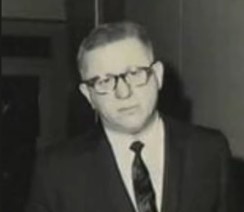
Aurand was less surprised. She understood that courtesy and good manners could be useful tools for a man who wanted access to influential people. Giancana had been introduced to Exner through Frank Sinatra, whose entertainment connections provided access to a world where politics, celebrity, and organized crime sometimes overlapped.
Aurand explained that Giancana had obvious reasons to treat Exner well. “She was acting as a liaison between JFK and him,” she said. “And he saw advantages in being close to the president.”
There could be political leverage, favorable treatment, or opportunities to negotiate. Whatever his motivations, treating Kennedy’s girlfriend with courtesy made practical sense.
Aurand also offered an observation about the nature of organized crime leadership: “You don’t necessarily get to the top of any powerful organization, including organized crime, by not being able to hold a polite conversation at a restaurant.” It is an excellent point.
The ability to intimidate is one form of power. The ability to make people comfortable, establish relationships, and move through respectable society is another.
Neither author attempted to sanitize Giancana’s criminal record or suggest that his courtesy made him harmless.
Allen was clear that association with someone like Giancana could leave a permanent stain. “If you were in any association with someone like Giancana, you were going to be stained. And it’s a stain you may never be able to rub off.”
For Exner, that association would become part of her public identity long after the relationships themselves had ended.
Why Judith Exner Remained Silent
One of the most important questions surrounding Exner is why she did not tell everything she knew sooner. Allen believes the answer involves loyalty, fear, and an understanding of how the public would react.
He described her as someone who loved Kennedy deeply. When she discussed the day she met Kennedy, Allen recalled, she would light up. When the conversation turned to his assassination, she would become emotional.
He told me: “She loved him so much, from the day she met him until the day she died.”
Allen finds it difficult to reconcile that affection with the suggestion that Exner would deliberately invent stories intended to destroy Kennedy’s reputation. He also believes she had legitimate reasons to fear for her safety and that she understood the American public was not ready to accept her account.
She would have been the person directly implicating Kennedy in the alleged communications involving the Mafia and the CIA. Other people could speculate about what the president knew, but Exner’s account placed her in a position to provide firsthand testimony. Allen believes she understood that the public was unlikely to believe her.
Aurand offered another way of understanding the decisions Exner made. Her story, she argued, only makes sense when readers understand her upbringing, personality, values, and the difficult circumstances in which she found herself.
She described Exner as someone whose life had become entangled in events that ultimately damaged her reputation and, in many ways, ruined her life. The media’s characterization of her, Aurand believes, obscured the actual decisions she made. “The scarlet woman, the party girl, the attention seeker. None of that makes any sense with the actual actions, if you look at the actions that she took on paper.”
Aurand believes those actions make more sense when Exner is understood as a well-brought-up woman who loved the president and agreed to do what he asked of her.
She concluded that it was unfortunate that the circumstances surrounding the disclosure of Exner’s name, combined with her decision to hold back parts of her story, permanently damaged public perceptions of her.
Instead, Aurand hopes readers will see her as “a basically moral person who was caught up in a really tricky situation and just did her best to navigate.”
One Last Drink With Judith
Toward the end of our conversation, I asked both authors a question that seemed particularly appropriate for Crime and Cocktails. If they could sit down with Judith Exner today, what would they order, and what would they ask her?
Mark Allen chose Jack Daniel’s, a drink he associated with Exner. He recalled that after her cancer diagnosis, she stopped drinking. He also remembered sharing a glass of champagne with her following an important interview. She drank only a few sips, but the moment stayed with him.
His question would be simple, direct, and irresistible to anyone fascinated by the Kennedy-Mafia connection: “What else do you know that you haven’t told me?” Allen remains convinced that Exner knew more than she ever revealed, and that some of those secrets went with her to the grave.
Exner died on September 24, 1999, in Duarte, California, from breast cancer. She was 65 years old. Whatever else she might have shared, there would be no more interviews, no opportunity to revisit old conversations, and no chance to ask one final question.
Aurand chose a Manhattan, one of her favorite cocktails when visiting a nice bar. Her question would be less concerned with political secrets than with the world Exner left behind. She would want to know what Exner thought about the progress women have made, how the media treats women today, and how far society still has to go to achieve genuine equality.
Aurand was particularly troubled that sexist portrayals of Exner continued long after her death. She wondered what Exner would make of the way women associated with powerful men are still judged, scrutinized, and often reduced to the most sensational parts of their lives. For a woman who had spent so much of her life navigating the demands and dangers of powerful men, the question would have been especially meaningful.
There was one final observation from Aurand that deserves particular attention. She wished Exner could have lived to see the book and know that someone had made a serious effort to tell her story fairly. For decades, Exner had been portrayed through a narrow lens: the mistress, the socialite, the woman with a scandalous secret. Allen and Aurand wanted readers to see the person behind those labels.
Neither author claimed to have captured every detail or answered every question. Allen acknowledged that no biography can promise its subject would agree with every interpretation. But they had tried to provide context, examine the evidence, and give readers a fuller understanding of Exner’s relationships with John F. Kennedy and the Mafia figures who entered her life.
Perhaps that is the closest thing to a final toast they could offer her: not an attempt to make her a saint, not an effort to erase her mistakes, but a willingness to look beyond the headlines and consider the complicated woman who lived inside them.
And somewhere in the unanswered questions surrounding Judith Exner, there may still be a few secrets worth raising a glass to.
The Woman Behind the Dangerous Beauty
When I asked what they most wanted skeptical readers to understand, Allen returned to the evidence. He wanted readers to consider how difficult Exner’s account would have been to fabricate, given the specific dates, locations, and participants she identified.
He also wanted them to remember the affection she had for Kennedy and the emotional response she displayed whenever his assassination was discussed.
Aurand returned to the woman herself. Her argument was that readers cannot understand Exner without considering the world in which she lived and the extraordinary pressures she faced.
Together, their perspectives offer something more interesting than another debate about whether Judith Exner was a good woman or a bad one. They ask us to consider the possibility that she was a complicated human being who became involved in events much larger than herself.
The Kennedy family had its public mythology. Sam Giancana had his criminal empire. The CIA operated in the shadows of international politics. And Judith Exner found herself connected to all three.
Her story remains controversial, and individual claims should always be examined against the historical record. But dismissing her because of her gender, romantic relationships, or personal imperfections does little to advance our understanding of what happened.
Perhaps that is the greatest contribution of A Dangerous Beauty.
It invites readers to look again at a woman who spent much of her life being judged by the men she knew rather than by the information she possessed.
Judith Exner had many more secrets that she took to her grave.
Get Your Copy Here:
A Dangerous Beauty: The Kennedys, the Mob, the FBI, and Judith Exner – the Woman Who Linked Them All