Crazy Joey Gallo: The Man Who Finally Stopped Kissing the Ring
“Kiss the Ring. Dig Your Grave” series – Article 4
Every Mafia boss preached the same gospel.
Respect the hierarchy. Pay your tribute. Follow orders. Never question the man at the top. If you remained loyal long enough, your time would come. Promotions would follow. Wealth would increase. Your standing would rise. The organization would reward your devotion.
It was a promise repeated in every social club, whispered across card tables, and reinforced with every induction ceremony. For Joe Gallo, it turned out to be one of the biggest lies in organized crime.
Unlike Tommy Bilotti or Frank Scalice, Gallo didn’t die because he remained blindly loyal. His story is darker than that. He spent years believing that loyalty mattered, only to discover he had become little more than an ATM for a boss who viewed devotion as a revenue stream.
By the time Joe Gallo realized the game had been rigged from the beginning, there was only one option left. War.
His rebellion would ignite one of the bloodiest internal conflicts in Mafia history and forever change the way mob soldiers looked at the men they called “Boss.”
Sometimes kissing the ring doesn’t dig your grave. Sometimes it teaches you that the ring was never meant to reward you in the first place.
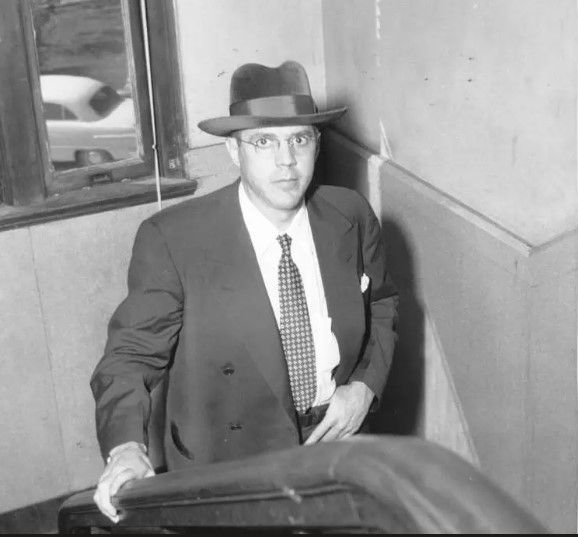
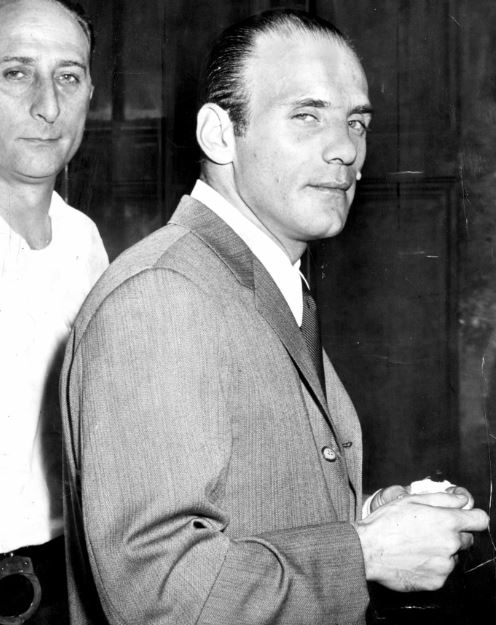
| Joey Gallo |
Brooklyn’s Young Enforcer
Born Joseph Gallo in Brooklyn in 1929, Joe grew up in Red Hook, a neighborhood where longshoremen, bookmakers, labor racketeers, and street gangs lived side by side. Crime wasn’t simply present—it was woven into everyday life.
Alongside his brothers Larry and Albert, Joe developed a reputation for fearlessness at an early age. He possessed intelligence, charisma, and a volatile personality that made him both fascinating and unpredictable. Friends admired his confidence. Rivals respected his willingness to use violence.
Those qualities eventually brought the Gallo brothers into the orbit of Joe Profaci, one of New York’s original Five Families bosses.
To ambitious young gangsters, serving Profaci seemed like the quickest path to success.
The Gallos threw themselves into the work.
Earning for the Boss
The Gallo crew became exceptional earners.
Loansharking. Bookmaking. Extortion. Labor racketeering. Whatever generated money, they did it well.
Profaci appreciated one thing above all else—cash flowing upward. Every week, soldiers and captains paid tribute to the boss, who in turn distributed influence and protection throughout the family.
At least that was the theory.
In practice, many members believed the money mostly flowed one direction.
Up.
Profaci had developed a reputation for squeezing every possible dollar from his own family. Some associates joked that he could tax the air his soldiers breathed. Mandatory contributions appeared endless, while financial assistance in return remained scarce.
The Gallos paid. Again. And again. Like thousands of loyal soldiers before them, they believed faithful service would eventually earn respect.
The Price of Loyalty
Joe Profaci built his organization around old-world ideas of obedience. Questioning the boss bordered on heresy. Refusing tribute was unthinkable. Every demand came wrapped in the language of tradition.
Honor. Respect. Family. Those words carried tremendous emotional power inside La Cosa Nostra.
But Joe Gallo slowly noticed something troubling. The sacrifices always seemed to flow in one direction. Profaci expected complete loyalty from his soldiers. He offered little in return beyond permission to keep earning.
As the years passed, younger members increasingly viewed Profaci as detached from the men risking prison—and death—to finance his lavish lifestyle.
The gap between rhetoric and reality grew impossible to ignore.
Loyalty Without Respect
Respect cannot be demanded forever. Eventually it must be earned.
The Gallos believed they had done everything expected of loyal soldiers. They generated enormous income, enforced the family’s rules, and carried out orders without hesitation.
Yet promotions never arrived. Influence remained limited. Important decisions stayed concentrated among Profaci’s longtime loyalists and relatives.
The Gallos had become valuable. They had not become trusted. Joe Gallo recognized the difference.
One afternoon’s tribute payment looked much different once he realized it wasn’t buying a future.
It was simply paying rent.
The Awakening
History often remembers revolutions as sudden explosions. Most begin with quiet disappointment. Joe Gallo’s disillusionment didn’t occur overnight.
It developed gradually as years of loyalty produced little except increasing financial demands. Conversations with other dissatisfied members revealed that many shared the same frustrations.
Profaci wasn’t simply collecting tribute. He was exploiting ambition. Young soldiers believed obedience would eventually lead upward. Instead, they remained trapped beneath an aging leadership determined to preserve its own wealth and power.
For Gallo, the realization proved liberating. If loyalty changed nothing… Why remain loyal?
The First Profaci War
In 1960, frustration erupted. Joe Gallo and his allies kidnapped several high-ranking Profaci loyalists in an attempt to force negotiations and reshape the family’s leadership.
It was an extraordinary act of defiance. For generations, Mafia tradition insisted that disagreements be handled through hierarchy. Gallo skipped hierarchy altogether.
The result became known as the First Profaci War. Gun battles erupted across Brooklyn.
Bombings. Assassinations. Ambushes. Kidnappings.
The conflict shattered the illusion that every Mafia family operated as a united brotherhood. Instead, it exposed what many had quietly suspected. Sometimes the greatest threat to a gangster wasn’t another family.
It was his own.
| Willie Moretti: When Even the Boss Couldn’t Save You |
A War Without Winners
Although temporary truces emerged, the conflict permanently damaged the Profaci organization. Joe Profaci died of cancer in 1962 before fully crushing the rebellion.
Leadership eventually passed to Joseph Colombo, whose surname would eventually rename the family itself. Joe Gallo had succeeded in proving that bosses could be challenged. He had not succeeded in escaping the consequences.
Convicted on extortion charges, Gallo spent years in prison while the organization reorganized around new leadership. The rebellion had changed history.
It had not made him safe.
| Thomas “Tommy” Bilotti – The Ultimate “Yes” Man |
Freedom Came With a Price
Released from prison in the early 1970s, Gallo emerged into a Mafia landscape transformed by new alliances and old grudges. His celebrity had grown.
Magazine profiles portrayed him as sophisticated, eccentric, and unusually intellectual for a gangster. He frequented Manhattan nightclubs, associated with artists and writers, and cultivated an image unlike traditional mob figures.
The Colombo family remembered something else. The man who had nearly destroyed them. Old wars rarely remain buried forever.
Umberto’s Clam House
On April 7, 1972, Joe Gallo celebrated his birthday at Umberto’s Clam House in Little Italy. The dinner ended in gunfire. Assailants burst into the restaurant and opened fire before disappearing into the night. Gallo staggered outside onto Mulberry Street, collapsing on the sidewalk.
He died shortly afterward.
Whether the killing directly resulted from lingering Colombo family vengeance remains debated among historians, but few doubted that his long war against the organization had made him a marked man.
The rebellion had finally caught up with him.
| Frank Scalice: Loyalty to the the Executioner |
The Ring Was Never Enough
Joe Gallo occupies a unique place in Mafia history because he experienced both sides of loyalty.
First, he believed in it. Then he rejected it. Neither path saved him. His years of faithful service earned little more than exploitation. His rebellion earned him notoriety, imprisonment, and eventually death.
The lesson is profoundly cynical. Blind obedience can destroy you. Open rebellion can destroy you too. Inside organized crime, the game is often unwinnable because the rules exist primarily to protect those already holding power.
The boss demands absolute loyalty while reserving the right to offer none in return.
The Noir Lesson
The Mafia loves stories about loyalty because loyalty is profitable.
A loyal soldier works harder, asks fewer questions, and keeps paying tribute. He believes tomorrow will be better because today’s sacrifices will eventually be rewarded.
Joe Gallo believed that story. Until he didn’t.
Unlike Tommy Bilotti, he refused to die defending a boss who viewed him as expendable. Unlike Frank Scalice, he refused to remain loyal while political winds shifted around him. Unlike Willie Moretti, he refused to trust that friendship guaranteed protection.
He chose revolution instead. It changed the Mafia forever. It also ensured he would spend the rest of his life looking over his shoulder. Joe Gallo discovered a truth that every gangster eventually learns.
The ring isn’t a promise. It’s a reminder. It belongs to the boss. And no matter how many times you kiss it, it was never meant to belong to you.
References:
Capeci, Jerry. The Complete Idiot’s Guide to the Mafia. Indianapolis: Alpha Books, 2002.
Colicchio, Tom. The Gallo Beaked Bird: The Untold Story of Crazy Joe Gallo. New York: Scribner, 2008.
Ianni, Francis A. J. Black Mafia: Ethnic Succession in Organized Crime. New York: Simon & Schuster, 1974.
Raab, Selwyn. Five Families: The Rise, Decline, and Resurgence of America’s Most Powerful Mafia Empires. New York: Thomas Dunne Books/St. Martin’s Press, 2005.
United States Senate. Organized Crime and Illicit Traffic in Narcotics: Hearings Before the Permanent Subcommittee on Investigations. Washington, DC: U.S. Government Printing Office, various editions.
Federal Bureau of Investigation. La Cosa Nostra: An Introduction. Washington, DC: Federal Bureau of Investigation. https://www.fbi.gov/history/famous-cases/la-cosa-nostra
New York Times. “Joe Gallo Is Slain at Birthday Celebration in Little Italy.” April 8, 1972.
Alexander, Shana. The Gallo Files. New York: Random House, 1972.