Meyer Lansky: The Accountant of the Underworld
Some gangsters built reputations with bullets. Others built them with charisma, public violence, or political influence. Meyer Lansky built his with numbers.
Quiet, disciplined, and almost unnervingly controlled, Lansky became one of the most important architects of twentieth-century organized crime without ever fitting the popular image of a mob boss. He rarely raised his voice, rarely sought publicity, and rarely allowed emotion to interfere with business. While other criminals drank heavily, bragged recklessly, or murdered impulsively, Lansky studied profits, partnerships, and risk.
He treated organized crime like an international corporation long before corporate crime became a political phrase.
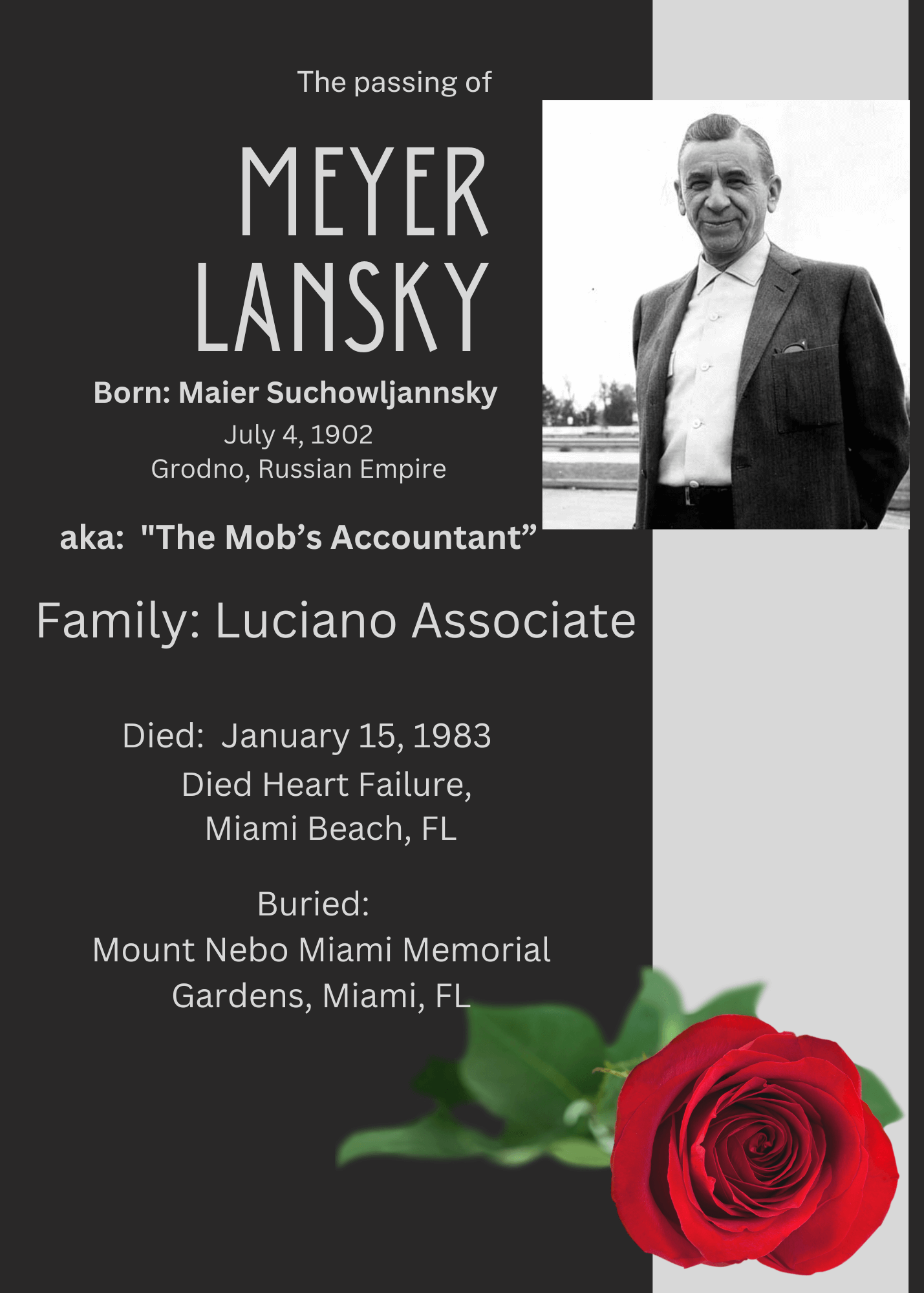
Law enforcement officers spent decades trying to prove that Lansky was the financial mastermind behind the American Mafia. Newspapers called him “The Mob’s Accountant,” though the title barely captured the scale of his influence. Lansky helped create national gambling networks, offshore money systems, labor rackets, casino empires, and criminal alliances that stretched from New York to Havana to Las Vegas.
Unlike many gangsters of his era, he did not crave celebrity. He craved control.
From the Russian Empire to the Lower East Side
Meyer Lansky was born Maier Suchowljansky in 1902 in Grodno, then part of the Russian Empire, now Belarus. His Jewish family fled anti-Semitic persecution and immigrated to New York, settling in the crowded immigrant neighborhoods of the Lower East Side.
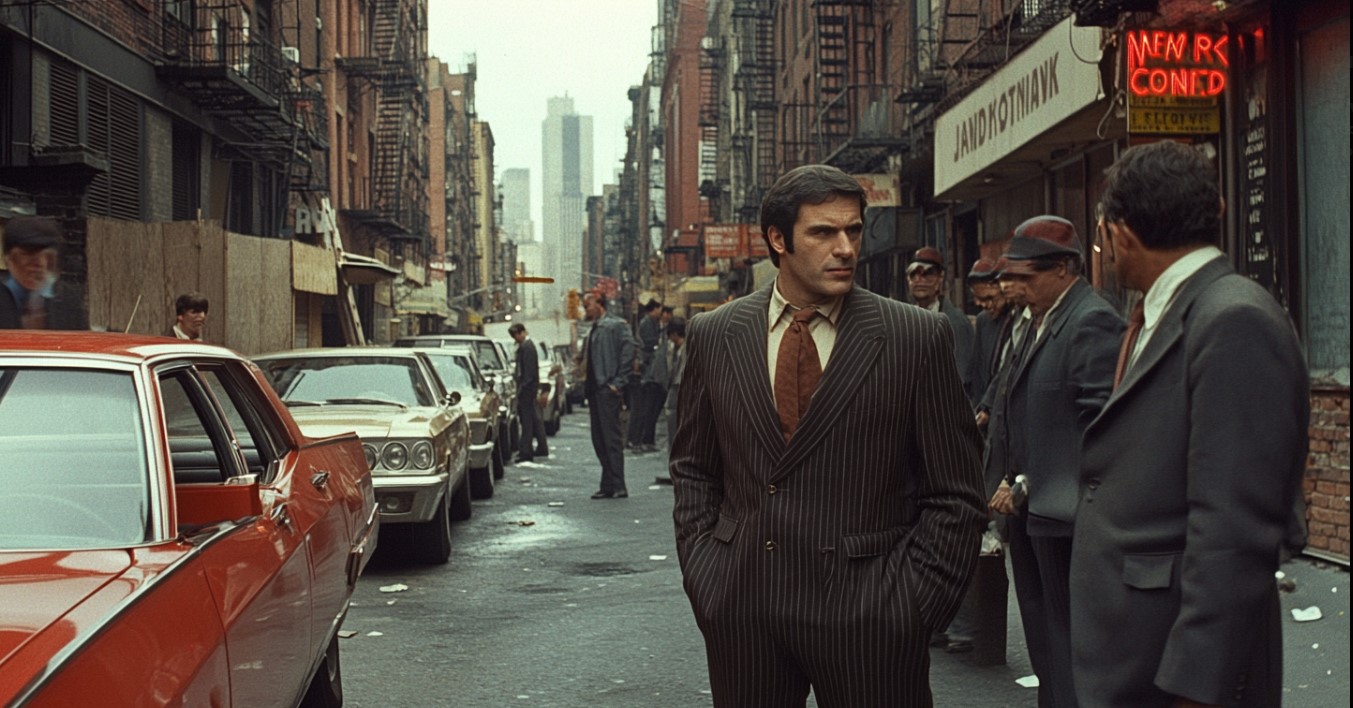
The streets were harsh and tribal. Irish gangs fought Italians. Italians fought Jews. Everyone fought poverty.
Young Lansky learned quickly that intelligence could be as valuable as physical strength. Small in stature but fearless, he gained a reputation for calmness under pressure and unusual strategic thinking. During his teenage years, he met another ambitious young street hustler named Charles “Lucky” Luciano.
The two formed one of the most consequential criminal partnerships in American history.
Luciano recognized Lansky’s intelligence immediately. Lansky recognized Luciano’s ambition. Together, they represented a new generation of gangsters less interested in old ethnic rivalries and more interested in profit. That shift changed organized crime forever.
The Birth of Modern Organized Crime
During the 1920s, Prohibition transformed street criminals into millionaires. Illegal liquor flooded America while politicians, police officers, and businessmen quietly accepted bribes to look the other way.
Lansky excelled in the environment because he understood organization better than chaos.
He partnered with fellow Jewish gangster Benjamin “Bugsy” Siegel, forming what became known as the Bugs and Meyer Mob. Their crews specialized in bootlegging, robbery, enforcement, and contract killings. Though Lansky preferred avoiding violence personally, he understood its necessity within organized crime.
Unlike emotional gang leaders, Lansky treated violence as a business instrument. He also understood alliances.
Older Mafia bosses often distrusted non-Italians, but Luciano increasingly relied on Lansky as both adviser and strategist. Together they envisioned a national criminal syndicate built on cooperation rather than endless gang wars.
When the bloody Castellammarese War erupted in New York during the early 1930s, Lansky supported Luciano’s efforts to eliminate old-world bosses like Giuseppe “Joe the Boss” Masseria and Salvatore Maranzano.
After the old leadership fell, Luciano reorganized the Mafia through The Commission, creating a corporate-style structure for organized crime across America. Lansky became one of its most valuable unofficial advisers.
He was not Italian. He could never formally become a Mafia boss in the Sicilian tradition.
But many gangsters understood a private truth: Lansky’s influence often rivaled that of the men officially in charge.
The Financial Brain of the Syndicate
Lansky’s true genius emerged in gambling.
He understood probabilities, cash flow, laundering systems, and investment structures with remarkable sophistication. While many gangsters wasted fortunes on luxury and ego, Lansky reinvested criminal profits into expanding operations.
He built gambling networks across the United States and the Caribbean, controlling casinos, race wires, bookmaking systems, and offshore operations. By the 1940s and 1950s, his reach extended far beyond neighborhood crime.
Lansky helped organize syndicate gambling operations in Florida, New Orleans, Cuba, and Las Vegas. He cultivated relationships with politicians, businessmen, bankers, and corrupt officials internationally.
His operations blurred the line between organized crime and legitimate enterprise. That ambiguity protected him.
Unlike flamboyant gangsters who attracted headlines, Lansky preferred remaining in the background. He dressed conservatively, avoided public scandal, and maintained a disciplined personal image. Investigators often grew frustrated because Lansky rarely behaved like the stereotypical mobster they expected.
He looked more like an accountant than a criminal emperor. That appearance became one of his greatest weapons.
Cuba: Paradise Before the Revolution
No chapter of Lansky’s life better symbolized his ambitions than Cuba.
During the 1940s and 1950s, Havana became a glittering playground for gambling, corruption, prostitution, and American tourism. Under dictator Fulgencio Batista, organized crime figures received extraordinary freedom in exchange for financial arrangements and political loyalty.
Lansky recognized the opportunity immediately.
He invested heavily in Cuban casinos and luxury hotels, envisioning Havana as a sophisticated international gambling center that could rival Monte Carlo. Mob money flowed through casinos like the Riviera Hotel and other high-end properties connected to syndicate interests.
Celebrities, politicians, businessmen, and tourists poured into Havana nightly while organized crime quietly skimmed enormous profits.
For a time, Lansky’s vision worked perfectly. Then came the revolution.
When Fidel Castro seized power in 1959, the casinos were shut down and syndicate investments vanished almost overnight. Lansky reportedly lost millions.
The Cuban Revolution destroyed one of organized crime’s most profitable international playgrounds and dealt Lansky one of the greatest financial blows of his career.
Las Vegas and the Desert Empire
Even as Cuba collapsed, Las Vegas rose.
Lansky understood before most Americans that legalized gambling could produce enormous wealth while appearing respectable. Alongside figures like Luciano, Siegel, and Frank Costello, Lansky helped finance and influence casino development in Nevada.
The Flamingo Hotel, famously associated with Siegel, represented more than a casino. It represented the future of organized crime investment: glamorous, legal on the surface, and fueled by hidden syndicate money.
Lansky excelled at moving illicit profits through legitimate-looking businesses.
He understood that the future of organized crime depended not merely on street rackets but on financial integration. Casinos, hotels, unions, real estate, and offshore banking systems provided cleaner and safer methods of accumulating wealth than traditional gang violence.
By mid-century, organized crime had evolved into something far more sophisticated than prohibition-era street gangs. Lansky helped engineer that transformation.
The Pursuit by the Government
Federal authorities spent decades pursuing Lansky.
The Federal Bureau of Investigation considered him one of the most powerful organized crime figures in America. Yet proving his criminal leadership remained extraordinarily difficult.
Lansky insulated himself carefully. He avoided direct involvement in murders, delegated dangerous operations, and maintained layers of distance between himself and illegal activities.
He also possessed another advantage: patience.
While many gangsters self-destructed through ego, Lansky remained methodical and cautious. Investigators repeatedly suspected him of controlling enormous hidden wealth through offshore accounts and secret investments, though the exact extent of his fortune remains debated.
Ironically, despite decades of headlines portraying him as fabulously wealthy, Lansky claimed near the end of his life that much of his fortune had disappeared.
Whether that was truth, deception, or financial concealment remains uncertain.
Israel and the Final Years
In 1970, facing tax charges in the United States, Lansky attempted to settle in Israel under the country’s Law of Return, which grants citizenship rights to Jews immigrating there.
The move triggered international controversy.
Israeli authorities ultimately denied Lansky permanent residency, unwilling to become a sanctuary for one of America’s most famous organized crime figures. He returned to the United States, where prosecutors continued pursuing him, though major convictions remained elusive.
By then, age and illness were catching up with him. Lansky died in Miami Beach in 1983 at the age of 80.
Unlike many gangsters, he was never assassinated, never imprisoned for decades, and never destroyed by public flamboyance. He survived because he understood restraint better than most criminals ever could.
The Legacy of Meyer Lansky
Meyer Lansky helped reshape organized crime into a modern financial enterprise. He understood international banking, political corruption, gambling economics, and organizational structure long before many law enforcement agencies fully grasped the scale of what was emerging.
He was not merely a gangster.
He was a strategist operating inside America’s shadows during an era when crime, politics, and business often overlapped seamlessly.
The public remembers the flashy killers, the cigar smoke, the machine guns, and the bodies on nightclub floors. But men like Lansky represented something colder and more enduring. He proved that the most dangerous criminals are not always the loudest men in the room.
Sometimes they are the quiet ones balancing the books.