Vincent Gigante: The Madman Who Outsmarted the Mafia, the FBI, and America
Vincent “The Chin” Gigante wandered the streets of New York City in a bathrobe.
That was the image most Americans came to know.
Slippers dragging across sidewalks. Pajamas underneath a stained robe. Mumbling to himself outside Greenwich Village apartment buildings while pretending to talk to parking meters or invisible strangers. Neighbors saw an aging eccentric drifting through the city like a man whose mind had quietly collapsed years earlier.
Federal agents saw something else entirely. One of the most powerful Mafia bosses in America.
For decades, Gigante used the performance of insanity as both camouflage and weapon while secretly ruling the powerful Genovese crime family—the organization many law enforcement officials considered the most disciplined and sophisticated Mafia family in the country.
The act became legendary. So did the paranoia surrounding it. Was he truly insane? Partially insane? Or the greatest actor organized crime ever produced?
The answer depended on who was asking.
Bronx Streets and Early Violence
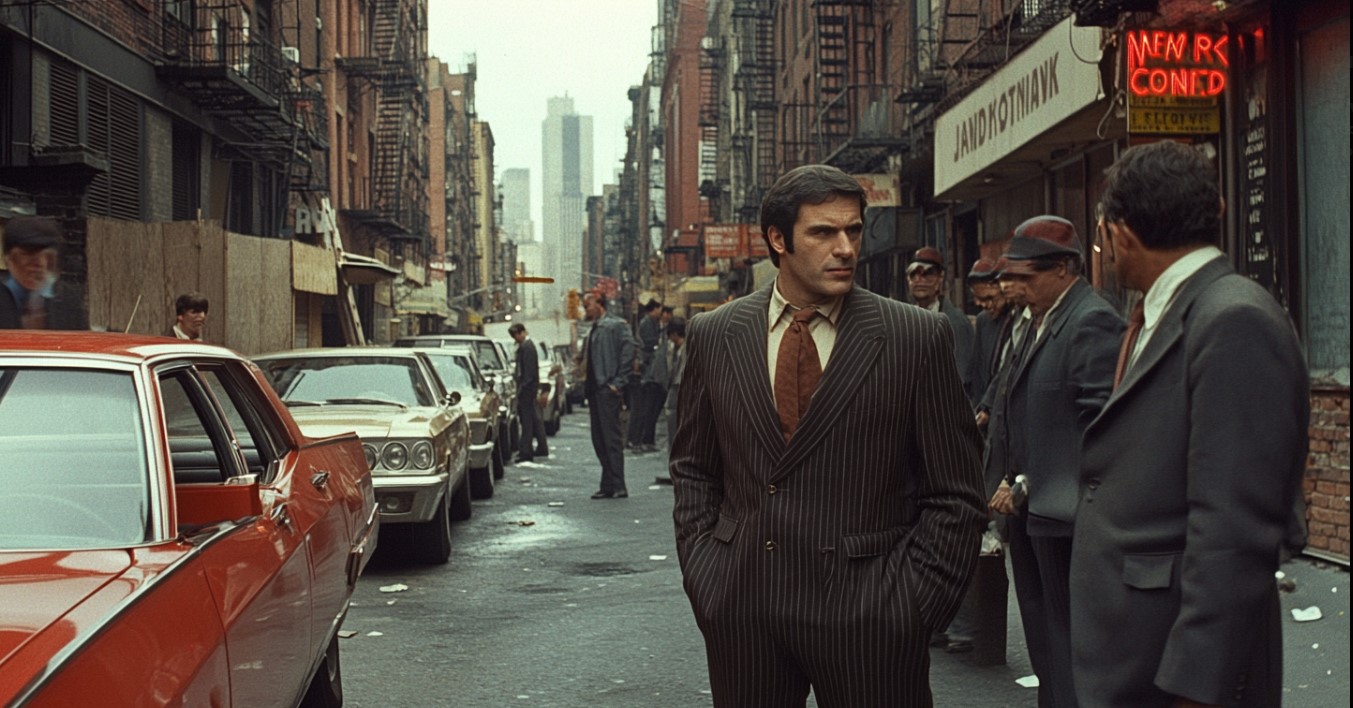
Vincent Gigante was born in 1928 in the Bronx to Italian immigrant parents. The neighborhood shaped him quickly.
Mid-century New York offered endless opportunities for ambitious young criminals willing to use intimidation and violence. Street gangs, gambling operations, labor racketeering, loansharking, and Mafia influence saturated many working-class neighborhoods. Gigante entered that world early through gang associations and underworld relationships tied to the powerful Luciano-Genovese organization.
Unlike intellectual strategists such as Meyer Lansky or politically polished operators like Frank Costello, Gigante projected physical menace naturally. He had been a boxer in his youth. People remembered the hands first.
The Costello Shooting
Gigante first entered national organized crime history dramatically in 1957. That year, Vito Genovese sought control of the Luciano crime family from reigning boss Frank Costello. Genovese allegedly selected Gigante to carry out the assassination attempt.
The shooting became one of Mafia history’s defining moments. Gigante approached Costello outside his Manhattan apartment building and fired. Miraculously, Costello survived with only a grazing wound to the head.
According to legend, Costello looked directly at Gigante during the attack and recognized him immediately. Yet Costello refused to identify the shooter officially. That silence likely saved Gigante’s life.
And elevated his standing permanently within organized crime.
Rise Through the Genovese Family
After Genovese consolidated power, Gigante rose steadily through the organization.
The Genovese family operated differently from many rival Mafia groups. Law enforcement officials frequently described it as exceptionally secretive, disciplined, and resistant to informants. Publicity was discouraged. Internal structure remained tightly controlled. Violence occurred strategically rather than theatrically. Gigante fit that culture perfectly.
He built influence through loansharking, gambling, extortion, labor racketeering, and political relationships while avoiding unnecessary visibility. Unlike flamboyant gangsters such as John Gotti, Gigante despised media attention.
Attention created vulnerability. Gigante preferred shadows.
The “Oddfather”
By the 1970s and 1980s, Gigante had become the dominant force within the Genovese family. Then came the performance.
Gigante increasingly appeared in public behaving bizarrely—wandering bathrobe-clad through neighborhoods, mumbling incoherently, staring blankly, or acting disoriented around ordinary people. Lawyers and medical experts repeatedly argued he suffered severe mental illness rendering him incompetent for prosecution.
Federal authorities became furious. Because the act worked.
For years, Gigante avoided major legal consequences partly through endless competency disputes and psychiatric evaluations. Prosecutors believed he was orchestrating one of the most elaborate deception campaigns in organized crime history.
The press eventually nicknamed him “The Oddfather.” Gigante likely hated that.
A Quiet Empire
While pretending madness publicly, Gigante allegedly ruled an enormous criminal empire privately.
Federal investigations connected the Genovese family to gambling, construction corruption, labor racketeering, loansharking, waterfront influence, extortion, and infiltration into legitimate businesses throughout New York and beyond. Gigante reportedly governed through layers of insulation and trusted intermediaries.
Meetings happened carefully. Orders traveled indirectly. Exposure remained minimal.
Unlike flashy bosses who craved recognition, Gigante valued invisibility. He reportedly became enraged by gangsters seeking media attention because publicity attracted federal surveillance and political pressure.
In many ways, he represented a return to old Mafia discipline. Quiet. Secretive. Patient. Dangerous.
John Gotti and Mafia Contrast
Gigante’s hatred of public visibility created an especially interesting contrast with John Gotti during the 1980s and 1990s. Gotti embraced celebrity. Gigante viewed celebrity as stupidity.
According to numerous accounts, Gigante deeply disapproved of Gotti’s media exposure and courtroom theatrics. Some reports even suggested Gigante supported assassination plots against Gotti following the Gambino boss’s reckless public behavior.
Whether true or not, the contrast reflected two competing Mafia philosophies. Gotti turned organized crime into performance. Gigante treated it like espionage.
The Genovese family generally survived longer and more quietly because of that mentality.
The FBI Closes In
Eventually, the insanity defense began collapsing.
Federal prosecutors gathered increasing evidence suggesting Gigante functioned normally during private Mafia meetings while performing mental instability publicly. Informants and surveillance operations described a calculating organized crime leader carefully managing criminal operations behind the scenes.
The act had limits. Especially once multiple insiders cooperated.
By the 1990s, prosecutors finally secured major racketeering charges against Gigante connected to organized crime leadership activities. The evidence became overwhelming. Even then, the bathrobe remained.
Conviction and Collapse
In 1997, Gigante was convicted on racketeering and conspiracy charges.
The conviction marked one of the federal government’s biggest victories against traditional organized crime leadership. Prosecutors successfully argued that Gigante had orchestrated a massive deception campaign regarding his mental health for decades.
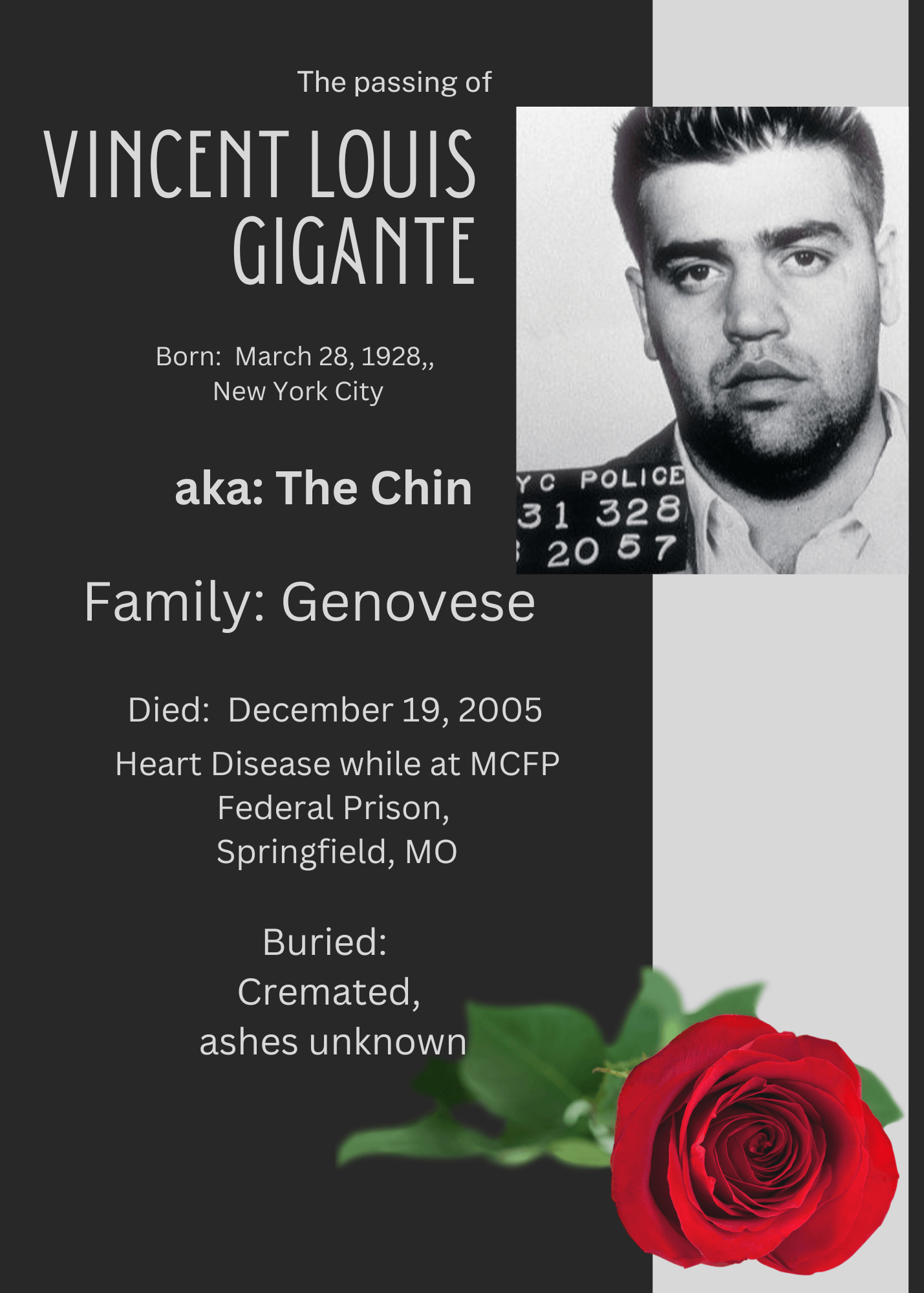
Later, Gigante himself effectively admitted the insanity act had been largely fabricated. One of the greatest performances in Mafia history finally ended in a courtroom. He spent his remaining years imprisoned while his health declined steadily. Vincent Gigante died in 2005.
The Last Old-School Boss
Gigante came to symbolize the final generation of deeply traditional Mafia leadership before organized crime weakened dramatically under RICO prosecutions, surveillance technology, and informant cooperation.
He avoided celebrity. Avoided interviews. Avoided public glamour. Unlike modern criminal figures obsessed with visibility, Gigante understood power worked best when hidden.
That philosophy made him extraordinarily difficult to prosecute for years.
The Legacy of Vincent “The Chin” Gigante
Vincent Gigante remains one of the strangest and most fascinating figures in organized crime history because he weaponized perception itself.
He turned madness into strategy. Or perhaps strategy into madness. Maybe after decades inside organized crime, the line blurred permanently even for him.
Unlike flamboyant gangsters such as Bugsy Siegel or media-driven bosses like John Gotti, Gigante represented the Mafia at its quietest and most disciplined.
He understood something ancient about power: The less people truly see you, the more dangerous you become.
In noir terms, Vincent Gigante was the old man mumbling beneath a bathrobe on a cold New York sidewalk while entire criminal empires moved silently behind his half-closed eyes.
Buried at: Created. Ashes unknown.
|