Owney “The Killer” Madden: The Gentleman Killer of Broadway
Owney Madden dressed like a nightclub owner, spoke with polished confidence, and carried himself with the smooth elegance of a man born for expensive rooms.
He was also a killer.
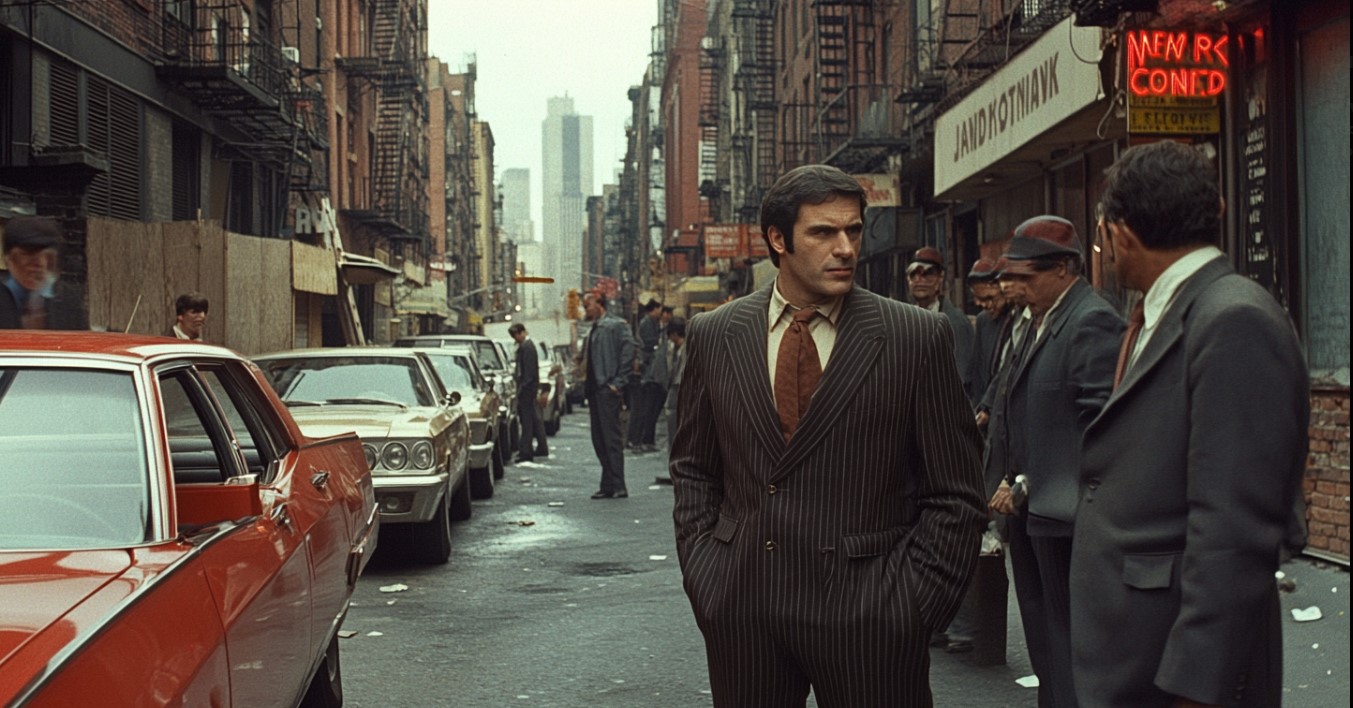
That contradiction defined Madden’s entire life. Unlike the rough street predators who clawed their way upward through public violence and crude intimidation, Madden cultivated sophistication. He preferred tuxedos to trench coats, champagne to whiskey bottles smashed across saloon floors, and jazz clubs glowing beneath Manhattan neon instead of dark alleyway social clubs.
Yet beneath the elegance stood one of the most feared gangsters of the Prohibition era.
Owney Madden helped transform organized crime into nightlife itself. Broadway clubs, bootlegging empires, speakeasies, corrupt politicians, musicians, dancers, and gunmen all drifted through his orbit. He understood something many gangsters eventually learned:
People will forgive almost anything if you make them feel glamorous while it happens. For years, Madden sold America exactly that illusion.
From England to Hell’s Kitchen
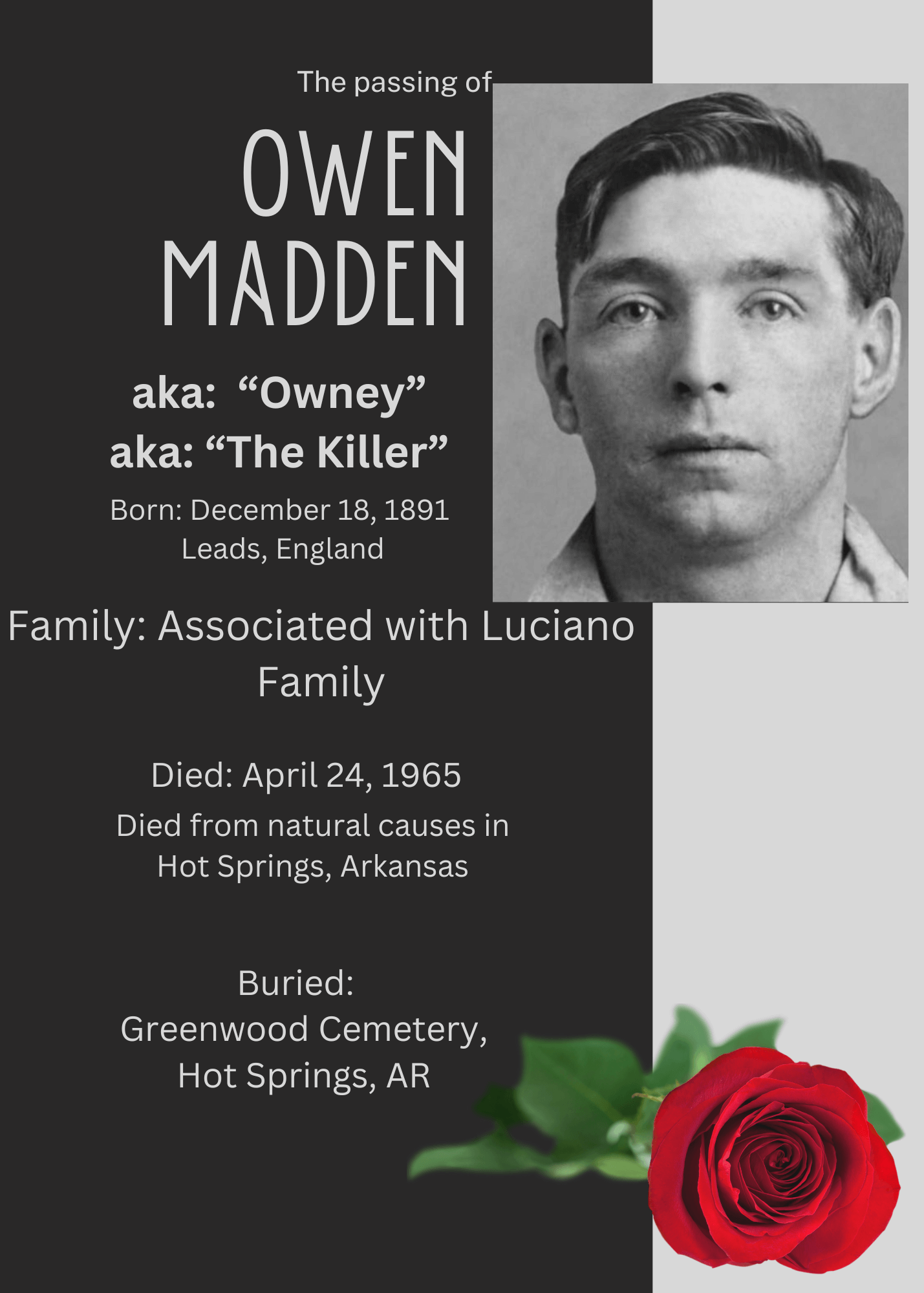
Owney Madden was born Owen Vincent Madden in Leeds, England, in 1891 before immigrating to New York City as a child.
His family settled in Hell’s Kitchen, one of the roughest neighborhoods in Manhattan during the late nineteenth and early twentieth centuries. Poverty, gang warfare, political corruption, and street violence shaped daily survival there. Children learned quickly which corners belonged to which crews and which names carried dangerous weight.
Madden adapted naturally.
By his teenage years, he had joined the notorious Gopher Gang, one of New York’s feared street organizations operating through robbery, extortion, gambling, and violence. Hell’s Kitchen gangs fought constantly for territory and political influence, often functioning as unofficial enforcement arms for corrupt political machines.
Madden stood out because he combined intelligence with ruthlessness. He looked calm while others lost control. That quality made him dangerous.
The First Kill
Violence entered Madden’s life permanently at a young age.
In 1910, he was convicted for murder after a deadly street confrontation involving rival gangsters. Madden reportedly shot and killed a man during the conflict and received a lengthy prison sentence at Sing Sing Correctional Facility.
Prison hardened him further. But it also refined him.
Unlike impulsive gangsters who emerged from incarceration more reckless, Madden came out sharper, more disciplined, and far more ambitious. He had watched organized crime evolve while behind bars and recognized that the future belonged not merely to street gangs but to large-scale criminal enterprises connected to politics, nightlife, and enormous streams of money.
Then Prohibition arrived. And suddenly America handed gangsters a fortune.
Prohibition and the Broadway Empire
When alcohol became illegal in 1920, organized crime exploded into a national industry.
Americans continued drinking enthusiastically despite federal law, creating massive black-market demand for liquor. Gangsters who could control supply routes, political protection, and nightlife venues became incredibly wealthy almost overnight.
Owney Madden thrived in that environment.
Unlike bootleggers focused solely on distribution, Madden understood presentation. He built influence through Manhattan nightlife, especially along Broadway, where jazz clubs, speakeasies, dancers, musicians, and wealthy customers blended into a glamorous underground economy fueled by illegal alcohol.
Madden became deeply associated with famous establishments including the Cotton Club in Harlem, one of the most legendary nightlife venues of the Jazz Age.
The club symbolized the contradictions of the era.
Elegant white customers drank illegally while Black performers created some of the greatest jazz music in American history beneath gangster management and racial segregation. Entertainment, exploitation, glamour, and organized crime all existed together under the same roof.
Madden profited enormously.
The Cotton Club and Harlem Nights
Though the Cotton Club became famous primarily through performers like Duke Ellington, Madden’s influence behind the scenes helped shape the venue’s operations during its peak years.
The Cotton Club represented more than entertainment. It was a machine.
Liquor flowed constantly despite Prohibition. Politicians, celebrities, gangsters, entertainers, and wealthy socialites filled the club nightly beneath cigarette smoke and jazz rhythms. Organized crime figures recognized early that nightlife could generate not only money but influence.
Madden excelled at managing both.
Unlike many gangsters who intimidated publicly, he cultivated relationships socially. He moved comfortably among businessmen, performers, corrupt officials, and underworld figures alike.
People often forgot they were dealing with a murderer. That was intentional.
Bootlegging and Violence
Despite Madden’s polished image, violence remained central to his empire.
Bootlegging during Prohibition was warfare disguised as business. Rival gangs battled constantly over distribution territories, supply chains, and political protection. Madden’s operations reportedly became connected to multiple killings, bombings, and enforcement attacks throughout New York.
He rarely needed to pull triggers personally anymore. Power changes that.
By the 1920s, Madden had evolved from street gunman into organized crime executive. Others carried out violence on his behalf while he focused increasingly on managing profits, clubs, liquor distribution, and political relationships.
Still, the old instincts never disappeared entirely. Associates understood Madden’s calm demeanor concealed lethal capability. He projected sophistication precisely because he no longer needed to prove himself physically.
Fear already existed.
The Broadway Celebrity Gangster
Madden belonged to a generation of gangsters who became intertwined with American celebrity culture.
Journalists covered him. Nightclub owners respected him. Broadway personalities encountered him constantly.
Unlike traditional Mafia bosses who preferred secrecy, Madden moved visibly through elite nightlife circles. Yet he maintained a more refined image than many contemporaries. He resembled a businessman operating inside vice industries rather than a stereotypical street thug.
That image helped protect him. People often romanticize criminals who appear stylish enough.
Hollywood later built entire noir archetypes from figures like Madden: elegant gangsters in tailored suits running jazz clubs beneath city lights while violence lurked invisibly nearby.
The fantasy concealed ugly realities. Behind the music stood extortion. Behind the champagne stood corruption. Behind the glamour stood bodies.
The End of Prohibition
When Prohibition ended in 1933, many bootlegging empires collapsed or transformed rapidly.
Madden adapted better than most.
Rather than disappearing with the illegal liquor trade, he shifted increasingly toward legitimate or semi-legitimate business operations connected to entertainment and hospitality. He relocated much of his later life activity to Arkansas, where he became involved with hotels, clubs, and gambling interests in Hot Springs.
Even there, organized crime influence remained close.
Hot Springs during the mid-twentieth century functioned as a strange blend of resort town, gambling hub, and underworld sanctuary where gangsters, politicians, entertainers, and wealthy visitors mixed freely.
Madden fit naturally into the atmosphere.
Older now, he projected more businessman than gangster publicly. But law enforcement never entirely stopped viewing him as a major organized crime figure tied to earlier violence and bootlegging operations.
Death and Reinvention
Owney Madden died in 1965 at age seventy-three.
Unlike many gangsters of his era, he avoided assassination, lengthy federal collapse, or public disgrace. He survived by evolving constantly—street gangster, bootlegger, nightclub king, businessman. The transformations kept him alive.
And they helped turn him into legend.
The Legacy of Owney Madden
Owney Madden represented organized crime at its most seductive.
He understood nightlife as power long before Las Vegas corporations or celebrity nightclub empires existed. He recognized that organized crime could sell fantasy as effectively as fear. Jazz clubs, elegant bars, beautiful dancers, expensive liquor, and neon-lit nights all became part of the business model.
He helped invent the glamour of the American underworld. That glamour came soaked in corruption and violence. Unlike colder Mafia strategists such as Carlo Gambino or terrifying enforcers like Albert Anastasia, Madden occupied a stranger cultural space.
Part gangster. Part nightclub impresario. Part Broadway myth. He moved through Jazz Age New York like a noir character stepping between champagne towers and crime scenes beneath electric city lights.
Owney Madden made organized crime look elegant. That elegance hid how brutal the business really was.