Joseph Colombo and the Victim’s Narrative
Article 4 in the Series: “The Blame Game: Mobsters Who Could Never Admit They Were the Problem”
Gunfire at Columbus Circle
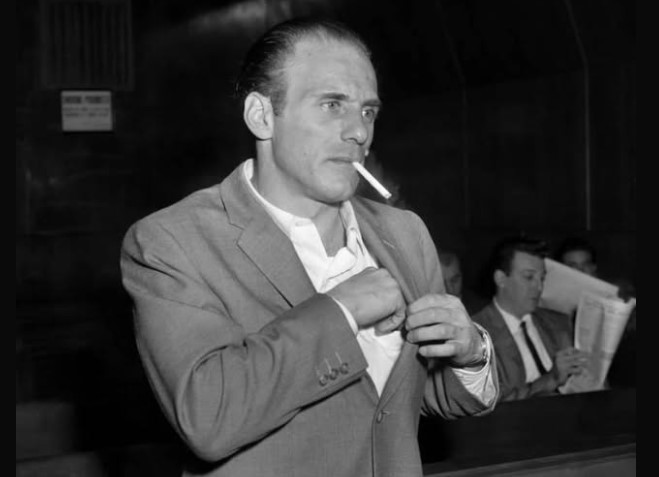
On June 28, 1971, thousands of people gathered in Manhattan’s Columbus Circle for what was supposed to be a celebration. Flags waved in the summer heat. Music drifted through the crowd. Speakers prepared to address supporters gathered for the annual rally of the Italian-American Civil Rights League. Then gunfire shattered the event.
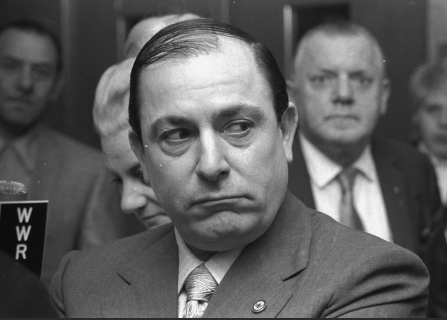
As chaos erupted, Joseph Colombo collapsed to the ground, mortally wounded. Although he survived the shooting, he never regained consciousness and remained incapacitated until his death years later. The attack stunned New York and instantly became one of the most controversial moments in Mafia history.
To many observers, Colombo appeared to be the victim of forces beyond his control. He was portrayed as a community leader targeted by enemies, a champion of Italian Americans punished for speaking out. Yet beneath the public image was a more complicated reality. Long before the shooting at Columbus Circle, Colombo had developed a habit shared by many powerful mobsters: whenever problems emerged, someone else was responsible.
The Man Who Was Always the Victim
The government was persecuting Italian Americans. The media was spreading lies. Federal investigators were conducting vendettas. Critics were motivated by prejudice. Rivals were undermining him.
According to Colombo’s narrative, nearly every conflict in his life originated with someone else’s actions. What he rarely acknowledged was the possibility that many of the crises surrounding him were consequences of decisions he had made himself.
| The First Colombo War: Blood, Tribute, and Betrayal |
Choosing the Spotlight Over the Shadows
Joseph Colombo rose to power during a period when organized crime was becoming increasingly vulnerable. Federal law enforcement agencies were expanding their efforts against the Mafia. Public awareness of organized crime was growing. Congressional hearings, criminal prosecutions, and investigative journalism were shining light into corners of the underworld that had once remained hidden.
Many mob bosses responded by retreating deeper into the shadows. Colombo chose a different path.
In some ways, he was the opposite of the traditional Mafia leader. Instead of avoiding public attention, he embraced it. Rather than operating quietly behind the scenes, he stepped into the spotlight and became a recognizable public figure. Through the Italian-American Civil Rights League, he positioned himself as a defender of ethnic pride and a critic of government overreach.
The organization attracted substantial support. Many Italian Americans genuinely felt frustrated by stereotypes that linked their heritage to organized crime. Hollywood films, newspaper articles, and television reports frequently reinforced those associations. Colombo recognized an opportunity and seized it.
The problem was that he blurred the line between legitimate advocacy and personal ambition.
| Carmine Galante and the Empire He Destroyed Himself |
The Italian-American Civil Rights League
While the League addressed real concerns about discrimination, it also provided Colombo with something he clearly enjoyed: attention. Reporters covered his speeches. Television cameras followed his activities. Public officials responded to his statements. For a Mafia boss, it was an extraordinary level of visibility.
That visibility came with consequences.
Traditional organized crime leaders understood that publicity often creates risk. Every newspaper article attracts scrutiny. Every television appearance generates interest. Every public statement invites investigation. For decades, Mafia bosses had survived by avoiding the spotlight. Colombo seemed convinced that he could rewrite those rules.
As his profile grew, so did concerns within organized crime itself.
Some mob leaders reportedly worried that Colombo’s activities were drawing unnecessary attention to the Mafia. Others feared that his public campaign would encourage investigators to look more closely at organized crime operations. Whether those concerns were entirely justified is almost beside the point. What matters is that Colombo consistently appeared unable to recognize why others might view his behavior as dangerous.
Instead, criticism became evidence of hostility.
| Joe Massino and the Empire of Excuses |
When Criticism Became Conspiracy
This pattern would define much of Colombo’s career. Whenever opposition emerged, he often interpreted it as proof that someone else was acting unfairly. If government agencies investigated him, they were persecuting him. If journalists questioned his motives, they were biased. If rivals expressed concern, they were jealous or disloyal.
The possibility that his own decisions might be contributing to these problems rarely seemed to receive equal consideration.
This mindset became particularly evident in his public battle against federal authorities. Colombo frequently portrayed the government as the aggressor in a campaign against Italian Americans. Certainly, prejudice existed, and many people of Italian descent felt unfairly stereotyped. Yet Colombo often ignored an uncomfortable fact.
Federal investigators were not interested in him because of his ethnicity. They were interested in him because authorities believed he was a Mafia boss involved in organized criminal activity. That distinction mattered.
Turning Investigation Into Persecution
By framing every investigation as discrimination, Colombo transformed legitimate law enforcement scrutiny into evidence supporting his personal narrative. It allowed him to position himself as a victim rather than a subject of investigation. More importantly, it insulated him from self-reflection. If every problem was caused by prejudice, there was little reason to examine his own conduct.
The strategy proved effective for a time.
Colombo attracted supporters, generated headlines, and became one of the most recognizable figures in organized crime. Yet public visibility is a double-edged sword. The same attention that fuels influence also attracts enemies. Every speech, every interview, and every appearance increased the number of people paying attention to him.
Many mob bosses spend their careers trying to avoid becoming famous. Colombo seemed determined to become exactly that.
| Five Families: Blood, Power, and the Empire Beneath New York |
A Mafia Boss Who Became a Public Symbol
As his profile expanded, tensions reportedly grew both inside and outside organized crime circles. The Mafia has always depended on discretion. Criminal organizations thrive when they remain invisible. Colombo’s activities challenged that principle. Whether intentionally or not, he transformed himself into a symbol, and symbols often become targets.
The irony is that Colombo frequently presented himself as a defender of his community against outside forces while failing to recognize how his own choices were contributing to the pressure surrounding him. Public controversy did not simply happen to him. In many respects, he actively invited it.
This tendency to externalize blame is common among powerful leaders. Success is interpreted as proof of brilliance. Failure becomes evidence of sabotage. Criticism is dismissed as jealousy or prejudice. Over time, the leader constructs a worldview in which personal responsibility gradually disappears.
Colombo’s career followed this pattern with remarkable consistency.
The Dangers of Becoming Famous
When opposition emerged, he searched for enemies. When problems intensified, he identified villains. The answer was always outside himself. Government agencies, journalists, rival gangsters, political figures, and cultural institutions all became convenient explanations for the challenges he faced.
Yet reality has a way of ignoring personal narratives.
By the early 1970s, Colombo had become one of the most visible Mafia figures in America. Visibility creates vulnerability. Whether the threats came from rival criminals, internal disputes, or other forces remains the subject of debate among historians and investigators. What is beyond dispute is that Colombo occupied a position that would have been unthinkable for most traditional Mafia bosses.
He had become famous.
The Shooting That Changed Everything
On that June afternoon in 1971, the consequences of that visibility arrived in dramatic fashion. The shooting at Columbus Circle ended not only Colombo’s public campaign but also his ability to shape the narrative surrounding his life. For years afterward, observers debated who was responsible and why. Numerous theories emerged, and many questions remain unanswered.
What is clearer is the broader lesson.
Joseph Colombo spent much of his career portraying himself as a victim of forces beyond his control. He blamed prejudice, government agencies, critics, and rivals for many of the difficulties he encountered. Some of those factors undoubtedly existed. However, they do not fully explain his story. His own decisions played a significant role.
The Choices That Created the Risk
He chose publicity over discretion. He chose confrontation over caution. He chose to place himself at the center of public controversies that most Mafia leaders would have avoided entirely. Those choices generated opportunities, but they also generated risks.
The tragedy of Joseph Colombo’s story is not simply that he was shot. It is that he appeared unable to recognize how much of the danger surrounding him had been created by his own actions. Like many powerful figures, he viewed himself as the target of other people’s schemes while overlooking the role he played in creating the conditions for conflict.
The Enemy He Never Blamed
That is why he belongs in The Blame Game: Mobsters Who Could Never Admit They Were the Problem. His story is not merely about organized crime, ethnic politics, or public relations. It is about the human tendency to blame external forces for problems we help create ourselves.
In the end, Joseph Colombo spent years fighting enemies he could see—government investigators, journalists, critics, and rivals. The enemy he never fully confronted was the one created by his own ambition, ego, and relentless desire for attention. Like many mob bosses before and after him, he mistook consequences for persecution and criticism for conspiracy.
By the time reality caught up with him, it was too late to change the story.
| Joe Colombo |
References:
Colombo, Joseph A. The Colombo Family: The New York Mafia Dynasty. Various historical interviews and public statements.
Raab, Selwyn. Five Families: The Rise, Decline, and Resurgence of America’s Most Powerful Mafia Empires. New York: St. Martin’s Press, 2005.
Capeci, Jerry. The Complete Idiot’s Guide to the Mafia. New York: Alpha Books, 2002.
Critchley, David. The Origin of Organized Crime in America: The New York City Mafia, 1891–1931. New York: Routledge, 2009.
United States Senate. Organized Crime Hearings and Reports Relating to La Cosa Nostra. Washington, DC: U.S. Government Printing Office.
Abadinsky, Howard. Organized Crime. 10th ed. Belmont, CA: Wadsworth Publishing, 2013.
DeStefano, Anthony M. The Deadly Don: Vito Genovese, Mafia Boss. New York: Citadel Press, 2008.
Sifakis, Carl. The Mafia Encyclopedia. New York: Facts on File, 2005.