The Ant’s Shadow: Tony Spilotro, Phoenix’s Underworld, and the Men Who Worked in the Dark
The desert had its own secrets. Beneath Phoenix’s sunshine and its growing suburban neighborhoods, an underworld of stolen merchandise, narcotics, gambling, and organized crime was taking shape during the 1970s. The men involved did not always look like gangsters, and their business did not always involve a gunman standing outside a nightclub. Sometimes it meant a burglary crew breaking into a home, a shipment of stolen electronics heading toward Mexico, or a load of narcotics moving through a chain of dealers toward Chicago.
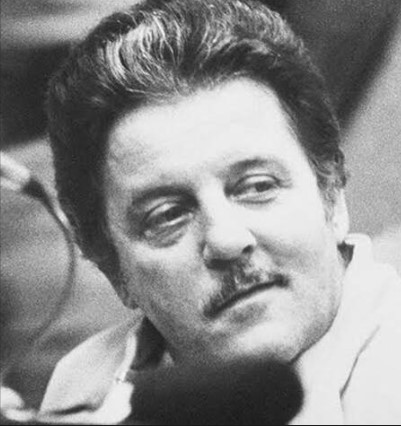
One name connected to this shadow economy belonged to a man whose reputation had already been forged in the bloodiest corners of the Chicago underworld: Anthony “Tony the Ant” Spilotro. A Chicago Outfit enforcer sent west to protect the Mob’s interests in Las Vegas, Spilotro developed criminal connections that reached beyond Nevada. Among the figures associated with a Phoenix burglary-and-narcotics operation were Paul Schiro and a local man named Frank Moreno. Their story offers a glimpse into the sprawling criminal networks that operated across state lines—and the violent Mafia figure whose ambitions helped make the American Southwest part of his world.
A Chicago Childhood in the Shadow of the Mob
Anthony John Spilotro was born in Chicago on May 19, 1938, one of six sons in an Italian-American family. His parents operated a restaurant in a neighborhood where local mobsters were familiar faces. The family business gave the young Spilotro an early view of the men who occupied Chicago’s criminal hierarchy, although the existence of those connections alone cannot explain the violent course his life would take.
He left high school without graduating and began accumulating arrests while still young. By his early twenties, he had attracted the attention of established Outfit figures, including Sam “Mad Dog” DeStefano, a notorious loan shark and enforcer whose reputation for sadism made him one of Chicago’s most feared criminals. Spilotro proved himself useful in a world where loyalty was measured less by promises than by what a man would do when someone needed to be frightened, beaten, or eliminated.
The incident that helped define his reputation occurred in 1962, when Billy McCarthy and Jimmy Miraglia were murdered in what became known as the M&M murders. The two men had allegedly committed crimes against people connected to the Outfit, crossing a boundary that mobsters considered dangerous. Spilotro was accused of participating in their killings, and accounts of the murders included a particularly gruesome allegation that he had placed McCarthy’s head in a vise during an interrogation. Spilotro was never convicted of the murders, but the episode became central to his reputation as a man willing to employ extraordinary brutality.
His connections to DeStefano brought further trouble. Spilotro was indicted in 1972 in connection with the 1963 murder of real estate broker Leo Foreman, whose killing had also been associated with DeStefano’s criminal circle. Spilotro was acquitted in 1973. DeStefano himself was killed before the case went to trial, leaving behind a legacy of violence that had helped shape the younger gangster.
By the time Spilotro reached his early thirties, he had become an experienced Outfit operative with a reputation for surviving criminal investigations. He had also learned an important lesson: violence could establish authority, but money gave that authority a purpose.
| Sin City’s Bloody Accountant: The Dark Rise and Brutal Fall of Gus Greenbaum |
Las Vegas: The Ant Gets His Assignment
In 1971, Chicago Outfit leadership sent Spilotro to Las Vegas. His assignment was to protect the organization’s interests, particularly the illegal diversion of casino profits known as the skim. The Outfit had invested in the city’s gambling industry, and casino executives, bookmakers, and criminal intermediaries occupied overlapping worlds in which enormous sums could move without appearing on ordinary business ledgers.
Frank “Lefty” Rosenthal operated casinos associated with the Outfit’s interests, while Spilotro served as the street-level figure expected to protect those interests from interference. His job was not to sit behind a casino desk. He was there to make sure problems stayed manageable, rivals understood the boundaries, and the people responsible for the operation could continue doing business.
But Spilotro had a weakness that would eventually become a liability: he wanted more than the assignment required.
He began expanding into burglary, fencing stolen property, bookmaking, and loansharking. He also developed a reputation for operating independently of the men who had sent him west. His violent temperament and appetite for personal profit brought him money, but they also attracted police attention and threatened the secrecy upon which the Outfit’s casino interests depended.
Spilotro opened the Gold Rush, a Las Vegas pawnshop that became associated with the sale of stolen merchandise. The shop provided an outlet for valuables acquired by burglars, allowing stolen property to be converted into cash. It was an arrangement that made practical criminal sense, but it also created a visible connection between the street criminals doing the stealing and the man who stood to profit from their work.
As authorities increased their scrutiny, Spilotro’s position became increasingly precarious. Nevada gaming regulators placed him in the state’s Black Book in 1978, barring him from casinos. The decision struck at the heart of his official role, but it did not end his criminal activities.
Instead, the burglary business grew into one of the most notorious chapters of his career.
| Operation Strawman. The Mob’s Paper Empire Crumbles in Las Vegas |
Phoenix: Another Piece of the Criminal Map
Arizona offered Spilotro opportunities beyond Las Vegas. Contemporary reporting described a criminal network in Phoenix in which Spilotro and Paul Schiro were associated with burglary and narcotics activities. Schiro was identified as a local criminal figure whose connections extended into the wider underworld, including relationships involving Umberto Mancini, a former business partner described in the reporting as a close friend of Joe Bonanno.
The Phoenix operation reportedly dealt in a variety of stolen goods, ranging from household electronics and jewelry to industrial equipment and dental gold. Its alleged narcotics activities extended beyond Arizona, with the network described as supplying a significant portion of the hard drugs sold on Chicago streets. The full scope of that business was not established in the available contemporary account, but the reported connections illustrate how regional criminal enterprises could serve markets hundreds of miles away.
This was not a story of a single gang committing isolated burglaries. The alleged operation depended on the movement of goods, access to buyers, and connections between men who occupied different levels of the criminal economy. A stolen television was valuable only if someone could move it and sell it; industrial equipment required a different kind of buyer, while narcotics demanded its own supply and distribution arrangements.
The Phoenix network also existed in a competitive environment. Organized-crime interests associated with Chicago and New York were active in the region, and the presence of Bonanno-linked figures suggested that Arizona was not exclusively under the influence of one criminal organization. Such overlapping interests could create opportunities for cooperation, but they also carried the potential for rivalry.
For Spilotro, Phoenix represented another opportunity to extend his influence and profit from criminal activity beyond the casino skim. It also meant more associates, more transactions, and more exposure to law enforcement.
| Atomic Cocktails and Mob Cash: The Strange Marriage of Nuclear Tourism and Organized Crime |
Frank Moreno and the Men in the Background
Among the names identified in contemporary reporting on the Phoenix ring was Frank Moreno, described as a Phoenix-based associate. Fred Pedote, Arden Lee Smith, and Brian Ho, nicknamed “The Mad Pineapple,” were also identified in connection with the operation. Smith was described as a major narcotics dealer who had fled to Mexico to avoid a jail term, while Ho was characterized as a weapons and drug dealer.
Moreno’s appearance in the account is particularly interesting because he represents the kind of figure who can disappear from popular Mafia histories. Spilotro’s name became notorious, and Schiro’s criminal connections later received attention in investigations of the Chicago Outfit. Moreno, by contrast, remains a less clearly documented name in the surviving account examined for this article.
The available evidence identifies him as an associate of the Phoenix network, but it does not establish his precise position, personal history, or eventual fate. It would be premature to describe him as a formally inducted Mafia member or to assign him particular crimes without additional records. That does not make his name unimportant. Criminal enterprises depended on local relationships, and the men who handled property, transportation, and other practical details could be essential to an operation even when they never reached the public prominence of its leaders.
What matters is the broader picture: the Phoenix network was described as a combination of burglary and narcotics activity, with connections reaching into the Chicago underworld. Moreno’s name belongs to that historical trail, even if his individual role remains unresolved.
| The Desert Laundromat: How Mob Money Became Legit in Las Vegas |
The Hole in the Wall Gang
By the latter half of the 1970s, Spilotro’s Las Vegas criminal activities were increasingly associated with a burglary crew that became known as the Hole in the Wall Gang. Led operationally by childhood friend Frank Cullotta, the crew specialized in breaking into homes and businesses, sometimes cutting through walls or roofs to bypass security systems.
The name captured the gang’s methods, but the operation was no joke. Burglary required planning, tools, transportation, buyers, and a willingness to take risks that could lead to long prison sentences. Jewelry and other valuables could bring substantial returns, especially when the stolen goods passed through established fencing channels. Cullotta later described the scale of the crew’s operations in Las Vegas as extensive.
Spilotro’s relationship with Cullotta illustrated how personal loyalty and criminal business could become intertwined. The two men had known each other since childhood, and Cullotta became one of Spilotro’s trusted associates in Nevada. Yet the same closeness that made Cullotta valuable also made him a potential threat if their relationship collapsed.
In July 1981, members of the Hole in the Wall Gang were arrested during a burglary attempt at Bertha’s, a furniture and jewelry store in Las Vegas. Investigators had been watching the operation, and the arrests dealt a serious blow to the crew. Cullotta eventually cooperated with authorities after becoming convinced that Spilotro’s circle posed a danger to him.
The case demonstrated the weaknesses of a criminal enterprise built on secrecy and trust. One informant could expose years of activity, identify associates, and help investigators reconstruct relationships that had previously been difficult to prove.
The Ant’s Final Reckoning
Spilotro’s criminal career was marked by repeated legal battles, allegations of violence, and growing friction with the Chicago Outfit. His aggressive behavior in Las Vegas attracted attention that threatened the organization’s ability to maintain its casino interests. The Outfit had sent him west to protect its business, but his expanding criminal activities and public notoriety increasingly made him a liability.
On June 14, 1986, Spilotro and his younger brother Michael were reported missing after traveling back to the Chicago area. Their bodies were discovered days later in an Indiana cornfield, and both men had been brutally beaten. The killings became one of the most notorious episodes in the history of the Chicago Outfit. In 2007, a federal court found Outfit leader James Marcello responsible for the murders as part of the broader Family Secrets case.
Spilotro’s death ended his personal criminal career, but it did not answer every question about the network of associates who had operated around him. The Phoenix operation remains a reminder that organized crime was rarely confined to the city where its most notorious figures lived. It moved through relationships, markets, stolen property, and the connections between men who rarely appeared together in public.
Frank Moreno’s name survives as one of the clues to that world. The available record does not tell us what became of him, but it places him among the associates identified in a Phoenix criminal network linked to Spilotro and Schiro. Further court files and contemporary reporting may yet reveal more.
The desert had its secrets, and the underworld rarely left a complete accounting. Some men became legends, others became informants, and many left behind little more than a name in an old report. In the shadow of Tony Spilotro, that fragment may be the beginning of a story rather than its end.
References:
- The Mob Museum. (n.d.). Tony Spilotro. https://themobmuseum.org/notable_names/tony-spilotro/
- The Mob Museum. (n.d.). Battle for Las Vegas. https://themobmuseum.org/digital-archive/battle-for-las-vegas/
- The Daily Iowan. (1977, March 31). “Mob” figures move in on Phoenix. University of Iowa Libraries Digital Newspaper Archive. https://dailyiowan.lib.uiowa.edu/DI/1977/di1977-03-31.pdf
- The Daily Iowan. (1977, April 6). Report on Arizona narcotics-smuggling networks and Anthony “Tony the Ant” Spilotro. University of Iowa Libraries Digital Newspaper Archive. https://dailyiowan.lib.uiowa.edu/DI/1977/di1977-04-06.pdf
- United States v. Spilotro, 800 F.2d 959 (9th Cir. 1986). https://law.justia.com/cases/federal/appellate-courts/F2/800/959/270618/
- United Press International. (1986, March 19). Alleged gangster denies paying off mob leader. UPI Archives. https://www.upi.com/Archives/1986/03/19/Alleged-gangster-denies-paying-off-mob-leader/1413511592400/
- Redmond, R. (2020, June 30). “Mobbed Up” podcast: Hole in the Wall—Part 7. Las Vegas Review-Journal. https://www.reviewjournal.com/crime/mobbed-up-podcast-hole-in-the-wall-part-7/