Joseph Colombo: The Mob Boss Who Stepped Into the Spotlight
Joe Colombo wanted to change the image of the Mafia.
That was his first mistake.
For decades, organized crime in America survived partly through silence. Bosses denied the Mafia existed. Politicians pretended not to see it. Witnesses disappeared, reporters speculated, and the underworld operated inside carefully maintained shadows. Then Joe Colombo walked directly into television cameras and began speaking publicly about Italian-American discrimination.
Suddenly, a Mafia boss was holding rallies. Giving interviews. Posing beside politicians and celebrities.
To some Italian-Americans, Colombo looked like a defender of ethnic pride against media stereotypes and government harassment. To federal authorities, he looked like a dangerous manipulator using civil rights language to shield organized crime.
To many fellow gangsters, he looked reckless. That tension followed Colombo through his entire rise to power and eventually ended in blood beneath the summer sun of Columbus Circle.
From Brooklyn Streets to Organized Crime
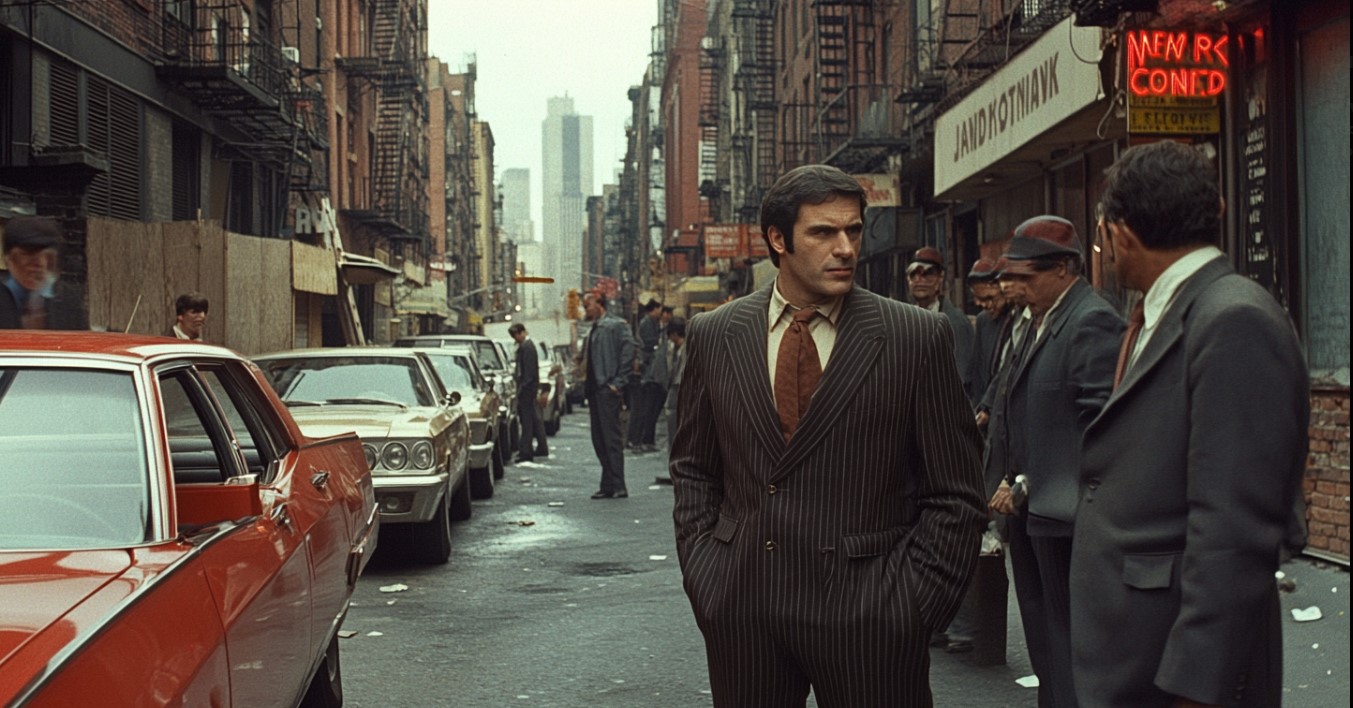
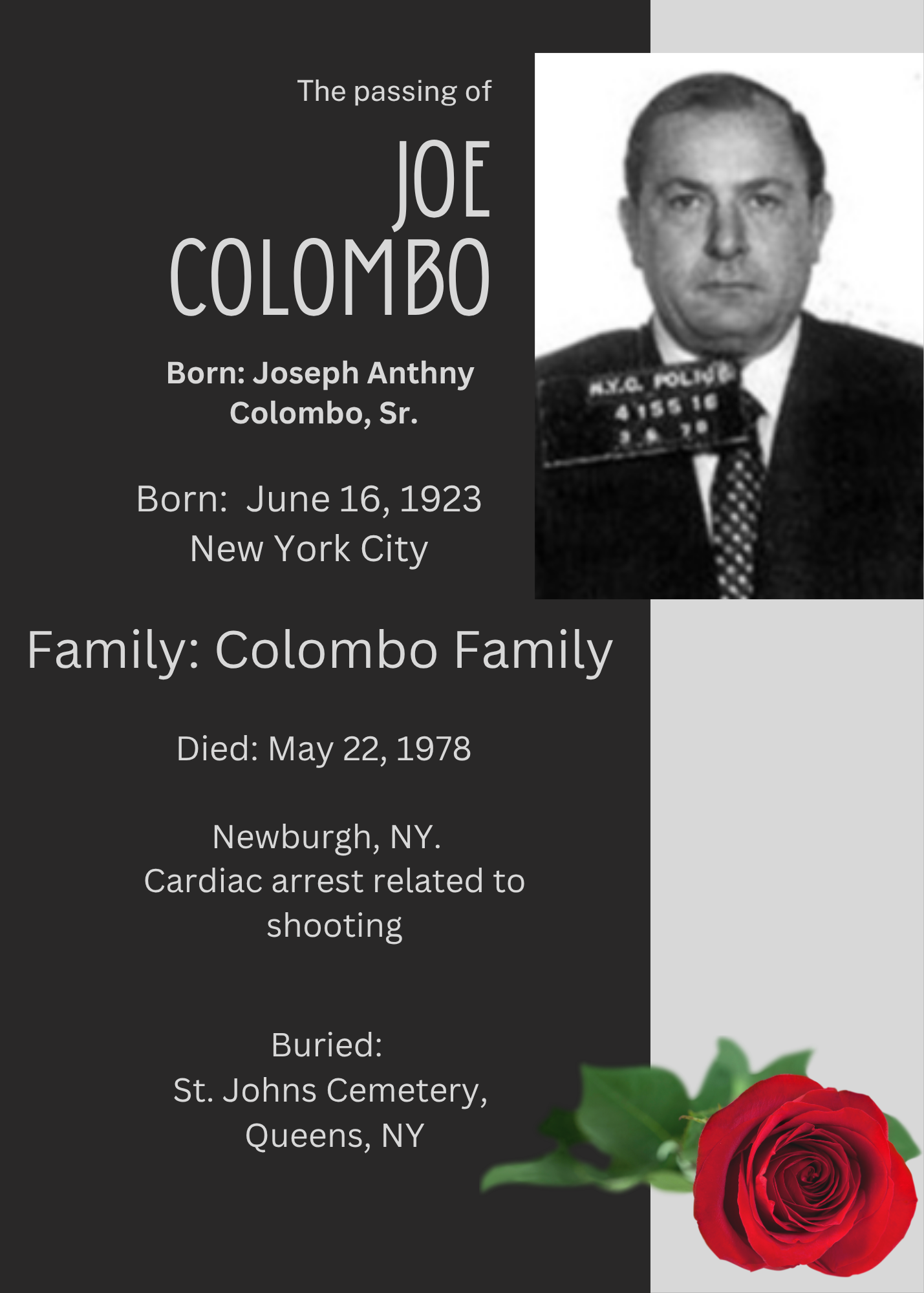
Joseph Colombo was born in Brooklyn in 1923 to an Italian immigrant family already connected indirectly to organized crime circles. His father reportedly worked within the criminal world before dying under suspicious circumstances when Colombo was young.
The environment shaped him early.
Brooklyn during the 1930s and 1940s existed inside overlapping systems of street gangs, political machines, labor rackets, gambling operations, and Mafia influence. Organized crime offered money, protection, and status to ambitious young men growing up in working-class neighborhoods where legitimate advancement often moved painfully slowly.
Colombo entered that world methodically. Unlike flamboyant gangsters who craved headlines immediately, the younger Colombo initially built his reputation quietly through loansharking, gambling, extortion, and racketeering operations connected to the Profaci crime family under Joe Profaci.
Profaci ruled his organization like an old Sicilian patriarch, demanding heavy tribute payments and absolute loyalty from subordinates. Many members resented his leadership style deeply.
Those resentments eventually exploded into violence.
The Profaci War
During the early 1960s, internal rebellion tore apart the Profaci family in what became known as the First Colombo War. The conflict centered largely around younger gangsters frustrated by Profaci’s greed, rigid leadership, and constant financial demands. One of the rebellion’s most aggressive figures was Joseph Gallo and his crew.
Kidnappings, assassinations, and revenge attacks spread across Brooklyn as factions fought for control. Colombo aligned himself with the loyalist side supporting Profaci leadership. That decision proved crucial.
When Profaci died in 1962 and interim leadership shifted through instability, Colombo emerged as a disciplined and dependable figure acceptable to powerful Mafia leaders outside the family. With backing from figures connected to The Commission, Colombo eventually became boss of the organization.
The family itself was later renamed the Colombo crime family in his honor. He was still relatively young compared to many Mafia bosses.
And unlike many of them, he enjoyed public attention.
A Different Kind of Mafia Boss
Colombo stood apart from traditional organized crime leaders because he possessed political instincts unusual within the Mafia.
He understood media. He understood symbolism. And most importantly, he understood television.
During the late 1960s and early 1970s, public discussion about organized crime intensified dramatically after congressional investigations, FBI campaigns, and high-profile prosecutions exposed Mafia operations nationally.
Italian-Americans often complained that Hollywood films, newspapers, and politicians unfairly portrayed their entire ethnic community as criminal. Colombo saw opportunity inside that frustration.
In 1970, he founded the Italian-American Civil Rights League.
Officially, the organization protested discrimination against Italian-Americans and objected to use of terms like “Mafia” and “Cosa Nostra” in media coverage. Public rallies attracted thousands of supporters waving Italian flags and cheering Colombo’s speeches.
The optics stunned America. A sitting Mafia boss was now presenting himself as a civil rights advocate.
The League and the Performance
The Italian-American Civil Rights League became both political movement and public spectacle. Celebrities attended events. Politicians appeared cautiously supportive. News cameras broadcast images of Colombo speaking passionately about ethnic pride and unfair treatment. He positioned himself as a defender of hardworking Italian-Americans against government stereotyping.
Many ordinary Italian-Americans genuinely supported parts of the message. Discrimination against Italian immigrants and their descendants had been real for decades. Colombo tapped into legitimate cultural resentment while carefully blending it with self-serving objectives.
The strategy infuriated federal authorities.
The Federal Bureau of Investigation believed Colombo used the League partly to intimidate investigators and complicate organized crime prosecutions by reframing them as ethnic persecution. Within the Mafia itself, reactions were mixed.
Some admired Colombo’s charisma and public influence. Others viewed him as dangerously visible.
Traditional Mafia culture depended on invisibility. Colombo was transforming organized crime leadership into something resembling political theater. He enjoyed the spotlight too much.
Hollywood and The Godfather
Colombo’s influence unexpectedly reached Hollywood during the production of The Godfather.
When Paramount Pictures began producing the film adaptation of Mario Puzo’s novel, the Italian-American Civil Rights League protested heavily against what it viewed as negative ethnic stereotypes. Tensions escalated.
Eventually, negotiations reportedly occurred between studio representatives and organized crime-connected figures associated with Colombo. Certain terms, including “Mafia” and “Cosa Nostra,” were minimized in the screenplay partly to ease pressure from the League.
Ironically, the film later became one of the most iconic portrayals of organized crime in cinematic history. And Colombo helped shape the circumstances surrounding its production.
Reality and performance were beginning to overlap in strange ways.
The Assassination Attempt
On June 28, 1971, Colombo appeared at an Italian-American Civil Rights League rally in Columbus Circle in Manhattan. Thousands attended. Flags waved. Music played. Cameras rolled.
Then gunfire erupted.
A man approached Colombo and shot him multiple times before being killed immediately by Colombo’s bodyguards and supporters. Chaos exploded across the rally site as terrified crowds scattered. Colombo survived the shooting initially but suffered catastrophic brain injuries. He never fully recovered.
For the remaining seven years of his life, he existed largely incapacitated, unable to function as the powerful public figure he once had been. The motives behind the shooting remain debated.
Some theories pointed toward internal Mafia politics. Others suggested connections to rival gangsters, including lingering tensions involving Joseph Gallo. Speculation even touched on broader criminal and political conspiracies.
Like many Mafia mysteries, certainty disappeared beneath layers of silence and rumor.
Decline and Death
After the shooting, Colombo’s direct influence over the crime family effectively ended.
Leadership shifted to other figures while internal instability continued haunting the organization for decades. Colombo himself remained physically alive but permanently diminished, a tragic shadow of the charismatic boss who once commanded crowds and television cameras.
He died in 1978 from complications related to the assassination attempt. The ending carried a bitter irony.
Joe Colombo spent years trying to bring organized crime into the public conversation under the banner of ethnic pride and legitimacy. In the end, that visibility may have helped place him directly in the line of fire.
The Legacy of Joe Colombo
Joe Colombo remains one of the most unusual figures in American organized crime history.
Unlike bosses such as Carlo Gambino or Meyer Lansky who preferred quiet influence, Colombo embraced publicity openly. He attempted to merge organized crime power with public political identity in ways few gangsters ever dared.
Part activist. Part performer. Part Mafia boss. He understood media instinctively decades before modern celebrity culture fully matured. Yet his public strategy violated one of organized crime’s oldest survival rules:
Stay invisible.
Colombo believed he could reshape the narrative surrounding the Mafia and Italian-American identity simultaneously. For a brief moment, it almost worked. Crowds cheered him. Cameras followed him. Politicians tolerated him cautiously.
But organized crime has always punished visibility eventually. Joe Colombo stepped into the spotlight believing he could control the image.
Instead, the spotlight exposed how dangerous that image truly was.
Buried at: St. Johns Cemetery , Queens, NY