The Loyalty Test: How Mickey Featherstone Destroyed the Westies
Every criminal organization eventually
faces the same question.
It is not whether the police will
come. It is not whether rivals will attack. It is not whether someone will get
greedy.
The real test is whether loyalty can
survive fear.
For years, Francis “Mickey”
Featherstone was the embodiment of loyalty inside the Westies. He fought
alongside Jimmy Coonan, enforced the gang’s authority, and built a reputation
as one of the most feared men in Hell’s Kitchen. His willingness to use
violence made him invaluable. His devotion made him trusted.
Then the very organization he had
risked everything to protect abandoned him.
The transformation from loyal soldier
to government witness did not happen overnight. It was forged through betrayal,
resentment, and the realization that the gang’s code of honor applied only when
it benefited those at the top. When Featherstone finally agreed to cooperate
with federal investigators, he did far more than save himself.
He dismantled one of New York City’s
most notorious Irish gangs from the inside.
His story serves as one of organized crime’s oldest lessons.
The men who demand absolute loyalty
are often the first to abandon it.
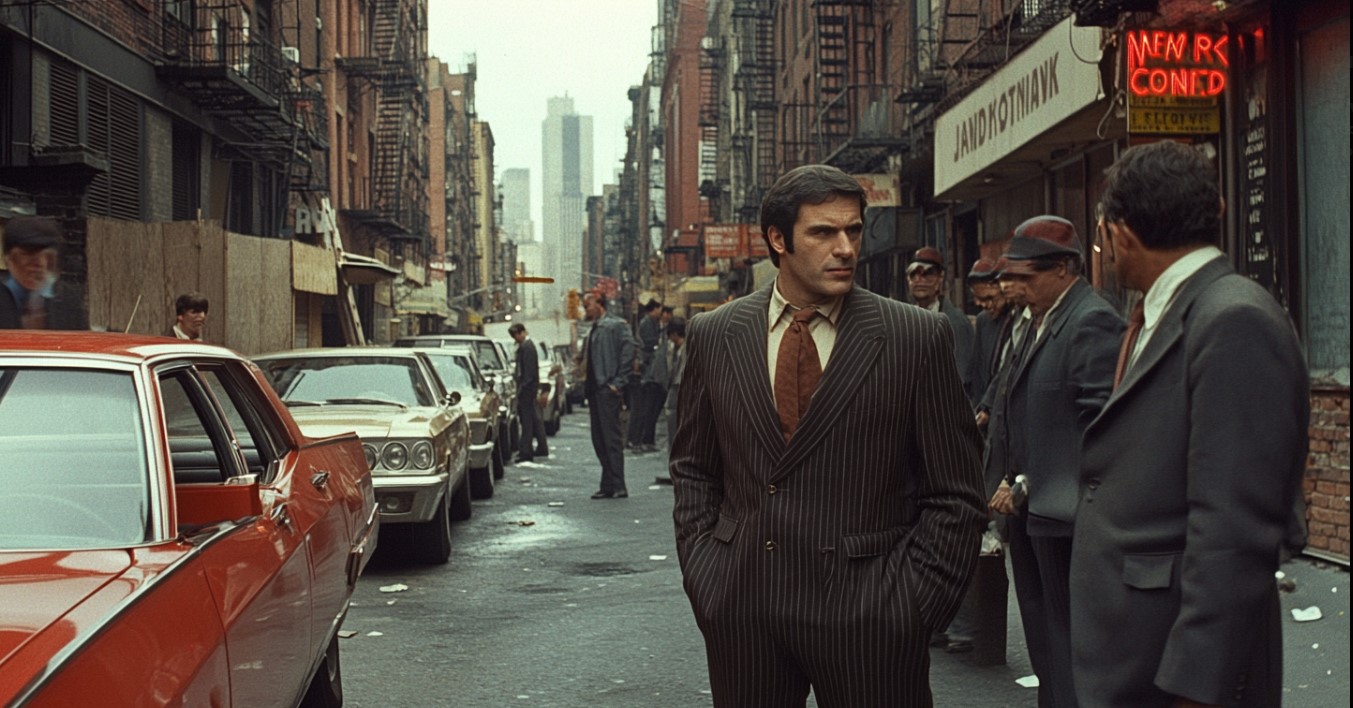
Growing Up in Hell’s Kitchen
Francis “Mickey”
Featherstone grew up in the unforgiving streets of Hell’s Kitchen, a
neighborhood where toughness was often valued above education and survival
frequently depended upon reputation. Violence was not an extraordinary event.
It was woven into daily life through neighborhood fights, street gangs,
organized crime, and a culture that rewarded those willing to stand their
ground.
By the 1960s and early 1970s, Hell’s
Kitchen remained one of Manhattan’s roughest neighborhoods despite the city’s
changing skyline. The docks were declining, jobs were disappearing, and
organized crime filled many of the economic voids left behind.
Young men seeking money, protection,
or status often found all three through the neighborhood’s criminal networks. Featherstone proved to be exactly the kind of
recruit the Westies wanted.
Before embracing a life of crime, he
served honorably in the United States Marine Corps during the Vietnam era. The
Marines instilled discipline and confidence, but returning home did not provide
the stability many veterans hoped for. Instead, Featherstone drifted back
toward the streets where old friendships and criminal opportunities proved
difficult to resist.
He was physically intimidating,
fiercely loyal, and entirely comfortable with violence. Those qualities quickly attracted Jimmy
Coonan’s attention.
Jimmy Coonan’s Most Trusted Lieutenant
Jimmy Coonan understood that criminal
organizations survive because of dependable soldiers.
While Coonan handled strategy,
alliances, and the gang’s growing relationship with powerful Gambino captain
Roy DeMeo, he depended upon trusted men to enforce his decisions. Featherstone
became one of those men. The two
developed more than a working relationship.
They became close friends.
Within the Westies, loyalty was
everything. Members were expected to protect one another, remain silent when
questioned by police, and carry out orders without hesitation. The gang
cultivated an image of brotherhood rooted in Irish identity and neighborhood
pride.
That image proved powerful.
Members believed they belonged to
something larger than themselves. They drank together, fought together, and
built reputations together. Like many organized crime groups, the Westies
wrapped criminal behavior in the language of family.
Family, however, can become expendable
when survival is at stake.
Featherstone participated in
extortion, loansharking, labor racketeering, and acts of violence that
strengthened the Westies’ hold over Hell’s Kitchen. His reputation grew with
every confrontation. Rivals viewed him as dangerous. Associates respected him. More importantly, Jimmy Coonan trusted him. Or so Featherstone believed.
The Murder That Changed Everything
Every betrayal has a beginning. For Mickey Featherstone, it came with the
murder of Michael Holly.
In 1985, Holly, a local New York
resident with no connection to the Westies, was murdered in Hell’s Kitchen.
Federal investigators and later courtroom testimony established that
Featherstone was not responsible for the killing. Instead, evidence showed that
fellow Westie Kevin Kelly committed the murder after mistaking Holly for
someone else.
The mistake should have ended Kelly’s
criminal career. Instead, something
remarkable happened.
According to testimony presented
during later prosecutions, Jimmy Coonan and several senior members of the
Westies decided that Featherstone should take the blame. Kelly remained
valuable to the organization, while Featherstone’s reputation for violence made
him a believable suspect.
The gang expected him to accept prison
rather than expose the truth. It was the
ultimate loyalty test. Sacrifice
yourself. Protect the organization. Trust that your friends will eventually take
care of you. Featherstone waited.
The help never came.
| Hell’s Kitchen Before the Westies: The Forgotten Irish Gangsters of New York |
Prison Changes Everything
Behind prison walls, loyalty becomes
easier to evaluate. Promises disappear. Phone calls become less frequent. Money stops arriving. Friends move on.
As Featherstone sat incarcerated for a
murder he insisted he had not committed, he watched the organization continue
operating without him. The men he believed would protect him instead protected
themselves.
The realization struck harder than any
prison sentence. He had not been
imprisoned because of police work. He
had been imprisoned because his own friends found him expendable.
Organized crime thrives on mythology.
Gang leaders speak endlessly about honor, respect, and brotherhood because
those ideas inspire loyalty more effectively than fear alone. Featherstone
gradually recognized that these principles often flowed in only one direction.
The soldier sacrificed. The boss survived. That understanding transformed one of the
Westies’ most loyal enforcers into one of its greatest threats.
| Roy DeMeo and the Westie: The Partnership Built on Murder |
Breaking the Code
The Mafia calls it omertà. The Westies simply called it keeping your
mouth shut.
Either way, the expectation remained
absolute. Informants ranked below murderers in the criminal hierarchy. A man
who cooperated with law enforcement faced permanent condemnation and, if
possible, execution.
Featherstone understood exactly what
cooperation would mean. He also
understood that silence had earned him nothing.
Federal investigators recognized the
opportunity before them. For years, prosecutors had suspected the full scope of
the Westies’ activities but struggled to prove them. Murders lacked witnesses.
Extortion victims feared retaliation. Associates refused to testify.
Featherstone could change everything. He knew the players. He knew the murders. He knew the money. Most importantly, he knew Jimmy Coonan.
His decision to cooperate did not
simply provide isolated pieces of evidence. It supplied investigators with the
internal roadmap of the entire organization.
The wall of silence cracked.
| The Westies vs. the Mafia: Why the Five Families Feared a Small Irish Gang |
Building the Federal Case
Federal prosecutors assembled one of
the strongest organized crime cases ever brought against the Westies. Featherstone’s testimony became the
foundation.
He described murders, extortion
schemes, labor racketeering operations, loansharking, and the gang’s close
relationship with Roy DeMeo’s Gambino crew. He identified participants,
explained criminal procedures, and helped investigators connect individual crimes
into a single criminal enterprise prosecutable under the Racketeer Influenced
and Corrupt Organizations Act—better known as RICO.
Other witnesses followed. Documents supported testimony. Physical evidence filled remaining gaps.
What had once appeared to be
disconnected crimes scattered across Hell’s Kitchen emerged as a coordinated
criminal conspiracy directed by Jimmy Coonan and his inner circle.
For prosecutors, it represented years
of investigative work finally coming together.
For the Westies, it marked the beginning of the end.
Jimmy Coonan Falls
The federal trial stripped away the
mythology surrounding the Westies.
Jurors heard not tales of loyal
neighborhood toughs defending Hell’s Kitchen, but evidence of calculated
murders, extortion, fraud, and betrayal. Featherstone’s testimony carried
particular weight because he had lived the crimes rather than merely investigated
them.
He knew where bodies had disappeared. He knew who issued orders. He knew which stories were lies. Jimmy Coonan was convicted on multiple
racketeering charges, including murder, and sentenced to decades in federal
prison. Other members of the organization received lengthy sentences as well.
The gang that once terrorized Hell’s
Kitchen effectively ceased to exist.
Ironically, the greatest threat to the
Westies had never been the Gambino family, rival Irish gangs, or determined
police detectives. It had been one of
their own.
The Price of Survival
Mickey Featherstone entered the
federal Witness Security Program after his cooperation. Like countless former
mob associates before him, he exchanged one prison for another.
He survived. But survival carried its own punishment. A new identity. A hidden life. Permanent separation from the neighborhood
that had shaped him.
The criminal world viewed him as a
traitor. Law enforcement regarded him as a valuable witness. History remembers
him as both.
Whether Featherstone acted out of
revenge, self-preservation, or genuine remorse remains open to debate. Human
motives rarely fit neatly into a single category. He almost certainly wanted
freedom. He undoubtedly felt betrayed. There is also evidence that years of
violence had taken a profound psychological toll.
Whatever his reasons, the consequences
cannot be disputed.
Without Mickey Featherstone’s
testimony, federal prosecutors would have faced a far more difficult task
dismantling the Westies.
The Real Meaning of Loyalty
Organized crime has always sold the
illusion of loyalty. Movies celebrate
it. Gangsters preach it. Bosses demand it. Reality tells a different story.
Loyalty inside criminal organizations
often lasts only as long as it remains profitable. The moment protecting one
man threatens another’s freedom, principles begin to disappear. History is
filled with mobsters who believed decades of faithful service guaranteed
protection, only to discover they had become liabilities rather than brothers.
Mickey Featherstone learned that
lesson inside a prison cell.
Jimmy Coonan expected unquestioning
obedience from the men beneath him. When Featherstone became inconvenient, the
organization sacrificed him without hesitation. The betrayal destroyed more
than a friendship. It destroyed the foundation upon which the Westies had built
their identity.
In trying to preserve the gang, Coonan
created the very witness who would ultimately destroy it.
The streets of Hell’s Kitchen have
changed dramatically since those violent years. Luxury apartments stand where
gangsters once collected protection money. Tourists walk avenues that once
echoed with whispered threats and late-night gunfire.
Yet the story of Mickey Featherstone
endures because it reveals an uncomfortable truth about organized crime. The greatest danger rarely comes from the
police waiting outside.
It comes from the man sitting beside
you at the bar, quietly realizing that the family he swore to protect has
already decided to sacrifice him.
References:
Capeci, Jerry, and Gene Mustain. Murder
Machine: A True Story of Murder, Madness, and the Mafia. New York: Penguin
Books, 1992.
English, T. J. The Westies: Inside
New York’s Irish Mob. New York: St. Martin’s Press, 1990.
Jacobs, James B., Coleen Friel, and
Robert Radick. Gotham Unbound: How New York City Was Liberated from the Grip
of Organized Crime. New York: New York University Press, 1999.
Raab, Selwyn. Five Families: The
Rise, Decline, and Resurgence of America’s Most Powerful Mafia Empires. New
York: St. Martin’s Press, 2005.
United States v. James Coonan, et al.,
938 F.2d 1553 (2d Cir. 1991).
Federal Bureau of Investigation. The
Vault: Westies. Washington, DC: Federal Bureau of Investigation.
Sifakis, Carl. The Mafia
Encyclopedia. 3rd ed. New York: Facts On File, 2005.
Maas, Peter. Underboss: Sammy the
Bull Gravano’s Story of Life in the Mafia. New York: HarperCollins, 1997.