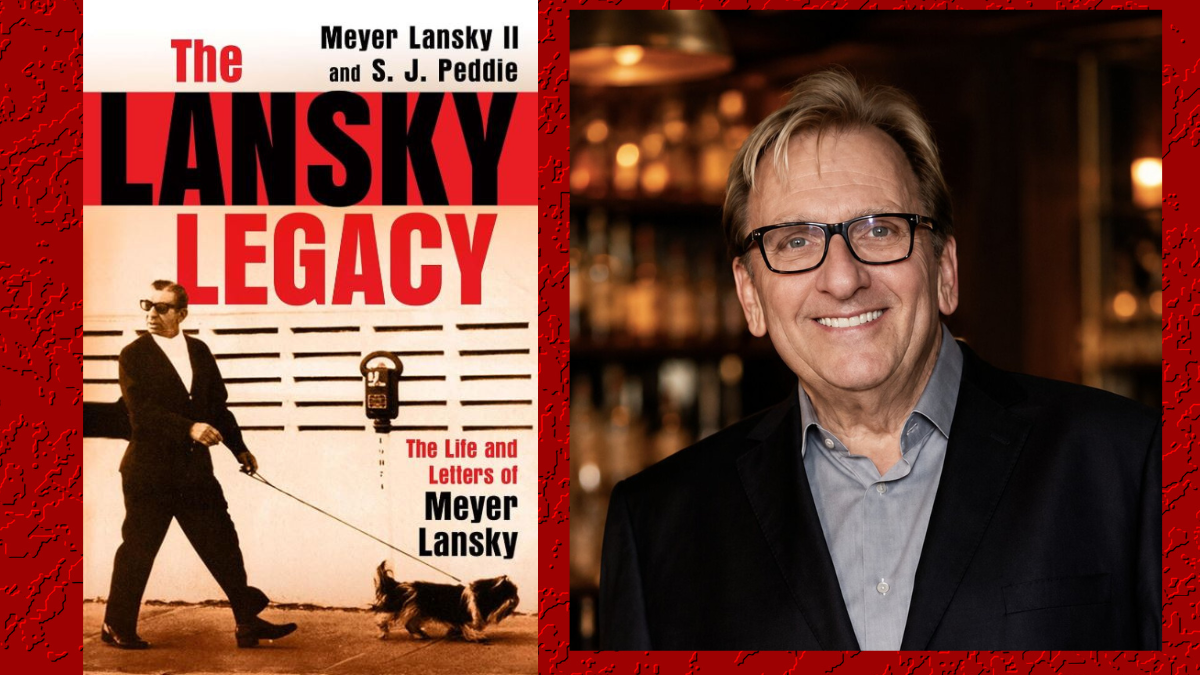
The Lansky Legacy: The Grandson Behind the Name Tells a Different Story
By C.F. Marciano
Few names from organized crime history have endured like Meyer Lansky.
Decades after his death, the man often called the “Mob’s Accountant” remains a subject of fascination for historians, filmmakers, and crime enthusiasts. Books continue to be written about him. Documentaries revisit his life. Hollywood continues to reinvent him. Yet despite all the attention, one voice has largely been missing from the conversation: his family’s.
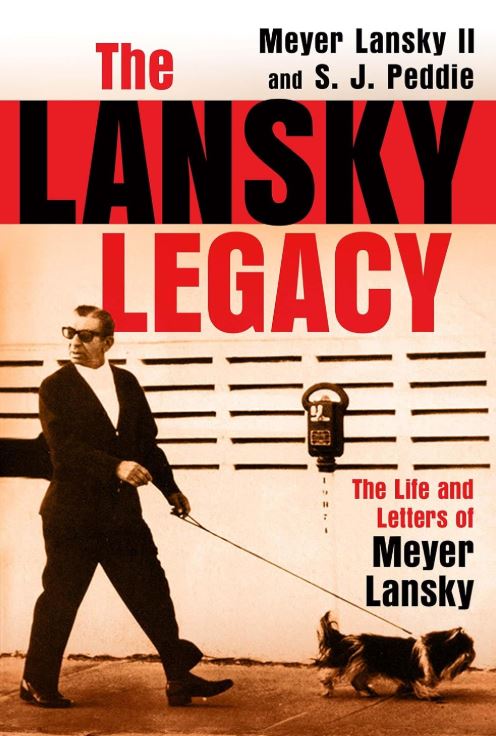
That is what makes The Lansky Legacy, written by Meyer Lansky II and co-author S.J. Peddie, different. Rather than focusing solely on investigations, court records, and underworld lore, the book draws on family memories, personal correspondence, and stories passed down through generations.
At the center of the project is a collection of letters that remained in family hands for decades. “Actually, I just got those letters a couple of years ago,” Lansky II said. “My father passed away. He was 91, and he gave me all the letters.”
The letters arrived after years of gathering stories from relatives, particularly his Uncle Buddy, who lived near Meyer Lansky in Florida. As his father grew older, more family history began to emerge.
“He always was kind of hesitant to talk about it too much,” Lansky II recalled. “Later, as my dad got older, he started giving me things and telling me stories.”
Those stories eventually became the foundation of The Lansky Legacy.
More Than a Historical Figure
For Meyer Lansky II, the man known to history was first and foremost a grandfather. “Well, they (the other authors of books about Lansky) never sat down to dinner with my grandfather like I did,” he said. “They never went shopping for clothes.”
While historians focus on gambling operations, business ventures, and criminal investigations, Lansky II remembers a man concerned with everyday family matters. “He was like a father to me,” he said. “He was always concerned about my grades and my spelling and what kind of sports I was playing.”
Those memories provide some of the book’s most revealing moments, showing a side of Meyer Lansky rarely discussed in traditional mob histories.
The Disappointment That Stayed With Him
One of the most personal subjects in the book involves Israel. According to Lansky II, being denied the opportunity to remain there left a lasting emotional scar on his grandfather. “He was really hurt by that,” he said.
The disappointment went beyond politics or legal battles. “He wanted to be buried by his grandparents on the Mount of Olives, and he wasn’t able to.”
For a man often portrayed as calculating and unemotional, it was a deeply personal loss.
Why Meyer Lansky Still Fascinates People
When asked why Meyer Lansky continues to capture public attention while many of his contemporaries have faded from memory, Lansky II points to something less tangible.
“My grandfather had a mysterious quality.” Unlike many organized crime figures, Lansky avoided publicity and carefully guarded his private life. “He never talked about anything. He thought about everything.”
According to his grandson, Meyer Lansky had a presence that was difficult to ignore. He rarely sought attention, yet he seemed to command it whenever he entered a room. “He had a dark tan, beautiful clothes, he spoke eloquently, great manners,” Lansky II recalled. It wasn’t just his appearance or the way he carried himself. There was a confidence and quiet authority about him that made people pay attention. Lansky II believes that combination of intelligence, charm, and self-assurance left a lasting impression on nearly everyone who met him.
There was also an uncanny ability to make people feel understood. “He would say something like, ‘You have something on your mind. Ask me.’ It was almost magical.”
That combination of intelligence, confidence, and mystery may help explain why Meyer Lansky remains one of the most recognizable figures in organized crime history.
A Mobster With Morals?
One of the more interesting themes in The Lansky Legacy is Lansky II’s belief that his grandfather possessed a personal moral code. “He was a mobster with morals,” he said. Whether readers agree or not, it reflects how his family viewed him.
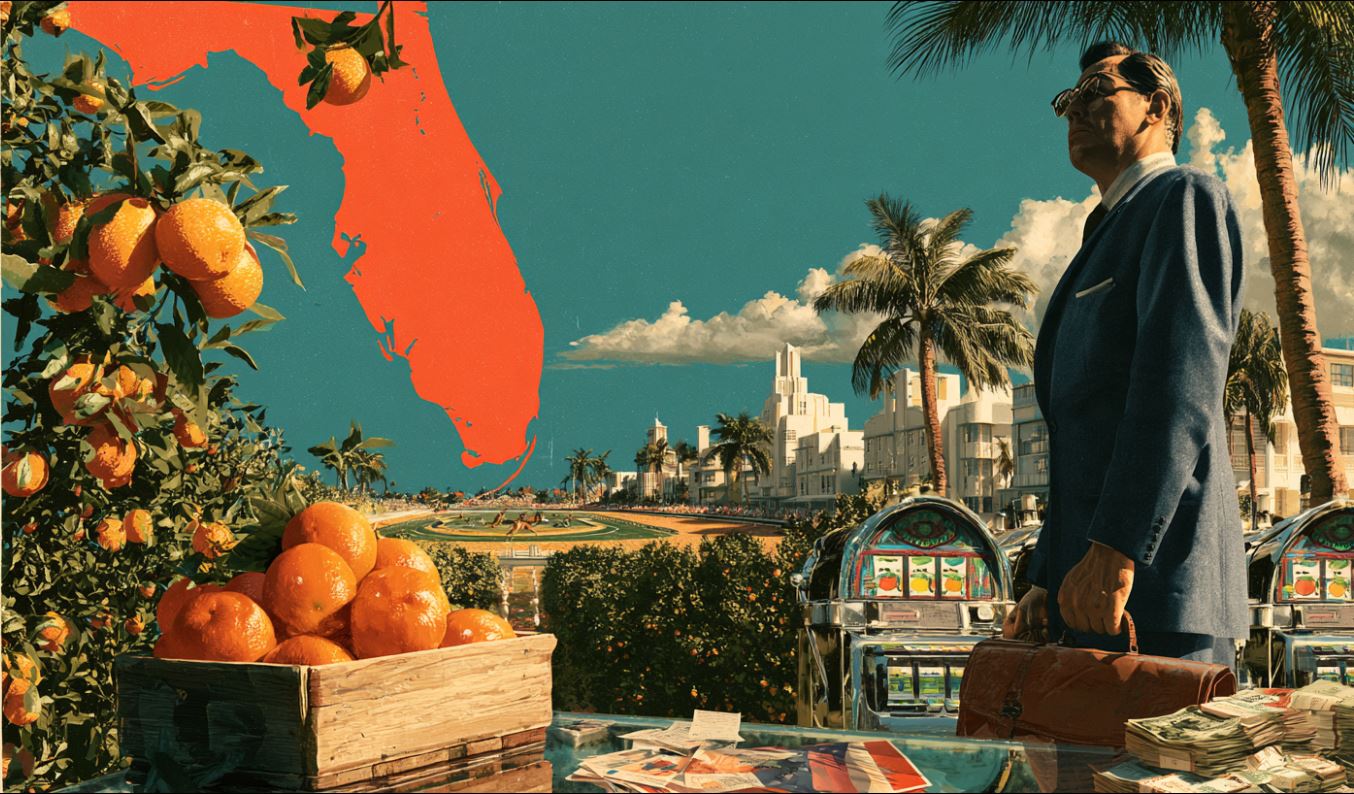
According to Lansky II, many people focus exclusively on the criminal aspects of Meyer Lansky’s life while overlooking the businesses he helped build and the causes he quietly supported. He spoke about his grandfather’s involvement in developing casinos in Florida and his belief that those enterprises created jobs and opportunities in communities that desperately needed economic growth.
Lansky II also noted that his grandfather supported a variety of charitable and community organizations throughout his life, particularly causes connected to Jewish charities and efforts to assist those facing economic hardship. While those contributions rarely receive the same attention as stories about gambling operations and organized crime, he believes they were an important part of who Meyer Lansky was. For Lansky II, those actions reflected a man who never forgot his own beginnings as a poor immigrant. Whatever history’s final judgment may be, he believes his grandfather understood the struggles of ordinary people and tried, in his own way, to give something back.
The result is a portrait that challenges readers to see Meyer Lansky as something more complicated than either hero or villain.
Discovering the Truth About His Grandfather
Growing up, Lansky II knew his grandfather as a family member long before he understood the significance of the name. Then one day “I heard ‘Meyer Lansky’s’ name on the radio,” he recalled. Curious, he began reading everything he could find.
What surprised him was the difference between the fearsome figures described in books and the men he met during family trips to visit his grandfather in Florida. Among them were legendary gangsters such as Vincent “Jimmy Blue Eyes” Alo and TikTok Tannenbaum. “I’d say, wait a minute, they don’t look anything like I’m reading about.”
The men portrayed in books as powerful underworld figures were now elderly retirees gathering around pools, card tables, and restaurants in South Florida. “These guys are little,” he remembered thinking. “How in the hell did they do all this?”
That contrast between legend and reality sparked a fascination that would eventually lead him to explore his family’s history in greater depth.
Building Las Vegas
The book also revisits the role Meyer Lansky and Benjamin “Bugsy” Siegel played in building modern Las Vegas. Lansky II believes people often underestimate the risks involved. “They couldn’t go to a bank and get money,” he explained. Materials were scarce. Labor was expensive. The city was still little more than a desert outpost.
“He put everything he had into it,” Lansky II said of Siegel’s efforts at the Flamingo. His grandfather often summarized the challenge with a simple observation. “It’s harder to start something than it is to take over something that’s already built.”
That lesson, Lansky II believes, applies far beyond Las Vegas.
A Legacy Beyond the Headlines
For Meyer Lansky II, the goal of The Lansky Legacy is not to rewrite history.
The controversies, criminal allegations, and decades of debate surrounding his grandfather remain part of the historical record.
What the book offers instead is a perspective few previous biographies could provide: that of someone who knew Meyer Lansky not as a historical figure, but as a grandfather.
Through family letters, personal memories, and stories passed down over generations, readers encounter a man who could be ambitious, private, generous, stubborn, and endlessly fascinating—all at the same time.
Preserving the Family Story
Would Meyer Lansky approve of the book? Lansky II paused before answering. “I think he would be proud of it today.” Not because it glorifies him. Not because it rewrites history. But because it preserves a family story that might otherwise have been lost.
For decades, historians have examined Meyer Lansky through surveillance reports, criminal investigations, newspaper headlines, and courtroom testimony. The Lansky Legacy approaches him differently.
It asks readers to look beyond the headlines and consider the husband, father, grandfather, and immigrant who existed alongside the legend. Whether readers agree with every conclusion or not, that perspective alone makes the book worth exploring.
After all, history often tells us what a man did.
Family stories sometimes reveal who he was.
If The Lansky Legacy Were a Cocktail
Because this interview was conducted for CrimeAndCocktails.net, one final question seemed appropriate.
If The Lansky Legacy were served as a cocktail instead of a book, what would be in the glass?
Lansky II didn’t hesitate.
“How about an Electric Iced Tea?”
It was an unexpected answer, but his explanation fit both the book and the man at its center.
“Because now you’re talking about my grandfather. Because you have a whole mixture of different elements inside an Electric Iced Tea—bourbon, gin, vodka, sweet and sour mix, and a splash of cola.
For Lansky II, the drink reflects the complexity of the story he is telling. Like the cocktail, The Lansky Legacy combines family memories, personal letters, organized crime history, Las Vegas, friendships, triumphs, disappointments, and enduring mysteries.
“It’s got a mix of everything,” he said. “And it’s a powerful drink.”
That may be the perfect description of The Lansky Legacy itself—a story that blends family history with one of the most fascinating figures ever to emerge from the American underworld.
Image of Meyer Lansky II courtesy of Dani Porter-Lansky
Get your copy by clicking on below:
The Lansky Legacy: The Life and Letters of Meyer Lansky
by Meyer Lansky II and S.J. Peddie