Mickey Cohen: The Last King of Sunset Strip
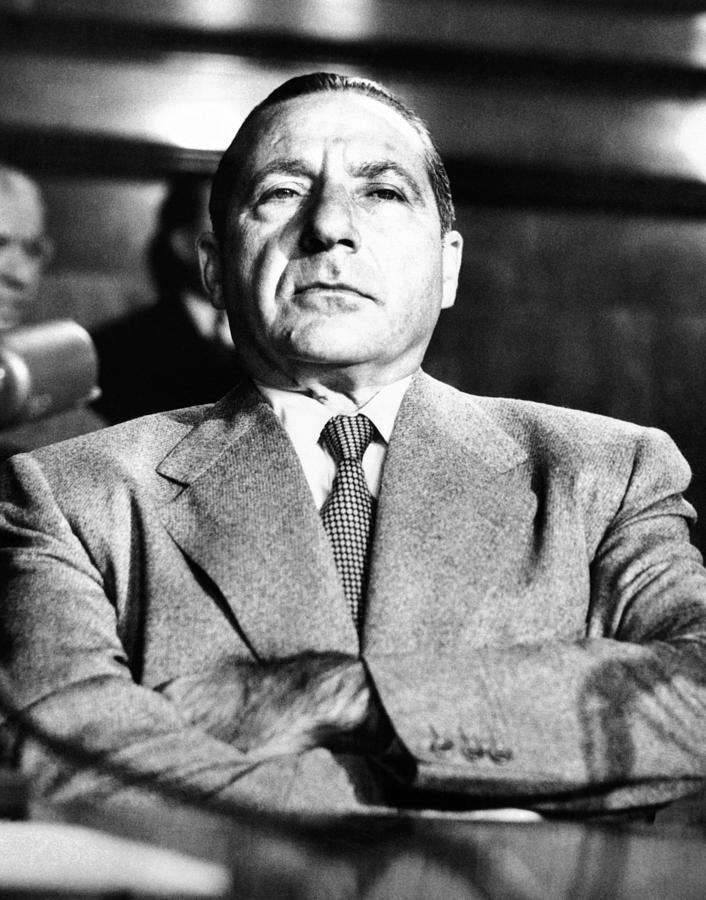
Mickey Cohen never looked like a traditional Mafia boss. He was short, sharp-faced, loud, flashy, and endlessly theatrical. He loved expensive suits, celebrity attention, beautiful women, fast cars, and newspaper headlines. Unlike old-school gangsters who preferred the shadows, Cohen practically lived in front of cameras.
That visibility made him famous. It also made him dangerous.
Cohen represented a different kind of American gangster—less Sicilian godfather, more urban street predator wrapped in Hollywood glamour. He emerged from the brutal labor rackets and bootlegging wars of the Depression era but evolved into something uniquely Los Angeles: part mobster, part celebrity, part businessman, and part media creation.
He operated in a city where corruption wore sunglasses.
Los Angeles during the mid-twentieth century was not simply movie studios and palm trees. Beneath the glamour existed gambling dens, narcotics rings, prostitution rackets, police corruption, labor violence, and organized crime networks fighting for control of the rapidly expanding West Coast economy. Cohen thrived inside that world because he understood something many gangsters never fully grasped:
In America, attention itself could become power.
Brooklyn Streets and Boxing Rings
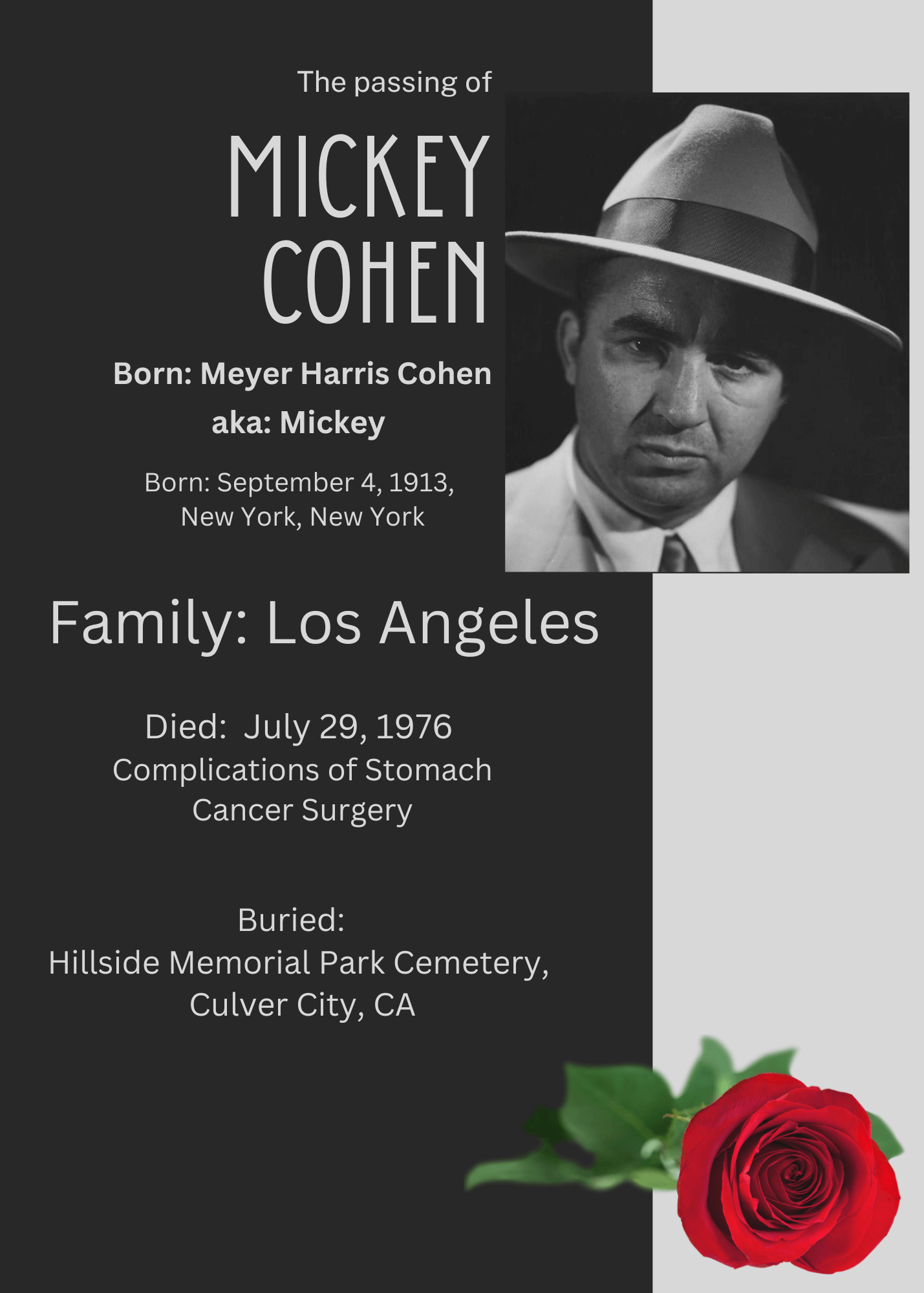
Mickey Cohen was born Meyer Harris Cohen in Brooklyn in 1913 to poor Jewish immigrant parents from Eastern Europe. His family later moved to Los Angeles, where Cohen spent much of his youth running the streets of Boyle Heights.
The neighborhood was rough, crowded, and violent. Cohen learned early that survival depended on aggression, nerve, and reputation.
As a teenager, he boxed professionally under the nickname “Gangster Mickey Cohen.” The ring suited him. He was fast, fearless, and comfortable with pain. Though he never became a major boxing star, the experience sharpened qualities that later defined him in organized crime: toughness, showmanship, and relentless confidence.
Boxing also connected him to gamblers, bookmakers, and underworld figures.
In America during the 1920s and 1930s, boxing and organized crime often overlapped heavily. Fighters, promoters, bookmakers, and gangsters operated within the same smoky social circles filled with illegal gambling and political corruption.
Cohen entered that world naturally.
Chicago and the Education of a Mobster
As a young man, Cohen traveled to Chicago, where he worked for powerful organized crime syndicates connected to Al Capone and other underworld figures.
Chicago during Prohibition functioned like a graduate school for organized crime. Bootlegging empires generated enormous wealth while gang wars filled streets with gunfire and corpses. Cohen absorbed lessons about intimidation, gambling operations, labor racketeering, and political corruption from some of the most violent criminal organizations in America.
He also developed relationships with national underworld figures, including Benjamin “Bugsy” Siegel. That connection changed his life permanently.
By the late 1930s and early 1940s, Siegel and other syndicate figures expanded operations into California, seeing enormous opportunity in Los Angeles gambling, nightlife, and labor rackets. Cohen became one of Siegel’s trusted lieutenants on the West Coast. He admired Siegel’s style deeply.
Both men loved celebrity culture, expensive clothing, and public visibility. But Cohen lacked some of Siegel’s elegance. He was rougher, louder, and more openly combative.
Where Siegel could charm a room quietly, Cohen often dominated it aggressively.
Hollywood, Gambling, and Corruption
Mid-century Los Angeles offered ideal conditions for organized crime. The city was growing rapidly, money flowed constantly through entertainment industries, and political corruption created openings everywhere.
Cohen became deeply involved in bookmaking, gambling operations, loan-sharking, labor extortion, and nightclub ownership. He cultivated relationships with actors, athletes, politicians, lawyers, and police officers. Hollywood fascinated him.
Unlike old-world Mafia bosses who avoided publicity, Cohen embraced it completely. Reporters loved interviewing him because he delivered colorful quotes and dramatic performances. He frequently portrayed himself as a misunderstood businessman unfairly targeted by authorities.
The act worked surprisingly well.
Many ordinary Americans viewed Cohen less as a terrifying gangster than as an entertaining rogue. His public persona blurred the line between criminality and celebrity long before modern celebrity culture fully developed. But behind the cameras remained real violence.
Rival gangsters, bookmakers, and syndicate factions fought constantly over gambling territory in Los Angeles. Bombings, shootings, and assassination attempts became part of Cohen’s daily existence.
And then Bugsy Siegel died.
Taking Over After Bugsy
When Benjamin “Bugsy” Siegel was murdered in 1947, Cohen inherited much of Siegel’s Los Angeles criminal network. The transition immediately triggered conflict.
Eastern Mafia leaders increasingly distrusted Cohen. Unlike disciplined national syndicate figures such as Meyer Lansky, Cohen was impulsive, media-obsessed, and difficult to control. Rival gangsters questioned both his loyalty and his competence.
Violence escalated rapidly.
Cohen survived numerous assassination attempts during the late 1940s and early 1950s. Gunmen attacked his home, bombed his properties, and ambushed him publicly. One famous incident involved attackers spraying bullets into his Brentwood residence while Cohen and guests scrambled for cover. The attacks only increased his celebrity status.
Newspapers turned Cohen into a national fascination—a wisecracking gangster surviving war on the Sunset Strip. He leaned into the image enthusiastically.
He gave interviews. Posed for photographers. Made jokes to reporters. Behind the bravado, however, Cohen lived under constant threat.
He reportedly carried weapons regularly and surrounded himself with armed bodyguards. Friends described him as paranoid, restless, and increasingly unstable during periods of intense gang conflict.
In organized crime, publicity attracts attention. Attention attracts enemies.
The Kefauver Era and Federal Pressure
By the early 1950s, public concern about organized crime exploded nationally during the televised Kefauver Hearings led by Senator Estes Kefauver. Cohen became one of the era’s most recognizable gangsters.
He testified publicly, insulted reporters, and treated the proceedings almost like entertainment. Cameras loved him because he understood performance instinctively. Federal authorities, however, were becoming less amused.
Like many organized crime figures, Cohen proved difficult to convict for violent crimes directly. Witnesses disappeared, changed stories, or became terrified. Prosecutors therefore targeted him financially instead.
Tax evasion became the government’s weapon of choice. The strategy had worked against Capone, and officials hoped it would work again.
It did.
Prison and Reinvention
In 1951, Cohen was convicted of tax evasion and sentenced to federal prison. Prison did not humble him.
If anything, it strengthened his public mythology. Cohen continued giving interviews, telling stories, and cultivating his image even behind bars. After release, he returned to Los Angeles as a celebrity gangster rather than a traditional underworld power.
By then, organized crime itself was changing.
The old era of flamboyant gangsters dominating newspapers was fading. Federal surveillance, wiretaps, and organized crime prosecutions increasingly favored quieter, more disciplined criminal operations.
Cohen never adapted fully to that reality. He remained too visible. Too loud. Too interested in being famous.
Still, he managed to survive longer than many expected. He even reinvented himself partially during later years, associating with celebrities, giving media interviews, and occasionally speaking publicly about religion and personal reform.
Whether the transformation was sincere or another performance remains debated.
With Cohen, performance and reality were often inseparable.
The Final Years
Mickey Cohen spent his later years as a strange relic of another America—an aging gangster celebrity wandering through a city he once helped terrorize and entertain simultaneously.
He died in 1976 from complications related to stomach cancer.
By then, the Los Angeles he dominated during the 1940s and 1950s had changed dramatically. Organized crime still existed, but the romanticized public gangster era was fading beneath more corporate and secretive criminal structures.
Yet Cohen endured in American memory because he perfectly embodied noir-era Los Angeles: glamorous, corrupt, violent, ambitious, and endlessly performative.
He was not a Mafia godfather in the old Sicilian sense. He was something more American.
Mickey Cohen turned organized crime into spectacle. He understood headlines almost as well as he understood intimidation. In a city built on illusion, he became both criminal and character at the same time.
And somewhere beneath the camera flashes and tailored suits remained the same street kid from Boyle Heights who learned early that survival depended on making people afraid to look away.
Click the links below to see where he is buried.