Thomas “Three-Fingers Brown” Lucchese: The Quiet Strategist of the American Underworld
Thomas Lucchese rarely raised his voice. He did not need to.
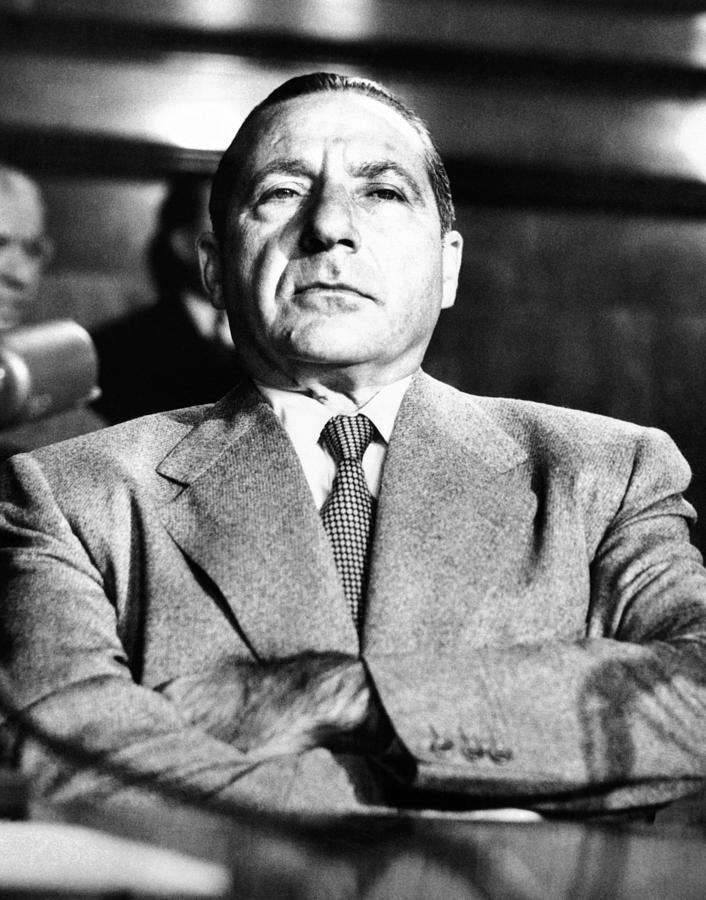
In a Mafia era crowded with flamboyant killers, celebrity gangsters, and violent egomaniacs, Lucchese represented something colder and more disciplined. He avoided public spectacle obsessively. Reporters rarely photographed him. Federal agents struggled to build direct cases against him. Even other gangsters sometimes underestimated him because he projected the calm appearance of an ordinary businessman rather than a Mafia boss.
That calm concealed one of the sharpest criminal minds in American organized crime history.
For decades, Thomas Lucchese operated near the center of the national syndicate alongside figures like Charles “Lucky” Luciano, Meyer Lansky, and Frank Costello. Unlike gangsters driven by attention, Lucchese understood invisibility as a weapon. He built power patiently.
And patience made him extraordinarily dangerous.
From Sicily to East Harlem
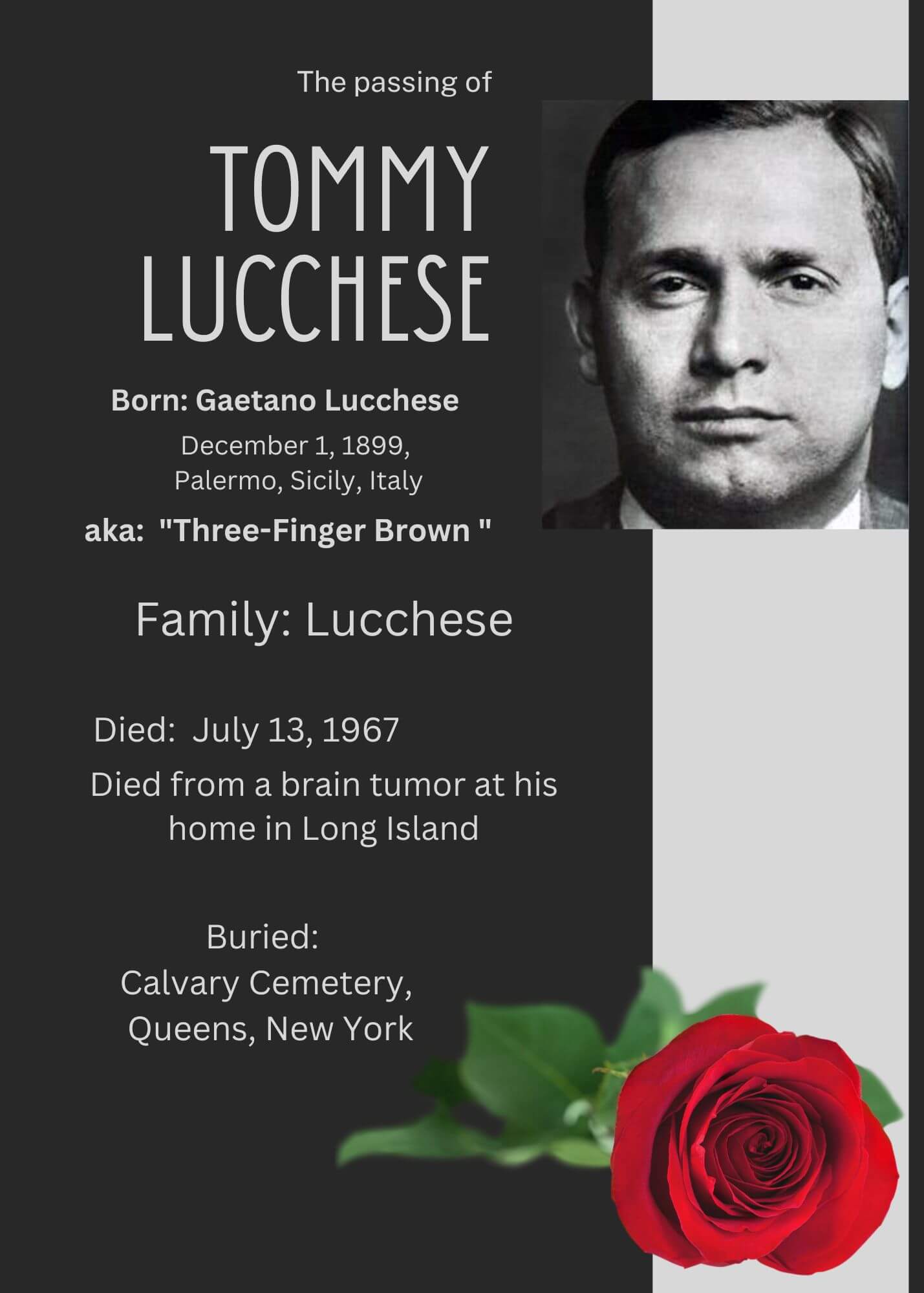
Thomas Lucchese was born Gaetano Lucchese in Palermo, Sicily, in 1899 before immigrating to New York City as a child.
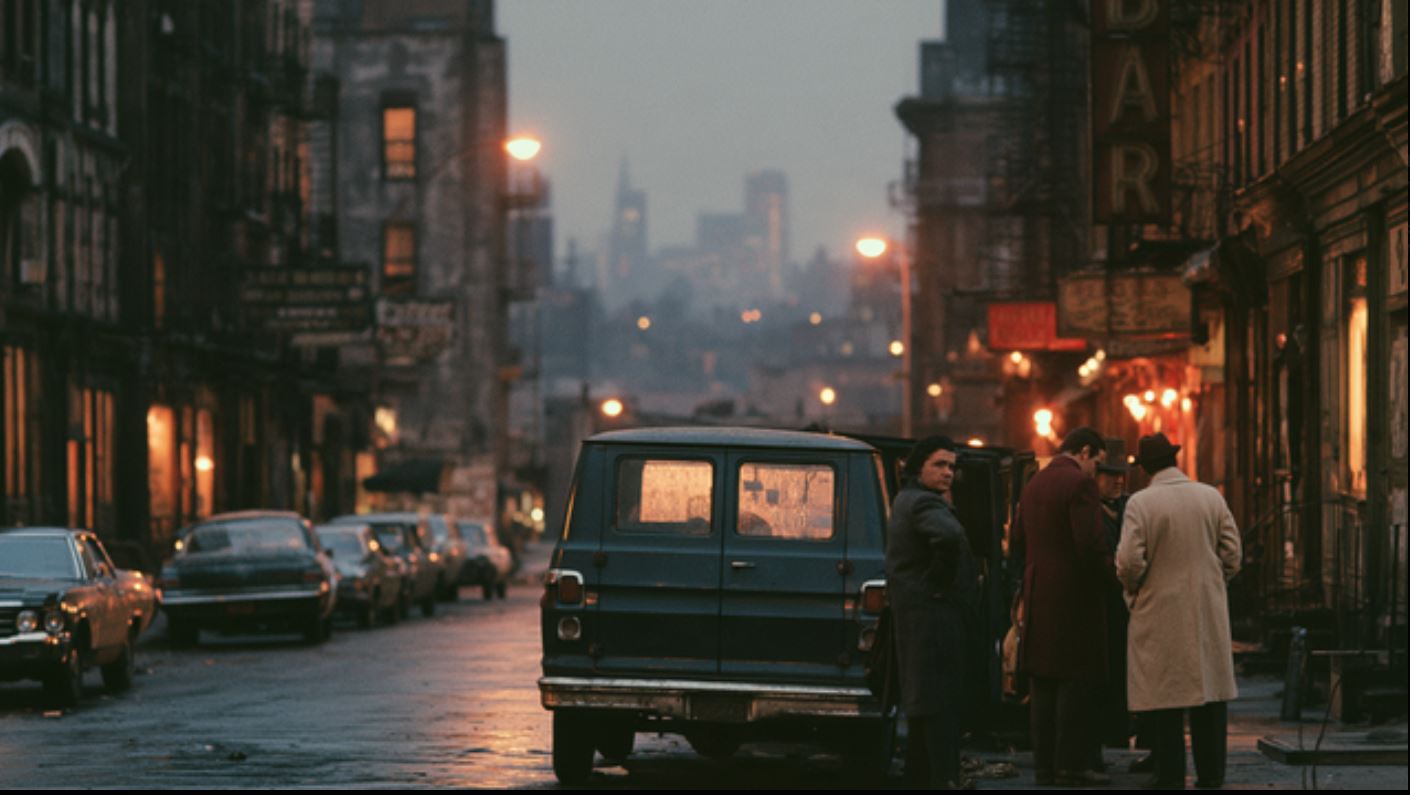
Like many Sicilian immigrant families arriving in America during the early twentieth century, the Luccheses settled inside crowded Italian neighborhoods shaped by poverty, labor exploitation, gang violence, and political corruption. Young immigrants often discovered that organized crime offered faster advancement than factory work or dock labor.
Lucchese entered street crime early.
By adolescence, he had become associated with gangs involved in theft, extortion, gambling, and robbery. One early police incident reportedly involved him stealing an automobile at a time when cars themselves still symbolized modern wealth and technological change. The streets educated him quickly.
Unlike louder gangsters who cultivated fear theatrically, Lucchese developed a more restrained style. He preferred observation to intimidation and organization to chaos. Those qualities attracted the attention of rising Mafia powers.
Prohibition and the Luciano Revolution
The arrival of Prohibition transformed organized crime nationwide.
Illegal alcohol created enormous criminal opportunity while exposing weaknesses in American law enforcement and political systems. Gangsters capable of managing bootlegging routes, corrupt officials, labor relationships, and violence accumulated staggering wealth during the 1920s.
Lucchese became deeply connected to the criminal organization led by Giuseppe “Joe the Boss” Masseria. But the old Mafia order was collapsing.
Younger gangsters like Luciano sought modernization and national coordination rather than rigid old-world factionalism. The violent Castellammarese War erupted during the early 1930s as Mafia factions battled for dominance across New York.
Lucchese aligned himself carefully with Luciano’s reform movement. That decision shaped the rest of his career. When Luciano reorganized organized crime after the war through The Commission, Lucchese became one of the important emerging leaders inside the new syndicate structure.
He had survived the bloodshed while many others disappeared into graves or prison cells.
Survival mattered.
The Gagliano Years
Lucchese rose under the leadership of Tommy Gagliano, a quiet and highly secretive Mafia figure who valued discipline above publicity. The partnership fit perfectly.
Gagliano preferred operating silently behind the scenes, and Lucchese absorbed that philosophy deeply. Together, they built an organization focused on stable profits, political relationships, labor influence, and low public visibility.
The family expanded into gambling, trucking, labor racketeering, garment industry corruption, airport operations, and construction interests throughout New York.
Unlike organizations weakened by internal chaos or reckless violence, the Gagliano-Lucchese structure emphasized efficiency. Make money quietly. Avoid unnecessary attention. Protect the system. The strategy proved extraordinarily successful.
Taking Control
When Gagliano died in 1951, Lucchese inherited leadership of the organization smoothly. The transition itself revealed something important. There were no dramatic public wars. No spectacular assassinations. No screaming headlines. Power simply transferred quietly because the internal structure remained disciplined.
The organization eventually became known as the Lucchese crime family.
Under Lucchese’s leadership, the family became one of the most powerful and profitable Mafia organizations in America. His influence extended deeply into labor unions, trucking operations, airports, garment businesses, and transportation systems vital to New York commerce.
He understood infrastructure. That understanding separated elite Mafia leaders from ordinary gangsters.
Control industries quietly enough, and legitimate society begins depending on criminal systems without fully recognizing it. Lucchese excelled at that kind of invisible corruption.
The Airport Racketeering Empire
One of Lucchese’s most important criminal territories involved New York’s airports and transportation infrastructure.
The postwar expansion of air travel created enormous opportunities for organized crime infiltration. Cargo theft, trucking control, union influence, and shipping contracts generated massive profits for Mafia organizations capable of manipulating logistics systems.
Lucchese moved aggressively into that world.
Federal investigators believed his organization exercised extensive influence over cargo movement, labor relations, and airport operations connected to what later became John F. Kennedy International Airport and other transportation hubs.
The theft operations became legendary.
Millions of dollars in goods reportedly vanished through organized criminal networks tied to airport and trucking corruption. Lucchese rarely appeared publicly connected to any of it.
That insulation protected him for years.
Relationships and Political Balance
Unlike volatile gangsters such as Albert Anastasia or ambitious power-seekers like Vito Genovese, Lucchese preferred strategic alliances and balance.
He maintained close relationships with important Mafia leaders including Carlo Gambino.
The Gambino-Lucchese alliance became one of the strongest power blocs within organized crime during the mid-twentieth century. Both men valued discipline, secrecy, and profit stability over reckless violence or public notoriety. Together, they helped shape Mafia politics nationally.
Lucchese especially understood that organized crime survives best when leadership avoids ego.
Ego attracts cameras. Cameras attract prosecutors.
Public Image and Private Power
Thomas Lucchese cultivated almost deliberate ordinariness publicly.
Neighbors reportedly described him as polite, conservative, and respectable. He dressed well but not flamboyantly. He avoided celebrity culture entirely. Unlike future gangsters such as John Gotti, Lucchese understood that public fascination eventually destroys criminal empires.
The quieter the boss, the stronger the organization often became.
Law enforcement officials considered him one of the most intelligent Mafia leaders in America precisely because he operated so cautiously. He insulated himself through layers of intermediaries, compartmentalized operations, and indirect communication systems.
Like Gambino, Lucchese treated organized crime less like street warfare and more like corporate management. That evolution made the Mafia harder to prosecute.
Illness and Death
By the mid-1960s, Lucchese’s health began deteriorating. Despite physical decline, he reportedly maintained influence within the organization until his death in 1967 from a brain tumor.
He died at home. Not in prison. Not beneath gunfire. Not humiliated publicly.
For a Mafia boss operating at the highest levels of organized crime for decades, that outcome represented extraordinary success.
His death marked the gradual end of the older Mafia generation shaped by Prohibition and the Luciano revolution.
The quieter architects were fading. A louder and more unstable era waited ahead.
The Legacy of Thomas Lucchese
Thomas Lucchese remains one of the most effective and disciplined Mafia leaders in American history. He lacked the cultural mythology of Al Capone or the theatrical infamy of Bugsy Siegel. That was intentional.
Lucchese represented organized crime at its most sophisticated and least visible. He understood labor systems, transportation infrastructure, political relationships, and financial stability far better than gangsters obsessed with intimidation alone.
He built systems quietly enough that ordinary people often never noticed them. And that made them far more dangerous.
Thomas Lucchese operated like a shadow moving beneath New York itself—through airports, trucking lines, union halls, cargo terminals, and business offices where organized crime quietly intertwined with legitimate commerce.
He rarely needed violence to announce power. The system already spoke for him.
Click the links below to see where he is buried.s