The Mafia’s Favorite President? Richard Nixon and the Politics of Enemies: Daniel Ellsberg and the Pentagon Papers
The Leak That Made the White House Look Over Its Shoulder
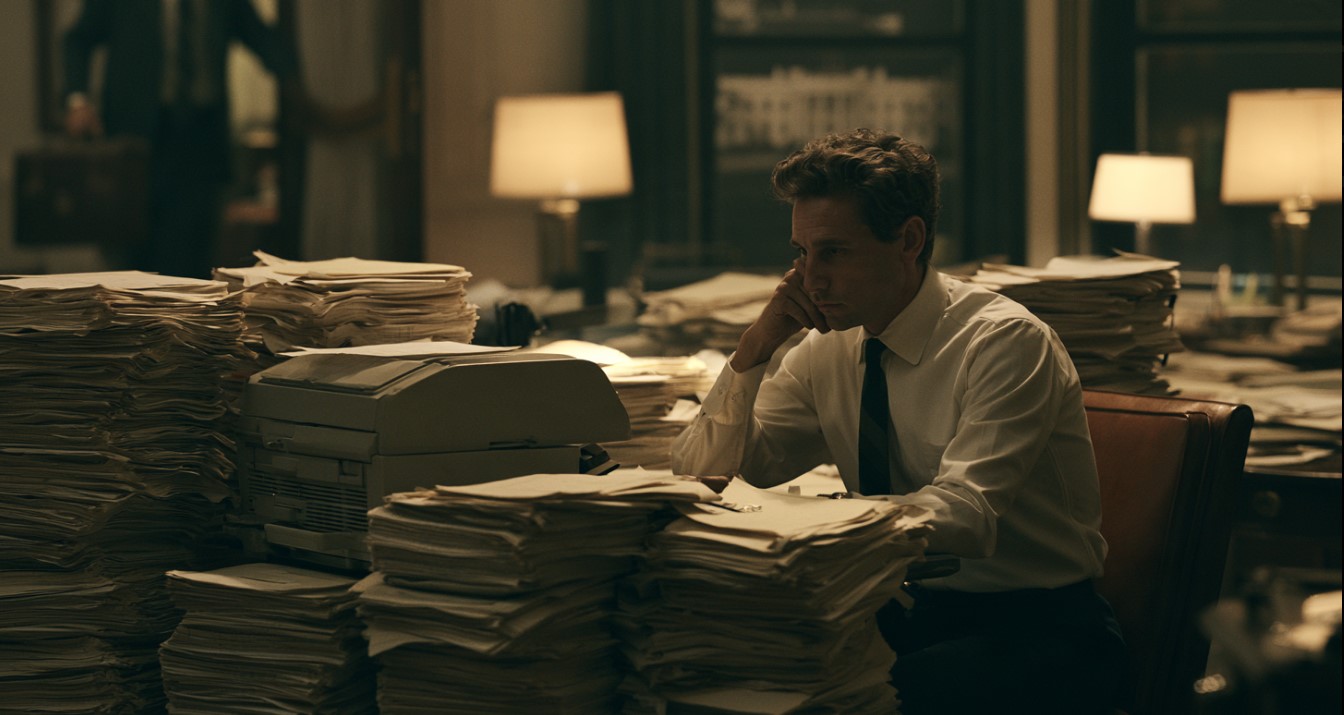
Washington had secrets before Daniel Ellsberg came along. It had classified files, locked offices, coded cables, whispered conversations, and men who understood that some information was never supposed to leave the building where it was created. What made Ellsberg different was not simply that he possessed one of those secrets. He decided to make it public.
In 1971, Ellsberg handed newspapers a massive classified study of American involvement in Vietnam. The document had been commissioned years earlier, during the Johnson administration, and had nothing to do with Richard Nixon when it was first created. But once portions of the study began appearing in print, Nixon inherited the problem, and the White House reacted as though an enemy had broken through the gates.
The document became known as the Pentagon Papers.
Officially titled the Report of the Office of the Secretary of Defense Vietnam Task Force, the study had been commissioned by Secretary of Defense Robert McNamara in 1967. It eventually grew into roughly 7,000 pages documenting American involvement in Vietnam from the aftermath of World War II through the 1960s. The report contained classified material, internal assessments, intelligence documents and records of government decision-making that had never been intended for newspaper readers.
What happened next became one of the most consequential clashes between the American government and the press in the twentieth century. It also produced something darker: a secret White House operation intended to stop leaks, investigate Ellsberg and uncover damaging information about him.
That operation became known as the Plumbers.
And before the scandal called Watergate exploded into public view, the men associated with the Plumbers had already crossed a line that would come back to haunt the Nixon administration.
The Papers Nobody Was Supposed to Read
The Pentagon Papers were not a simple report written to criticize or defend one president. They were an enormous historical and policy study examining how the United States became increasingly involved in Vietnam.
Robert McNamara ordered the project in 1967. A team of researchers and analysts assembled documents and reconstructed the history of American involvement, producing a study that eventually covered thousands of pages. The National Archives describes the completed report as approximately 7,000 pages, with the original report classified at the Top Secret level.
Daniel Ellsberg was among the analysts who worked with the material.
He was hardly the stereotypical image of a government whistleblower. Ellsberg had served as a Marine and had worked inside the national-security establishment. He had experience at the Department of Defense, the State Department and RAND Corporation. He understood the machinery of government because he had spent years inside it.
That background would make his decision particularly dangerous.
Ellsberg increasingly became convinced that the public had not been given an accurate picture of the country’s involvement in Vietnam. The Pentagon Papers contained evidence of how earlier administrations had privately assessed the war and how those assessments sometimes differed from the public presentation of American policy.
By 1971, Ellsberg had moved beyond merely questioning the war privately. He began copying portions of the classified study and providing them to journalists.
The secret was no longer safely locked inside government filing cabinets.
June 13, 1971
The first newspaper to publish material from the Pentagon Papers was The New York Times, which began publication on June 13, 1971. The reaction inside the Nixon administration was immediate.
The administration sought a court order preventing further publication, arguing that continued disclosure threatened national security. The legal battle moved quickly through the federal courts and eventually reached the Supreme Court.
Other newspapers joined the fight, including The Washington Post and the Boston Globe. What had started as a leak to one newspaper became a national confrontation over government secrecy, freedom of the press and the limits of executive power.
The Supreme Court’s decision in New York Times Co. v. United States, 403 U.S. 713 (1971), became one of the landmark press-freedom decisions in American constitutional history. The Court rejected the government’s attempt to impose a prior restraint on publication, allowing the newspapers to continue publishing the material.
For Nixon, however, the legal defeat was only part of the problem.
The president and his advisers were increasingly concerned about leaks from inside the government. The Pentagon Papers had been created before Nixon took office, yet their publication threatened to expose the conduct of previous administrations and potentially damage the credibility of the government Nixon now controlled.
There was another concern as well. If someone could walk away with thousands of pages of classified material and give them to the press, what else might be sitting in another government office waiting to escape?
The White House wanted answers. It also wanted revenge.
Enter the Plumbers
The response was not limited to lawyers and courtrooms. Inside the Nixon White House, officials began developing a secret operation to identify and stop leaks. The unit eventually became known as the Plumbers, a nickname reflecting its supposed mission of plugging leaks.
- Howard Hunt and G. Gordon Liddy became central figures in the operation. Egil Krogh and other White House officials were also involved in the effort to investigate Ellsberg and the sources of embarrassing information.
The language surrounding the operation could sound bureaucratic. The reality was something else.
The White House wanted information about Ellsberg. Not merely information about the Pentagon Papers, but information about the man himself.
The National Archives records that after the Pentagon Papers leak, the Plumbers-related investigations included the Fielding break-in, alleged interception of communications involving Ellsberg and other matters. The Archives’ records of the Watergate Special Prosecution Force later included a specific Plumbers Task Force devoted to cases involving individuals suspected of breaking into the Los Angeles office of Ellsberg’s psychiatrist, Lewis Fielding, in an effort to obtain Ellsberg’s medical records.
The investigation was beginning to change character. The question was no longer simply, Who leaked the documents?
It was becoming, What can we find out about Ellsberg?
And eventually, What can we do with what we find?
Looking for Dirt
There was a familiar political instinct at work: if an opponent could not be defeated by the argument, perhaps the opponent could be damaged personally. The White House operation sought compromising information about Ellsberg. The idea was not confined to understanding how he obtained the documents. Investigators wanted material that could undermine his credibility.
This was the darker side of the leak investigation.
The men involved were not operating like ordinary federal investigators working within a conventional criminal case. They were operating through a secret White House structure that increasingly blurred the boundaries between government intelligence, political strategy and covert activity.
The National Archives’ historical material describes how Hunt and Liddy recruited people for the operation and how the team ultimately targeted Ellsberg’s psychiatrist. The operation that followed would become one of the clearest examples of how the response to the Pentagon Papers escalated beyond the original leak.
The White House wanted something on Ellsberg. What it got instead was a crime.
The Night They Went Looking for Ellsberg’s Secrets
On September 3, 1971, members of the Plumbers operation broke into the Beverly Hills office of Dr. Lewis Fielding, Ellsberg’s psychiatrist. They were looking for Ellsberg’s records.
The burglary was not an accidental by-product of a legitimate investigation. It was an unauthorized entry into a private medical office, conducted as part of the secret effort to obtain damaging information about the Pentagon Papers leaker.
The burglars did not find what they wanted.
But the significance of the operation extended far beyond the empty hands with which they left the office. The government had crossed from investigating a leak into conducting an illegal search for personal information about the person responsible for it.
The National Archives identifies the Fielding burglary as one of the central cases later investigated by the Watergate Special Prosecution Force. The records specifically describe the purpose of the break-in as an effort to obtain Ellsberg’s medical records.
The operation also established a pattern that would later become painfully familiar. There was a target. There was a secret team. There was an effort to obtain information outside normal legal channels.
And there were people inside the government willing to authorize or facilitate activities that ordinary investigators could not lawfully conduct.
What Did Nixon Know?
This is where the history becomes more complicated than the popular version. It is tempting to draw a straight line from Nixon to the Fielding burglary and write the entire episode as though the president personally ordered the break-in. The historical record does not support that simple conclusion.
Historian Timothy Naftali told the Senate Judiciary Committee in 2024 that there was no evidence Nixon authorized the Fielding break-in beforehand. At the same time, Naftali’s testimony described Nixon as having approved broader secret investigative efforts concerning Ellsberg and having possessed an expansive view of presidential authority in matters involving national security.
That distinction matters.
Nixon did not need to personally pick up a telephone and order someone to break into a psychiatrist’s office for the atmosphere surrounding the operation to matter. The White House had created a secret investigative structure and empowered subordinates to pursue information about Ellsberg.
The operation then moved beyond conventional boundaries. The burglars broke into the office. And the people who had created the machinery of the operation suddenly had a serious problem on their hands.
They had committed a crime while attempting to investigate a crime.
The Cover Story
The break-in created another problem. If the burglars were caught, the operation could be traced back to people connected to the White House.
According to records discussed by the Senate Judiciary Committee and preserved in the historical investigations, the participants attempted to disguise the burglary as an ordinary break-in rather than an operation targeting Ellsberg’s psychiatrist. The Plumbers’ activities were increasingly difficult to keep contained.
This was the strange world created by the leak investigation. The government was trying to uncover a secret by creating new secrets. It was trying to protect national security through actions that could themselves become matters of criminal investigation.
And the people conducting the operation were beginning to leave a trail. That trail would eventually lead far beyond Beverly Hills.
From Ellsberg to Watergate
The Fielding burglary and the Watergate break-in were not the same operation, and it is important not to collapse them into one event.
But there were people and methods connecting the two episodes.
- Howard Hunt and G. Gordon Liddy were involved in the Plumbers operation surrounding Ellsberg. The same men later became central figures in the Watergate scandal. Hunt and Liddy were connected to the group that carried out the June 1972 break-in at Democratic National Committee headquarters in the Watergate complex.
The connection was therefore not that the Pentagon Papers somehow caused Watergate. The deeper connection was organizational and cultural.
The White House had already experimented with secret intelligence-gathering against a perceived political threat. The operation had already demonstrated a willingness to use covert methods, unauthorized entries and political intelligence.
Watergate would take those habits into another arena. The target would change. The machinery would look familiar.
| The Mafia’s Favorite President? Richard Nixon and the Politics of Enemies: The ‘Enemies List’ and the IRS |
The Trial of Daniel Ellsberg
While the White House was dealing with its own illegal activities, Ellsberg faced the possibility of spending years in prison. He and Anthony Russo were indicted on federal charges stemming from their handling of the Pentagon Papers. The government’s case was serious, and Ellsberg faced the possibility of conviction on charges related to espionage, theft and conspiracy.
The trial began in Los Angeles in 1972.
But as the proceedings continued, evidence emerged concerning government misconduct connected to the investigation. The Fielding burglary became an important part of that story, as did revelations concerning surveillance and the government’s handling of information relevant to the defense.
The prosecution’s case began to unravel under the weight of its own investigative methods.
In May 1973, Judge William Matthew Byrne Jr. dismissed the charges against Ellsberg and Russo because of governmental misconduct. Congressional records from the period and later government investigations document the dismissal and the misconduct that surrounded the prosecution.
Ellsberg therefore never received a final jury verdict determining his guilt or innocence on the charges.
Instead, the government’s own conduct had helped destroy its prosecution. The irony was difficult to miss. The administration had tried to expose Ellsberg as a lawbreaker.
In the process, investigators working for the administration committed crimes of their own.
The Papers Changed the Question
The Pentagon Papers were important because of what they revealed about Vietnam policy and the government’s internal decision-making. But the confrontation that followed created a second historical question that was almost as important.
How much power should a president have when the government believes national security is at stake?
The Nixon administration argued that classified information could endanger national security and that the government had a legitimate interest in stopping its publication. The newspapers argued that the public had a right to know about matters of profound national importance.
The Supreme Court’s decision did not settle every argument about classified information or national security. It did, however, establish a major constitutional barrier against the government’s attempt to stop publication through prior restraint in that particular case.
The episode also demonstrated something else. A government can classify information. It can lock the information away. It can prosecute the person who removes it. But classification does not guarantee secrecy forever.
Eventually, someone may decide that the public interest requires the secret to be exposed.
| How ’bout a Perdon, Mr. President? |
The Nixon White House and the Culture of Secrecy
The Pentagon Papers had not been created by Nixon. They documented decisions made largely under previous administrations. Yet the leak arrived during Nixon’s presidency, and his administration responded in ways that became increasingly associated with the broader Watergate story.
The White House’s concern about leaks became part of a larger obsession with enemies, political opponents and damaging information. Secret investigations expanded. The Plumbers became involved in activities that had little resemblance to ordinary government administration.
The National Archives’ Watergate records contain investigations involving Ellsberg, the Fielding burglary, the Plumbers, political campaigns, alleged illegal surveillance and numerous other activities. They also include records concerning alleged White House connections to organized crime and the Mafia, illustrating the extraordinary range of matters investigated after the scandal exploded.
That archival trail is revealing. Watergate was not simply a burglary at a Washington hotel.
It was the visible eruption of a much larger system of secret political intelligence, covert operations and attempts to control damaging information.
The Pentagon Papers were one of the first major cracks in that system.
The Man Who Opened the File
Daniel Ellsberg did not bring down Richard Nixon. The Pentagon Papers did not cause Watergate. But the Ellsberg affair exposed the mentality that would become central to the later scandal.
A classified document had escaped. The administration wanted to know who was responsible. The investigation moved into secret channels. Personal information became a weapon. A private office was burglarized.
And the men involved in that operation would later appear in the Watergate story.
That sequence is what makes the Pentagon Papers episode so important to the history of the Nixon White House. The story was not simply about Vietnam, journalism or one man’s decision to leak government documents. It was about what happened when a presidency began treating leaks and political opposition as problems to be handled through increasingly unconventional means.
The line between legitimate government secrecy and political secrecy began to blur.
Once that line disappeared, almost anything could be justified as necessary.
| Sanctified by Proximity: Billy Graham, Richard Nixon, and the Dangerous Seduction of the Oval Office |
The File That Would Not Stay Closed
There is something almost noir about the Pentagon Papers story.
A classified file leaves Washington. A former insider begins copying pages. Newspapers receive pieces of the secret. Lawyers rush into court. Government officials search for the source. Men working in the shadows are sent looking for damaging information. A psychiatrist’s office is burglarized in the middle of a political investigation.
Then the investigation itself becomes part of the scandal. That is the strange architecture of the Nixon era. The White House wanted to plug a leak. Instead, it opened a door into a much larger story about presidential power, secrecy, political intelligence and the limits of law.
Ellsberg had taken thousands of pages out of government custody and placed them in the hands of the press. The Nixon administration responded with court orders, secret investigations and eventually a covert operation directed at the man himself.
The papers were supposed to remain buried in government archives. Instead, they became evidence. And the people who tried to stop them from being exposed left behind a trail of their own.
That trail would eventually lead straight to Watergate.
References:
- National Archives and Records Administration. “Pentagon Papers.” National Archives, Washington, D.C.
- National Archives and Records Administration. “National Archives and Presidential Libraries Release Pentagon Papers.” June 8, 2011.
- National Archives and Records Administration. “The Pentagon Papers: The Department of State Reacts.” The Text Message, October 19, 2021.
- National Archives and Records Administration. “The Pentagon Papers, Now Online After 40 Years.” Pieces of History, June 13, 2011.
- National Archives and Records Administration. “Records of the Watergate Special Prosecution Force.” Guide to Federal Records, Record Group 460.
- National Archives and Records Administration. “Plumbers Task Force Investigation.” Watergate Special Prosecution Force Records.
- National Archives and Records Administration. “Facial Hair Friday: G. Gordon Liddy, White House Plumber.” National Archives History Office.
- New York Times Co. v. United States, 403 U.S. 713 (1971).
- United States Senate Committee on the Judiciary. Testimony of Timothy Naftali concerning the Nixon presidency and the Watergate era. September 24, 2024.
- United States District Court for the District of Columbia. United States v. Ehrlichman, 376 F. Supp. 29 (D.D.C. 1974).
- United States Government Printing Office. Congressional Record, May 14, 1973, discussion of the dismissal of the Ellsberg-Russo prosecution.
- Ellsberg, Daniel. Secrets: A Memoir of Vietnam and the Pentagon Papers. Viking, 2002.