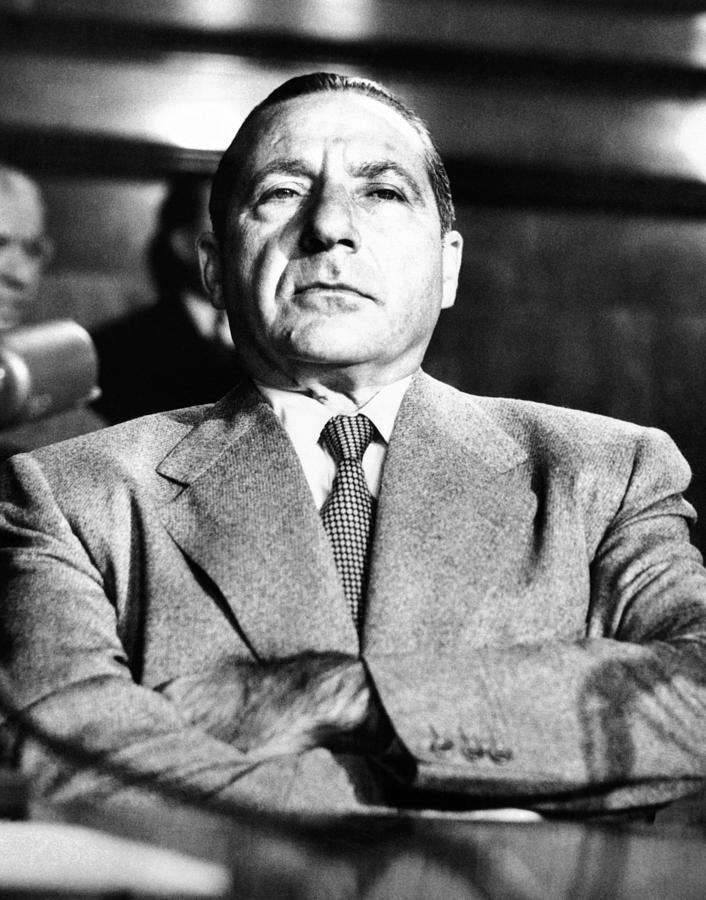
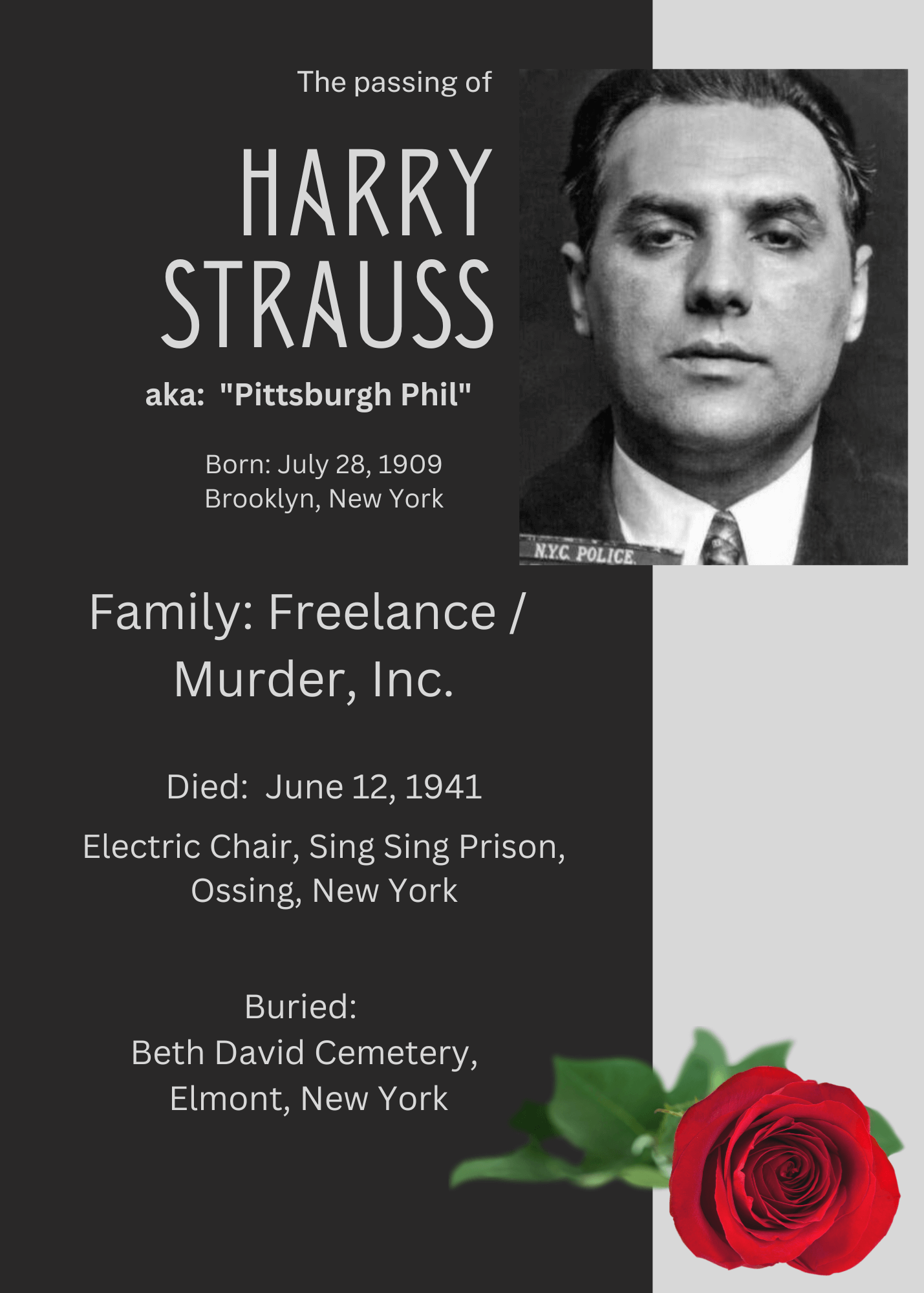
Harry “Pittsburgh Phil” Strauss: The Smiling Psychopath of Murder, Inc.
Harry Strauss killed people the way other men changed cigarettes. Casually. Without visible emotion.
And often without reason anyone sane could understand.
Among the killers of Murder, Inc.—an organization already filled with violent men—Strauss developed a reputation that frightened even fellow gangsters. Murderers feared him. Enforcers avoided provoking him. Informants later described him not simply as ruthless but unstable, a man capable of extreme violence with almost cheerful detachment.
That combination made him useful.
For a while.
Nicknamed “Pittsburgh Phil,” though he had little actual connection to Pittsburgh, Strauss became one of the most
infamous contract killers tied to organized crime during the 1930s and early 1940s. He allegedly participated in dozens of murders connected to labor racketeering, organized crime discipline, and syndicate enforcement operations carried out through the machinery of Murder, Inc.
Some estimates claimed he killed over one hundred people. The real number may never be known.
What remains certain is darker:
Harry Strauss represented organized violence stripped almost entirely of humanity.
Brooklyn’s Violent Laboratories
Harry Strauss was born in Brooklyn in 1909 and grew up inside neighborhoods where gangs, labor violence, political corruption, and organized crime shaped daily life.
Brooklyn during the early twentieth century functioned almost like a laboratory for organized criminal evolution. Street gangs merged gradually into larger racketeering systems tied to gambling, unions, extortion, trucking, and bootlegging operations. Young men with violent instincts found opportunity quickly.
Strauss fit naturally into that world.
From an early age, he reportedly displayed alarming behavior—fights, cruelty, impulsiveness, and emotional
coldness that distinguished him even among hardened criminals. He drifted into gang activity and underworld associations while still young, eventually becoming connected to the Brownsville crews that later formed the backbone of Murder, Inc.
Violence became normal to him. Too normal.
Murder, Inc.
Murder, Inc. operated as organized crime’s enforcement arm during the 1930s and early 1940s.
Though not an official corporation, the group functioned as a loosely coordinated network of killers connected to
national Mafia and syndicate leadership under figures such as Louis Buchalter and Albert Anastasia.
The organization handled murders for criminal leaders seeking distance from direct violence.
Witnesses. Informants. Disloyal associates. Labor organizers. Rivals. Anyone threatening organized crime operations could become a target.
Strauss became one of the organization’s most feared killers because he reportedly enjoyed the work. That disturbed even gangsters accustomed to murder.
A Killer Without Limits
Numerous accounts from informants and investigators described Strauss as almost pathologically violent.
He allegedly used guns, knives, ice picks, ropes, and blunt objects interchangeably depending on circumstance and
mood. Witnesses later testified that Strauss sometimes discussed killings casually over meals or jokes.
He lacked the emotional barriers most people possess.
One story claimed Strauss murdered a man simply for insulting him during a card game. Another suggested he killed someone over a relatively minor debt dispute. Whether every story was true
mattered less than the reputation itself. People believed him capable of
anything. And in organized crime, reputation often functions as reality.
Strauss’s unpredictability made him effective but dangerous. Unlike disciplined Mafia bosses who viewed murder
strictly as business necessity, Strauss appeared personally energized by violence.
That distinction terrified people.
Brownsville and the Gangster Factory
Strauss belonged to the infamous Brownsville underworld ecosystem that produced numerous Murder, Inc. killers,
including figures such as Abe Reles and Frank Abbandando.
Brownsville gangs evolved inside environments saturated with poverty, corruption, ethnic conflict, and criminal
opportunity. Young gangsters learned quickly that violence generated status and protection. The transition from neighborhood gang activity into organized syndicate enforcement happened naturally.
Strauss became one of the ultimate products of that system. A human weapon. Difficult to control. Impossible to reform.
The Fear Inside Murder, Inc.
What made Strauss especially frightening was not merely the body count attributed to him. It was the internal fear he generated.
Even among killers, Strauss reportedly stood apart psychologically. Associates described him as impulsive and capable of turning violent unexpectedly. Some informants later suggested fellow gangsters worried Strauss might eventually become uncontrollable.
Organized crime values violence. But only controlled violence.
A killer who enjoys murder too openly eventually becomes a liability because he attracts attention, destabilizes
operations, and creates unpredictable risks. Strauss walked dangerously close to that line constantly.
Abe Reles Turns Informant
The collapse of Murder, Inc. began when Abe Reles decided to cooperate with prosecutors.
Reles possessed intimate knowledge of the organization’s murders, participants, and operational structure. Under
pressure, he began naming names and describing killings in horrifying detail.
Strauss became a major target.
Suddenly, murders once hidden behind fear and silence entered courtrooms through insider testimony. Newspapers exploded with stories describing contract killings, body disposal methods, and
criminal conspiracies stretching across the country.
America realized organized crime had industrialized murder.
Strauss became one of the public faces of that nightmare.
Trial and Conviction
Strauss faced prosecution for murder as authorities aggressively dismantled Murder, Inc.
Witness testimony connected him to numerous killings, though organized crime’s culture of intimidation still
complicated many cases. Prosecutors focused heavily on the murder of gangster and labor racketeer Irving Penn as part of broader efforts against the organization.
Strauss reportedly maintained remarkable calm during portions of the proceedings. Perhaps because he believed silence still protected him. Perhaps because fear no longer reached him normally. Either way,
the system finally closed around him.
The Electric Chair
In 1941, Harry Strauss was executed in the electric chair at Sing Sing Correctional Facility. He was thirty-two years old. Thirty-two.
For all the terror attached to his name, all the murders attributed to him, and all the mythology surrounding
Murder, Inc., his life ended abruptly inside a prison execution chamber.
The state killed the killer. But the deeper horror remained: Strauss had not been unique. He had been employed.
Murder as Industry
Harry Strauss symbolized the darkest evolution of organized crime during the twentieth century.
Murder no longer functioned merely as personal revenge or spontaneous gang warfare. Syndicates transformed violence into organized infrastructure carried out by specialists traveling city to city on assignment.
Strauss was one of those specialists.
A professional killer shaped by systems larger than himself.
That realization disturbed the public enormously because it suggested organized crime operated less like random
criminality and more like hidden corporate machinery.
And every machine needs men willing to do the dirtiest work.
The Legacy of Harry “Pittsburgh Phil” Strauss
Harry Strauss remains one of the most terrifying figures connected to Murder, Inc. precisely because he lacked
romantic qualities often attached to organized crime mythology.
No glamour. No political sophistication. No strategic empire-building. Just violence. Cold, repetitive, efficient violence.
Unlike polished Mafia bosses such as Frank Costello or calculating strategists like Meyer Lansky, Strauss
represented the lowest and bloodiest layer of organized crime’s structure.
He was what happened after the orders came down. The footsteps outside the apartment door. The car slowing beside the curb.
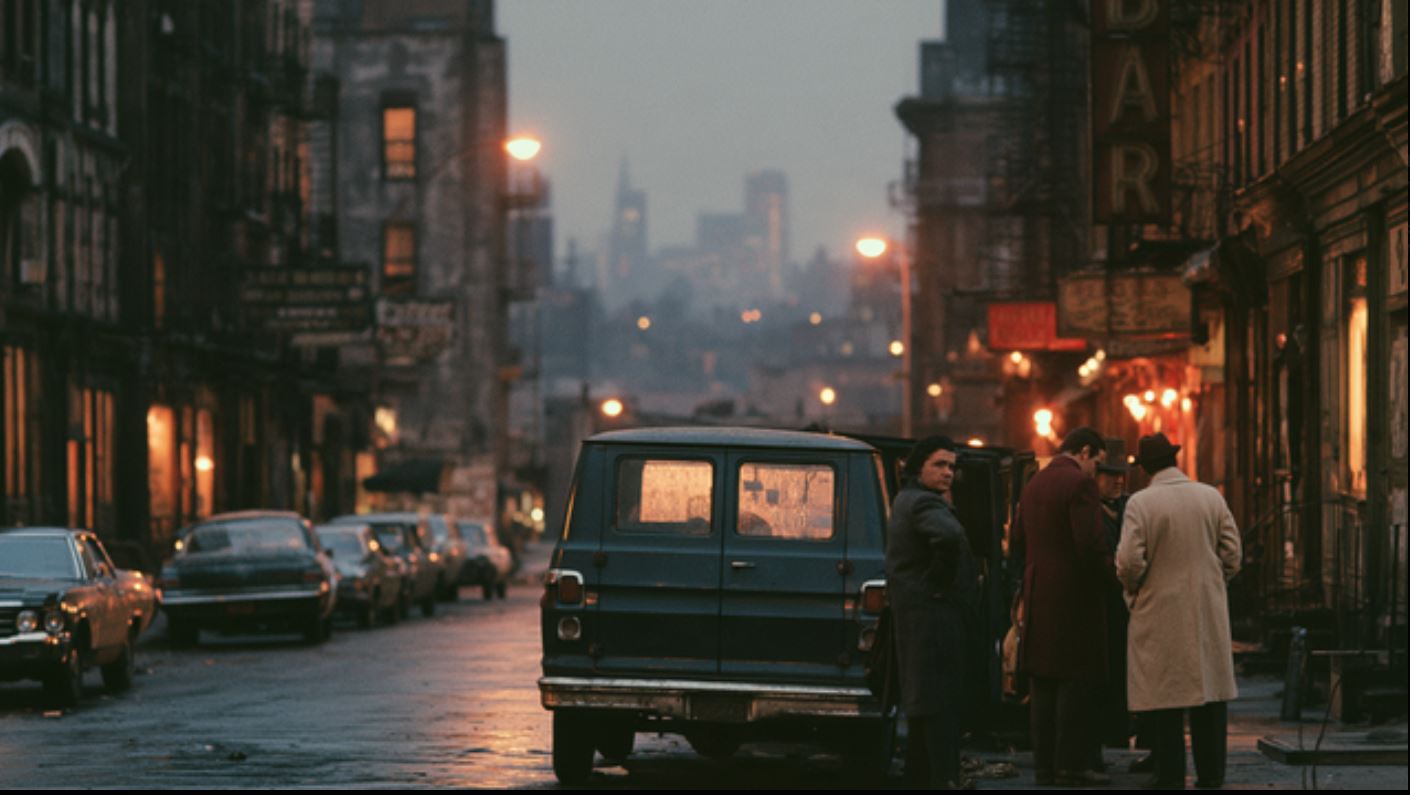
The smiling man reaching into his coat beneath dim Brooklyn streetlights.
And eventually, even Murder, Inc. could not protect him from the chair waiting at the end of the corridor.
Click the links below to see where he is buried.