Article 5 of a 5-part series: “Mob Mouthpieces: The Lawyers Who Danced with the Devil”
In Washington, power rarely announces itself.
It does not arrive carrying a gun or issuing threats from a darkened doorway. More often, it wears a tailored suit, speaks in measured tones, and moves quietly through boardrooms, courtrooms, and political offices. The most influential people in America frequently understand that true power comes not from publicity but from access.
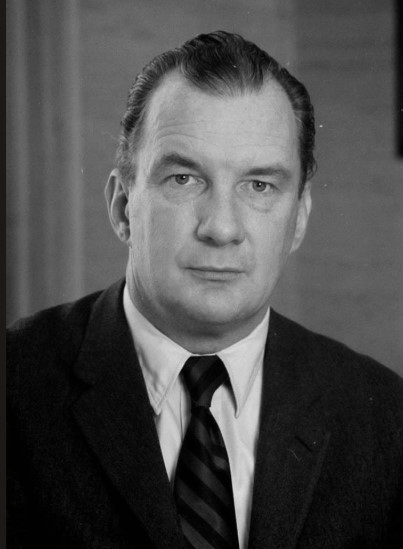
Few lawyers understood that reality better than Edward Bennett Williams.
For much of the twentieth century, Williams occupied a unique position within American public life. He was one of the nation’s most celebrated defense attorneys, a confidant of politicians, an adviser to corporate executives, and a legal strategist whose client list included some of the most powerful and controversial figures in America.
His office became a destination for men facing existential threats. Politicians called when careers were collapsing. Business leaders called when investigations threatened their empires. Labor bosses called when prosecutors came knocking.
So did mobsters.
Among Williams’s most famous clients were Teamsters leader Jimmy Hoffa and Mafia boss Frank Costello, two men who represented different forms of American power but shared a common problem: the federal government wanted them behind bars.
Williams became the lawyer standing between them and that fate.
The Lawyer Who Represented Power
Unlike many criminal defense attorneys, Edward Bennett Williams did not build his reputation through theatrical courtroom performances. He built it through intellect, preparation, and an extraordinary understanding of how institutions functioned.
Prosecutors feared him because he understood their methods. Politicians respected him because he understood influence. Clients trusted him because he understood that major legal battles were rarely fought solely inside the courtroom.
They were fought through strategy.
Williams approached cases the way a military commander approaches a campaign. Every witness mattered. Every document mattered. Every procedural weakness became a potential opening. He viewed litigation as a contest of preparation and patience rather than dramatic speeches.
That approach made him enormously successful.
It also made him attractive to powerful clients whose futures depended upon avoiding conviction.
When Frank Costello needed legal representation, Williams offered precisely the kind of disciplined, sophisticated defense that a man of Costello’s stature required.
| Attorney-Client Priviledge… and the Body Count: Frank Ragano: The Courier Between Worlds |
The Prime Minister of the Underworld
Frank Costello was not the most violent mobster in America.
He did not cultivate the image of a ruthless street enforcer. He rarely sought publicity. He preferred influence over intimidation and relationships over bloodshed. While other gangsters built reputations through violence, Costello built his through politics, gambling, and access.
Law enforcement officials often referred to him as the “Prime Minister of the Underworld.”
The title fit.
Costello possessed extraordinary connections within government, law enforcement, labor organizations, and business circles. He represented a newer model of organized crime boss—one who preferred corruption to confrontation and who understood that political influence could be more valuable than a gunman.
By the late 1940s and early 1950s, federal authorities increasingly viewed Costello as one of the most powerful criminal figures in the country. The challenge was proving it.
Everyone knew who Frank Costello was.
Proving exactly how he accumulated and maintained his power proved far more difficult.
| Attorney – Client Privilege… and the Body Count: Melvin Belli: The King of Torts – and Public Spectable |
The Kefauver Hearings
The defining public confrontation between Costello and the federal government arrived during the Senate investigations led by Senator Estes Kefauver.
The hearings became one of the first great televised spectacles in American political history. Millions of Americans tuned in to watch lawmakers question organized crime figures about corruption, gambling, and criminal influence.
Costello became the star witness.
Recognizing the dangers of public exposure, he agreed to testify under strict conditions. Television cameras famously showed only his hands rather than his face. The image became iconic. Viewers watched the nervous movements of a man widely believed to be among the most powerful mob leaders in America.
Behind the scenes stood Edward Bennett Williams.
Williams understood that the hearings represented more than a legal challenge. They were a battle for public perception. Costello’s answers would be scrutinized not only by senators but by millions of citizens watching from their living rooms.
The attorney’s task was not simply protecting a client.
It was managing a collision between organized crime and national television.
| Attorney–Client Privilege… and the Body Count: Jerry Giesler: Hollywood’s Defender and Bugsy Siegel’s Lifeline |
Privilege and Political Power
Attorney-client privilege often appears straightforward in theory.
A client speaks honestly. The lawyer keeps the conversation confidential. The legal system benefits because effective representation depends upon trust.
When the client is Frank Costello, however, the stakes become significantly higher.
A man like Costello sits at the center of a vast network of relationships. Every conversation potentially touches politics, business, law enforcement, gambling operations, or criminal associates. The information available to an attorney representing such a figure can be immense.
Williams operated within that environment while maintaining a reputation for professionalism and ethical discipline.
Unlike attorneys who became closely identified with organized crime, Williams never appeared to embrace the underworld culture surrounding some of his clients. He represented them because they needed legal counsel, not because he shared their worldview.
Yet the relationship still illustrates a central tension of criminal defense.
The more powerful the client, the more valuable the lawyer becomes.
The more valuable the lawyer becomes, the closer he moves to the center of influence.
| Attorney–Client Privilege… and the Body Count Roy Cohn: The Fixer Who Became the Story |
Jimmy Hoffa and the Machinery of Power
If Frank Costello represented organized crime’s political sophistication, Jimmy Hoffa represented labor’s raw institutional power.
As president of the Teamsters Union, Hoffa controlled one of the most influential labor organizations in the United States. His ability to mobilize workers and influence commerce made him a formidable force in American life.
Federal investigators spent years attempting to dismantle his power.
Williams repeatedly stepped into the role of defender.
Representing Hoffa required many of the same skills required to represent Costello. Both men operated within vast networks of influence. Both attracted relentless government scrutiny. Both believed prosecutors were motivated by politics as much as justice.
For Williams, the similarities were obvious.
He often found himself defending men who occupied controversial positions within American society yet remained entitled to the full protection of the legal system.
The attorney’s duty did not change because a client was unpopular.
The public’s perception often did.
The Ethics of Access
The most fascinating aspect of Edward Bennett Williams’s career was not his representation of gangsters or labor leaders.
It was his proximity to power itself.
Williams moved comfortably among senators, judges, corporate executives, journalists, and government officials. He understood how decisions were made and where influence flowed. His clients hired him not merely because he was brilliant but because he possessed a sophisticated understanding of American institutions.
That reality creates an uncomfortable question.
When a lawyer becomes extraordinarily powerful, does he simply represent power, or does he become part of it?
Williams never faced accusations that he facilitated organized crime. He was not a Mafia fixer or an underworld intermediary. Nevertheless, his career demonstrates how elite attorneys can become central figures within systems of influence that extend far beyond individual court cases.
The lawyer remains an advocate.
The advocate gradually becomes an institution.
The Costello Problem
Frank Costello eventually faced increasing legal pressure from federal authorities.
Tax cases, investigations, and public scrutiny gradually weakened his position. In 1957, after surviving an assassination attempt linked to internal Mafia rivalries, Costello began stepping away from active leadership within organized crime.
Unlike many gangsters of his generation, he largely avoided dying in prison or being murdered in a gang war.
His survival owed much to caution, intelligence, and a willingness to retreat when circumstances demanded it.
It also reflected the reality that men like Costello often fought their most important battles through lawyers rather than gunmen.
Edward Bennett Williams helped navigate those battles.
The attorney could not erase Costello’s reputation. He could not eliminate government investigations. What he could do was ensure that constitutional protections applied even to a man widely regarded as a criminal kingpin.
In that respect, Williams performed the role the legal system required of him.
The public often found that role difficult to appreciate.
The Counselor to Kings
Edward Bennett Williams never carried out mob business.
He never attended Mafia Commission meetings. He never operated gambling enterprises or served as an adviser to organized crime families. His relationship with figures such as Frank Costello and Jimmy Hoffa remained fundamentally professional.
Yet his career demonstrates how closely law and power can become intertwined.
Williams represented men who occupied the highest levels of their respective worlds. Whether those worlds involved politics, labor, business, or organized crime, the underlying challenge remained remarkably similar. Powerful people facing legal threats sought the best defense available.
Williams frequently became that defense.
His legacy therefore occupies a complicated space in American legal history.
Supporters remember a brilliant attorney who protected constitutional rights and ensured that even unpopular defendants received vigorous representation. Critics sometimes view him as a lawyer whose talents helped powerful men avoid accountability.
Both perspectives contain elements of truth.
The Man Between the Government and the King
In noir fiction, there is often a character who stands between opposing forces.
He is neither criminal nor prosecutor. He belongs fully to neither side yet understands both. He serves as the intermediary through whom conflicts are negotiated and battles are fought.
Edward Bennett Williams frequently occupied that position.
When the government targeted Frank Costello, Williams stood in the middle. When federal investigators pursued Jimmy Hoffa, Williams stood in the middle. His role was not to determine innocence or guilt but to ensure that power encountered resistance.
That responsibility lies at the heart of criminal defense.
Yet when the client is a kingpin, a labor boss, or a national figure, the lawyer inevitably becomes part of a larger story.
Williams represented men.
History remembers that he represented empires.
And in the uneasy space between those two realities lies the enduring mystery of attorney-client privilege, power, and the lawyers who found themselves dancing close to the edge of both.
References:
Edward Bennett Williams — One Man’s Freedom (Williams, 1962); Washington Post archives; Georgetown University Law Center historical collections.
Frank Costello — Federal Bureau of Investigation organized crime files; Senate Kefauver Committee records; New York organized crime investigations.
Jimmy Hoffa — U.S. Department of Justice records; Teamsters Union historical archives; Senate labor investigations.
Kefauver Hearings — U.S. Senate Special Committee to Investigate Organized Crime in Interstate Commerce records (1950–1951).
Attorney–Client Privilege and Criminal Defense Ethics — American Bar Association ethics opinions; legal scholarship regarding criminal defense representation.
Organized Crime in Mid-Century America — FBI organized crime files; U.S. Senate investigative committee records; contemporary newspaper archives.