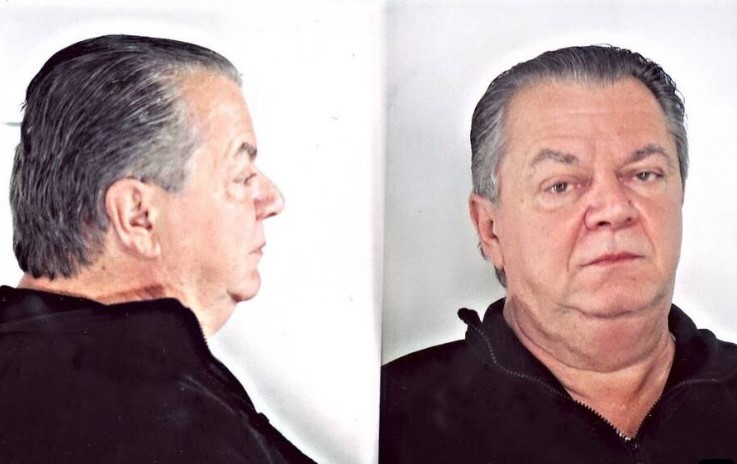
Joe Massino: The Boss Who Became the Enemy Within
Power in the Mafia was supposed to insulate a man. Rank meant protection. The higher you climbed, the safer you were. That was the lie Joe Massino believed—and enforced—for decades. When that lie finally cracked, it didn’t just take down a boss. It exposed the Mafia’s most fatal weakness: when the enemy sits at the head of the table, the organization has already lost.
Joe Massino was not flamboyant. He didn’t crave headlines or cultivate myth. He rose quietly, methodically, stepping over bodies without drawing attention to the blood on his shoes. That discipline is what made his fall so devastating. When Massino became the first official New York Five Families boss to cooperate with the government, he didn’t just betray his men. He betrayed the very idea that the Mafia could survive itself.
This wasn’t panic. This wasn’t weakness. This was calculation.
And that made it unforgivable.
Building a Throne on Silence
Massino came up through the Bonanno family during its most unstable years. The family had already been poisoned by betrayal—Joe Bonanno’s exile, internal wars, and decades of dysfunction. By the time Massino gained real power, the Bonannos were widely regarded as the weakest of the Five Families. Massino hated that reputation.
He aligned himself with powerful figures like Carmine Galante and later helped engineer Galante’s murder when the old boss became a liability. Loyalty, to Massino, was never sentimental. It was transactional. If you strengthened the family, you lived. If you endangered it, you died.
That philosophy carried him to the top.
When Massino became boss in the early 1990s, he set out to do something rare in modern Mafia history: restore legitimacy. He reduced flashy violence. He demanded discipline. He insisted on silence. Under his rule, the Bonanno family regained a seat at the Commission and something close to respect.
Massino didn’t just run the family. He rebranded it. And he ruled with an obsession that bordered on paranoia.
| Joe Massino and the Empire of Excuses |
Fear as a Management Style
Massino trusted no one—not fully. He micromanaged, monitored, tested loyalties. Informants were his nightmare, and he responded by creating an atmosphere where fear did most of the work. Suspected cooperators didn’t get second chances.
Massino personally approved murders meant to reinforce silence, including the killing of Bonanno captain Gerlando “George from Canada” Sciascia, whose perceived disloyalty made him expendable. The message was clear: talking wasn’t just death—it was erasure.
But fear has a shelf life. The more Massino tightened control, the more isolated he became. Communication narrowed. The circle shrank. Trust evaporated. And while Massino believed this made him safer, it ensured that when the walls finally closed in, there would be no one left to stand with him.
| Banana War: Joe Bonanno’s Last Gambit |
The Case That Broke the Boss
Federal prosecutors didn’t need a miracle to bring Joe Massino down. They needed time.
Wiretaps. Cooperating witnesses. Surveillance. Slowly, methodically, the case against Massino hardened into something unavoidable. In 2003, he was convicted of racketeering and seven murders. The government wasn’t bluffing. The death penalty was on the table.
For the first time in his career, Joe Massino faced a problem fear couldn’t solve. The code he had enforced for decades suddenly demanded something from him—his life. And Massino decided the code wasn’t worth it.
The Moment the Crown Cracked
When Massino agreed to cooperate in 2004, the shock rippled through every Mafia family in America. This wasn’t a soldier or a capo trying to save himself. This was a sitting boss—a Commission-level figure—deciding that survival outweighed tradition. Massino didn’t just talk. He taught.
He explained hierarchy. Decision-making. Murder approvals. He testified against his own underboss, Salvatore Vitale—his brother-in-law—and against other high-ranking figures. He provided insight into how modern Mafia leadership functioned behind closed doors.
The Bonanno family collapsed almost overnight.
But the damage didn’t stop there. Massino’s cooperation rewrote the rules. It proved something that could never be undone: omertà had a price, and that price could be negotiated.
From that moment on, every boss became a potential informant in waiting.
| Sonny Black: One Mistake Erased Thirty Years of Loyalty |
The Enemy Within, Defined
Joe Massino didn’t turn because he hated the Mafia. He turned because he loved himself more. That distinction matters.
He wasn’t motivated by guilt. He expressed no moral awakening. His cooperation was strategic—a business decision made under existential pressure. In noir terms, Massino didn’t see himself as a villain. He saw himself as the only realist left in a room full of dead men walking.
But leadership is symbolic. And when the symbol collapses, everything beneath it rots.
Massino had spent his career hunting internal enemies, convinced betrayal always came from below. He never imagined it would come from the top—until he was the one doing it. That is the ultimate irony of his story.
After the Fall
Massino avoided execution and received a reduced sentence. He entered witness protection and later emerged quietly, stripped of power, title, and relevance. No throne. No family. No respect.
Among mobsters, his name became a warning rather than a legend.
Joe Massino proved that the Mafia’s greatest threat wasn’t law enforcement or rival families. It was the moment a boss decided that the oath was conditional—that silence was negotiable—that survival justified everything. Once that happened, the game was over. The enemy didn’t have to infiltrate the family.
He was already in charge.
References:
- Capeci, Jerry. The Complete Idiot’s Guide to the Mafia. Alpha Books.
- Maas, Peter. Underboss: Sammy the Bull Gravano’s Story of Life in the Mafia. HarperCollins.
- United States v. Massino, 546 F.3d 123 (2d Cir. 2008).
- FBI Records: Bonanno Crime Family Profiles and Indictments.
- Raab, Selwyn. Five Families: The Rise, Decline, and Resurgence of America’s Most Powerful Mafia Empires. St. Martin’s Press.
- Federal Bureau of Prisons historical case summaries.
- New York Times archives on the Bonanno family prosecutions (1990s–2000s).