The Mob Without the Mob Boss
Texas Guinan, the Underworld, and the Business of Staying One Step Away
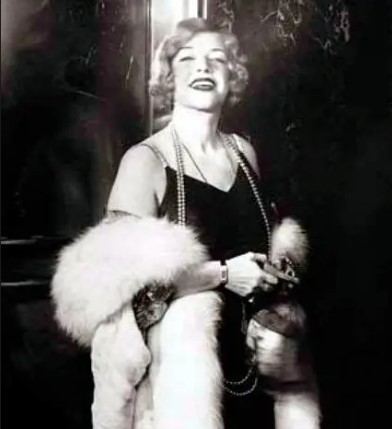
In the Prohibition-era nightclub business, the person standing beneath the spotlight wasn’t necessarily the person controlling the money, the liquor, or the men who made sure everything ran smoothly. Behind the glittering chandeliers and expensive champagne, an entirely different operation was taking place. Bootleggers controlled supply. Criminal intermediaries arranged distribution. Powerful underworld figures provided connections, influence, and sometimes protection. Meanwhile, the nightclub hostess kept the customers entertained and the cash registers ringing.
Texas Guinan understood where she belonged in that arrangement.
She was not a Mafia boss, a bootlegging queen, or a criminal commander issuing orders from a secluded office. Her influence came from a different source. She controlled the atmosphere, attracted the clientele, and created the public identity that made her establishments desirable. In an illegal industry where liquor was the essential commodity, Guinan understood that the person who could fill a room was every bit as valuable as the person who could fill the bottles.
It was a useful distinction, and potentially a profitable one.
| Hello, Suckers! |
The Business Behind the Champagne
Prohibition created an enormous criminal marketplace, but operating a successful speakeasy required more than finding someone willing to sell illegal alcohol. The supply had to be dependable, customers had to be attracted, employees had to be paid, and the establishment had to survive the attention of law enforcement.
These responsibilities frequently involved different people with different interests.
Men such as Larry Fay understood the commercial possibilities of combining illegal liquor with popular entertainment. Fay had become an important figure in New York’s nightclub world and was associated with Guinan’s rise at the El Fey Club. His business interests and her entertainment abilities made for a useful arrangement.
Other underworld figures operated on a much larger scale. Owney Madden became a major force in the city’s illegal liquor trade and nightclub industry. His influence extended into Harlem’s Cotton Club, demonstrating how the entertainment business could intersect with powerful criminal interests.
Guinan operated in this environment, where the boundaries between legitimate entertainment and organized criminal enterprise were often difficult to distinguish. Yet her particular contribution was clear: she knew how to turn an establishment into a destination.
Customers came for the music, the liquor, the spectacle, and the opportunity to occupy the same room as celebrities and wealthy personalities. Guinan made sure they had a reason to return.
She Sold the Room, Not the Liquor
There is an important difference between being associated with an illegal liquor operation and personally controlling its distribution. The historical record supports Guinan’s involvement in Prohibition-era nightclub businesses and her relationships with people connected to the underworld. It does not establish that she personally managed major bootlegging routes or controlled the criminal organizations supplying her establishments.
That distinction is important because the liquor trade was a dangerous business. Distribution networks involved transportation, storage, suppliers, intermediaries, and men willing to use intimidation to protect valuable territory. A nightclub operator needed access to dependable liquor, but that did not necessarily mean she needed to control the machinery that delivered it.
Guinan’s strongest asset was her public identity. Her flamboyant personality, celebrity clientele, newspaper coverage, and ability to command an audience gave her commercial value independent of the actual liquor supply.
She could make an establishment famous. Other people could concern themselves with keeping it stocked.
In the criminal economy of Prohibition, that division of labor made practical sense.
| Celebrity as Legal Buffer |
The Advantage of Keeping a Little Distance
There was another advantage to Guinan’s position: she was not publicly identified as the head of a major criminal organization. Her celebrity rested on entertainment, not intimidation. She could cultivate relationships with powerful men without needing to assume their responsibilities or imitate their methods.
That did not mean she was insulated from criminal liability. Her establishments were repeatedly targeted by Prohibition authorities, and she faced arrests and legal difficulties. Nor does the historical record establish that she deliberately structured every business relationship to avoid ownership of illegal liquor. It would be a mistake to portray her as having discovered some foolproof legal arrangement.
But the distinction between the public face of a nightclub and the people behind its supply network remains important.
The men involved in bootlegging had to worry about shipments, rival suppliers, police investigations, and the possibility that a business associate might become a liability. Guinan had a different set of concerns. She needed an entertaining room, a profitable clientele, a recognizable identity, and enough publicity to keep people talking.
Her business was built around people, not distribution routes.
And that gave her a degree of flexibility that a traditional underworld operator might not have enjoyed. When one nightclub closed, another opportunity could emerge. When a business relationship deteriorated, her personal reputation could remain intact. The name Texas Guinan was portable, even when the nightclub doors were not.
The Power Behind the Personality
Guinan’s career illustrates something frequently overlooked in histories of organized crime: the underworld needed more than gangsters. It needed entrepreneurs, entertainers, bartenders, musicians, landlords, suppliers, intermediaries, and personalities capable of attracting wealthy customers.
The criminal organization might control the liquor, but someone still had to persuade people to buy it.
Guinan excelled at that assignment. She created an atmosphere in which illegal drinking became fashionable, turned wealthy customers into regular patrons, and made her establishments recognizable far beyond the neighborhoods in which they operated.
She was not the mob boss, and she did not need to be.
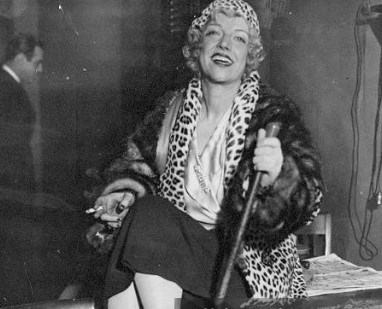
In the smoky nightclub world of Prohibition Manhattan, power didn’t always sit in the back room with the men discussing liquor shipments. Sometimes it stood beneath the stage lights, wearing a cowboy hat, entertaining a room full of millionaires and gangsters.
Texas Guinan understood that the person who controlled the audience could become just as valuable as the person who controlled the supply.
She sold the fantasy. The underworld supplied the machinery.
And everyone had a reason to keep the show running.