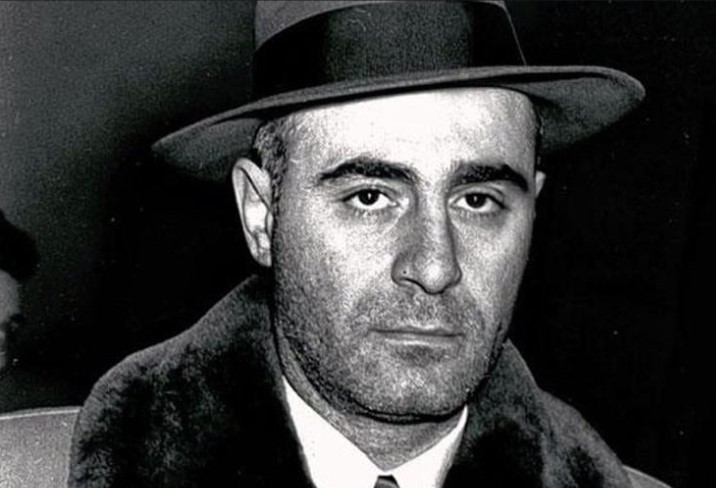
Thomas Eboli: The Debt Loyalty Couldn’t Pay
“Kiss the Ring. Dig Your Grave” series – Article 9
The Mafia has always been obsessed with loyalty. It demands absolute obedience from its members while promising protection in return. Wiseguys are taught that devotion matters, that years of faithful service will eventually be rewarded, and that standing beside powerful men provides a measure of security unavailable anywhere else.
The truth is considerably darker.
Organized crime has never been a meritocracy. It is a constantly shifting landscape of alliances, ambitions, and calculations where yesterday’s indispensable lieutenant can become tomorrow’s expensive problem. Loyalty matters only until it conflicts with power, money, or survival. When that moment arrives, history has a remarkable way of disappearing.
Thomas Eboli discovered that lesson at the highest levels of the American Mafia.
He spent decades serving some of organized crime’s most powerful figures. He survived gang wars, federal investigations, and leadership struggles that destroyed lesser men. He earned enormous respect throughout New York’s underworld and eventually rose to become the acting boss of one of America’s most powerful crime families.
Then he made a mistake that loyalty couldn’t fix.
Whether Thomas Eboli was murdered over a massive narcotics debt, political failures, or a combination of both remains debated among organized crime historians. What isn’t disputed is the ending. After decades of faithful service, one of the Mafia’s most respected leaders was found dead inside his Cadillac with five bullets in his body.
Years of loyalty had finally come due.
The Gentleman Gangster
Born in Brooklyn in 1911 to Italian immigrant parents, Thomas “Tommy Ryan” Eboli grew up during organized crime’s formative years. Unlike many gangsters who cultivated images of violent unpredictability, Eboli developed a reputation for calm professionalism. Associates frequently described him as courteous, intelligent, and politically sophisticated—a man equally comfortable negotiating disputes or conducting business.
His personality made him particularly valuable to powerful Mafia leaders.
Eboli possessed something organized crime desperately needed during its transition from neighborhood gangs to criminal corporations. He understood diplomacy. He knew when violence was necessary and, more importantly, when it wasn’t. That combination of intelligence and restraint helped him steadily climb through the ranks of what would eventually become the Genovese crime family.
More importantly, he understood his place within the hierarchy.
Thomas Eboli was never the loudest man in the room. He preferred serving power rather than competing for it. Throughout much of his career, he proved himself exactly the kind of loyal lieutenant every Mafia boss claimed to admire.
| Crazy Joey Gallo: The Man Who Finally Stopped Kissing the Ring |
Serving Vito Genovese
Eboli’s fortunes became closely tied to one of organized crime’s most feared and influential figures, Vito Genovese.
Few Mafia leaders possessed Genovese’s political instincts or ruthless ambition. He spent decades maneuvering through gang wars, international intrigue, and internal Mafia politics before finally securing leadership of his family in 1957. Men who earned his trust occupied extraordinarily powerful positions within organized crime.
Thomas Eboli became one of those men.
He supported Genovese through years of political turmoil and helped maintain stability within the organization during periods of enormous pressure from both rivals and federal law enforcement. His loyalty appeared unwavering, and Genovese rewarded that loyalty with increasing responsibilities.
When Genovese received a lengthy prison sentence in 1959 for narcotics trafficking, trusted allies became essential to preserving the family’s power structure. Leadership responsibilities shifted among influential captains, with Eboli eventually emerging as one of organized crime’s most respected administrators.
His decades of service had finally brought him to the center of power. Unfortunately, that is often where the danger begins.
| Benjamin “Bugsy” Siegel: The Empire He Built Became His Execution Order |
The Problem With Temporary Power
Acting bosses occupy a peculiar position within organized crime.
They wield enormous authority while simultaneously reminding everyone that the real boss remains somewhere else. They must project strength without appearing too ambitious and exercise leadership without creating resentment among powerful captains waiting for their own opportunities. It is an impossible balancing act.
Thomas Eboli performed it remarkably well for years. Associates viewed him as steady and dependable—a man capable of maintaining order without unnecessarily disrupting longstanding political arrangements. He possessed sufficient influence to command respect without appearing threatening to other powerful figures.
Yet power inside the Mafia is rarely limited to a single family.
Every important decision creates consequences extending far beyond organizational boundaries. Gambling interests overlap. Labor rackets intertwine. Financial arrangements connect powerful men across New York’s Five Families. Eventually, Thomas Eboli found himself entangled in obligations larger than loyalty alone could satisfy.
The Million-Dollar Problem
One of organized crime’s enduring mysteries involves the precise circumstances surrounding Thomas Eboli’s death. The most widely accepted theory among Mafia historians suggests that Eboli borrowed approximately $4 million from Carlo Gambino to finance a large-scale narcotics operation. According to this account, the investment failed spectacularly, leaving Eboli unable to repay an enormous debt.
Other historians question aspects of that narrative, suggesting his murder may have stemmed from broader political considerations within the Genovese family itself.
Both explanations may contain elements of truth.
What remains clear is that by 1972, Thomas Eboli faced extraordinary pressure. Powerful men expected results, and organized crime has historically shown little patience when fortunes disappear. Millions of dollars represented far more than a financial setback. Such losses threatened relationships, weakened political alliances, and invited dangerous questions about leadership itself.
Loyalty could purchase time. It could not erase debt.
| Sonny Black: One Mistake Erased Thirty Years of Loyalty |
A Reputation No Longer Enough
Perhaps the greatest tragedy of Thomas Eboli’s story lies in everything he had accomplished before his downfall.
He had served faithfully for decades. He had protected organizational interests. He had earned the respect of allies and rivals alike. By any conventional understanding of loyalty, Thomas Eboli had fulfilled every obligation expected of him. It didn’t matter.
Organized crime rarely rewards past accomplishments when present circumstances become unacceptable. Yesterday’s victories possess remarkably little value once today’s problems begin affecting powerful people.
The Mafia remembers favors until remembering becomes inconvenient. Then it remembers only consequences.
Eboli had spent his entire career proving himself indispensable. Powerful figures throughout organized crime viewed him as intelligent, reliable, and politically valuable. None of those qualities proved sufficient when circumstances changed.
Power had become transactional once again.
The Last Ride
On July 16, 1972, Thomas Eboli met the same ending that has claimed countless organized crime figures before and since.
His body was discovered slumped inside his Cadillac in the Crown Heights neighborhood of Brooklyn. He had been shot multiple times at close range, an unmistakable message written in gunfire.
There would be no negotiations. No second chances. No consideration given to decades of faithful service. The Mafia had balanced its books.
His murder sent shockwaves throughout organized crime. Thomas Eboli was not an impulsive street gangster or an unreliable associate. He represented stability itself—a respected leader who had spent years protecting the interests of powerful men.
If loyalty couldn’t save Thomas Eboli, who exactly could it save?
The answer, history repeatedly demonstrates, is very few people.
The Cost of Being Useful
Thomas Eboli’s life illustrates one of organized crime’s greatest contradictions.
The Mafia desperately needs loyal men to survive. It requires capable administrators, skilled diplomats, and trusted leaders willing to place organizational interests above personal ambition. Yet history repeatedly shows that the same qualities making someone valuable often make them expendable once circumstances change.
Eboli wasn’t murdered because he lacked loyalty. He was murdered because loyalty possesses limits. Money does not. Political realities do not. Power certainly does not.
He spent his life proving he could be trusted with extraordinary responsibilities. The organization rewarded him with influence, wealth, and respect. When events allegedly left him unable to satisfy powerful expectations, those rewards immediately became irrelevant.
The calculation had changed. So had his value.
The Noir Lesson
Thomas Eboli spent decades kissing the ring.
He protected powerful bosses, preserved delicate political arrangements, and faithfully served one of organized crime’s most influential families. By every traditional Mafia standard, he had earned both respect and security.
Neither proved permanent.
Whether his murder resulted from an unpaid debt, failed business arrangements, or shifting political alliances ultimately matters less than what it reveals about organized crime itself. Thomas Eboli learned that loyalty functions very much like currency within the Mafia—it possesses value only while others agree that it does.
The moment circumstances change, yesterday’s investments become tomorrow’s liabilities.
He spent his life believing faithful service mattered. In many ways, it did. Loyalty elevated him higher than most gangsters ever dreamed possible. It earned him power, influence, and extraordinary responsibilities. What it could not earn him was forgiveness.
Thomas Eboli rose to the very top of organized crime’s hierarchy by becoming indispensable to powerful men. In the end, those same men discovered something every Mafia boss eventually learns. No one is indispensable.
Especially when the bill comes due.
References:
Capeci, Jerry. The Complete Idiot’s Guide to the Mafia. Indianapolis: Alpha Books, 2002.
Messick, Hank. Lansky. New York: G. P. Putnam’s Sons, 1971.
Raab, Selwyn. Five Families: The Rise, Decline, and Resurgence of America’s Most Powerful Mafia Empires. New York: Thomas Dunne Books/St. Martin’s Press, 2005.
United States Senate. Organized Crime and Illicit Traffic in Narcotics: Hearings Before the Permanent Subcommittee on Investigations. Washington, DC: U.S. Government Printing Office, various editions.
Federal Bureau of Investigation. La Cosa Nostra: An Introduction. Washington, DC: Federal Bureau of Investigation. https://www.fbi.gov/history/famous-cases/la-cosa-nostra
New York Times. “Thomas Eboli, Mafia Figure, Found Slain in Brooklyn Auto.” July 17, 1972.
Davis, John H. Mafia Dynasty: The Rise and Fall of the Gambino Crime Family. New York: HarperCollins, 1993.