The Attorney General, the Mob and New Orleans: Jack Gremillion’s Louisiana
New Orleans had always understood the value of a good secret.
Behind the French Quarter balconies, the jazz clubs, political headquarters and smoky back rooms, money moved through channels that rarely appeared on official ledgers. Gambling, politics, patronage and business were often separated by little more than a handshake. By the middle decades of the twentieth century, Carlos Marcello had become one of the most powerful figures in that world.
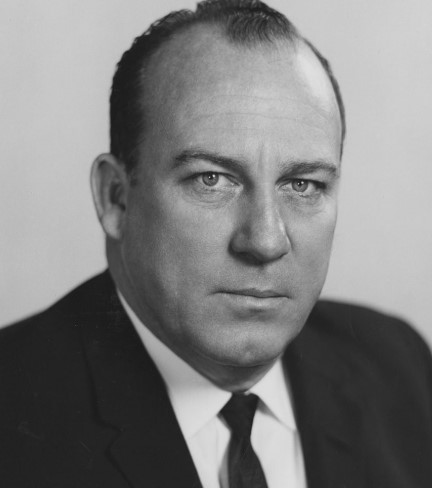
And sitting in the middle of Louisiana’s political establishment for sixteen years was Attorney General Jack P. F. Gremillion.
That does not mean Gremillion was a Mafia stooge. The historical record does not support reducing his career to such a simple accusation. What it does show is considerably more interesting: a powerful state official operating inside a political culture where organized crime had established relationships with businessmen, politicians and law-enforcement figures, while federal investigators increasingly tried to determine where legitimate government ended and criminal influence began.
Eventually, Gremillion himself would become the target of a federal criminal investigation.
The case would revolve around a failed financial company called Louisiana Loan & Thrift Corporation, allegations involving securities, and testimony about Gremillion’s financial interest in the company. He would ultimately be convicted of perjury before a federal grand jury, although he was acquitted of the underlying securities-fraud charges.
The story was not simply about the Mafia. It was about power.
The Long Machine
Jack Gremillion’s political career was born inside the rough-and-tumble world of Louisiana Democratic politics.
Governor Earl K. Long played an important role in his rise. Gremillion defeated incumbent Attorney General Fred S. LeBlanc and began what became an extraordinary sixteen-year tenure as Louisiana’s attorney general, serving from 1956 until 1972. His long career placed him at the center of state politics during the administrations of Earl Long, Jimmie Davis and John McKeithen.
Long and Gremillion developed a political relationship that became one of the defining features of Gremillion’s career.
Louisiana politics during this period was intensely personal. Political loyalty mattered. So did patronage, alliances and access. The state was still wrestling with the legacy of the Long political machine while New Orleans possessed its own complicated network of political, business and criminal interests.
And somewhere in that landscape stood Carlos Marcello.
Carlos Marcello’s New Orleans
Marcello was not merely a neighborhood gangster. By the 1950s and 1960s, federal authorities regarded him as the dominant organized-crime figure in New Orleans. His influence extended into gambling, business and political relationships, although the exact nature of those relationships varied from individual to individual.
The important point for Gremillion’s story is that Marcello did not operate in isolation.
A released federal intelligence document concerning Marcello specifically addressed his relationship with Gremillion. An informant told investigators that Marcello and Gremillion had a relationship and that calls had been made to the Attorney General’s office from a motel associated with Marcello interests in 1966. The informant said many of the calls were actually made to assistants in the Attorney General’s office with whom he had become friendly during his years as a parish attorney, seeking legal opinions about real-estate matters.
That distinction matters.
The document does not establish that Gremillion was taking orders from Marcello. It does, however, place the Attorney General’s office inside the network of contacts that federal investigators were examining around Marcello.
For a historian, that is far more useful than simply calling somebody “Mafia-connected.”
| The Gambling Town: Kentucky’s Attorney General and the Mob’s Newport Empire |
The Gambling Question
New Orleans had another problem that refused to disappear: gambling. For decades, illegal gambling had been one of the financial pillars of organized crime in the city. Federal investigations, congressional inquiries and local reform organizations repeatedly examined the relationship between gambling operations and public officials.
The 1951 Kefauver investigation had already placed New Orleans and Carlos Marcello under a national spotlight. Two decades later, the issue had not disappeared. Federal investigators were still examining allegations involving organized gambling, political protection and corruption.
Gremillion’s office existed in the middle of that environment. The question was not simply whether gambling existed. Everyone knew it did. The question was who permitted it to exist.
That distinction would become increasingly important as federal investigators began looking beyond street-level bookmakers and gambling houses toward the financial structures supporting Louisiana’s political and business establishment.
A Federal Investigation Comes to Louisiana
By the late 1960s, federal investigators were examining a number of Louisiana institutions and officials.
The Metropolitan Crime Commission of New Orleans had become one of the most persistent critics of the city’s official denial that organized crime existed. In 1967, after Life magazine published an article describing organized crime in New Orleans, Orleans Parish District Attorney Jim Garrison launched a grand-jury investigation into the allegations. The resulting legal battle involved subpoenas seeking information from the Metropolitan Crime Commission concerning its sources and information about organized crime.
Gremillion was part of this broader law-enforcement landscape. At the same time, federal investigators were digging into Louisiana Loan & Thrift Corporation.
What they found would put the Attorney General himself under a much brighter light.
| The Man in the Statehouse: When Alabama’s Attorney General Went to War for the Mob |
Louisiana Loan & Thrift
Louisiana Loan & Thrift was supposed to be a legitimate financial enterprise. Instead, federal investigators alleged that the company had become part of a complicated securities operation involving prominent Louisiana figures. The federal indictment alleged that Gremillion had been instrumental in founding the company, advised and assisted its management, held a concealed ownership interest, attended board meetings and received money in the form of fees, loans and dividends.
Those were serious allegations.
The federal government charged Gremillion and others with securities-related offenses, including fraudulent sales of securities, mail fraud, sale of unregistered securities and conspiracy. The Securities and Exchange Commission reported the indictment in February 1969.
Gremillion did not simply disappear into the machinery of the federal prosecution. He fought. And the case eventually produced one of the strangest distinctions in his career. Gremillion was acquitted of the underlying securities charges. But the story did not end there.
The Grand Jury
While the broader prosecution was underway, Gremillion testified before a federal grand jury investigating Louisiana Loan & Thrift. The government focused on whether he had actually possessed an economic interest in the company.
His testimony became the basis for a separate prosecution.
In 1972, the Fifth Circuit affirmed his conviction on five counts of perjury for statements he made before the federal grand jury. The appellate court noted that Gremillion had been acquitted on the underlying securities charges, but held that the perjury conviction could stand.
The distinction is crucial. Gremillion was not convicted of securities fraud.
He was convicted of lying to a federal grand jury about his interest in Louisiana Loan & Thrift.
The Fifth Circuit affirmed that conviction. The once-powerful Attorney General who had spent sixteen years occupying one of the most influential offices in Louisiana politics was now a federal criminal defendant with a conviction attached to his name.
The Marcello Connection
This is where the story becomes particularly interesting for students of organized crime. There is documentary evidence that federal investigators were interested in the relationship between Gremillion and Marcello. There is also evidence that investigators were examining Marcello’s relationships with numerous Louisiana officials and businessmen.
One FBI document specifically records questions about Marcello’s relationship with Gremillion and telephone contacts with the Attorney General’s office. Another document identifies Gremillion among individuals connected to a proposed business arrangement involving Marcello interests and describes a meeting between Marcello, Gremillion and attorney Jack Wasserman. It also stated that Gremillion intended to use Wasserman as his lawyer in the Louisiana Loan & Thrift matter.
Those records deserve attention. But they also deserve caution.
An intelligence report is evidence of what investigators were told or what they were investigating, not automatically proof that every allegation contained in it was true. That is particularly important when dealing with informants, organized crime investigations and political figures.
The temptation in Mafia history is to connect every name with a straight line. The historical record is rarely that clean.
| Carlos Marcello |
A Political Culture Under Investigation
Gremillion’s problems arrived at a moment when Louisiana’s political system was already facing intense scrutiny.
Federal investigators were examining organized crime. Congress was debating stronger tools against the Mafia. Local crime commissions were challenging official denials about organized crime. Gambling remained a persistent source of criminal revenue.
And state officials were increasingly being forced to answer questions about their relationships with businessmen and political operators.
In 1970, a congressional discussion of organized crime specifically cited the federal prosecution involving Gremillion and Louisiana Loan & Thrift. The congressional record described allegations that organized-crime enterprises had received a substantial portion of the company’s deposits through loans.
That did not prove that Gremillion himself was acting on behalf of the Mafia. It did demonstrate why the case mattered.
The federal government was no longer interested solely in finding bookmakers and gamblers. Investigators were following the money into banks, corporations, securities offerings and political relationships. The underworld was becoming increasingly difficult to distinguish from the legitimate economy.
The Fall of Jack Gremillion
Gremillion’s political career ultimately ended under the shadow of the federal investigation. His legal troubles did not erase everything he had accomplished in office, nor did his prosecution establish that every allegation made about him or his political relationships was true.
But the symbolism was difficult to miss. For sixteen years, Gremillion had occupied the office responsible for enforcing Louisiana law. By the early 1970s, he had been convicted of lying to the federal government about his connection to a financial company that prosecutors had investigated for securities violations.
And the FBI files showed that investigators had also been examining his contacts with the political and business network surrounding Carlos Marcello. There was no single smoking gun that neatly proved a Mafia-controlled Attorney General.
There was something more complicated.
There was a political system in which powerful men knew one another, criminal enterprises sought protection and legitimacy, businessmen crossed paths with politicians, and federal investigators increasingly suspected that the lines between them had become dangerously blurred.
The Real Story Behind Gremillion’s Louisiana
The most interesting question is not whether Jack Gremillion was “the Mafia’s Attorney General.” The evidence does not justify such a simple conclusion.
The better question is how a man who spent sixteen years as Louisiana’s chief legal officer became entangled in an investigation involving a financial corporation, securities violations and testimony before a federal grand jury—while federal investigators were simultaneously examining the political relationships surrounding Carlos Marcello.
That story is darker because it is real.
Organized crime did not always need a politician to take orders from a mob boss. Sometimes influence operated through friendships, favors, business relationships, lawyers, political alliances and access. That was the world of Carlos Marcello.
And Jack Gremillion spent sixteen years living at its center. New Orleans had always known that power came with a price.
By the time the federal government finished examining Louisiana Loan & Thrift, Jack Gremillion had learned just how expensive that price could become.
References:
- United States v. Gremillion, 464 F.2d 901 (5th Cir. 1972). U.S. Court of Appeals for the Fifth Circuit.
- United States v. Anzelmo, 319 F. Supp. 1106 (E.D. La. 1970).
- Louisiana State Bar Association v. Gremillion, 320 So. 2d 171 (La. 1975).
- U.S. Securities and Exchange Commission. SEC News Digest, February 24, 1969. “Five Indicted in New Orleans.”
- U.S. Congress. Congressional Record, 91st Cong., 2nd Sess., August 6, 1970. Discussion concerning organized crime legislation and the federal prosecution involving Jack P. F. Gremillion and Louisiana Loan & Thrift Corporation.
- National Archives and Records Administration. FBI records concerning Carlos Marcello and Louisiana political and business relationships, including document 32577900, released through the JFK Assassination Records Collection.
- Louisiana Supreme Court. In re Metropolitan Crime Commission, 251 La. 518, 205 So. 2d 384 (1967).
- United States Commission on Civil Rights. Voting, 1961. Historical report concerning Louisiana state officials and Attorney General Jack P. F. Gremillion.
- Grady, Alan. When Good Men Do Nothing: The Assassination of Albert Patterson. Tuscaloosa: University of Alabama Press, 2003.
- Kurtz, Michael L. Earl Long: The Saga of Uncle Earl and Louisiana Politics. Baton Rouge: Louisiana State University Press, 1993.
- D Magazine. “Who’s Behind the Mafia in Dallas?” December 1977. Discussion of Carlos Marcello’s Louisiana political and business relationships.
- Equal Justice Initiative. Lynching in America: From Enslavement to Segregation and Mass Incarceration. Montgomery, Alabama: Equal Justice Initiative, historical discussion of Jack P. F. Gremillion’s tenure and Louisiana’s resistance to desegregation.