Sam “Momo” Giancana: The Smiling Devil of Chicago
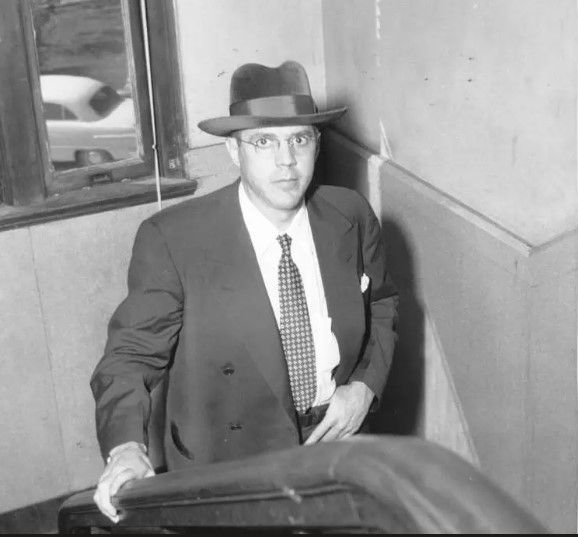
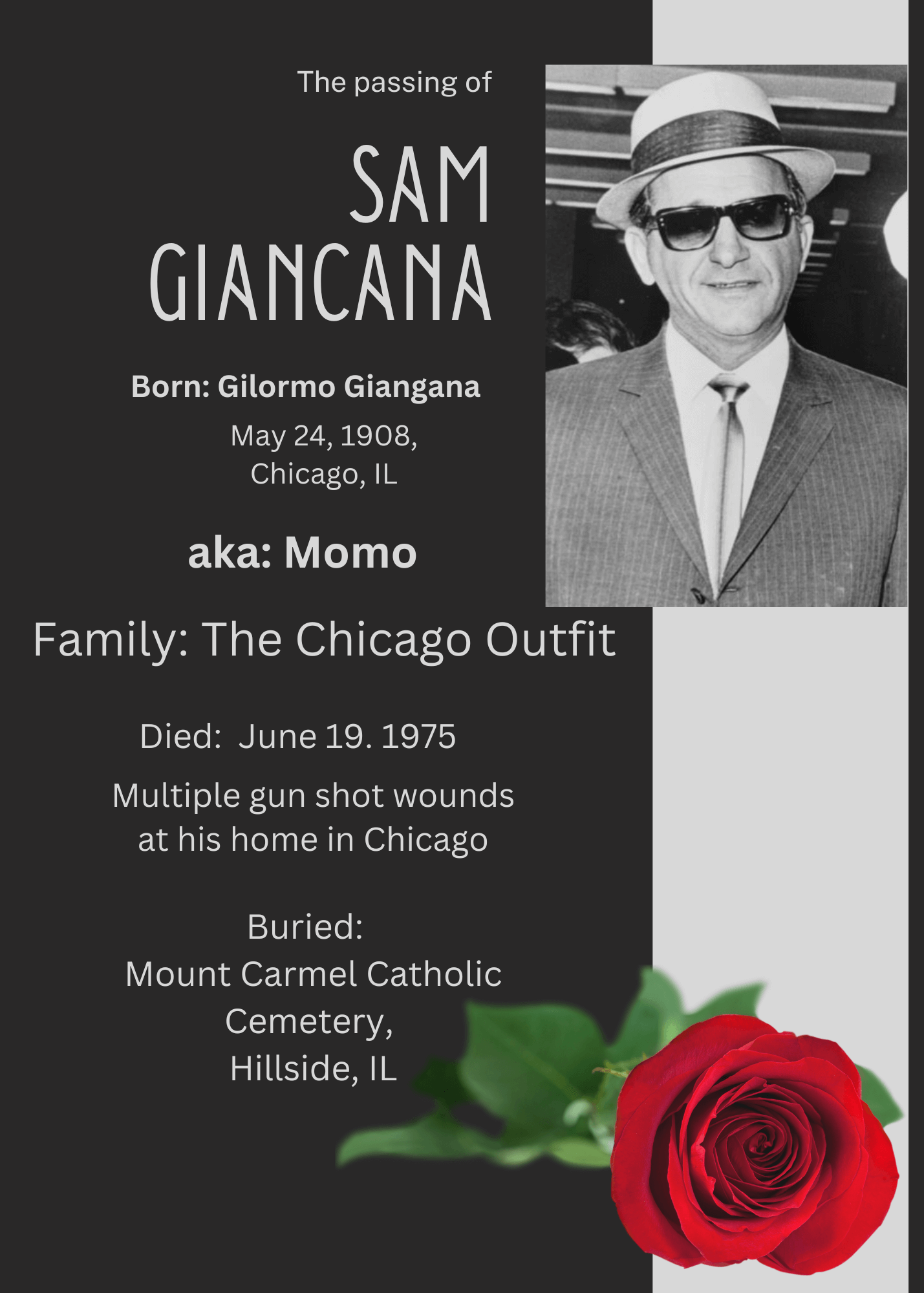
Sam Giancana looked less like a traditional Mafia don and more like a neighborhood businessman who happened to know everybody in town. He was compact, sharp-eyed, stylish without being elegant, and capable of shifting from charm to menace in seconds. Friends called him funny and magnetic. Enemies called him ruthless, paranoid, and explosively violent.
Both descriptions were true.
Giancana rose from the bloody streets of Chicago to become one of the most powerful organized crime figures in America during the 1950s and 1960s. As boss of the Chicago Outfit, he inherited a criminal empire shaped by Al Capone but transformed by postwar America into something more sophisticated, political, and deeply connected to legitimate institutions.
Unlike old-world Mafia bosses who preferred secrecy, Giancana cultivated visibility carefully. He loved nightlife, celebrity culture, expensive restaurants, and public attention. He socialized with entertainers, politicians, businessmen, and rumored intelligence operatives. At the height of his influence, whispers connected him not only to organized crime but also to presidential politics, Las Vegas casinos, Hollywood stars, and covert Cold War operations.
Reality and mythology became tangled around Sam Giancana so completely that even decades later it remains difficult to separate fact from rumor.
That uncertainty became part of his legend.
The Streets of Chicago
Sam Giancana was born Salvatore Giancana in Chicago in 1908 to poor Sicilian immigrant parents. He grew up in the city’s violent immigrant neighborhoods during an era when gangs controlled entire blocks through intimidation, theft, and political corruption.
Chicago was not merely corrupt during Giancana’s youth. It was industrialized corruption.
Street gangs worked alongside political machines, labor racketeers, police officers, and bootleggers inside a city where violence often operated openly. Young Giancana entered that world early, joining the notorious 42 Gang, a street crew known for hijackings, robberies, and brutal enforcement work.
The gang gained its name from 42nd Place, but its reputation spread far beyond one neighborhood.
Giancana stood out because of his fearlessness and intelligence. He became known as a skilled getaway driver and aggressive street enforcer. Unlike some gangsters who developed slowly through social connections, Giancana earned respect directly through violence and reliability.
The Chicago Outfit noticed.
By the time Prohibition flooded organized crime with money during the 1920s, Giancana had already positioned himself within one of America’s most dangerous criminal environments.
The Chicago Outfit After Capone
The public often remembers Chicago organized crime through the larger-than-life image of Al Capone. But by the time Giancana rose to prominence, the Outfit had evolved far beyond Capone’s flamboyant bootlegging empire.
The new generation operated more quietly and more strategically.
Following Capone’s downfall and imprisonment for tax evasion, leaders like Tony Accardo modernized the Outfit into a disciplined criminal organization deeply embedded in gambling, labor unions, extortion, narcotics, and political corruption.
Giancana became one of Accardo’s most trusted rising figures.
He excelled at gambling operations and policy rackets, especially Chicago’s lucrative underground lottery systems. He also demonstrated a willingness to use violence whenever necessary to maintain control.
Associates described him as both highly social and deeply dangerous. He could joke comfortably at dinner one moment and order retaliation the next. That unpredictability made people cautious around him.
By the 1950s, Giancana had effectively become boss of the Chicago Outfit while Accardo stepped partially into a quieter supervisory role behind the scenes.
Now Giancana controlled one of the most powerful criminal organizations in America.
Hollywood, Las Vegas, and Celebrity Culture
Giancana loved attention.
Unlike quieter Mafia bosses such as Carlo Gambino, Giancana embraced nightlife and celebrity culture enthusiastically. He socialized with entertainers, singers, actors, and wealthy businessmen regularly.
Las Vegas became especially important to him.
Like many organized crime leaders during the postwar years, Giancana recognized the extraordinary profit potential of casino operations in Nevada. The Chicago Outfit invested heavily in Las Vegas casinos through hidden ownership interests, skimming operations, and partnerships with legitimate businessmen.
Millions flowed quietly from casino counting rooms back into Outfit-controlled channels.
Giancana thrived inside this glamorous environment. Expensive restaurants, casinos, showgirls, and celebrity parties suited his personality perfectly.
He also became linked romantically to singer Phyllis McGuire, a relationship that intensified public fascination with him. Reporters increasingly portrayed Giancana as a celebrity gangster living between Hollywood glamour and organized crime brutality.
That visibility created problems.
The federal government was becoming more aggressive toward organized crime, and Giancana’s growing public profile attracted attention from both journalists and investigators.
Politics, the Kennedys, and CIA Rumors
Few gangsters became more entangled with American political mythology than Sam Giancana.
Rumors and allegations connected him to the 1960 presidential election, particularly claims involving organized crime influence in Illinois during John F. Kennedy’s narrow victory over Richard Nixon.
The stories remain heavily debated, but they became part of Giancana’s legend permanently. Even more explosive were allegations involving the Central Intelligence Agency.
During the Cold War, the CIA reportedly explored covert relationships with organized crime figures as part of plots targeting Cuban leader Fidel Castro after the Cuban Revolution destroyed Mafia casino operations in Havana.
Giancana’s name surfaced repeatedly in these stories.
The idea sounded unbelievable to many Americans: the U.S. government potentially collaborating with Mafia figures for international assassination plots.
Yet investigations and released documents over later decades suggested that contacts between intelligence operatives and organized crime figures did occur.
How deeply Giancana personally participated remains debated. But the rumors amplified his mystique enormously. He became not merely a mobster but a figure linked to the darkest corners of Cold War America.
Federal Pressure and Exile
By the early 1960s, Attorney General Robert F. Kennedy launched aggressive campaigns against organized crime. Giancana became a major target.
Wiretaps, surveillance, subpoenas, and grand jury investigations intensified steadily. Federal authorities viewed Giancana as both politically dangerous and symbolically important. Bringing him down would demonstrate that even powerful Mafia bosses were vulnerable.
Giancana responded badly to pressure.
He became increasingly paranoid and erratic. Associates feared his temper. Law enforcement monitored him constantly. In 1965, after refusing to answer grand jury questions, Giancana was jailed for contempt.
Eventually, mounting legal pressure pushed him to leave the United States for Mexico. Exile frustrated him deeply.
Like many powerful gangsters, Giancana struggled psychologically when separated from his networks of influence and control. Though still respected, he no longer commanded the same direct authority he once had in Chicago.
The Outfit itself also preferred stability over public controversy. Giancana increasingly looked like a liability.
The Murder of Sam Giancana
In 1974, Giancana returned to the United States.
Rumors circulated immediately that federal investigators wanted to question him again regarding organized crime, Cuba, and possible intelligence operations connected to past political scandals.
Then, on June 19, 1975, Giancana was murdered in the basement of his suburban Chicago home while cooking sausage and peppers.
The killing looked professional.
He was shot multiple times, including a final shot to the back of the head—a classic execution-style signature.
Officially, the murder remains unsolved. Unofficially, theories exploded for decades.
Some believed the Outfit silenced him before he could cooperate with investigators. Others suspected intelligence connections, political motives, or old criminal rivalries.
The mystery only deepened Giancana’s legend.
The Legacy of Sam Giancana
Sam Giancana embodied the transition of organized crime during postwar America from street-level gangsterism into something entangled with politics, entertainment, labor unions, casinos, and international intrigue.
He was both traditional mobster and modern media figure.
Like John Gotti after him, Giancana understood the power of publicity. But unlike Gotti, Giancana operated during an era when the boundaries between organized crime, politics, and intelligence agencies appeared disturbingly porous. That ambiguity made him endlessly fascinating.
He was charismatic enough to move among celebrities and ruthless enough to survive Chicago organized crime for decades. Yet like many gangsters who grew too visible, too ambitious, or too politically complicated, he ultimately died violently.
In the end, Sam Giancana became something larger than a Mafia boss.
He became a symbol of mid-century American corruption itself—a world where gangsters, politicians, entertainers, and covert operatives sometimes seemed to occupy the same smoky room, speaking quietly over drinks while the rest of the country watched only the shadows on the wall.