The One Rule That Made the American Mafia Powerful
Silence was its armor. Discipline was its weapon. And violence was supposed to be the last resort.
There was a time when a man could disappear from a New York neighborhood without anyone admitting they had ever known him. A business owner might suddenly become generous. A union official might change his position overnight. A politician could discover that a campaign contribution came with expectations he had never agreed to discuss. Nobody needed to explain what had happened. The message was understood.
That was the real power of the American Mafia. Not the gunmen lurking outside restaurants, not the bodies turning up in abandoned automobiles, and not the spectacular executions that made newspaper headlines. Those were the visible pieces of a much larger machine. Behind the violence stood something far more important: an organization built around discipline, hierarchy, silence, and an almost obsessive need for control.
Hollywood made the Mafia famous for its bloodshed. History tells a more complicated story. The American Mafia did not become one of the most influential criminal organizations in the country simply because its members were willing to kill. It became powerful because, at least during its most successful years, its leaders understood when not to kill.
There was one unwritten principle that held much of the operation together: control yourself, control your people, and never allow personal ambition to threaten the organization.
It was a rule enforced through loyalty, intimidation, financial incentives, and, when necessary, murder. Break it, and the consequences could be permanent.
The Business of Keeping Blood Off the Streets
The popular image of a Mafia operation is a collection of violent men settling every disagreement with a pistol. In reality, much of the organization’s business was considerably less theatrical. Money was counted, favors were exchanged, territory was negotiated, union contracts were manipulated, gambling operations were protected, and disputes were settled behind closed doors.
A well-connected Mafia boss did not need to send a gunman into a restaurant every time somebody refused to cooperate. Sometimes a telephone call was enough. Sometimes a meeting with the right person accomplished what a dozen threats could not. And sometimes the mere knowledge of what had happened to someone who crossed the organization made further persuasion unnecessary.
Violence was always part of the equation, but it was an expensive and unpredictable business expense. A murder could trigger an investigation, attract newspaper attention, invite retaliation, and create witnesses who might eventually become cooperating informants. Even a successful hit could leave behind a trail of problems that threatened the very people who had authorized it.
This did not make Mafia leaders compassionate or restrained men in any conventional sense. They were criminals who understood that uncontrolled violence was bad for business. A dead man could no longer pay tribute, run a gambling operation, deliver a union contract, or maintain a useful political connection. Worse, his murder could create a blood feud that consumed money, manpower, and attention for years.
The Mafia’s preferred arrangement was a profitable one: everyone understood who held the power, everyone knew what was expected, and nobody had to make a public demonstration of what happened when the rules were ignored.
Fear was most useful when it remained in the background.
| Five Families: Blood, Power, and the Empire Beneath New York |
Order Over Instinct: The Criminal Chain of Command
The American Mafia’s organizational structure was one of its greatest advantages. Its hierarchy established lines of authority and created a system in which individual members were expected to subordinate personal grievances to the interests of the family.
At the top sat the boss, who controlled the organization and its most important decisions. Beneath him was the underboss, followed by the consigliere, capos, and soldiers. Associates operated around the edges of the organization, sometimes earning substantial money without becoming formally inducted members.
The structure was not simply a collection of impressive titles. It was a mechanism for controlling people who were often violent, ambitious, suspicious, and accustomed to getting their own way.
A soldier who felt insulted by another member was not supposed to settle the matter with a bullet. A capo was expected to handle disputes within his crew and answer to the boss. Major decisions involving violence, territory, or the interests of other families could require approval from higher authorities. The precise rules varied between families and across different periods, but the underlying principle remained important: individual members were not supposed to turn personal disagreements into organizational wars.
The system was far from perfect. Mafia history is filled with insubordination, conspiracies, betrayals, and unauthorized killings. Yet the hierarchy provided something that ordinary street gangs often lacked: a mechanism for regulating conflict and protecting the larger enterprise from the destructive impulses of its members.
A criminal organization could survive a great deal of outside pressure. What it could not survive indefinitely was a war among its own people.
| John Gotti and the Myth of the Betrayed Boss |
Omertà: The Most Valuable Thing a Mobster Owned
In the Mafia, silence was not merely a tradition. It was a form of protection.
Omertà, the code of silence associated with the Sicilian Mafia, became one of the most recognizable features of American organized crime. Its popular interpretation suggests a romantic code of honor, an almost medieval commitment to loyalty among thieves. The reality was considerably uglier.
Silence protected the organization from law enforcement, shielded its leadership from prosecution, and made it extraordinarily difficult for investigators to establish the connections between criminal acts and the men who profited from them.
A soldier might collect money from an illegal gambling operation without knowing every person involved in the business. A bookmaker might deal with a middleman who answered to a capo, who ultimately reported to a boss. Information was compartmentalized, and members were expected to know only what they needed to know.
This arrangement created layers of insulation between the people committing crimes and the people directing them.
It also created a psychological prison. Members learned that speaking to outsiders could destroy their standing, their livelihood, and potentially their lives. Even conversations among fellow mobsters required caution. A man who talked too freely could become a liability, and liabilities were not generally treated with kindness.
The greatest enforcement mechanism was the knowledge that cooperation with authorities could make a man an enemy of everyone he had once called a friend. But silence had limitations. It depended on trust, and trust depended on the belief that the organization would protect its members. Once that confidence disappeared, the code began to unravel.
| I Was Just Following Orders: The Deadliest Lie in Organized Crime |
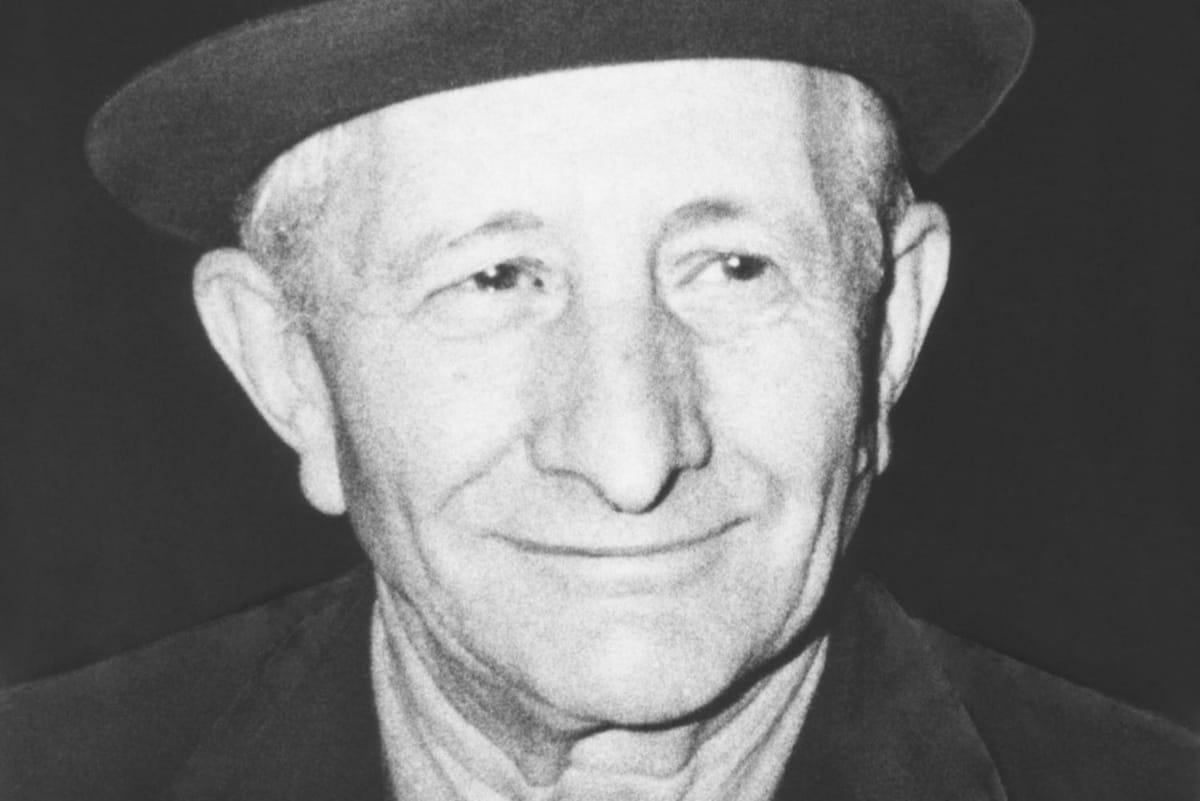
Carlo Gambino: The Boss Who Understood the Value of Invisibility
Few figures illustrate the advantages of restraint better than Carlo Gambino.
Gambino was not a particularly theatrical mob boss. He rarely sought the kind of public attention that surrounded more flamboyant figures, and he generally preferred to operate through trusted associates rather than place himself at the center of every dispute. His leadership style emphasized patience, relationships, financial interests, and careful management of the Gambino crime family.
He became boss in 1957 following the assassination of Albert Anastasia, a particularly violent figure whose murder inside a Manhattan barbershop remains one of the most notorious episodes in Mafia history. Gambino’s rise was not simply a matter of inheriting a position. It involved alliances, political maneuvering within the underworld, and an ability to maintain relationships with powerful figures.
Under Gambino, the family became one of the most influential criminal organizations in the United States. Its interests extended into labor racketeering, construction, gambling, loansharking, and other lucrative enterprises. He maintained connections with other Mafia leaders while generally avoiding the public spectacle that could attract unnecessary attention.
Gambino understood that a boss did not have to be the loudest man in the room to control it. His authority rested on the organization beneath him, the relationships he cultivated, and the knowledge that his decisions carried consequences.
He died of natural causes on October 15, 1976, at his home in Massapequa, Long Island. His death did not bring the family to an end. Instead, it exposed the continuing importance of succession, alliances, and internal stability in an organization that had grown far beyond the personality of one man.
Gambino’s career offered a lesson that more reckless leaders would eventually ignore: the most effective exercise of power is sometimes the one nobody sees.
| Carlo Gambino |
When the Mafia Forgot Its Own Rules
The American Mafia’s history contains a recurring warning. When personal ambition overtook organizational discipline, the consequences could be catastrophic.
The Castellammarese War of 1930–1931 was perhaps the clearest early example. The conflict between the forces of Joe Masseria and Salvatore Maranzano turned New York’s underworld into a battlefield. Mobsters were murdered, alliances shifted, and the struggle for supremacy threatened the stability of the criminal networks that had developed around gambling, bootlegging, and racketeering.
The war was not simply a disagreement over territory. It was a struggle over who would control the future of organized crime in New York.
Among the men watching the conflict unfold was Charles Lucky Luciano. Luciano recognized that endless internal warfare was bad for business. The old system, dominated by personal loyalties and rivalries, had created an environment in which ambitious men could drag entire organizations into conflict.
Luciano eventually helped orchestrate the removal of Masseria in April 1931 and Maranzano in September of that year. Both men were murdered, and the balance of power shifted.
Luciano’s subsequent reorganization helped establish a more structured system of cooperation among the major Italian-American Mafia families. The Commission provided a forum for resolving disputes, coordinating interests, and preventing individual bosses from dragging the entire organization into unnecessary warfare.
It was not a peace conference in any honorable sense. It was a criminal boardroom designed to protect criminal profits.
The Commission represented an important change in the way the Mafia exercised power. Rather than relying entirely on the authority of individual bosses, it provided a mechanism for managing relationships among competing families. It did not eliminate violence, but it offered a way to regulate conflicts that might otherwise become destructive.
The lesson was unmistakable: a Mafia boss who could not control his own people was a danger to everyone else.
The Price of Losing Control
By the 1970s and 1980s, the environment surrounding organized crime had changed dramatically. Federal investigators had developed more sophisticated surveillance techniques, prosecutors had access to increasingly powerful legal tools, and the government’s ability to build complex organized-crime cases had improved.
The Mafia was also facing a problem from within. The old assumptions about loyalty and silence were becoming increasingly difficult to maintain.
The Racketeer Influenced and Corrupt Organizations Act (RICO) of 1970 gave prosecutors a powerful tool for pursuing criminal enterprises and their leadership. Rather than treating every illegal transaction as an isolated offense, the government could pursue patterns of criminal activity and the organizations behind them.
The 1980s brought some of the most consequential Mafia prosecutions in American history. The Commission Case, which culminated in convictions of prominent Mafia leaders in 1986, demonstrated how federal prosecutors could use surveillance, cooperating witnesses, and RICO to reach men who had once seemed insulated from ordinary criminal investigations.
The old walls of silence were beginning to crack.
One of the most damaging developments was the growing number of mobsters willing to cooperate with authorities. Men who had once accepted prison sentences rather than testify against their associates began reconsidering the arrangement. Some faced lengthy sentences. Others feared being murdered by their own organizations. Still others recognized that the leadership they had served was no longer capable of protecting them.
The Mafia had always operated on a bargain: obedience in exchange for money, status, and protection. When that bargain stopped working, loyalty became a much harder commodity to purchase.
The career of Sammy Gravano illustrated the devastating consequences. Gravano, a high-ranking member of the Gambino family, became a cooperating witness against boss John Gotti and other organized-crime figures. His testimony helped secure Gotti’s conviction in 1992.
The betrayal was more than a personal humiliation for the Gambino family. It demonstrated that even men who had reached the highest levels of the organization could decide that their future was better served by abandoning the code.
Omertà could intimidate a man into silence, but it could not guarantee that he would remain silent forever.
The One Rule That Made Them Powerful
The American Mafia was never an organization built on perfect discipline. Its history is littered with murder, treachery, greed, and spectacular failures of leadership. But during its most successful decades, its strongest families understood that violence alone could not sustain an empire.
Silence limited exposure. Hierarchy restrained individual ambition. Restraint prevented unnecessary conflicts. And the threat of punishment ensured that members understood the consequences of challenging the organization.
Together, these principles created a criminal system that could operate for decades while maintaining relationships with businesses, labor unions, politicians, and legitimate institutions.
The irony is that the same qualities that helped the Mafia become powerful also made its eventual decline more revealing. As internal discipline weakened, members became less willing to trust one another. As trust disappeared, informants emerged. As informants emerged, investigations reached deeper into the organization’s leadership. The walls that had once protected the bosses began closing around them.
The Mafia did not simply lose a battle against law enforcement. It lost control of the people who made its power possible.
There is a final lesson buried beneath the history of the American underworld. Fear can establish authority, but it cannot maintain an organization forever. Money can purchase loyalty, but only while the rewards outweigh the risks. Violence can silence an enemy, but it can also create ten more.
The most powerful Mafia bosses understood that a gun was a terrible substitute for discipline. The men who forgot that lesson often ended up dead, imprisoned, or betrayed by the very people they had spent their lives controlling. In the end, the Mafia’s greatest weapon was never the bullet.
It was the ability to convince thousands of people that nobody would ever dare to pull the trigger without permission.
References:
Abadinsky, Howard. Organized Crime. 11th ed., Cengage Learning, 2017.
Critchley, David. The Origin of Organized Crime in America: The New York City Mafia, 1891–1931. Routledge, 2009.
Dickie, John. Cosa Nostra: A History of the Sicilian Mafia. Palgrave Macmillan, 2004.
Federal Bureau of Investigation. The Commission Case. United States District Court for the Southern District of New York, 1985–1986. Court records and trial proceedings.
Jacobs, James B., Christopher Panarella, and Jay Worthington. Busting the Mob: United States v. Cosa Nostra. New York University Press, 1994.
Lupo, Salvatore. History of the Mafia. Translated by Antony Shugaar, Columbia University Press, 2009.
Maas, Peter. The Valachi Papers. G. P. Putnam’s Sons, 1968.
Raab, Selwyn. Five Families: The Rise, Decline, and Resurgence of America’s Most Powerful Mafia Empires. Thomas Dunne Books, 2005.
United States Congress. Organized Crime Control Act of 1970, Public Law 91-452, 84 Stat. 922.