Carlos Marcello and the Men of Washington
When Washington’s Power Brokers Met the Men of the Underworld
In Washington, everybody has friends. The more important question is who those friends are, what they want, and what happens when the relationship becomes inconvenient.
Carlos Marcello understood that better than most men who operated on the wrong side of the law. He understood politicians, sheriffs, governors, judges, lawyers, and businessmen. He also understood the peculiar traditions of Louisiana politics, where personal relationships, patronage, and political loyalty could matter as much as formal authority.
Washington, however, presented a different challenge. Sometimes federal officials wanted Marcello’s testimony. Sometimes they wanted his records. Sometimes they wanted him deported. Eventually, some of the most powerful men in the country made him a priority in their campaign against organized crime.
Marcello’s story is not simply about a mobster cultivating friends in high places. It is also about a criminal organization deeply embedded in its local political environment and a federal government determined to dismantle the influence surrounding it. His ability to survive years of investigations, prosecutions, and deportation efforts made him one of the most consequential organized-crime figures in the American South.
Then came John F. Kennedy and his younger brother, Robert F. Kennedy. Their arrival in Washington transformed Marcello’s relationship with the federal government, turning an already contentious history into a personal and political struggle that would continue for years.
| Blood in the Bayou: Crime and Power in Louisiana Under Carlos Marcello |
The Room: New Orleans, January 25, 1951
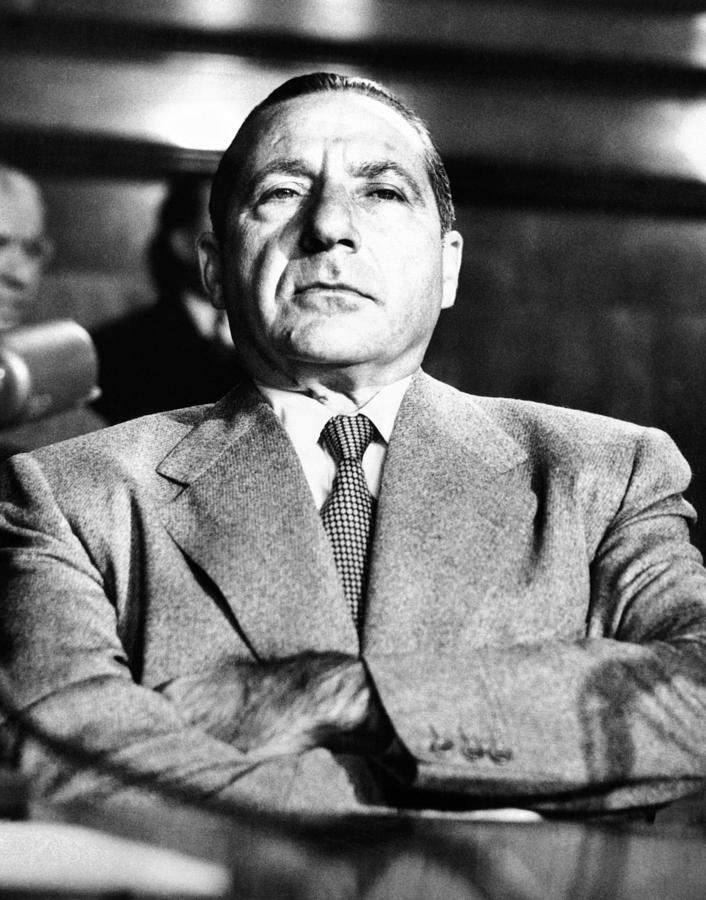
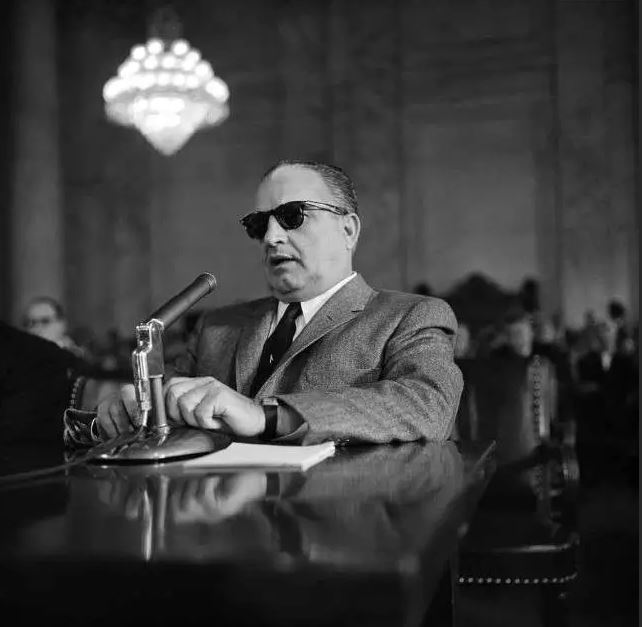
A Senate committee had come to New Orleans, and Carlos Marcello was on its list of witnesses. The Special Committee to Investigate Organized Crime in Interstate Commerce, better known as the Kefauver Committee, was examining the networks behind America’s gambling operations, racketeering enterprises, and suspected political corruption. Its hearings had attracted national attention by exposing the relationships between criminal organizations and the legitimate institutions operating around them.
Now investigators wanted answers from Marcello, a powerful figure in Louisiana’s gambling world whose activities and associations had attracted the attention of federal authorities.
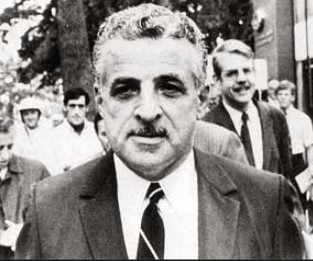
Marcello appeared before the committee on January 25, 1951. According to the official Senate record, investigators questioned him about his background, activities, and associations. His response was to invoke the Fifth Amendment repeatedly, refusing to provide substantive answers that might incriminate him.
The committee had hoped to learn more about the organization surrounding Marcello, including the gambling interests that generated revenue and the political relationships that might have protected those operations. Instead, investigators encountered a witness who appeared determined to reveal as little as possible.
Silence was Marcello’s strategy. He did not need to explain how the machinery worked if he could avoid answering the questions that might expose it. The encounter captured a central problem facing congressional investigators in the early 1950s. They could summon suspected underworld figures, question them under oath, and assemble evidence about their activities. Getting those witnesses to cooperate, however, was another matter entirely.
Marcello had entered the Senate’s investigation, but he had no intention of making the committee’s job easy.
| The Friendly Climate: Earl Long, Carlos Marcello, and Louisianas’s Open-Door Underworld |
The Politician: Power Without Elected Office
Carlos Marcello never served as a senator, governor, or mayor. He did not need an elected position to understand the importance of political influence.
Louisiana’s political culture had long been shaped by powerful personalities, patronage networks, local political organizations, and influential families. In that environment, relationships could determine who received a favor, who obtained a government appointment, and whose interests received attention from public officials.
Marcello operated within this political landscape with a keen understanding of how influence could be exercised. By the late 1940s, he had established himself as a dominant figure in Louisiana’s gambling world, and his interests intersected with businesses, law enforcement, and political figures throughout the region.
The Kefauver Committee’s 1951 investigation examined allegations of corruption involving public officials and the protection of gambling and vice operations. Later investigations and reporting would continue to scrutinize the relationships between Marcello’s organization and people in positions of public authority.
Yet the historical record requires a distinction between political influence and absolute control. Describing Marcello as a man who simply controlled Louisiana overlooks the complicated network of relationships, competing interests, and institutional resistance surrounding him.
There were allegations of payoffs and official assistance. There were public officials who defended Marcello or were accused of helping his interests, while others opposed him or participated in efforts to investigate his activities. Some politicians knew him without necessarily becoming participants in his criminal enterprise.
Understanding that distinction is essential. The existence of a relationship can be historically significant without automatically proving corruption or criminal collaboration. Marcello’s power lay partly in his access to people who could influence how government operated. Determining what that access accomplished, however, requires evidence about individual relationships and specific actions.
| Five Families: Blood, Power, and the Empire Beneath New York |
The Other Guys: Governors, Politicians, and Criminal Associates
Marcello’s world extended far beyond the men who worked directly for him. His political environment included governors, mayors, legislators, law-enforcement officials, and other people whose decisions could affect his interests. His criminal associations also connected him to figures operating within the broader national underworld.
One of the most significant political relationships involved Louisiana Governor Earl K. Long, a colorful and influential figure whose career reflected the state’s tradition of highly personal politics. Long and Marcello have been discussed extensively in accounts of Louisiana’s political and criminal history, and their relationship illustrates the complicated intersection between Marcello’s organization and the state’s political establishment.
In 1956, Long pardoned Marcello following an earlier criminal conviction. The pardon was an important event in Marcello’s history because it demonstrated that the organized-crime figure had access to the highest levels of state government, even after his criminal record had become a matter of public concern.
The pardon, by itself, does not establish that Long participated in a criminal conspiracy or that every aspect of the relationship was corrupt. It does, however, raise legitimate historical questions about the circumstances surrounding the decision, the political environment in which it occurred, and the relationships that made such access possible.
Marcello was not operating in isolation from Louisiana’s political establishment. He existed within a system where personal connections could open doors that might otherwise have remained closed. That access was a form of political currency. For a man whose criminal activities attracted the attention of law enforcement, relationships with influential officials could be especially valuable.
The Connection: From Senate Hearings to Deportation
Marcello’s conflict with Washington began long before the Kennedy administration. The Kefauver Committee had already brought him before a national investigation in 1951, and federal immigration authorities had been pursuing his deportation for years.
Marcello was not a United States citizen. Immigration officials sought to remove him from the country, initially relying on his criminal record and his immigration status. The effort became a prolonged legal struggle, with Marcello using attorneys and litigation to resist the government’s attempts to deport him.
For years, the proceedings continued without permanently removing him from the United States. Then the political landscape changed dramatically.
In 1961, John F. Kennedy became president, and his younger brother, Robert F. Kennedy, assumed the position of attorney general. The new administration made organized crime a major federal priority, treating it as a national problem rather than merely a collection of local criminal enterprises.
Marcello became one of the administration’s targets.
On April 4, 1961, immigration authorities took him into custody during what he understood to be a routine reporting visit in New Orleans. He was transported to the airport and deported to Guatemala, an operation that became one of the defining episodes in his long conflict with federal authorities.
The deportation was an aggressive use of the government’s immigration powers and a striking demonstration of the determination with which the Kennedy administration pursued him. Washington was no longer simply investigating Marcello’s organization. It was attempting to remove him from the country.
Marcello eventually returned to the United States, and the legal struggle continued. But the experience had fundamentally changed his relationship with the federal government. His conflict with Washington was no longer an abstract dispute over investigations and prosecutions; it had become a deeply personal confrontation with the men leading the government’s campaign against organized crime.
Follow the Money: The Value of Political Protection
The financial world surrounding Marcello did not always resemble the familiar image of cash changing hands in a hotel room. The relationships that sustained his influence could be more complicated, involving gambling operations, business dealings, political patronage, and alleged cooperation from public officials.
Illegal gambling could generate enormous revenue, but maintaining a profitable operation required more than collecting bets. Operators needed locations, employees, reliable communications, and some way to manage the risk of arrest or interference. Relationships with people in positions of authority could potentially make those operations easier to sustain.
The Kefauver Committee investigated allegations of corruption involving public officials associated with Louisiana’s gambling and vice operations. Later federal investigations and journalistic accounts continued to examine the extent of Marcello’s political influence and the alleged cooperation his organization received from officials at different levels of government.
A 1980 Washington Post report discussed a federal investigation into Marcello’s political influence and quoted former New Orleans crime investigator Aaron Kohn describing the organization’s dependence on corrupt cooperation from public officials. The article also reported that more than 30 prominent Louisianans had written to a federal judge on Marcello’s behalf following his 1966 assault conviction.
Those individuals reportedly included politicians, law-enforcement officials, businessmen, bankers, and others. Their willingness to support Marcello was noteworthy, particularly given his reputation and criminal history.
But a letter of support is not proof that its author participated in corruption. People may support an individual for personal, political, professional, or other reasons, and those motives must be examined rather than assumed.
What the reported correspondence demonstrated was that Marcello retained a substantial network of people willing to associate their names with his defense. That network was itself historically significant, revealing how far his relationships extended into respectable circles.
For a man whose influence depended partly on access, such relationships could be valuable in ways that a simple exchange of money could never fully explain.
What Washington Knew: The McClellan Committee
The Kefauver hearings were not the last time Marcello would face congressional investigators. On March 24, 1959, he appeared before the Senate committee investigating labor-management corruption, commonly known as the McClellan Committee. Robert F. Kennedy served as the committee’s chief counsel, while John F. Kennedy was one of its members.
Once again, Marcello invoked the Fifth Amendment rather than provide substantive answers to the committee’s questions. The hearing placed three men on the same historical stage who would become central figures in one of the most consequential federal campaigns against organized crime: Carlos Marcello, John F. Kennedy, and Robert F. Kennedy.
The McClellan Committee was investigating criminal influence in labor unions and the relationships between organized crime, union leadership, and political power. Its work focused particularly on corruption and racketeering in organized labor, including concerns involving the Teamsters.
Marcello was part of this broader investigation, although he was far from the committee’s only target. Investigators were attempting to understand how criminal figures could exert influence through businesses, unions, and relationships with people holding positions of authority.
The committee’s work helped establish the groundwork for subsequent federal efforts against organized crime. Robert Kennedy’s experience investigating labor racketeering would prove especially important when he became attorney general.
For Marcello, the significance was difficult to ignore. The men asking questions in the Senate were becoming increasingly influential, and one of them would soon lead the Justice Department responsible for pursuing him.
The relationship between Marcello and Washington was entering a new phase. The government was no longer simply assembling information about organized crime; it was preparing to use its growing authority to confront major criminal organizations directly.
The Kennedy Problem: A Personal and Political Conflict
Robert Kennedy’s appointment as attorney general transformed the federal government’s relationship with Marcello. The Kennedy administration treated organized crime as a national law-enforcement priority and pursued major figures whose activities had previously been handled primarily through state and local investigations.
Marcello was among them. The Justice Department continued the effort to deport him, culminating in his removal to Guatemala in April 1961. His eventual return to the United States did not end the government’s interest in him or the conflict between the two sides.
Marcello regarded the deportation as an extraordinary abuse of federal power. Later investigations documented the intensity of his hostility toward Robert Kennedy, whose Justice Department had made him a target.
The confrontation was significant because it brought together two very different forms of power. Marcello possessed an established organization, extensive regional relationships, and decades of experience navigating Louisiana’s political environment. The Kennedy administration possessed the investigative resources, legal authority, and institutional reach of the federal government.
Neither side simply disappeared after the first confrontation. Marcello continued fighting the government’s efforts against him, while federal authorities continued investigating his activities.
The conflict later became an important part of the debate surrounding President Kennedy’s assassination. But the historical evidence demands a clear distinction between the documented hostility and the much more serious allegations that followed.
There is evidence that Marcello had reason to resent the Kennedy administration. There is evidence that the administration aggressively pursued him, including through the deportation effort. Neither fact, standing alone, establishes that Marcello ordered or participated in the assassination of President Kennedy.
Motive is not proof of murder. Establishing responsibility for an assassination requires evidence that goes beyond personal hostility, opportunity, or a history of conflict. That distinction is particularly important when examining Marcello, whose name became attached to numerous theories and allegations in the decades after Kennedy’s death.
The Politician’s Answer: Businessman or Mafia Boss?
Throughout his encounters with federal authorities, Marcello maintained a position sharply different from the government’s assessment of him. He denied being a Mafia boss or directing organized crime and presented himself instead as a businessman.
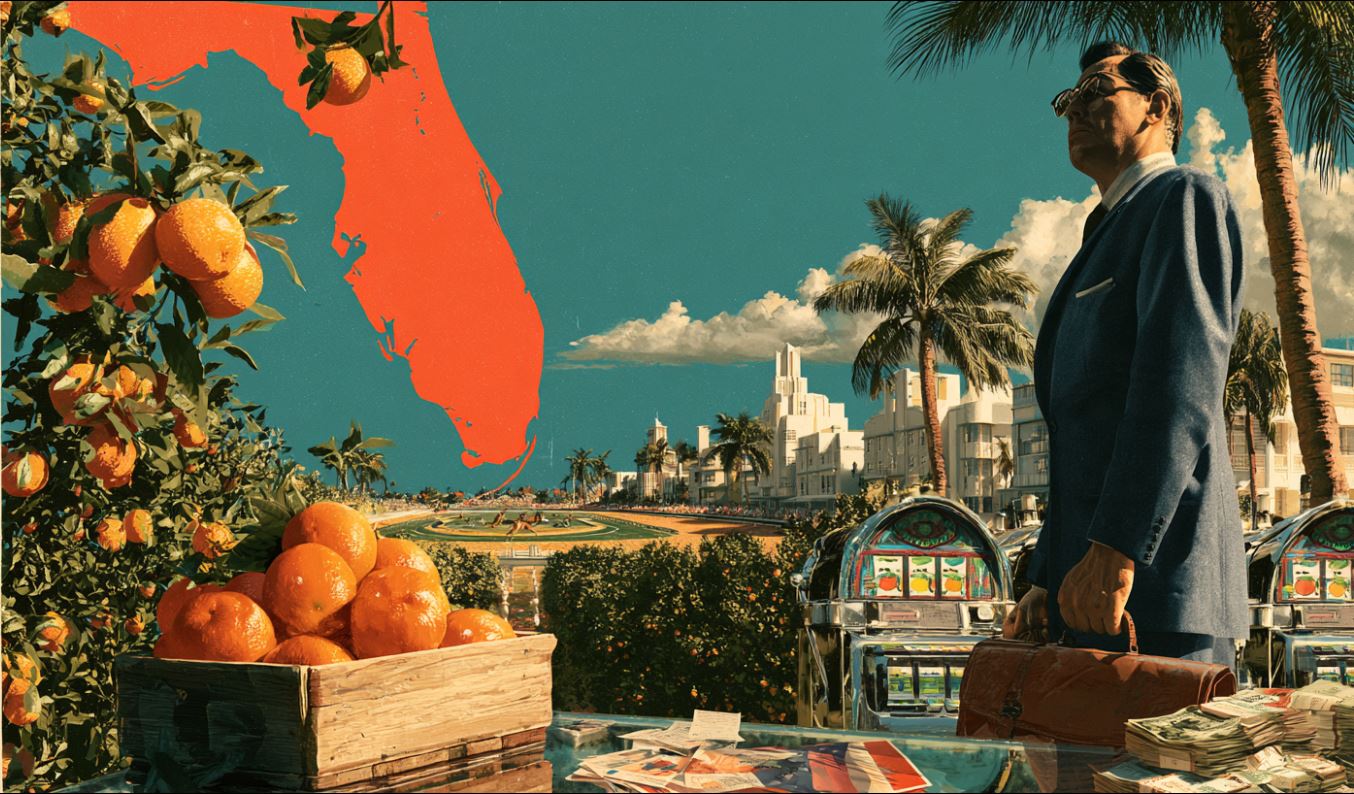
At various points, he described himself as a tomato salesman and later as an investor. Federal investigators, however, regarded him as a major organized-crime leader whose influence extended across Louisiana’s gambling operations and political environment.
The contrast became a recurring feature of his relationship with Washington. Federal authorities investigated him, sought to deport him, and pursued legal action against him. Marcello challenged their efforts and continued to contest the government’s characterization of his activities.
His repeated invocations of the Fifth Amendment also became a defining element of his public encounters with investigators. Rather than provide the explanations congressional committees sought, he relied on his constitutional protection against compelled self-incrimination. That choice did not itself establish guilt. It did, however, limit the information investigators could obtain directly from him and reinforced the difficulty of penetrating the organization surrounding him.
The conflict was almost circular. Washington regarded Marcello as a powerful racketeer who needed to be confronted, while Marcello portrayed himself as a businessman subjected to government persecution. Federal authorities continued their investigations, and he continued to resist them.
The result was a prolonged struggle between an entrenched organized-crime figure and a government determined to challenge his position.
The Men of Washington: When the Balance of Power Shifted
There is an irony at the center of Marcello’s story. He became known for his relationships with politicians, yet some of the most consequential political figures in his life were not allies. They were the men who sought to dismantle his organization or remove him from the country.
Estes Kefauver brought Marcello before a national audience during the Senate’s investigation of organized crime. John McClellan’s committee examined the criminal influence surrounding labor and business. John F. Kennedy became president, and Robert F. Kennedy became attorney general, placing the full authority of the federal government behind an increasingly aggressive campaign against organized crime.
Suddenly, Marcello was dealing with federal officials who had both the resources and the determination to challenge him. His experience illustrates an important aspect of the relationship between politics and organized crime. Influence did not always mean that gangsters controlled elected officials. Sometimes politicians used the power of government to investigate and prosecute criminal organizations, while those organizations relied on their own relationships and legal strategies to resist.
The two worlds could cooperate in some circumstances and collide in others. Political connections might help a criminal figure obtain access or support, but they could not guarantee protection against every investigation or prosecution.
Marcello’s decades-long conflict with Washington demonstrates the limits of influence as well as its potential value. He had relationships in Louisiana, but the federal government could bring resources to bear that extended far beyond the reach of local political networks.
In his case, the struggle between those competing forms of power became an essential part of the historical story.
The Marcello Myth: The Kennedy Assassination
No examination of Carlos Marcello’s relationship with Washington can avoid the controversy surrounding John F. Kennedy’s assassination. Over the decades, Marcello’s hostility toward the Kennedy administration, his connections within organized crime, and the circumstances of the president’s death have fueled speculation about a possible role in a conspiracy.
The House Select Committee on Assassinations examined Marcello’s background and his possible connections to the assassination. Its findings are frequently discussed because the committee considered whether organized-crime figures might have had motives to participate in a conspiracy against the president.
The committee identified Marcello as a possible figure of interest and concluded that he had motive, means, and opportunity. However, it did not establish direct evidence of his complicity in Kennedy’s assassination.
That qualification is crucial. The committee’s assessment did not amount to a finding that Marcello ordered the murder or participated in a conspiracy. Evidence of hostility toward the president’s administration and a potential motive cannot substitute for evidence establishing what a person actually did.
The distinction between association and conspiracy is especially important in this case. Marcello had connections to other organized-crime figures and a documented history of conflict with the Kennedy administration. Those facts provide historical context, but they do not automatically establish responsibility for the assassination.
Over time, the subject accumulated competing theories, disputed testimony, and allegations that went beyond what the available evidence could demonstrate. A responsible account must distinguish the committee’s findings from later speculation and acknowledge where the record remains inconclusive. The documented history of Marcello’s dealings with Washington is already remarkable. It does not need unproven allegations presented as established fact to make it compelling.
The Record: A Criminal Figure Under Decades of Scrutiny
Carlos Marcello’s history with the federal government extended across several decades. He appeared before the Kefauver Committee in 1951 and invoked the Fifth Amendment. In 1959, he appeared before the McClellan Committee and again declined to provide substantive answers to investigators. The Kennedy administration subsequently targeted him in its campaign against organized crime, and he was deported to Guatemala in 1961 before returning to the United States. His political influence in Louisiana remained a subject of repeated investigation and journalistic reporting, while federal authorities continued pursuing cases against him.
Marcello eventually faced major federal convictions, including a 1981 California conviction involving a conspiracy to bribe a federal judge. A later Louisiana conviction was overturned after the Supreme Court invalidated the mail-fraud statute used in that prosecution.
These events complicate any attempt to reduce Marcello’s history to a simple tale of an untouchable Mafia king or an innocent businessman persecuted by Washington. The documented record instead reveals a powerful organized-crime figure who operated within a political environment where personal relationships mattered enormously and where allegations of corruption repeatedly attracted official scrutiny.
Marcello had access to political figures, and some officials were accused of helping him or protecting his interests. Other public officials and federal investigators worked to expose his activities and bring him to account.
The government spent decades attempting to penetrate the network surrounding him, using congressional investigations, immigration proceedings, and criminal prosecutions. Marcello, in turn, relied on legal challenges and his established relationships to resist those efforts.
The result was a long and complicated struggle that exposed both the potential reach of organized-crime influence and the limits of that influence when confronted by determined federal authorities.
What We Know
The historical record establishes several important facts about Marcello’s relationship with Washington. He was a major target of congressional investigations into organized crime, appearing before both the Kefauver Committee in 1951 and the McClellan Committee in 1959. On both occasions, he invoked the Fifth Amendment rather than provide the substantive answers investigators sought.
The Kennedy administration aggressively pursued him, and federal immigration authorities deported him to Guatemala in 1961. He eventually returned to the United States, where his legal and political struggles continued.
Investigations and contemporary reporting documented extensive allegations of corruption involving public officials and the environment surrounding Marcello’s Louisiana organization. His relationships with influential political figures, including Governor Earl K. Long, were an important part of that history.
We also know that Marcello developed intense hostility toward Robert Kennedy following the deportation campaign. That hostility became relevant to later investigations into the Kennedy assassination, although it did not establish that Marcello participated in the crime.
These are significant historical facts, not merely conspiracy theories. They provide a foundation for examining how organized crime interacted with political power and how the federal government attempted to confront those relationships.
What We Don’t Know
The existence of a relationship does not prove that every politician who met Marcello was corrupt. Nor does evidence that a public official supported him establish that the official had been bribed or knowingly assisted criminal activity.
Political access and criminal collaboration are different things, and each alleged instance of wrongdoing must be evaluated on its own evidence. The same caution applies to claims about Marcello’s role in the assassination of President Kennedy.
The House Select Committee on Assassinations examined Marcello but stopped short of establishing direct evidence that he was complicit in the assassination. Later theories and allegations cannot erase that distinction.
The temptation is to connect every person, meeting, and event into one continuous conspiracy. Sometimes historical evidence establishes meaningful connections; in other cases, individuals may share an environment or association without participating in the same activities.
The task of responsible history is to determine which connections can be demonstrated and which remain speculation. Marcello’s political influence and his conflict with Washington deserve serious examination precisely because the documented facts are substantial enough to stand on their own.
The Final Word: Surviving the Men Who Wanted Him Gone
Carlos Marcello spent much of his life demonstrating that a man did not need to hold public office to understand politics. He understood the value of relationships, the importance of access, and the advantages that could come from knowing people who had influence over public institutions.
Power, however, came in different forms. Sometimes it belonged to a governor sitting behind his desk. Sometimes it belonged to a senator issuing a subpoena. Sometimes it arrived through an immigration order backed by the authority of the federal government.
Marcello’s greatest political achievement may not have been controlling politicians. It may have been his ability to survive years of investigations, deportation efforts, prosecutions, and changing political administrations while remaining an influential figure in Louisiana’s organized-crime history.
Washington investigated him, summoned him before congressional committees, attempted to deport him, and pursued criminal cases against him. He returned to the United States, challenged the government’s actions, and continued to fight the legal battles that followed.
His story reveals an uncomfortable truth about the relationship between organized crime and political power. Criminal influence did not always depend on controlling elected officials outright. Sometimes it depended on access, personal relationships, and a network of people willing to offer support.
But the Marcello story also demonstrates that political connections were not an absolute shield. The same federal institutions that struggled to expose the relationships surrounding him eventually brought substantial legal pressure to bear against him.
The central question is not simply whether Marcello knew powerful people. The evidence shows that he did. The more important questions concern what those relationships accomplished, which officials acted improperly, and how much influence one criminal organization could exert within a political system that was never entirely under its control.
For decades, Carlos Marcello navigated the intersection of organized crime and American politics. His story is one of access, resistance, and the collision between local influence and federal authority.
And it leaves us with one final question: When the men of the underworld knew the men of Washington, who was really using whom?
| Carlos Marcello |
References
- United States Senate. “The Kefauver Committee.” U.S. Senate Historical Office.
U.S. Senate — Kefauver Committee - United States Senate. “Kennedy Caucus Room.” U.S. Senate Historical Office.
U.S. Senate — Kennedy Caucus Room - U.S. Senate, Special Committee to Investigate Organized Crime in Interstate Commerce. Proceedings Against Carlos Marcello for Contempt of the Senate, S. Rep. No. 82-120, 82nd Cong., 1st Sess. (1951).
GovInfo — Proceedings Against Carlos Marcello - United States Senate, Committee on Homeland Security and Governmental Affairs. “Permanent Subcommittee on Investigations Historical Background.”
Senate — PSI Historical Background - National Archives. House Select Committee on Assassinations — Findings.
National Archives — HSCA Findings - National Archives. HSCA Records concerning Carlos Marcello and his deportation.
National Archives — Marcello Deportation Records - Lardner, George Jr. “U.S. vs. Marcello.” The Washington Post, February 18, 1980.
The Washington Post — U.S. vs. Marcello - United States Court of Appeals, Fifth Circuit. Marcello v. United States, 196 F.2d 437 (1952).
Marcello v. United States — Case Text - Los Angeles Times. “Carlos Marcello; Gulf Coast Crime Figure.” March 5, 1993.
Los Angeles Times — Carlos Marcello