The Westies and the Javits Center: How a Manhattan Megaproject Became a Mob Battleground
There was a time when Hell’s Kitchen smelled of coal smoke, whiskey, garbage and the Hudson River.
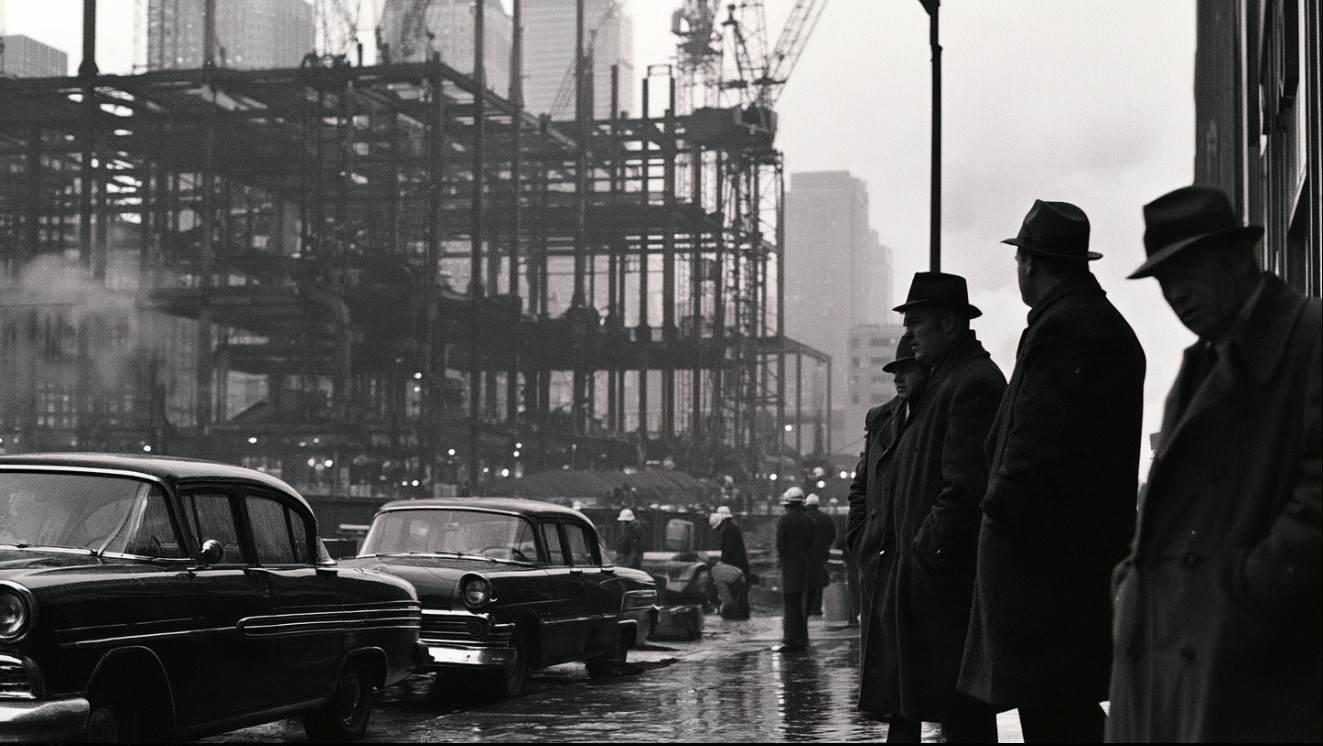
Then came the cranes.
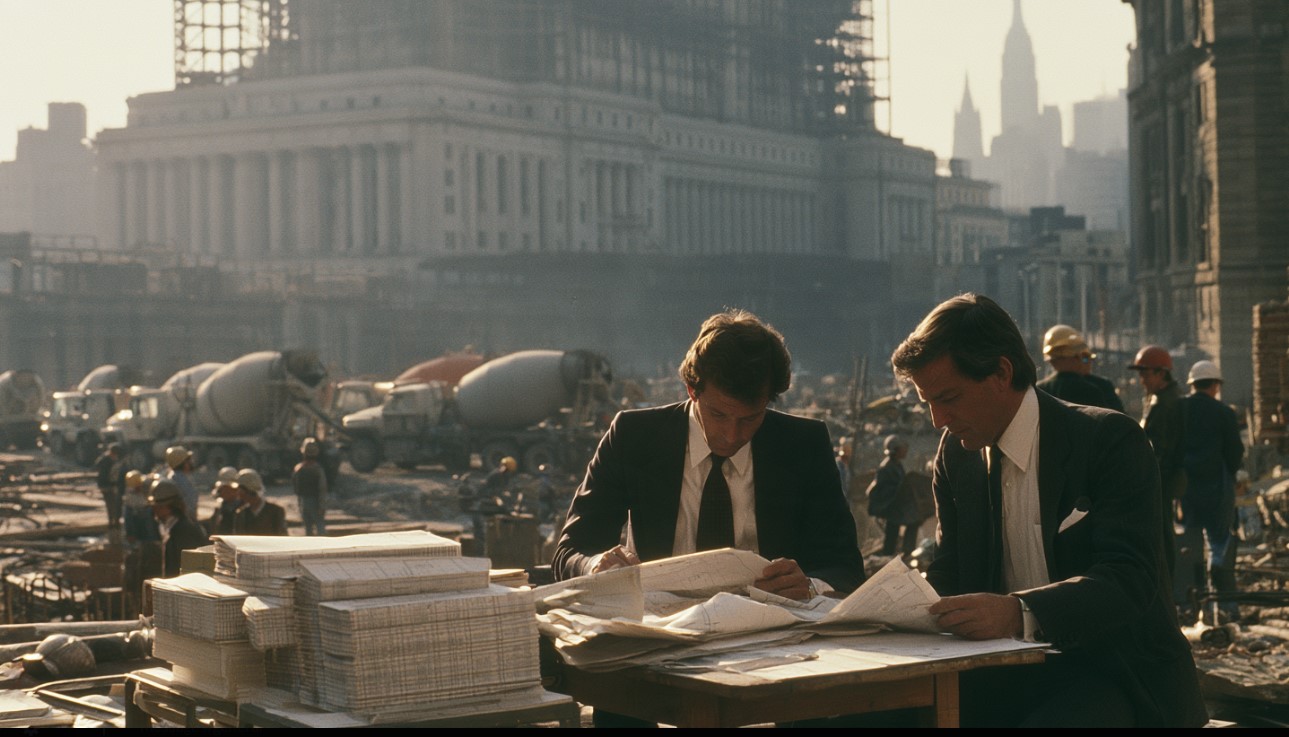
By the 1970s, Manhattan’s West Side was beginning to change, and one of the biggest prizes was rising on the western edge of Hell’s Kitchen: the Jacob K. Javits Convention Center. The building would not open until 1986, but long before the glass and steel went up, the construction project had already become part of a much darker contest.
For organized crime, the question was simple. Who controlled the jobs, the unions, the contracts and the money? The answer could be worth millions.
And in Hell’s Kitchen, men had already demonstrated that they were willing to kill for considerably less.
Hell’s Kitchen Had a New Gold Mine
The Westies did not invent labor racketeering in Manhattan. Organized crime had been involved with New York unions and construction for decades, and the city’s enormous building industry offered countless opportunities for corruption, extortion and influence.
But Hell’s Kitchen was entering a new era.
The old waterfront economy was declining. Traditional rackets tied to the docks were becoming less dependable, while redevelopment was transforming the West Side. Construction offered something the old neighborhood rackets could not: a seemingly endless stream of contracts, workers, union positions, subcontracting opportunities and access to legitimate businesses.
The proposed convention center was particularly attractive.
It would occupy a huge section of Manhattan’s West Side and require thousands of workers and an army of contractors and subcontractors. For legitimate businessmen, it was a major public construction project.
For criminals who understood how unions and construction could be manipulated, it looked like a vault with no combination. The Westies wanted the key. So did the Italian Mafia.
Mickey Spillane Refuses to Move
At the center of the Irish side of the struggle stood Mickey Spillane.
Spillane had ruled much of Hell’s Kitchen through gambling, loansharking and neighborhood influence. He was not simply another street gangster. He represented an established Irish criminal organization that had deep roots in the neighborhood.
The proposed Javits Center sat squarely inside that territory. Spillane was not interested in surrendering the construction racket to outsiders.
That brought him into conflict with Italian organized-crime interests, particularly the Genovese family. Later accounts of the Westies describe Anthony “Fat Tony” Salerno as wanting control of the project and seeking an arrangement that would put the construction operation under Italian Mafia influence. The stakes were enormous.
The Genovese family had the manpower, connections and union relationships to make a serious challenge. Spillane had something different: control of the neighborhood.
Hell’s Kitchen was his backyard. And Spillane was not about to let the Italians walk in and take the money.
Jimmy Coonan Sees the Future
Then there was Jimmy Coonan. Coonan belonged to a younger generation of Hell’s Kitchen criminals who did not have the same patience for the old order. He had already been at war with Spillane and had challenged him violently.
But Coonan understood something that would ultimately change the balance of power. You did not necessarily have to defeat the Italian Mafia. You could make a deal with it.
According to accounts of the Westies’ rise, Coonan reached an understanding with Salerno that would give Italian organized crime control over the construction operation while allowing Coonan to receive a share of the proceeds.
That arrangement transformed the nature of the conflict.
Coonan was no longer simply fighting Mickey Spillane for control of Hell’s Kitchen.
He was positioning himself to inherit Spillane’s territory while allowing the Italian Mafia to gain access to one of the most lucrative construction projects in Manhattan.
It was a classic underworld transaction. One side supplied the neighborhood. The other supplied the machinery. Everyone expected to get paid.
The Guns Came Before the Concrete
The Javits Center was still a construction project on paper when violence began reshaping the criminal hierarchy around it.
Several of Spillane’s associates were murdered during the escalating conflict. Tom Devaney, Eddie “the Butcher” Cummiskey and Tom “the Greek” Kapatos were among the men killed during the struggle for control of Hell’s Kitchen.
The killings weakened Spillane’s organization and helped clear the way for Coonan.
This was not simply a gang war over pride.
Every dead gangster potentially represented another piece of territory, another gambling operation, another loansharking customer and another connection to the construction world.
The violence was clearing the board.
And Coonan was positioning his pieces.
In May 1977, Spillane was murdered in Queens. Later accounts attributed the killing to Roy DeMeo, a Gambino soldier, acting in connection with Coonan. The precise circumstances surrounding the killing have been the subject of competing accounts, but the political and criminal consequence was unmistakable: the old Irish power structure had collapsed.
Coonan was now in position to dominate Hell’s Kitchen.
And the Italians had a new partner.
Roy DeMeo Enters the Picture
Roy DeMeo was one of the most important pieces in the new arrangement.
A Gambino associate, DeMeo was becoming notorious for the extreme violence associated with his crew. His relationship with Coonan provided the Westies with access to the Italian Mafia’s larger network.
For the Gambinos, Coonan represented something useful. The Westies controlled Hell’s Kitchen. They knew the neighborhood.
They knew the unions, bars, bookmakers, loan-shark customers and local criminals. They could operate in places where outsiders might attract attention.
And the construction boom offered a steady stream of opportunities.
The arrangement eventually led to a meeting involving Gambino boss Paul Castellano and Coonan and Mickey Featherstone. According to T. J. English’s account, the two sides agreed to share control of the emerging criminal opportunities surrounding the Javits Center. Publishers Weekly, reviewing English’s work, likewise describes the Javits Center as the “golden goose” over which the Westies and Mafia agreed to share dominion.
The Westies had fought the Italians. Now they were working with them.
The Golden Goose
Construction racketeering did not require a gangster to stand outside a building collecting envelopes every Friday. The real money could come through control. Control over who received jobs. Control over union membership. Control over subcontractors. Control over work crews. Control over labor peace. Control over who could enter a particular business.
A union position could become currency. A contractor could become a source of tribute. A labor dispute could become leverage.
And a criminal organization did not necessarily have to own a construction company to profit from construction.
It only needed influence. That was the beauty of the racket. The building could be legitimate. The contracts could be legitimate. The workers could be legitimate. The money moving around them could still be dirty.
The Javits Center Becomes a Criminal Battleground
The construction of the Javits Center eventually became entangled in broader allegations of organized-crime influence over New York’s construction industry and unions.
In 1987, federal prosecutors successfully prosecuted Anthony Salerno and other defendants in a major construction bid-rigging case. UPI reported that prosecutors accused Salerno and an associate of rigging 18 major Manhattan construction jobs, including the Javits Center and Trump Plaza, through control of unions and threats of labor action.
That case provided a much more concrete legal record of the relationship between organized crime, unions and major construction projects.
But the Javits story did not end when the building opened.
It got darker.
| The Westies vs. the Mafia: Why the Five Families Feared a Small Irish Gang |
The Mob After the Building Opened
The Javits Center opened in 1986.
By then, the Westies had evolved from a neighborhood gang into something more closely integrated with the Italian Mafia’s criminal network.
And the money did not disappear simply because construction ended.
The building itself generated continuing opportunities through unions, exhibitions, concessions and event work.
In 1995, the New York Times reported on findings by the Independent Review Board alleging that jobs at the Javits Center had been distributed to people with organized-crime connections, relatives and friends of union officials. The report concerned Teamsters Local 807 and described highly paid positions at the center.
That same year, an undercover NYPD investigation produced allegations involving the union representing exhibition workers at Javits. The Commercial Observer, reviewing the center’s history, reported that investigators found a pay-to-play system in which union membership could cost tens of thousands of dollars in exchange for access to lucrative work. The investigation linked the union to the Genovese family and the Westies.
The numbers were staggering.
According to the account, union membership could cost as much as $22,000, while successful members could earn as much as $100,000 a year working events.
The building had become more than concrete and glass.
It had become an ecosystem.
| Roy DeMeo and the Westie: The Partnership Built on Murder |
The Westies Had Found Their Place
The Javits Center demonstrated how the Westies changed after Coonan’s takeover. Mickey Spillane had fought to keep outsiders away from Hell’s Kitchen. Coonan realized that cooperation could be more profitable than isolation.
That decision brought the Westies into the orbit of the Gambino family and connected their neighborhood power to the larger machinery of Italian organized crime.
It also created a dangerous contradiction. The Westies were still Irish. They were still fiercely territorial. But they were increasingly doing business with men whose organizations had once been their rivals.
That relationship made Coonan more powerful. It also made the Westies dependent.
The same alliance that opened doors to construction money ultimately helped pull the gang deeper into the Mafia’s world.
Concrete, Blood and Money
The Javits Center was supposed to symbolize New York’s future.
Instead, for decades, its construction and operation became associated with a very old New York problem: organized crime finding ways to turn legitimate institutions into criminal opportunities.
The Westies did not control every aspect of the Javits Center, and it would be misleading to suggest that every contractor, union member or worker was part of a criminal operation.
The historical record is more complicated.
But there is little doubt that the project became an important battleground in the struggle among Irish gangsters, Italian Mafia families, unions and construction interests.
For Jimmy Coonan, the lesson was simple. Hell’s Kitchen could be ruled with a gun. But the real money was made with a contract. And beneath the steel beams, union cards and construction cranes, the Westies found the racket that could turn a neighborhood gang into something much bigger.
The Javits Center rose over Manhattan. So did the Westies.
And for a while, the two were joined by the same invisible architecture: power, labor, money and fear.
References:
Capeci, Jerry. Murder Machine: A True Story of Murder, Madness, and the Mafia. New York: Dell Publishing, 1992.
English, T. J. The Westies: Inside New York’s Irish Mob. New York: St. Martin’s Press, 1990.
English, T. J. Paddy Whacked: The Untold Story of the Irish American Gangster. New York: HarperCollins, 2005.
Jacobs, James B., Coleen Friel, and Robert Radick. Gotham Unbound: How New York City Was Liberated from the Grip of Organized Crime. New York: New York University Press, 1999.
Raab, Selwyn. “Panel Says Mob’s Friends Got Teamster Jobs at Javits Center.” The New York Times, May 4, 1995.
United Press International. “Genovese Crime Family Boss Anthony ‘Fat Tony’ Salerno and…” UPI Archives, April 28, 1987.
United Press International. “Teamsters Probe NY Javits Center Local.” UPI Archives, March 8, 1995.
“Always a Market: BEA 2012.” Publishers Weekly, 2012. Review and discussion of T. J. English’s The Westies.
“The Javits Center Is About to Get a Big Facelift. It Isn’t Coming a Moment Too Soon.” Commercial Observer, January 25, 2017.