Hell’s Kitchen Before the Westies: The Forgotten Irish Gangsters of New York
Long before Jimmy Coonan and the Westies turned Hell’s Kitchen into one of the most feared neighborhoods in America, another generation of Irish gangsters had already written the rules of survival on its blood-soaked streets. Their names have largely faded from popular memory, overshadowed by Al Capone, Lucky Luciano, and Murder, Inc., yet these forgotten street soldiers helped shape organized crime in New York decades before the Mafia reached its peak.
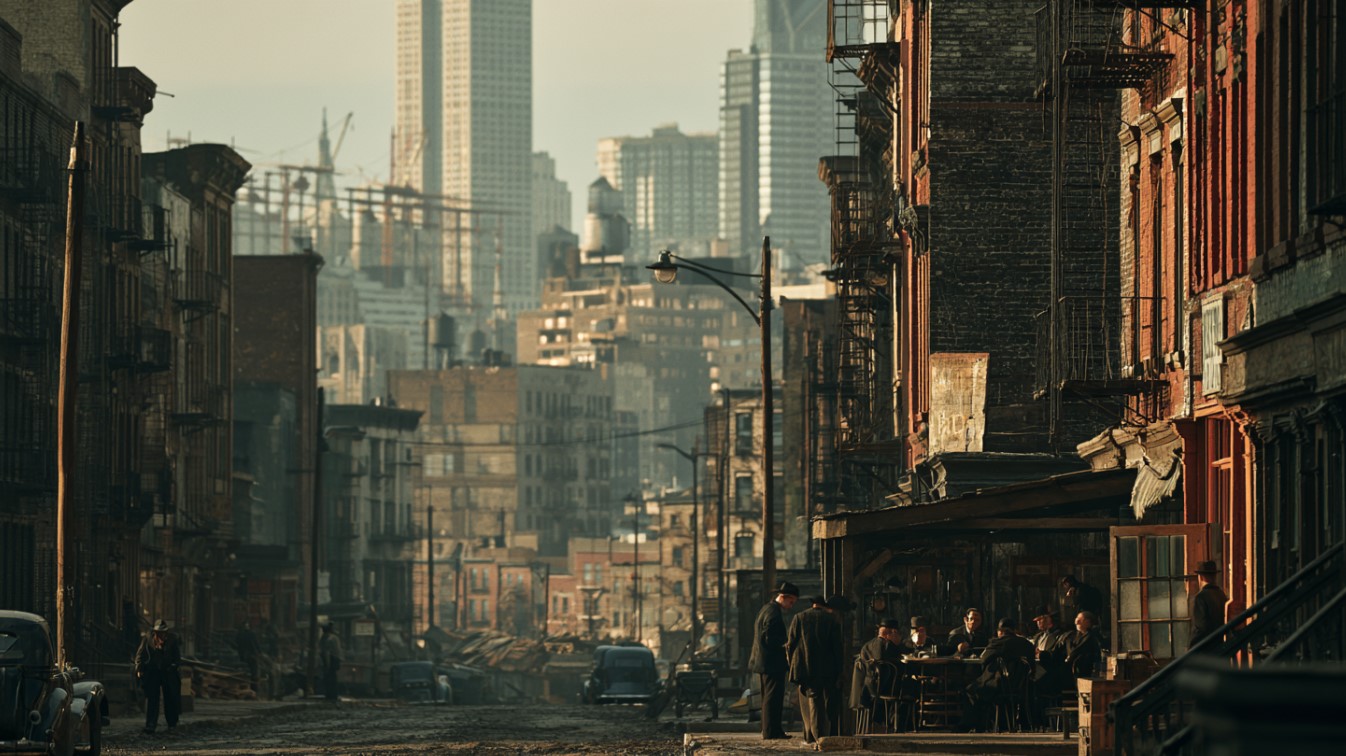
They did not wear tailored suits or preside over elaborate criminal empires. Most never became wealthy enough to escape the neighborhoods that created them. They were products of overcrowded tenements, dangerous docks, corrupt politics, and desperate poverty. They fought with clubs, razors, revolvers, and fists over blocks that respectable New Yorkers avoided after dark.
Their wars transformed Hell’s Kitchen into one of the city’s most notorious battlegrounds. More importantly, they built the criminal culture that eventually produced the Westies. The Irish gangsters of the late nineteenth and early twentieth centuries established a tradition of territorial violence, labor corruption, and political influence that endured long after their own gangs disappeared.
The Westies were not an accident of history.
They were the final chapter of a story that had begun nearly a century earlier.
A Neighborhood Built for Conflict
Hell’s Kitchen earned its violent reputation long before organized crime became a national enterprise.
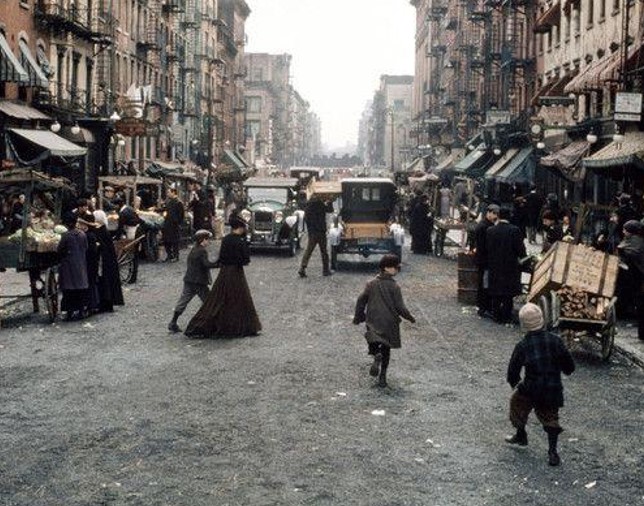
Stretching along Manhattan’s West Side, the neighborhood exploded with immigrants during the nineteenth century. Irish families fleeing the Great Famine arrived in enormous numbers, settling near the Hudson River docks where employment could be found unloading cargo ships, laying railroad tracks, or constructing the rapidly expanding city.
Life offered little comfort.
Entire families crowded into dark tenements with inadequate sanitation, rampant disease, and crushing poverty. Children often left school early to earn wages. Men competed fiercely for dangerous dock work that could disappear overnight. Police protection was inconsistent, while political corruption ensured that favors frequently mattered more than justice.
In neighborhoods where legitimate opportunities were scarce, gangs became employers, protectors, and social clubs all at once.
Young men discovered that controlling a street corner could produce income through gambling, theft, protection payments, or labor intimidation. Violence was not simply tolerated—it became an accepted language of authority.
Hell’s Kitchen evolved into a place where survival depended on strength, reputation, and the willingness to retaliate.
The Gophers Take Control
Among the earliest gangs to dominate Hell’s Kitchen were the Gophers.
Emerging during the late nineteenth century, the Gophers developed a fearsome reputation for robbery, burglary, assault, and election violence. Their exact origins remain debated by historians, but by the 1890s they had become one of Manhattan’s most powerful Irish street gangs.
Unlike later Mafia organizations with rigid hierarchies, the Gophers operated more like neighborhood tribes. Leadership shifted frequently, often determined by whoever proved strongest or most ruthless. Their members knew every alley, rooftop, and waterfront warehouse throughout Hell’s Kitchen.
Political corruption became one of their greatest assets.
New York’s political machines depended heavily upon immigrant votes. During elections, gangs intimidated opponents, stuffed ballot boxes, assaulted rival campaign workers, and ensured favorable outcomes for politicians willing to reward them afterward.
The arrangement benefited everyone involved except ordinary citizens. Politicians received votes. The gangs received protection. Police frequently looked elsewhere. The streets remained under criminal control.
For ambitious young gangsters, violence had become a career path.
The Rise of the Hudson Dusters
As the Gophers began declining, another notorious organization emerged.
The Hudson Dusters earned their name from the neighborhoods surrounding the Hudson River waterfront, where abandoned factories, warehouses, and rail yards provided ideal hiding places for criminals. Active primarily during the first two decades of the twentieth century, the gang became infamous for armed robbery, burglary, waterfront theft, and deadly confrontations with rival gangs.
Unlike many neighborhood crews, the Hudson Dusters operated across a broader section of Manhattan. Their criminal activities expanded beyond simple street crime into organized theft rings, labor disputes, and political intimidation.
Several legendary gangsters passed through their ranks, including Richard Lonergan and Kid Yorke, whose reputations became intertwined with some of New York’s bloodiest gang wars.
Shootouts between rival organizations became common enough that newspapers regularly covered them alongside political scandals and major fires. Innocent bystanders sometimes found themselves caught between feuding gangs battling over territory worth surprisingly little in financial terms.
The real prize was never the corner itself. It was what that corner controlled.
Politics and the Irish Machine
Crime alone cannot explain Hell’s Kitchen. Politics completed the picture.
Organizations such as Tammany Hall transformed Irish immigrants into one of New York’s dominant political forces. Many honest public servants emerged from this system, but corruption also flourished. Patronage determined employment. Loyalty mattered more than qualifications. Local political bosses frequently depended upon neighborhood toughs to maintain influence.
Street gangs became unofficial political operatives.
Election Day often resembled organized warfare rather than democracy. Ballot boxes disappeared. Voters were threatened. Opposing campaign workers suffered mysterious beatings. Friendly police officers ignored obvious criminal conduct while ambitious politicians quietly accepted the results.
The relationship blurred the distinction between politics and organized crime.
Gang leaders gained legitimacy through political connections. Politicians gained power through gang violence. This alliance established a blueprint that organized crime would refine for decades.
Italian Mafia families eventually perfected political corruption, but the Irish gangs had already demonstrated how effectively intimidation could shape public life.
| Roy DeMeo and the Westie: The Partnership Built on Murder |
The Waterfront Was Worth Killing For
Hell’s Kitchen overlooked one of New York’s greatest economic engines.
The Hudson River waterfront employed thousands of longshoremen who loaded cargo, unloaded imports, and kept commerce flowing into Manhattan. Whoever influenced hiring along the docks controlled enormous financial opportunities.
Legitimate unions sought to protect workers. Criminals saw something different. They saw payrolls.
Gangsters inserted themselves into labor disputes by intimidating employers, threatening strikebreakers, extorting union officials, and selling “labor peace” to businesses desperate to avoid disruption. The practice became known as labor racketeering.
It generated money with remarkable efficiency because businesses often concluded that paying criminals cost less than enduring prolonged strikes or sabotage.
Irish gangs learned this lesson early.
Later, Italian Mafia families expanded it into a sophisticated nationwide enterprise involving trucking, construction, garbage hauling, and shipping. The methods evolved. The objective never changed.
| Five Families: Blood, Power, and the Empire Beneath New York |
The Changing Face of Organized Crime
During the early twentieth century, New York’s criminal landscape underwent a profound transformation.
Street gangs built around neighborhoods gradually gave way to more centralized criminal organizations. The introduction of Prohibition in 1920 accelerated that process dramatically. Suddenly, illegal alcohol generated fortunes beyond anything neighborhood thieves had previously imagined.
Bootlegging required organization. Distribution networks. Political protection. Financial management. International suppliers. Neighborhood gangs could rob a warehouse. Organized crime syndicates could own the warehouse.
Italian-American gangsters such as Charles “Lucky” Luciano recognized that criminal success depended upon cooperation rather than endless street warfare. Ethnic rivalries became secondary to profit. Business partnerships replaced many neighborhood feuds.
Irish gangsters adapted in different ways. Some joined larger criminal enterprises. Others became labor racketeers. Many simply disappeared as younger generations embraced new organizations with greater earning potential.
Hell’s Kitchen, however, retained its identity. The neighborhood never forgot its traditions of territorial control or violent self-reliance.
| The Westies vs. the Mafia: Why the Five Families Feared a Small Irish Gang |
The Bridge Between Eras
Although the Gophers and Hudson Dusters vanished from newspaper headlines, their influence lingered. Generations of young Irish-Americans grew up hearing stories about neighborhood toughs who challenged police, politicians, and rival gangs alike. Respect remained tied to toughness. Reputation still mattered. Outsiders continued viewing Hell’s Kitchen as dangerous territory.
By the 1960s, economic decline struck the neighborhood hard. Factories closed. The waterfront lost jobs. Urban renewal displaced longtime residents while poverty deepened among those who remained. Those conditions resembled the environment that had originally produced the Gophers decades earlier.
History was beginning to repeat itself.
Into that world stepped Mickey Spillane, followed by Jimmy Coonan and the Westies. They inherited more than territory. They inherited an identity.
The Legacy of Forgotten Gangsters
The Westies often appear in popular culture as though they emerged from nowhere, suddenly challenging the Mafia during the 1970s. Nothing could be further from the truth.
They stood atop generations of Irish criminal tradition forged in Hell’s Kitchen’s tenements, docks, saloons, and political clubs. The Gophers established territorial dominance. The Hudson Dusters expanded criminal operations beyond neighborhood boundaries. Labor racketeers demonstrated that controlling employment could be more profitable than robbery. Political alliances revealed that corruption frequently paid better than confrontation.
Every generation added another lesson. Every gang refined another technique. By the time Jimmy Coonan assumed control, the foundation had already been laid. The Westies simply modernized it.
Their alliance with Roy DeMeo, their willingness to work alongside the Gambino crime family, and their reputation for terrifying violence represented the evolution of ideas born nearly a century before. The names changed. The weapons improved. The profits grew larger.
The underlying formula remained remarkably familiar. Poverty created opportunity. Politics protected criminals. Violence secured territory. Money followed fear.
Hell’s Kitchen eventually changed. Luxury condominiums replaced decaying tenements. Trendy restaurants displaced waterfront bars where gangsters once planned robberies over whiskey and beer. Tourists now stroll streets that previous generations hurried through before sunset.
Yet beneath the polished skyline lies the forgotten history of the Irish gangs who shaped one of America’s most infamous neighborhoods. Without the Gophers, there would have been no Hudson Dusters. Without the Hudson Dusters, there would have been no culture of organized labor corruption that attracted larger criminal enterprises.
And without that long, violent history, the Westies would never have become the last great Irish gang to make the Mafia look over its shoulder.
References:
Anbinder, Tyler. Five Points: The 19th-Century New York City Neighborhood That Invented Tap Dance, Stole Elections, and Became the World’s Most Notorious Slum. New York: Free Press, 2001.
Asbury, Herbert. The Gangs of New York: An Informal History of the Underworld. New York: Alfred A. Knopf, 1928.
English, T. J. The Westies: Inside New York’s Irish Mob. New York: St. Martin’s Press, 1990.
Burrows, Edwin G., and Mike Wallace. Gotham: A History of New York City to 1898. New York: Oxford University Press, 1999.
Jacobs, James B. Mobsters, Unions, and Feds: The Mafia and the American Labor Movement. New York: New York University Press, 2006.
Jacobs, James B., Coleen Friel, and Robert Radick. Gotham Unbound: How New York City Was Liberated from the Grip of Organized Crime. New York: New York University Press, 1999.
Raab, Selwyn. Five Families: The Rise, Decline, and Resurgence of America’s Most Powerful Mafia Empires. New York: St. Martin’s Press, 2005.
Sifakis, Carl. The Encyclopedia of American Crime. 2nd ed. New York: Facts On File, 2001.
Sifakis, Carl. The Mafia Encyclopedia. 3rd ed. New York: Facts On File, 2005.