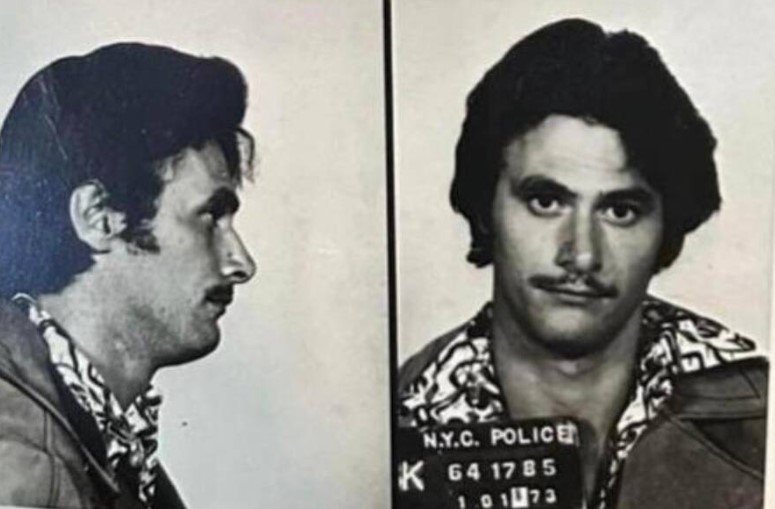
Tommy DeSimone: The Killer Who Could Never Earn His Button
“Kiss the Ring. Dig Your Grave” series – Article 6
The Mafia has always understood the power of ambition.
Every young gangster dreams of becoming indispensable. Earn enough money. Show enough courage. Carry out enough difficult assignments. One day the boss notices. The family rewards your loyalty. The ceremony arrives. Your finger is pricked, the saint’s card burns in your hand, and you’re finally one of them—a made man.
That dream has driven countless men to commit extraordinary acts of violence. For Thomas “Tommy” DeSimone, it became an obsession.
He believed every beating, every robbery, and every murder brought him one step closer to earning his button. He volunteered for dangerous work, intimidated anyone his crew considered a problem, and developed a reputation as one of the most feared young gangsters in New York. His willingness to kill made him valuable. His recklessness made him famous.
It also guaranteed he would never become what he wanted most. Tommy DeSimone spent his life trying to prove he belonged in the Mafia. The Mafia ultimately decided he belonged in a grave instead.
Growing Up Around the Life
Born in 1950 into a family with organized crime connections, Tommy DeSimone hardly needed an introduction to the underworld. Criminal activity surrounded him from an early age, and violence was treated less as an exception than as another tool of the trade.
As a young man, DeSimone gravitated toward the powerful Lucchese crew led by Paul Vario. The Vario organization controlled gambling, hijacking, loansharking, and labor racketeering throughout Brooklyn, and ambitious young associates viewed membership in the crew as an opportunity to build wealth and status.
DeSimone fit the mold of an ideal associate. He was fearless. He was loyal. Most importantly, he never hesitated when violence became necessary.
Older gangsters admired men who didn’t ask questions. Tommy rarely asked any.
A Reputation Built on Fear
Within Vario’s circle, DeSimone quickly became known for his willingness to intimidate debtors, rough up rivals, and enforce the crew’s authority. Unlike experienced Mafia leaders who often preferred threats over bloodshed, Tommy seemed to enjoy crossing the line.
Fear became his calling card.
Witnesses later described him as impulsive, explosive, and capable of shifting from friendly conversation to murderous rage with little warning. Henry Hill famously recalled that DeSimone could be charming one moment and terrifying the next—a man whose smile never guaranteed safety.
That unpredictability made him useful. It also made him dangerous.
For a time, the crew tolerated his volatility because he produced results. Problems disappeared when Tommy handled them. Debts were collected. Rivals backed down. Few people wanted to test the limits of his temper. Inside organized crime, effectiveness often outweighs personality.
At least for a while.
Chasing the Button
More than money, Tommy wanted acceptance. He desperately wanted to become a made man.
That distinction mattered because associates—even highly trusted ones—occupied the Mafia’s lowest tier. They earned for the family, took risks for the family, and sometimes died for the family without ever enjoying the protection afforded to inducted members.
A made man belonged. An associate merely served. Tommy believed his record spoke for itself. He participated in lucrative hijackings, enforced Vario’s authority without hesitation, and proved again and again that he would do whatever the crew required.
Every dangerous assignment felt like another step toward initiation. He assumed the family was keeping score. They were. Just not the way he imagined.
Violence Without Restraint
Experienced Mafia bosses often viewed violence as a business expense. Tommy viewed it as a solution. That difference became increasingly important.
The Mafia maintained rules—not because it opposed murder, but because uncontrolled violence attracted law enforcement attention and destabilized relationships between families. Killing required permission. Respecting hierarchy mattered. Discipline separated organized crime from street gangs.
DeSimone repeatedly ignored those distinctions.
He solved personal insults with brutality. Minor conflicts escalated into life-and-death confrontations. Older gangsters began questioning whether Tommy possessed the judgment necessary to survive long-term. Talent alone wasn’t enough. The Mafia demanded control.
Tommy offered chaos.
Billy Batts
Everything changed on June 11, 1970.
That evening, William ‘Billy Batts’ Bentvena, a recently released Gambino soldier, encountered Tommy at Robert’s Lounge in Brooklyn. Accounts differ regarding the exact exchange, but Batts reportedly mocked DeSimone about shining shoes years earlier, humiliating him in front of other gangsters. For most wiseguys, swallowing the insult would have been difficult.
For Tommy, it proved impossible. Days later, DeSimone and several associates brutally beat Batts before killing him. They buried the body, believing they had eliminated the problem.
Instead, they created one. Batts wasn’t simply another gangster. He was a made man. Under Mafia rules, killing an inducted member without authorization constituted one of the gravest offenses imaginable.
The murder transformed Tommy from an ambitious associate into a walking crisis.
Too Valuable to Kill… For Now
Initially, Paul Vario and James ‘Jimmy’ Burke shielded DeSimone as best they could. The body remained hidden. Stories were invented. Questions were deflected. Powerful friends delayed the inevitable.
But protection has limits.
The Gambino family demanded answers. Rumors spread throughout New York’s underworld. Every passing month increased pressure on Vario’s crew to resolve the situation before it triggered broader conflict between families.
Tommy continued behaving as though nothing had changed. That confidence proved disastrous.
| Crazy Joey Gallo: The Man Who Finally Stopped Kissing the Ring |
Another Fatal Mistake
If Billy Batts had been Tommy’s only problem, perhaps influential allies might eventually have negotiated a solution. Then came another killing.
Ronald “Foxy” Jerothe, another man connected to the Gambino organization, reportedly became involved in a dispute with DeSimone and was murdered as well. Whether every detail has survived accurately remains debated among historians. The broader reality is not.
By the late 1970s, Tommy had accumulated too many enemies, committed too many unauthorized acts of violence, and embarrassed too many powerful figures.
His protectors were running out of arguments.
The Promise of Induction
In January 1979, Tommy received the news he had dreamed about for years. He was finally going to be made.
According to multiple accounts, he dressed carefully for the occasion, believing the ceremony represented the culmination of everything he had sacrificed.
It was the happiest day of his life. He climbed into a car expecting to become part of La Cosa Nostra forever.
He was never seen again. Most investigators and organized crime historians believe DeSimone was murdered shortly after leaving for what he thought would be his induction ceremony. His body has never been recovered.
The button he chased all his life became bait.
| Benjamin “Bugsy” Siegel: The Empire He Built Became His Execution Order |
The Cruelest Irony
Tommy DeSimone misunderstood one essential truth about the Mafia. He believed violence earned respect.
In reality, discipline earned respect.
Killing without permission demonstrated recklessness rather than loyalty. Intimidation without restraint threatened the delicate political balance that allowed organized crime to function.
Every murder Tommy committed to prove his value actually reduced it. The more indispensable he tried to become, the more dangerous he appeared.
Eventually, even powerful friends could no longer justify keeping him alive.
The Noir Lesson
Hollywood immortalized Tommy DeSimone as the unpredictable psychopath in Goodfellas, but the real tragedy lies beneath the violence. He wasn’t simply bloodthirsty. He was ambitious.
Like countless young gangsters before him, Tommy believed the Mafia rewarded hard work, courage, and absolute commitment. Every favor he performed, every order he obeyed, and every act of violence convinced him he was earning a permanent place within the organization.
Instead, he was digging his own grave.
The Mafia didn’t reject Tommy because he wasn’t loyal.
It rejected him because he confused loyalty with recklessness. He believed saying “yes” to every dangerous opportunity would make him indispensable. He never realized that organizations built on rules eventually eliminate the men who refuse to follow them.
Tommy DeSimone spent years trying to earn a seat at the table. When the invitation finally came, it wasn’t to an initiation.
It was to his execution.
References
Capeci, Jerry. The Complete Idiot’s Guide to the Mafia. Indianapolis: Alpha Books, 2002.
Hill, Henry, and Douglas Century. The Wiseguy Cookbook: My Favorite Recipes From My Life as a Goodfella. New York: Penguin, 2002. (Biographical commentary.)
Pileggi, Nicholas. Wiseguy: Life in a Mafia Family. New York: Simon & Schuster, 1985.
Raab, Selwyn. Five Families: The Rise, Decline, and Resurgence of America’s Most Powerful Mafia Empires. New York: Thomas Dunne Books/St. Martin’s Press, 2005.
United States Senate. Organized Crime and Illicit Traffic in Narcotics: Hearings Before the Permanent Subcommittee on Investigations. Washington, DC: U.S. Government Printing Office.
Federal Bureau of Investigation. La Cosa Nostra: An Introduction. Washington, DC: Federal Bureau of Investigation. https://www.fbi.gov/history/famous-cases/la-cosa-nostra
Pistone, Joseph D., and Richard Woodley. Donnie Brasco: My Undercover Life in the Mafia. New York: New American Library, 1988.