Article 4 in the series: “The Loyalty Test: How Governors Learned to Fall in Line”
Fuller Warren, Florida, and the State That Let the Slots Sing
Florida sells itself as light. Sun on water. White roads. Easy money. In the years after World War II, it also sold something else: silence.
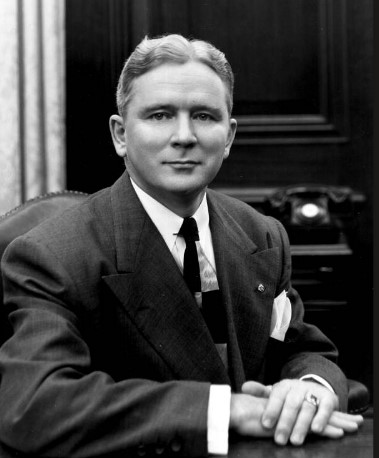
When Fuller Warren took office in 1949, the state was swelling with newcomers, cash, and ambition. Soldiers came home and wanted beaches. Retirees wanted warmth. Developers wanted land. And the underworld wanted what it always wants—new markets, loose rules, and politicians who understood the value of not understanding too much.
They found all three.
Warren was a Tallahassee politician with a lawyer’s smile and a talent for surviving storms. Publicly, he talked about growth and order. Privately, his administration presided over a Florida where slot machines chimed in back rooms, casinos breathed behind respectable doors, and gambling syndicates from Chicago, Cleveland, and New York treated the state like a seasonal office.
The machines were the soundtrack.
Slots were illegal in most of Florida, but you wouldn’t know it from the way they multiplied. They appeared in bars, clubs, hotel basements, and “private” rooms that were only private in the sense that the police didn’t come knocking. In South Florida especially, the racks of chrome and lights might as well have been civic decorations. Everyone knew they were there. Everyone knew who owned them. And everyone knew they weren’t going anywhere.
That kind of permanence doesn’t happen by accident.
Journalists started counting. Reformers started filing complaints. Lawmen in a few stubborn counties tried to push uphill. They ran into the same problem every time: investigations stalled, pressure appeared from above, and cases lost momentum like cars hitting sand.
The accusations sharpened: the Warren administration was protecting gambling interests. Smothering probes. Making sure the racket stayed profitable and the noise stayed manageable.
Warren denied it. Of course he did. Governors always do. He talked about local control, about priorities, about not wasting resources. He talked about economic growth. He talked about order. Meanwhile, the slot machines kept singing.
Florida in the early 1950s was a perfect storm for organized crime. It had tourism money, transient populations, a long coastline, and a political culture that treated vice like a bad habit instead of a mortal sin. Mob-linked syndicates didn’t need to conquer it. They just needed to rent it.
They did.
Cleveland interests. Chicago interests. New York interests. The names changed, but the business model didn’t. Slots fed casinos. Casinos fed bookmaking. Bookmaking fed everything else. Cash flowed north in winter and came back south in envelopes.
What they needed from Tallahassee wasn’t help. It was quiet.
And quiet, more often than not, is exactly what they got.
When local officials tried to make noise, they discovered the limits of their enthusiasm. Budgets were things that could be adjusted. Careers were things that could be paused. Political support was a weather system that could change overnight. The message was never written down. It didn’t need to be.
The governor’s office didn’t have to order anyone to stop. It just had to make it clear that stopping wasn’t especially appreciated.
By the early 1950s, the situation had become too obvious to ignore. The press had been circling for years, but now the state itself was forced to look in the mirror. A crime commission began pulling threads. Testimony started to stack up. The picture that emerged wasn’t pretty.
Political protection had kept the rackets alive.
Not a single villain. Not a single payoff you could frame and hang on a wall. A system. A habit. A shared understanding that Florida’s image was better served by sunlight than scrutiny, and that the money moving through those back rooms was good for too many people to interrupt.
Fuller Warren stood at the center of it, not as a mob boss, not as a gambler, but as the man whose administration became synonymous with drift. Drift toward tolerance. Drift toward excuses. Drift toward a state where illegality could become infrastructure if it paid well enough.
He pushed back at his critics, sometimes angrily, sometimes with lawyerly precision. He said the charges were exaggerated. He said Florida was being unfairly maligned. He said his enemies were playing politics.
They always are. The only question is which politics.
The crime commission’s findings landed like a bad weather report. They didn’t accuse the governor of running the rackets. They did something more damaging: they described a government that had failed to stop them. A government that had, by inaction and accommodation, made itself part of the ecosystem.
That’s the kind of guilt that doesn’t wash off easily.
In South Florida, the winter season came and went, and the money kept moving. Tourists lost quarters. Locals lost paychecks. Syndicates made their percentages. And the state kept selling itself as paradise.
In noir stories, the most dangerous places are the ones that pretend to be harmless. Florida’s beaches and blue skies were perfect camouflage. Who suspects a racket under a palm tree? Who looks for organized crime behind a postcard?
The answer, eventually, was everyone. But by then, the habits were set.
Warren left office in 1953 with his reputation scarred and his legacy argued over. Some remembered him as a builder, a modernizer. Others remembered him as the governor who couldn’t—or wouldn’t—turn off the machines.
History tends to be unkind to administrators who confuse growth with gravity. Florida grew, all right. It grew casinos without names. It grew slot routes that crossed counties. It grew a reputation as a winter playground for mob money.
And it grew a lesson: you don’t have to invite organized crime in. Sometimes you just leave the door open and call it sunshine.
References & Sources
- Florida Crime Commission (1950s), Reports and Hearings on Gambling and Organized Crime in Florida.
- Sifakis, Carl. The Mafia Encyclopedia. Facts on File, 2005.
- Tampa Tribune and Miami Herald archives (late 1940s–early 1950s), investigative reporting on slot machines and gambling syndicates.
- U.S. Senate, Special Committee to Investigate Organized Crime in Interstate Commerce (Kefauver Committee), Hearings, 1950–1951 (sections on Florida gambling operations).
- Mormino, Gary R. Land of Sunshine, State of Dreams: A Social History of Modern Florida. University Press of Florida, 2005.
- Florida State Archives, Governor Fuller Warren administration records (1949–1953).
- Asbury, Herbert. The French Quarter and related underworld histories (for regional organized crime migration and gambling culture).
- Newton, Michael. The Encyclopedia of American Law Enforcement. Facts on File, entries on Florida gambling and organized crime.