Al Capone: The King of Prohibition
Al Capone became the face of American organized crime because America secretly wanted one.
He arrived at the perfect moment: a violent new century intoxicated by money, corruption, celebrity culture, and prohibition. Newspapers transformed him into folklore while politicians condemned him publicly and quietly benefited from the systems that made him rich. To some Americans, Capone looked like a monster. To others, he looked like a strange kind of outlaw king—a man who seized power in a country already drowning in hypocrisy.
He understood that contradiction better than most.
Capone smiled for cameras, donated to charities, tipped generously, and spoke warmly to reporters. Meanwhile, his criminal empire extorted businesses, bribed officials, trafficked illegal liquor across Chicago, and left bodies bleeding in alleyways.
The violence built the fortune.
The fortune built the legend.
And the legend eventually consumed the man himself.
Brooklyn Beginnings
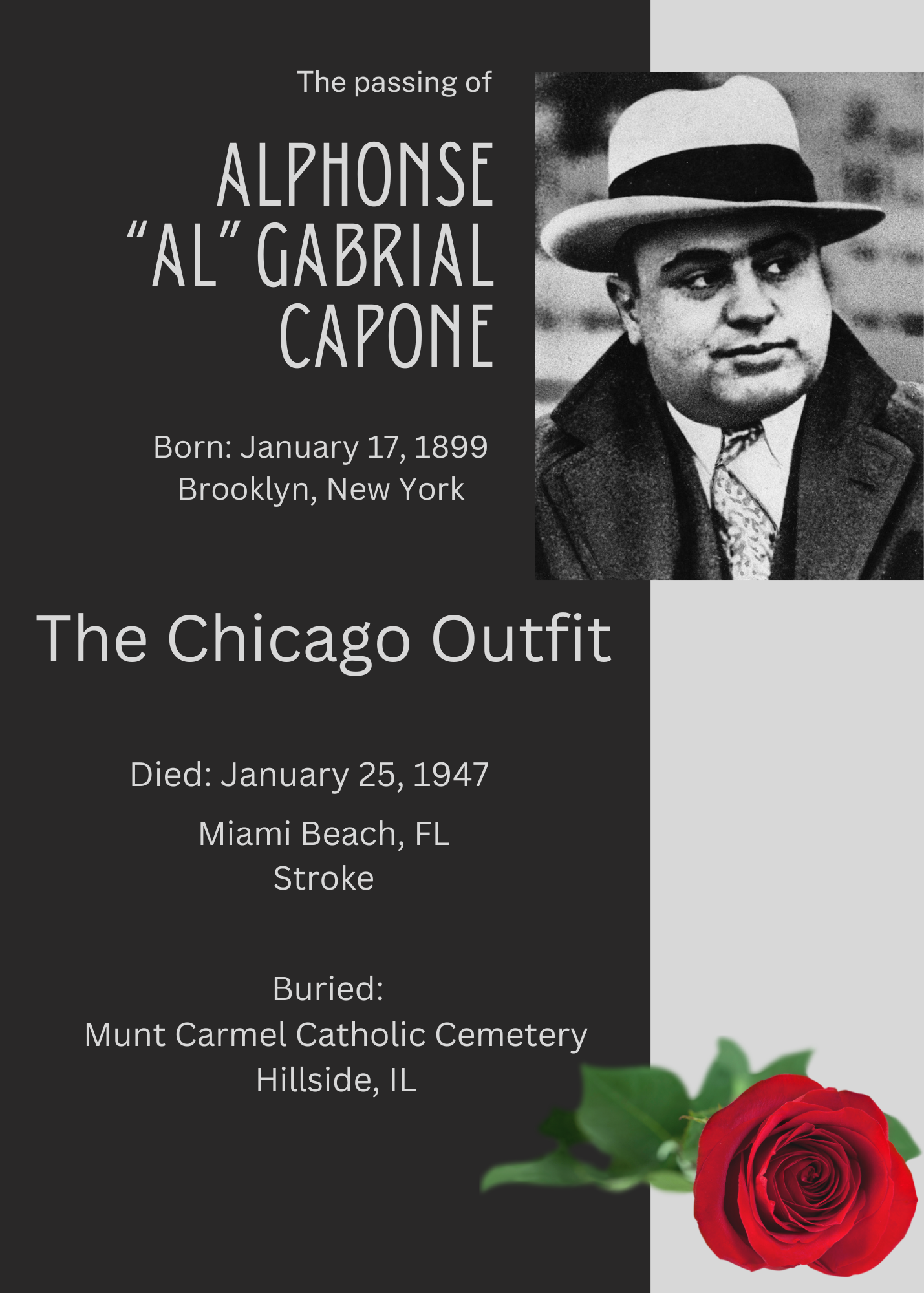
Al Capone was born Alphonse Capone in Brooklyn in 1899 to Italian immigrant parents from Naples. His father was a barber. His mother was deeply religious. Like many immigrant families struggling in crowded New York neighborhoods, the Capones lived between hope and hardship.
Young Capone learned quickly that street reputation mattered almost as much as money.
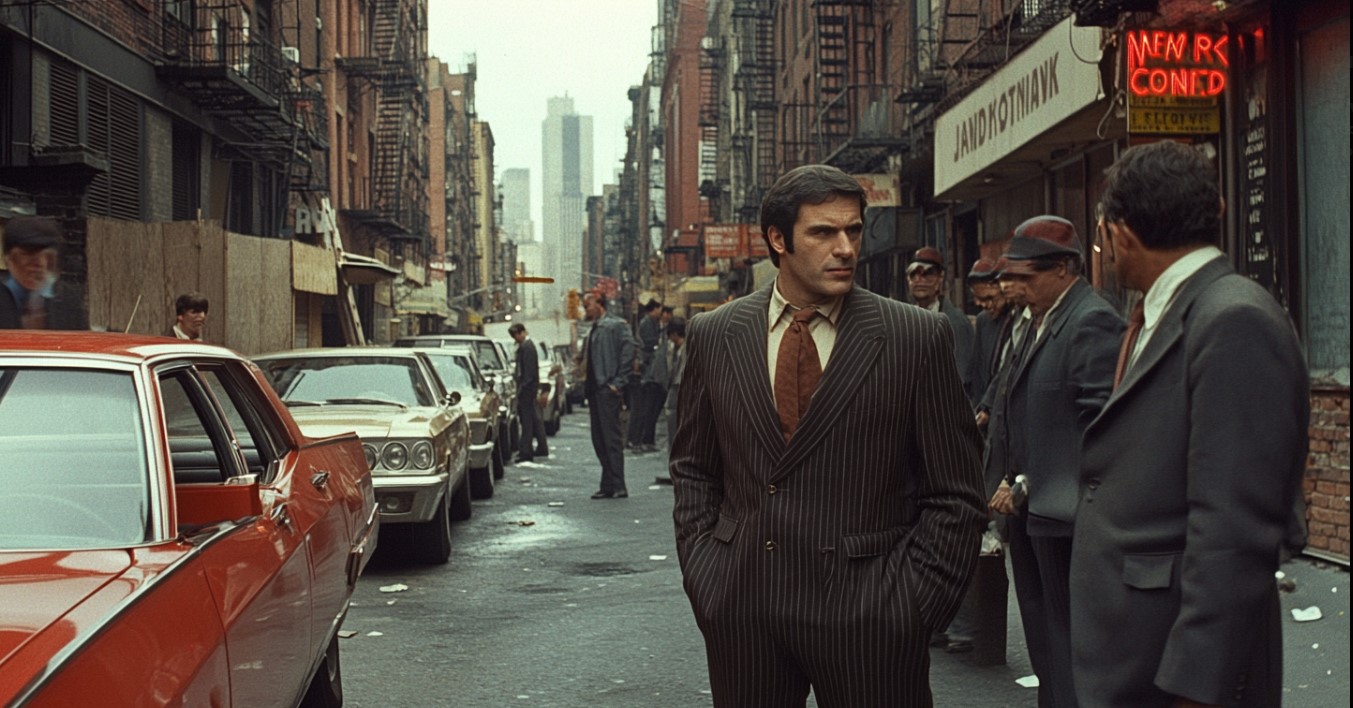
Brooklyn during the early twentieth century overflowed with gangs, labor conflicts, political corruption, and ethnic rivalries. Violence existed everywhere: docks, saloons, gambling dens, and tenement streets. Capone drifted naturally toward neighborhood gangs, eventually joining groups associated with rising underworld figures like Johnny Torrio.
Torrio became one of the most important influences in Capone’s life.
Unlike impulsive street thugs, Torrio understood organized crime as business. He taught Capone discipline, profit strategy, and political corruption. Violence mattered, but violence alone was not enough. Real power came from systems—police protection, political influence, labor control, and revenue streams that operated continuously.
Capone listened carefully.
The student would eventually surpass the teacher.
The Scar and the Reputation
Before Chicago, Capone acquired the facial scars that helped define his image permanently.
While working at the Harvard Inn in Brooklyn, he reportedly insulted a woman, provoking her brother Frank Galluccio into slashing Capone’s face during a confrontation. The wounds left visible scars across his cheek.
Capone hated the nickname “Scarface.”
He preferred hiding the scars in photographs and often claimed they came from wartime injuries, despite never serving in the military. Still, the scars contributed to his mythology: the visible mark of street violence carved directly into his appearance.
In another life, the injury might have become humiliation.
In organized crime, it became branding.
Chicago and the Torrio Empire
In the early 1920s, Torrio brought Capone to Chicago, where organized crime opportunities exploded under Prohibition.
The Eighteenth Amendment banned alcohol legally.
Americans kept drinking anyway.
That contradiction created one of the largest black-market economies in American history. Bootlegging generated fortunes almost overnight. Speakeasies multiplied across cities while politicians, judges, and police officers accepted bribes to look the other way.
Chicago became the perfect environment for organized crime expansion.
Torrio and Capone built enormous liquor distribution networks supplying illegal alcohol to thousands of bars, clubs, restaurants, and gambling establishments. The profits were staggering.
So was the violence.
Rival gangs fought constantly over territory and supply routes. Bombings, assassinations, and machine-gun attacks became routine features of Chicago life during the 1920s.
Capone thrived inside the chaos.
He combined brutality with charisma in ways few gangsters managed successfully. He could threaten a rival one hour and charm reporters the next. Associates described him as funny, generous, and socially magnetic until anger surfaced.
Then he became terrifying.
Taking Control of Chicago
After an assassination attempt badly wounded Johnny Torrio in 1925, Torrio retired and handed operational control of the Chicago Outfit to Capone.
Capone was only twenty-six years old.
Now he controlled one of the most powerful criminal organizations in America.
Under Capone’s leadership, the Outfit expanded aggressively into bootlegging, gambling, prostitution, labor racketeering, and political corruption. Millions of dollars flowed through the organization annually. Chicago officials, police officers, and politicians often operated under direct or indirect Outfit influence.
Capone understood that organized crime depended as much on public perception as violence.
He cultivated celebrity deliberately.
Newspapers followed him obsessively. Photographers captured him in expensive suits surrounded by bodyguards and luxury cars. Unlike quieter Mafia leaders such as Frank Costello decades later, Capone embraced publicity.
He became America’s first true celebrity gangster.
The Saint Valentine’s Day Massacre
No event defined Capone’s public image more than the Saint Valentine’s Day Massacre of 1929.
On February 14, gunmen disguised as police officers lined up members of rival gangster George “Bugs” Moran’s organization inside a Chicago garage and executed them with machine guns.
Seven men died.
The massacre horrified America.
Though Capone was in Florida at the time and never directly convicted, public opinion largely blamed him for orchestrating the killings. The massacre transformed Capone from notorious gangster into a national symbol of organized crime violence.
The bloodshed damaged even his carefully cultivated public persona.
Americans who once viewed gangsters with fascination increasingly saw organized crime as a direct threat to public order.
The federal government began paying closer attention.
The Public Robin Hood Illusion
Despite mounting violence, Capone retained surprising popularity among some ordinary Americans during the Depression.
Part of the appeal came from his public generosity.
He donated to charities, opened soup kitchens, tipped lavishly, and projected the image of a man succeeding in a system many Americans already considered corrupt. During the Great Depression, banks collapsed while politicians failed repeatedly. To struggling citizens, Capone sometimes appeared more effective than government itself.
It was a dangerous illusion.
The money funding soup kitchens came from extortion, violence, illegal liquor, and corruption. But organized crime has often survived by presenting itself as an alternative system of order where official institutions appear weak or hypocritical.
Capone understood that instinctively.
The Federal Pursuit
For years, prosecutors struggled to convict Capone for violent crimes directly.
Witnesses disappeared.
Jurors became frightened.
Police corruption contaminated investigations.
So the federal government pursued him differently.
Like later prosecutors targeting organized crime figures such as Louis Buchalter and John Gotti, authorities focused on financial crimes instead.
Tax evasion became the weapon.
The strategy worked.
In 1931, Capone was convicted of income tax evasion and sentenced to eleven years in federal prison.
The sentence stunned America.
For the first time, one of the country’s most powerful gangsters appeared genuinely defeated.
Alcatraz and Decline
Capone initially retained influence even behind bars, bribing guards and maintaining connections.
Then the government transferred him to Alcatraz Federal Penitentiary.
Alcatraz changed everything.
Isolation weakened his power dramatically. Even worse, untreated syphilis began destroying his health mentally and physically. By the late 1930s, Capone’s cognitive condition had deteriorated severely.
The once-feared king of Chicago became increasingly confused, childlike, and disconnected from reality.
He was released in 1939 but never regained real underworld influence.
Capone spent his final years in Florida, physically diminished and psychologically broken by illness.
He died in 1947 at age forty-eight.
The Legacy of Al Capone
Al Capone became more than a gangster.
He became an American myth.
His story embodied the contradictions of Prohibition-era America: public morality hiding private vice, political corruption thriving beside patriotic speeches, wealth exploding amid violence, and celebrity culture transforming criminals into icons.
Later gangsters like John Gotti would imitate aspects of Capone’s public image, but none ever matched his cultural impact. Capone emerged at the precise historical moment when newspapers, photography, politics, and organized crime collided into national spectacle.
He looked like the dark reflection of the American Dream itself.
Ambitious. Ruthless. Charismatic. Corrupt.
Al Capone built an empire from America’s appetite for illegal pleasure and institutional hypocrisy. For a brief period, he ruled Chicago not merely through violence, but through influence woven into politics, police departments, nightlife, labor systems, and public fascination.
Then the machine he helped create turned against him.
In the end, the king of Prohibition died not in a hail of bullets, but slowly, quietly, and mentally fading inside a Florida mansion while the legend around him grew larger than the man who created it.
Buried at: Mount Carmel Catholic Cemetery, Hillsside, Illinois