Harry “Happy” Maione: Murder, Inc.’s Smiling Executioner
The nickname didn’t fit the work.
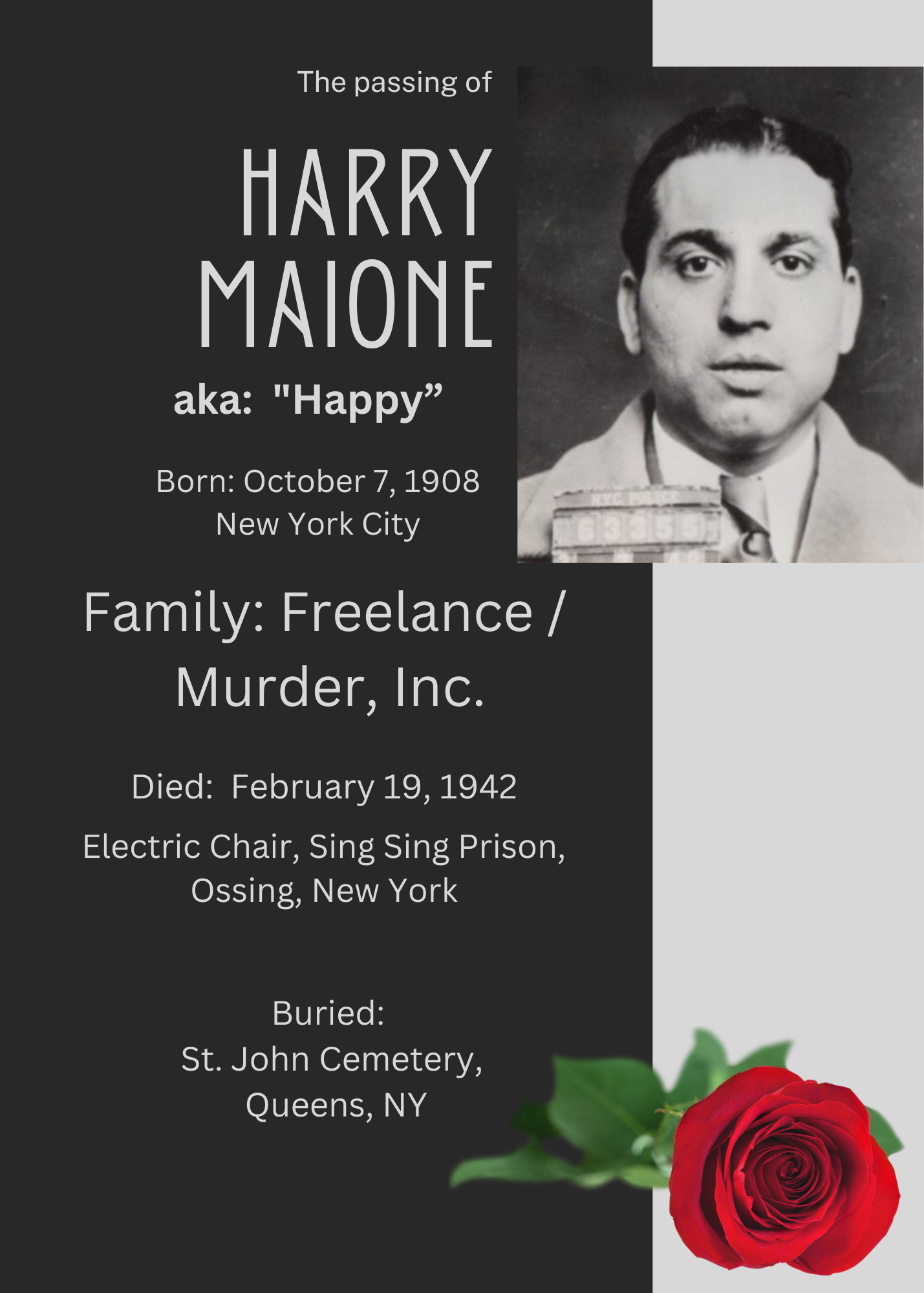
Harry “Happy” Maione carried a grin that friends remembered and enemies rarely forgot, but there was little happiness in the world he inhabited. Behind the easy smile stood one of the most feared killers connected to Murder, Inc., the infamous enforcement arm of organized crime that turned murder into a business during the 1930s and early 1940s.
Maione came of age in a criminal landscape where violence wasn’t simply a tool—it was a profession. Gangsters who could be trusted to carry out orders without hesitation became valuable commodities, and few men earned that trust more completely than Harry Maione. Alongside his brother Frank and a circle of hardened associates from Brooklyn, he helped build a reputation that spread throughout the underworld.
His story is not one of glamorous gangsters living lavishly in penthouses and nightclubs. It is the story of a man who spent much of his life in the shadows, enforcing the will of organized crime leaders and helping transform murder into an organized enterprise. For years, fear protected him.
Eventually, fear wasn’t enough.
Growing Up in Brooklyn’s Violent Underworld
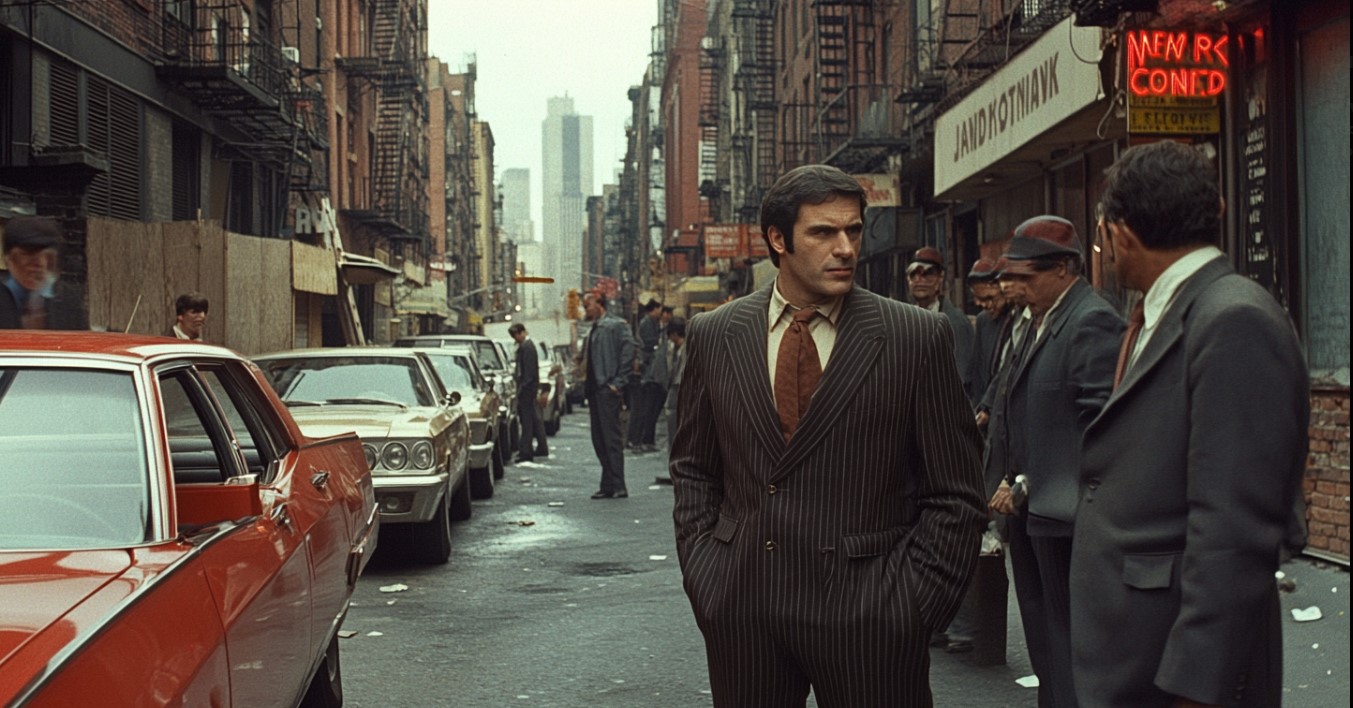
Harry Maione was born in Brooklyn in 1908, a time when New York’s immigrant neighborhoods were expanding rapidly and organized crime was becoming deeply embedded in everyday life. The streets offered limited opportunities for many young men, and criminal organizations often provided a faster route to money, status, and influence.
Brooklyn’s neighborhoods were crowded with bookmakers, labor racketeers, bootleggers, and gang members. Violence was common, but it was rarely random. Every fight, every shooting, and every act of intimidation was connected to territory, money, or power.
Maione grew up in that environment and adapted quickly. Alongside his brother Frank Maione, he became associated with criminal groups operating throughout Brooklyn. The brothers developed reputations as men who could be relied upon when disputes needed to be settled and debts needed to be collected.
Reliability is a prized commodity in organized crime. So is a willingness to do what others refuse to do.
Entering the World of Murder, Inc.
By the 1930s, organized crime in America had become increasingly sophisticated. National syndicates linked criminal organizations across cities and states, creating networks that generated enormous profits through gambling, labor racketeering, loansharking, and other illicit enterprises. Those operations required enforcement.
Out of that need emerged Murder, Inc., the group prosecutors would later describe as organized crime’s contract-killing arm. The organization allegedly operated under the influence of powerful underworld figures such as Louis “Lepke” Buchalter and Albert Anastasia. Its members carried out murders on behalf of syndicate leaders, eliminating witnesses, rivals, informants, and anyone else who threatened criminal interests.
Harry Maione became one of its most trusted participants. He wasn’t a strategist or a boss. He was something equally valuable: an enforcer who could be counted on to carry out difficult assignments without attracting unnecessary attention.
That reputation opened doors within the underworld. It also placed him directly in the government’s crosshairs.
The Murder of Dutch Schultz Ally George Rudnick
As Murder, Inc. expanded its influence, Maione became linked to a growing number of violent crimes. Witnesses and prosecutors later described an organization that treated murder as a practical solution to business problems. Men who talked too much disappeared. Rivals who resisted syndicate control often met similar fates.
The atmosphere surrounding the organization was one of calculated terror.
Victims frequently vanished without explanation. Bodies appeared in vacant lots, on isolated roads, or not at all. The uncertainty itself became a weapon. Fear discouraged cooperation with law enforcement and helped preserve the code of silence that protected organized crime.
For years, that silence allowed Maione and his associates to operate with relative freedom. Investigators suspected their involvement in numerous killings but struggled to gather evidence capable of securing convictions.
Then the foundation began to crack.
Abe Reles Turns Informant
The downfall of Murder, Inc. began with a betrayal that shook the underworld.
Abe Reles, one of the organization’s most notorious members, agreed to cooperate with authorities. His decision transformed organized crime investigations throughout New York. Suddenly, prosecutors had access to insider testimony detailing murders, conspiracies, and the internal operations of a criminal network that had long operated behind a wall of intimidation.
Reles knew the players. He knew the methods. Most importantly, he knew the killers.
Harry Maione’s name surfaced repeatedly during the investigations. Testimony connected him to several murders and exposed relationships that prosecutors had spent years trying to understand. The revelations generated sensational headlines and painted a chilling picture of an organization where human life was often valued less than profit.
For Maione, the consequences were immediate and severe.
Trial and Conviction
The prosecutions that followed represented one of the most successful law enforcement campaigns against organized crime up to that point. Witnesses described how murders were planned, approved, and carried out. Jurors heard details about an underworld that functioned according to its own rules and enforced those rules through systematic violence.
Maione faced charges related to the murder of Joseph Rosen, a Brooklyn candy store owner whose killing became one of the central cases used to dismantle Murder, Inc. Prosecutors argued that Rosen represented a threat to criminal interests and was therefore marked for elimination.
The testimony proved devastating.
Despite attempts to challenge the credibility of cooperating witnesses, the government successfully convinced jurors that Maione had participated in a conspiracy to commit murder. The verdict reflected a broader shift in the battle against organized crime. For the first time, prosecutors were breaking through the code of silence that had protected gangsters for decades.
The man who had spent years enforcing underworld discipline now found himself facing the harshest punishment the state could impose.
The Last Walk
Harry Maione’s appeals failed.
On February 15, 1942, he was executed in the electric chair at Sing Sing Prison. His brother Frank followed him to the execution chamber only hours later, a grim ending that underscored the collapse of one of Brooklyn’s most feared criminal partnerships.
The executions sent a powerful message throughout organized crime.
For years, many gangsters had believed that loyalty, intimidation, and silence could shield them from justice indefinitely. The downfall of Murder, Inc. proved otherwise. Informants, prosecutors, and determined investigators had succeeded in dismantling an organization once considered untouchable.
The smiling killer who had spent years helping enforce the underworld’s rules became another casualty of the system he served.
The Legacy of Harry “Happy” Maione
Harry Maione remains one of the most significant figures associated with Murder, Inc. not because he was a boss or a visionary, but because he embodied the organization’s essential function. He was a soldier whose primary value came from his willingness to carry out violence on command.
There was nothing glamorous about his career. He built no criminal empire, controlled no labor unions, and left behind no lasting organization. His reputation rested almost entirely on fear and his ability to enforce the will of more powerful men.
That makes his story particularly revealing.
Organized crime often depends less on charismatic leaders than on dependable enforcers willing to transform orders into action. Men like Maione allowed criminal enterprises to expand by ensuring that disobedience carried consequences.
In noir terms, Harry “Happy” Maione was the smiling man at the end of the bar whose pleasant demeanor concealed a far darker purpose. He laughed with friends, shared drinks, and blended into the crowd. Yet somewhere beneath the surface was a man who understood that in the world he inhabited, loyalty was measured in blood and silence was often the difference between survival and death.
For a time, that code protected him.
In the end, it could not save him.
Buried at: St. Johns Cemetery, Queens, NY