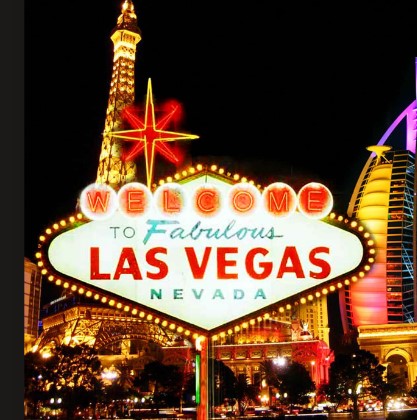
Las Vegas didn’t rise from the desert by accident. It was engineered—carefully, quietly, and with a kind of cold intelligence that had nothing to do with luck. The neon glow, the cocktails, the promise of reinvention—it all masked something more deliberate. Beneath the roulette wheels and showgirls, the city served a purpose far more pragmatic.
It was a laundromat.
Not for shirts or linens, but for money—dirty, bloodstained, and untraceable.
By the late 1930s, organized crime in America had evolved from street-corner rackets into something more sophisticated. Prohibition had ended, but the infrastructure it created remained. Gambling, loansharking, narcotics, and labor racketeering generated immense cash—too much cash. The problem wasn’t earning it. The problem was explaining it.
Men like Meyer Lansky understood this better than anyone. He wasn’t just a gangster; he was an architect of financial invisibility. Where others saw casinos as playgrounds, Lansky saw them as machines—systems capable of converting illicit income into something that looked clean, taxable, and legitimate.
Las Vegas was the perfect place to build those machines.
The Geography of Opportunity
Nevada legalized gambling in 1931, a desperate move during the Great Depression. The state needed revenue, and it was willing to look the other way to get it. Las Vegas, still little more than a dusty outpost, suddenly had a legal framework for vice.
To most Americans, it looked like a curiosity.
To organized crime, it looked like salvation.
The East Coast syndicates—flush with cash from New York, Chicago, and Miami—needed a funnel. They needed a place where money could move freely, where oversight was minimal, and where the line between legal and illegal blurred into something manageable. Vegas offered all of it, wrapped in desert isolation.
Enter Bugsy Siegel.
The Flamingo Experiment
Siegel wasn’t the first mob figure in Las Vegas, but he was the most visible. Charismatic, volatile, and dangerously ambitious, he believed the city could be more than a gambling stopover. He envisioned luxury—Hollywood in the desert.
The Flamingo Hotel was his statement.
It was also a financial black hole.
Construction costs ballooned. Money disappeared. Investors grew nervous. Behind the scenes, Lansky and others watched closely—not because they doubted the vision, but because they understood the stakes. The Flamingo wasn’t just a casino. It was a prototype.
If it worked, it would prove that illegal money could be transformed into legitimate revenue streams on a massive scale.
If it failed, it would expose the entire system.
The Flamingo struggled at first, opening prematurely in 1946 to empty rooms and bad press. But it didn’t die. It couldn’t. Too much money was tied up in it—too many reputations depended on its success.
And when it finally stabilized, it revealed something critical.
Casinos didn’t just make money.
They absorbed it.
The Skim: Profit Before the Books
The genius of the Las Vegas model wasn’t just in what it earned, but in what it hid.
At the center of the system was something deceptively simple: the skim.
The skim was the quiet removal of cash before it ever reached official accounting. Money came in through the casino floor—chips bought, bets placed, drinks ordered. Before the revenue was recorded, a portion was siphoned off, unreported and untaxed.
It was invisible by design.
Counting rooms—windowless, heavily guarded, and accessible only to trusted insiders—became the heart of the operation. Cash was sorted, stacked, and quietly diverted. The official numbers told one story. The real profits told another.
This wasn’t petty theft.
It was institutionalized extraction.
Millions of dollars could vanish annually from a single property, flowing back to syndicate bosses in Chicago, New York, and beyond. The casino still showed profit, still paid taxes, still appeared legitimate.
But the real money never touched the books.
Invisible Ownership
The skim solved one problem—moving money out.
Ownership structures solved another—bringing money in.
Mob figures rarely appeared on official documents. They didn’t need to. Instead, they operated through layers of intermediaries: front men, silent partners, and corporate shells. A casino might be owned by a respectable businessman on paper, but the real control lay elsewhere.
Hidden.
Protected.
Unprovable.
Lansky excelled at this. He understood that power didn’t require visibility. In fact, visibility was a liability. By staying in the shadows, he could control vast financial networks without attracting the kind of attention that destroyed more flamboyant figures.
The result was a system where illegal capital funded legal enterprises, which then generated legitimate income—income that could be taxed, invested, and reintegrated into the broader economy.
It was laundering at an industrial scale.
The Flow of Money
The pipeline was elegant in its simplicity.
Cash generated from East Coast rackets—bookmaking, extortion, narcotics—was funneled into Las Vegas casinos as investment capital. Once inside, it mixed with legitimate revenue from gamblers and tourists. Through a combination of skimming and accounting, portions of that money re-emerged as “clean” profits.
Dividends.
Salaries.
Business income.
What began as illicit cash ended as something banks would accept without question.
Vegas didn’t just hide money. It transformed it.
The Culture of Complicity
None of this operated in a vacuum.
Local officials, regulators, and even federal authorities often lacked the tools—or the will—to intervene effectively. Nevada’s regulatory framework in the early years was thin, designed more to encourage growth than enforce compliance.
And growth came quickly.
Hotels rose from the desert. The Strip began to take shape. Entertainment followed—singers, comedians, dancers—all drawn by the promise of easy money and loose oversight. The city developed a dual identity: glamorous on the surface, transactional underneath.
Everyone benefited.
That was the problem.
When an entire ecosystem profits from a system, accountability becomes optional.
Violence at the Edges
For all its sophistication, the system still relied on something primitive: fear.
Disputes over skimming percentages, construction costs, or management control weren’t settled in boardrooms. They were settled quietly, often permanently. The murder of Bugsy Siegel in 1947 remains one of the most famous examples—a reminder that even visionaries were expendable.
Vegas was a business.
But it was a mob business.
And mob businesses enforced their rules.
Legitimacy Achieved
By the 1950s and early 1960s, the model had matured. Las Vegas was no longer an experiment. It was an institution. Tourists poured in. Revenues soared. The casinos operated openly, their legitimacy reinforced by taxes paid and jobs created.
On paper, everything looked clean.
That was the final trick.
The mob didn’t need to hide anymore—not in the way it once had. Its money had been integrated into the system, indistinguishable from legitimate capital. Investments spread beyond Nevada into real estate, entertainment, and international ventures.
The desert had done its job.
It had taken something dirty and made it respectable.
The Mirage Holds
Las Vegas sold a dream: that anyone could walk in, place a bet, and walk out transformed. The irony is that the city itself was built on the same promise.
Transformation.
Reinvention.
Redemption.
But beneath that promise was a mechanism—precise, deliberate, and ruthlessly efficient. A system designed not for gamblers, but for gangsters. A place where money could shed its past without ever answering for it.
The lights made it look like magic.
It wasn’t magic.
It was accounting.
And for a few decades, it worked almost perfectly.
References
Haller, Mark H. Illegal Enterprise: A Theoretical and Historical Interpretation. Criminology, 1971.
Lacey, Robert. Little Man: Meyer Lansky and the Gangster Life. Little, Brown and Company, 1991.
Ovid Demaris. The Last Mafioso: The Treacherous World of Jimmy Fratianno. Bantam Books, 1981.
Roemer Jr., William F. The Enforcer: Spilotro—The Chicago Mob’s Man Over Las Vegas. Ivy Books, 1994.
Skolnick, Jerome H. House of Cards: Legalization and Control of Casino Gambling. Little, Brown and Company, 1978.
United States Senate. Organized Crime and Illicit Traffic in Narcotics (Kefauver Committee Hearings), 1950–1951.
United States Senate. Investigation of Organized Crime in Interstate Commerce (McClellan Committee Hearings), 1957–1960.