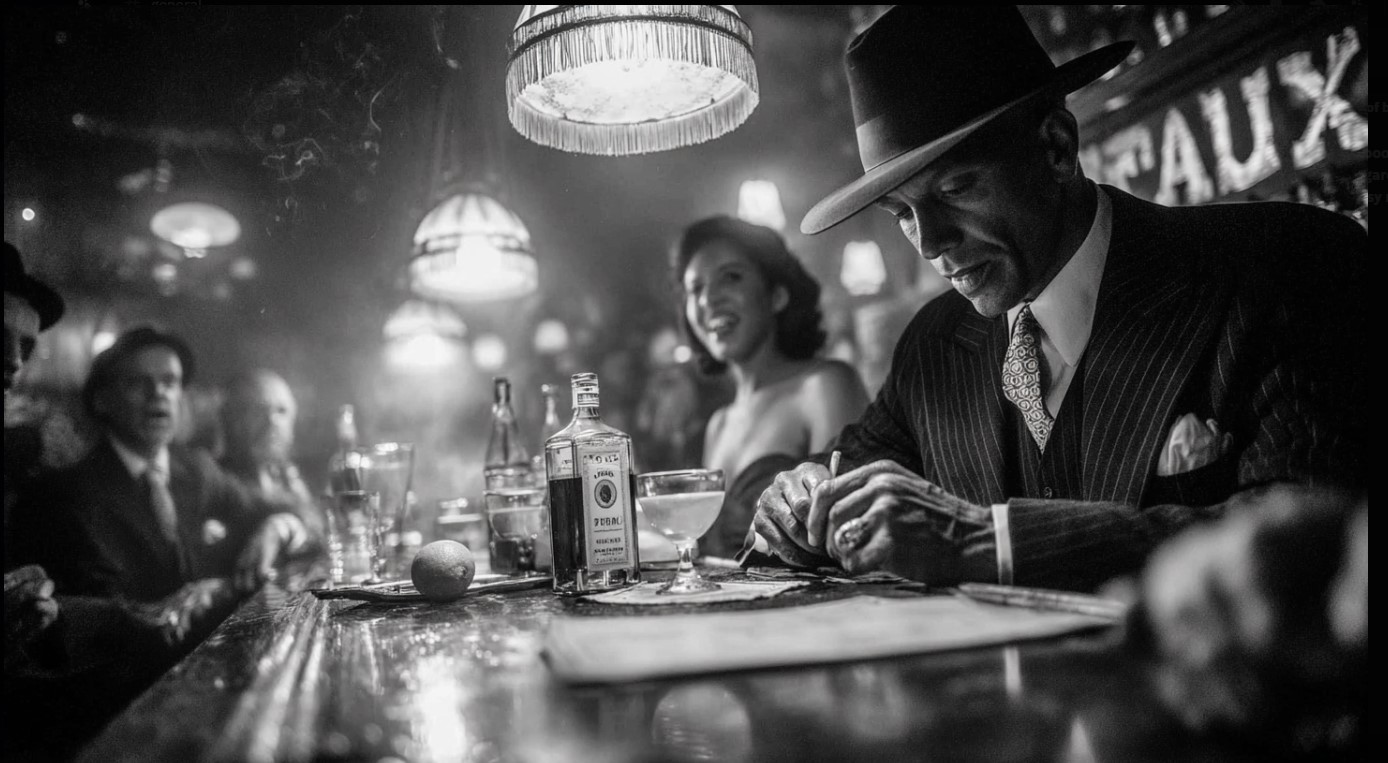
The American underworld never cared much for purity.
Politicians preached it. Priests demanded it. Newspapers sold it by the headline. But in the back rooms of Manhattan restaurants, beneath cigar smoke and the yellow glow of hanging lamps, another philosophy took shape. It was colder than morality and more practical than patriotism. The only thing that mattered was usefulness.
That was the world Charles “Lucky” Luciano understood better than almost anyone alive.
The public mythology surrounding the Mafia has always painted it as tribal, reactionary, and obsessed with bloodlines. Hollywood reinforced the image for decades: old Sicilian men guarding ancient traditions while outsiders stood at the door. Yet the real Luciano organization often operated very differently. Behind the violence and extortion was a criminal machine surprisingly willing to work with immigrants, Jews, Irish gangsters, political fixers, gay nightclub owners, and anyone else capable of making money without becoming a liability.
Luciano was not a social reformer. He was not enlightened in any modern sense. He was a racketeer who viewed prejudice as bad business.
And in Prohibition-era America, bad business got people killed.
The Street That Changed Luciano
Luciano’s worldview did not come from Sicily. It came from New York.
Born Salvatore Lucania in Sicily in 1897, Luciano arrived in Manhattan as a child immigrant and grew up in the brutal tenement ecosystem of the Lower East Side. The neighborhood was a collision point of languages, religions, and criminal cultures. Jewish gangs operated next to Irish crews. Italian kids fought over blocks with everyone else while trying to survive poverty that smelled like sweat, whiskey, sewage, and coal smoke.
The streets forced adaptation.
A young Luciano quickly learned that ethnic loyalty alone was limiting. If you only trusted Sicilians, you cut yourself off from half the city’s opportunities. If you only partnered with Italians, you lost access to Jewish financiers, Irish muscle, waterfront unions, corrupt politicians, and police contacts.
New York crime was becoming corporate before legitimate America fully understood the concept.
Luciano recognized this early. He admired intelligence more than ancestry. He trusted earning power more than religion. While older Mafia bosses clung to Old World customs and Sicilian exclusivity, Luciano built relationships across ethnic lines with men like Meyer Lansky and Benjamin “Bugsy” Siegel. To traditionalists, this was contamination. To Luciano, it was evolution.
The old bosses saw criminal empires as family heirlooms.
Luciano saw them as multinational corporations.
The Death of the Mustache Petes
The old guard of the Mafia became known by a nickname soaked in contempt: the Mustache Petes.
These were older Sicilian bosses who insisted on rigid traditions, Old World hierarchy, and suspicion toward outsiders. Many refused to work closely with non-Italians. Some even distrusted Italians from outside Sicily. Their organizations were deeply conservative, secretive, and rooted in village loyalties carried across the Atlantic.
Luciano hated their limitations.
During the late 1920s and early 1930s, the Mafia entered a bloody civil conflict known as the Castellammarese War. On one side stood conservative boss Joe Masseria. On the other stood Salvatore Maranzano, another traditionalist who ultimately declared himself “boss of bosses.”
Luciano played both sides until he decided both sides belonged in the grave.
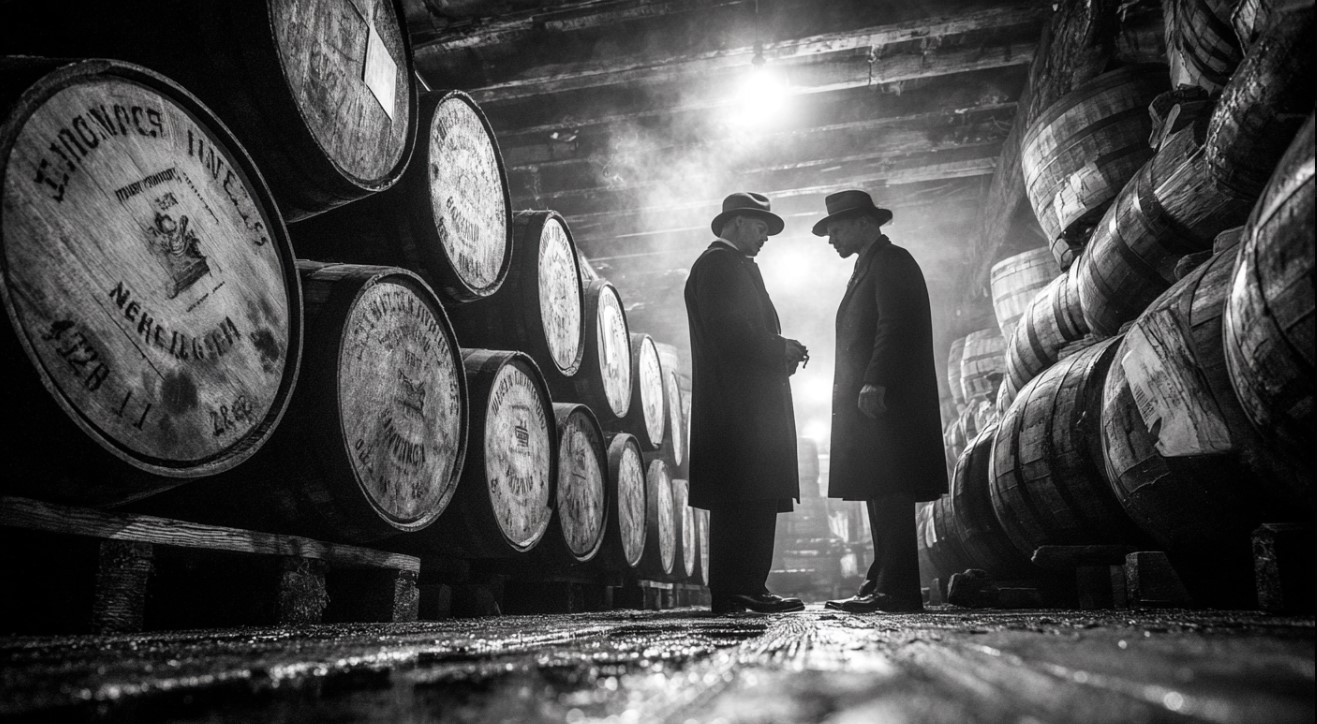
Masseria was murdered in a Coney Island restaurant in 1931 while Luciano conveniently stepped away from the table. Months later, Maranzano was butchered in his Manhattan office by gunmen disguised as federal agents. Luciano helped engineer both hits because he believed the old Mafia structure was suicidal.
The future belonged to businessmen willing to cooperate across ethnic lines.
After Maranzano’s death, Luciano reorganized the American Mafia into the Commission system, a board-like structure designed to reduce chaos and maximize profits. The Commission itself reflected Luciano’s modernism. It was less feudal monarchy and more criminal boardroom.
Violence remained constant, but ideology changed.
The Mafia stopped behaving like isolated Sicilian villages and started acting like a national syndicate.
Meyer Lansky and the New Criminal America
No relationship better symbolized Luciano’s philosophy than his partnership with Meyer Lansky.
Lansky was Jewish, small in stature, analytical, and almost eerily disciplined. Luciano trusted him deeply because Lansky understood numbers, logistics, and restraint. Together, they helped create an underworld where business partnerships mattered more than ethnicity.
The Luciano-Lansky alliance represented something larger happening inside organized crime. America itself was segregated, suspicious of immigrants, and poisoned by ethnic prejudice. Universities imposed Jewish quotas. Hotels excluded minorities. Country clubs enforced invisible walls with iron certainty.
The underworld often ignored those walls if money could be made on the other side.
This did not mean gangsters were morally progressive. Many criminals still carried personal prejudices. Racism certainly existed throughout organized crime. Violence against marginalized communities happened regularly. But the upper tiers of syndicate leadership tended to reward competence over social respectability.
A bookmaker who earned reliably had value.
A corrupt politician who delivered judges had value.
A gay nightclub operator who attracted wealthy customers had value.
The underworld did not ask for purity. It asked for profit and silence.
Nightclubs, Broadway, and Hidden Lives
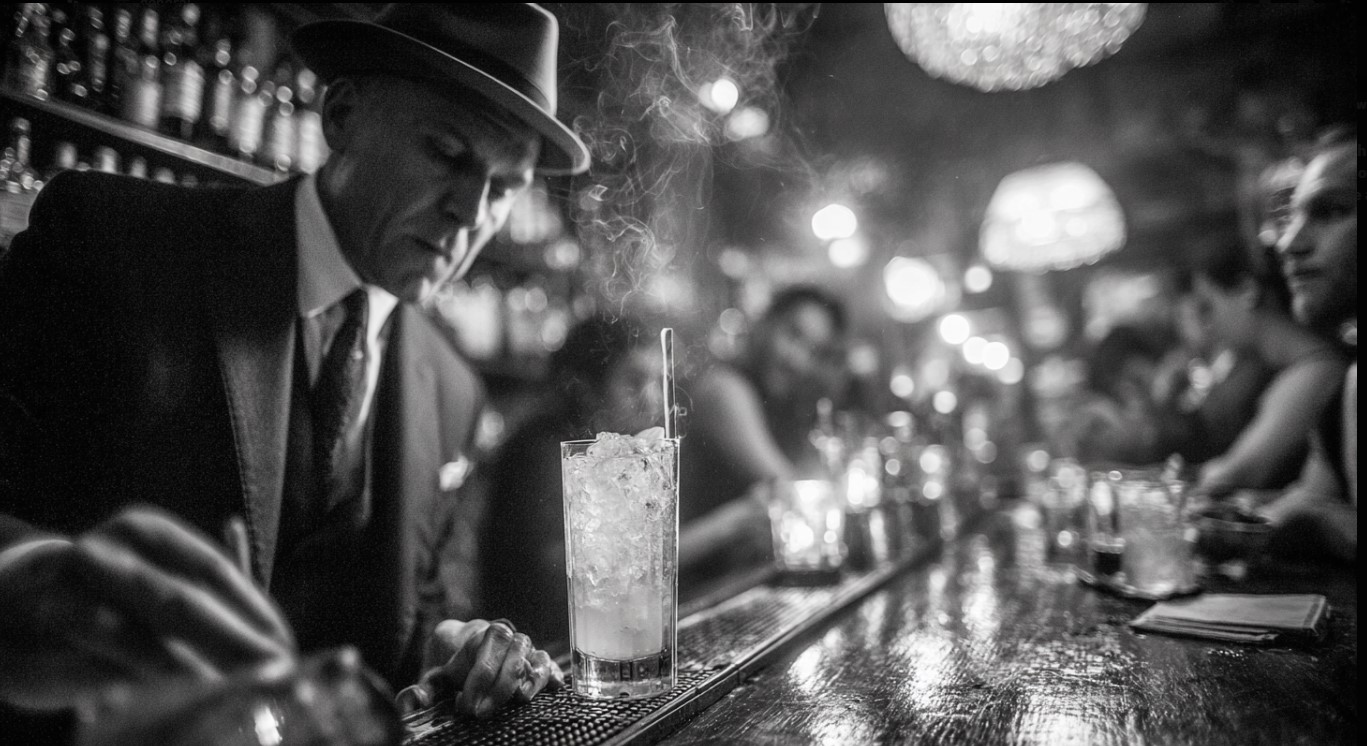
One of the least discussed aspects of organized crime history is how deeply gangsters embedded themselves in nightlife culture. During the 1930s, 1940s, and 1950s, mob-controlled clubs became gathering places for entertainers, gamblers, politicians, and people living double lives.
That included gay patrons and performers.
Publicly, America criminalized homosexuality and treated it as scandalous deviance. Police raided bars. Newspapers destroyed reputations. Careers evaporated overnight under whispers alone.
But mob-connected nightlife often operated under a different code.
Gangsters controlled many bars and clubs that catered to marginalized communities because mainstream businesses refused to serve them. The Mafia recognized an economic opportunity where respectable society saw social contamination. Illegal gambling rooms, drag performances, underground lounges, and private parties all generated revenue.
Protection became a commodity.
If a club owner paid properly, police problems could disappear. If politicians needed discretion, gangsters could provide it. The mob’s relationship with gay nightlife was rarely ideological. It was transactional. Yet the practical result was that organized crime frequently created spaces where outsiders could exist more safely than they could elsewhere in American society.
Not safely in an absolute sense. Nothing around the Mafia was ever truly safe.
But safer than the streets outside.
Religion Was Secondary to Loyalty
Luciano himself appeared largely indifferent to religious doctrine.
This separated him from some older Mafia figures who wrapped criminal behavior in Catholic ritual and Sicilian superstition. Luciano preferred modernity. He dressed sharply, admired efficiency, and operated more like an executive than a village patriarch. Loyalty mattered enormously to him, but religious identity rarely appeared central to his decision-making.
The Mafia’s oath structure emphasized secrecy and obedience, not theological purity.
In practice, criminal alliances crossed religious lines constantly. Jewish mobsters partnered with Catholics. Protestant politicians accepted mob bribes. Union leaders, gamblers, labor racketeers, and nightclub operators formed alliances built entirely on mutual interest.
The underworld became one of the few places in America where different immigrant groups regularly mixed at high levels of power.
Not because gangsters believed in equality.
Because greed erased barriers faster than morality ever could.
The Limits of Mafia “Tolerance”
Romanticizing organized crime is dangerous.
The Mafia was not inclusive in the modern sense, and it certainly was not humanitarian. Murder, exploitation, extortion, prostitution, narcotics trafficking, and labor corruption formed the foundation of its power. Women remained largely excluded from authority. Black criminal organizations often faced unequal treatment from Italian syndicates. Homophobia still existed among many mobsters despite their business ties to gay nightlife.
The Mafia tolerated difference when difference generated income.
That distinction matters.
Luciano’s openness had limits shaped by power and profit. He embraced outsiders who strengthened the enterprise and rejected those who threatened stability. His criminal meritocracy was still ruthless, violent, and deeply cynical.
Yet compared to much of respectable America at the time, Luciano’s underworld could appear strangely flexible.
Wall Street firms excluded Jews.
The Mafia partnered with them.
Politicians condemned immigrants in speeches.
The Mafia recruited them.
Police departments harassed gay communities.
The Mafia often collected protection money from the bars that sheltered them.
None of this made gangsters virtuous. It simply revealed an uncomfortable truth about America itself.
Sometimes the underworld adapted faster than polite society.
Luciano’s Lasting Legacy
By the time Luciano died in Naples in 1962, the criminal empire he helped build had reshaped organized crime across the United States. His Commission model survived. His business-minded philosophy survived. His willingness to cooperate across ethnic and religious boundaries became standard operating procedure for national syndicates.
The modern Mafia was no longer purely Sicilian.
It was American.
And America, for all its contradictions, has always been a place where outsiders reinvent themselves in dark corners long before they are accepted in daylight.
Luciano understood that instinctively. He knew the city’s energy came from collision — immigrant against immigrant, hustler beside hustler, each group trying to claw upward through corruption, ambition, and survival. The Mafia merely mirrored the country around it, stripping away public morality and exposing raw incentives underneath.
In smoky restaurants and hidden clubs, Luciano built an open table of criminals, fixers, drifters, and entrepreneurs who would never have been welcomed together in respectable society.
The irony remains hard to ignore.
The same America that shut doors based on religion, ethnicity, and sexuality created an underworld where those barriers often mattered less than competence, nerve, and earning potential.
It was not tolerance born from compassion.
It was tolerance born from business.
And in Lucky Luciano’s America, business came first.
References
- Gosch, Martin A., and Richard Hammer. The Last Testament of Lucky Luciano. Little, Brown and Company, 1975.
- Raab, Selwyn. Five Families: The Rise, Decline, and Resurgence of America’s Most Powerful Mafia Empires. Thomas Dunne Books, 2005.
- Critchley, David. The Origin of Organized Crime in America: The New York City Mafia, 1891–1931. Routledge, 2008.
- Dash, Mike. The First Family: Terror, Extortion, Revenge, Murder and the Birth of the American Mafia. Simon & Schuster, 2009.
- Talese, Gay. Honor Thy Father. G.P. Putnam’s Sons, 1971.
- Loughery, John. The Other Side of Silence: Men’s Lives and Gay Identities — A Twentieth-Century History. Henry Holt and Company, 1998.
- Chauncey, George. Gay New York: Gender, Urban Culture, and the Making of the Gay Male World, 1890–1940. Basic Books, 1994.
- Jacoby, Susan. These Strange New Minds: How AI Learned to Talk and What It Means. Pantheon Books, 2023.