The Economics of Drinking in the Shadows
Every speakeasy began with a question that sounded less like rebellion and more like accounting. How much capital would it take to open the doors, who could guarantee a steady flow of liquor, who would keep the authorities outside—and, just as importantly, who would quietly absorb the consequences when things went wrong?
Prohibition didn’t eliminate drinking. It industrialized its underground economy. A speakeasy was never just a room behind a false door. It was a calculated venture, built on risk models that looked more like small-time finance than romantic outlaw fantasy.
Startup Costs: Buying Your Way Into the Night
Opening a speakeasy required money before it required courage.
The first expense was space. Rent in desirable urban neighborhoods was often inflated far beyond normal market rates, paid in cash through intermediaries who asked few questions and remembered even fewer answers. Some landlords truly didn’t know what their properties would become. Others simply preferred plausible deniability.
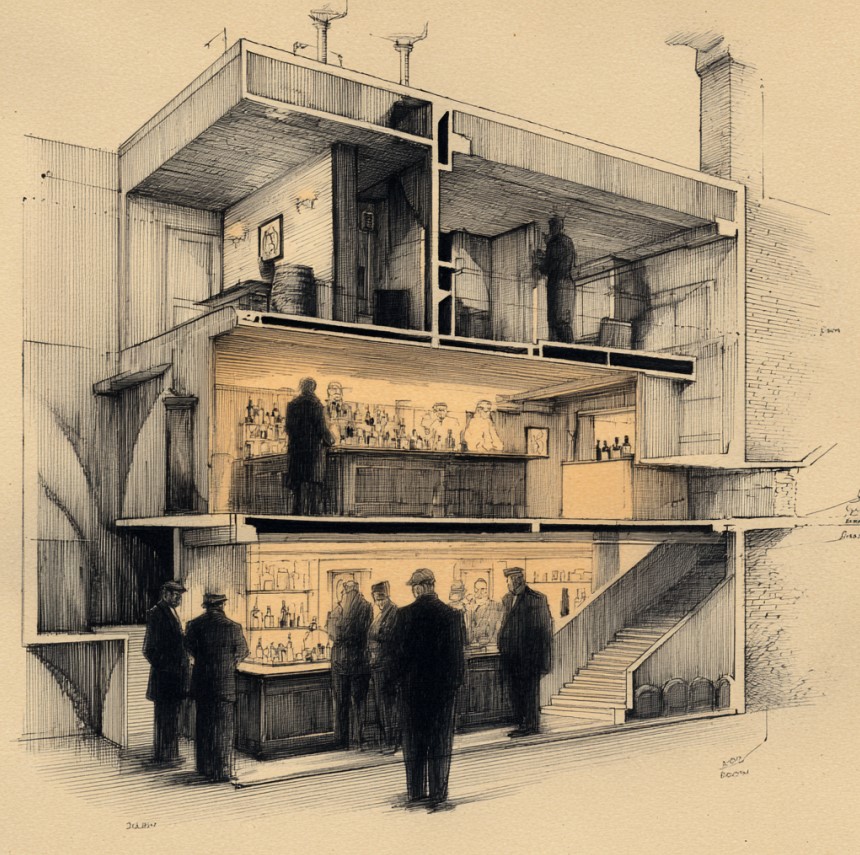
Once the space was secured, construction began immediately. Hidden entrances were standard, but so were reinforced doors, false walls, and emergency exits designed for rapid disappearance. Soundproofing wasn’t a luxury—it was a shield against curiosity. A good speakeasy could vanish into itself within minutes if necessary.
Interior design also mattered more than mythology suggests. These weren’t makeshift dens with mismatched furniture. Many were deliberately stylish, with polished bars, mirrored walls, and lighting designed to soften suspicion. Live music spaces were built with intention, not improvisation. The goal was longevity, not improvisation.
And above all else, there was the cost that no ledger could disguise cleanly: protection.
Protection was not optional. It was infrastructure.
Protection: The Weekly Cost of Being Left Alone
Every speakeasy operated under a simple understanding: someone would be paid, or someone would cause problems.
Payments flowed upward and outward—local gangs provided muscle, police captains provided silence, political fixers provided insulation. Each layer had its price, and each price was predictable enough to be budgeted like rent or liquor restocks.
Miss a payment, and the consequences rarely arrived as announcements. Instead, they appeared as inspections, anonymous raids, broken inventory, or sudden enforcement of forgotten regulations.
Protection wasn’t designed to prevent crime. It managed it.
Operators quickly learned that the smartest strategy wasn’t resistance, but incorporation. Protection costs were folded directly into pricing. Drinks were marked up not just for alcohol, but for continuity—the promise that the night would not be interrupted.
In this economy, stability itself was a commodity.
Liquor Supply Chains: The Real Backbone of the Speakeasy
Without liquor, a speakeasy was just darkness with furniture.
Supply chains stretched across borders and coastlines. Canadian whisky moved through the northern routes—Detroit, Buffalo, and upstate New York—smuggled in modified vehicles and routed through bribed checkpoints. Rum entered through Florida and Gulf ports, while homemade spirits filled gaps in immigrant-heavy neighborhoods where distilling knowledge already existed.
Redundancy was not efficiency—it was survival. A single disrupted route could collapse an entire operation unless alternatives were already in place. Organized crime distinguished itself from amateur bootlegging not by bravery, but by logistics.
Quality control mattered as much as delivery. Bad liquor meant sick customers, police attention, and reputational collapse. Reliable suppliers became more valuable than armed protection, because consistency kept the entire system stable.
In practice, the liquor network was the real infrastructure of Prohibition nightlife. Everything else was decoration built around it.
Credit, Cash, and Quiet Accounting
Speakeasies lived and died by cash flow.
Cash eliminated paper trails, which meant it also eliminated accountability in the traditional sense. Profits were skimmed, redirected, laundered through legitimate businesses—restaurants, laundries, nightclubs, and other establishments that existed as financial camouflage as much as commerce.
When bookkeeping existed, it was often fragmented or coded. The real accounting was frequently held in memory or shared only among trusted insiders. Women often handled these roles, not because they were hidden, but because they were underestimated.
Losses disappeared quickly into envelopes and excuses. Profits rarely stayed in one place long enough to be traced.
The objective was not transparency. It was continuity across chaos.
Why Planned Raids Were Part of the Business Model
Law enforcement and speakeasies were not always adversaries. Sometimes they were collaborators in a controlled performance.
Planned raids served multiple functions. They gave police departments visible enforcement statistics, reassured the public that Prohibition still functioned, and reinforced the value of cooperation to business owners operating in the shadows.
The structure of these raids was predictable. Liquor was hidden beforehand, slow nights were selected, and staged evidence was created for public consumption. A few arrests were made, headlines were written, and operations resumed within days.
Everyone understood the script.
Unplanned raids were different. Those signaled breakdowns in agreements, missed payments, or higher-level interference. They were not enforcement—they were disruption.
When a Speakeasy Was Truly Shut Down
Permanent shutdowns were rare and rarely moral in motivation.
A speakeasy typically disappeared only when it became inconvenient—when violence spilled into public view, when media attention grew uncontrollable, or when federal pressure outweighed local protection networks. Rival syndicates also accelerated closures when territory shifted.
In these cases, removal was efficient and quiet. Liquor was confiscated, ownership dissolved, and leases reassigned. Sometimes fires erased the physical space. More often, the same location reopened under a different name with different managers and the same structural bones.
Nothing truly vanished. It only changed labels.
The Federal Problem: When the Wrong People Paid Attention
Local enforcement could be managed. Federal attention could not.
Agents from the Bureau of Prohibition and later federal agencies operated outside local ecosystems of influence. They rotated assignments, followed documentation rather than relationships, and lacked the embedded incentives that stabilized local corruption networks.
This made them dangerous to the system, not because they were more powerful, but because they were less predictable.
Successful operators understood this clearly. The goal was not visibility—it was controlled invisibility. A speakeasy could exist, but it could not become symbolic.
Attention was the first step toward collapse.
The Endgame: Repeal and Reinvention
When Prohibition ended in 1933, the expectation among many operators was simple: survival had been achieved, and the system would dissolve.
It did not dissolve. It transformed.
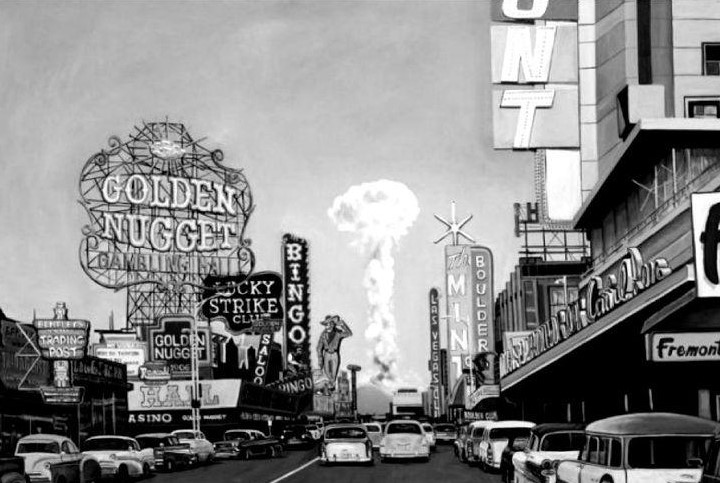
Legal bars replaced illegal ones almost overnight, but the underlying networks—financing, protection structures, and logistical expertise—did not disappear. They migrated into casinos, nightclubs, construction, and other industries where cash flow and discretion remained valuable.
Organized crime did not learn how to break laws during Prohibition. It learned how to coexist with them profitably.
The speakeasy was not the end of that system. It was its prototype.
Final Ledger
Speakeasies endured because they were not anomalies. They were integrated systems operating inside a larger, unofficial economy.
They were funded through calculated risk, protected through negotiated influence, and dismantled only when they stopped serving the interests that allowed them to exist in the first place. Their survival depended less on secrecy than on equilibrium.
The popular image is chaos behind hidden doors.
The reality is something far more precise: a structured business model operating in the margins of legality.
And that model did not disappear when Prohibition ended. It simply changed industries.
References & Sources
- FBI Vault – Prohibition and Organized Crime Records
FBI Vault - The Mob Museum – Prohibition Era Research Archives
The Mob Museum - U.S. National Archives – Bureau of Prohibition Records
National Archives - Mark H. Haller, Bootlegging: The Business and Politics of Violence
- Five Families
- The Corporation
- Library of Congress – Prohibition Primary Source Collections
Library of Congress - Last Call: The Rise and Fall of Prohibition