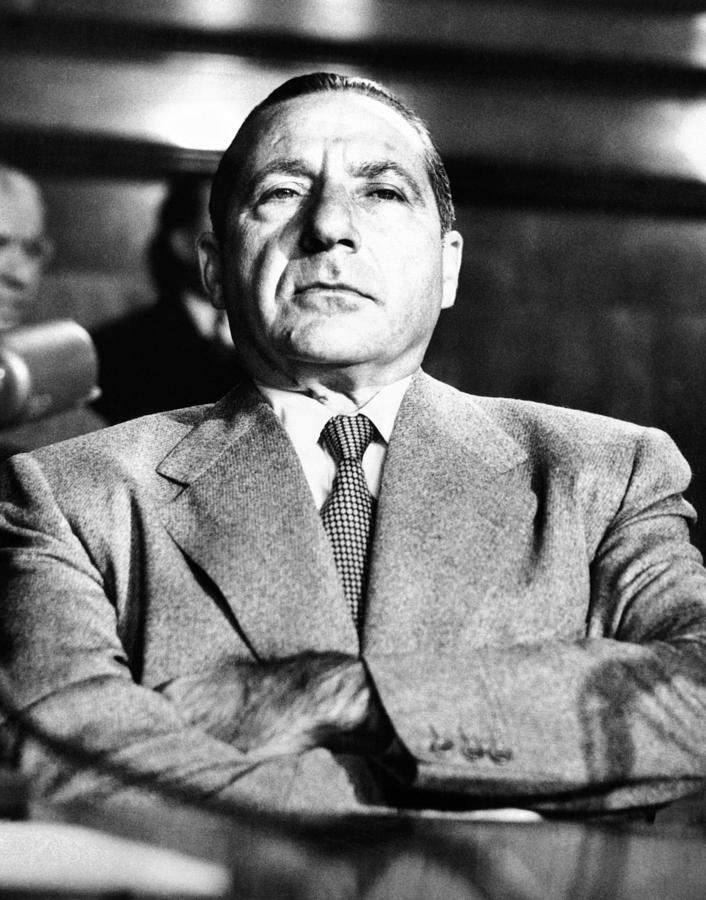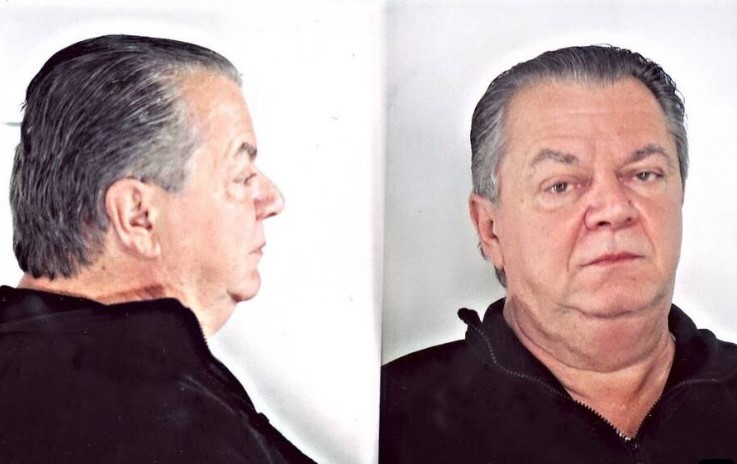

Vincent “Chin” Gigante: The Boss Who Paralyzed His Own Family
There are bosses who burn bright and fall hard. There are bosses who flip, betray their associates, and torch the house behind them. And then there was Vincent Gigante, a man who never publicly renounced the Mafia, never cooperated with prosecutors, and never abandoned the oath that bound him to the underworld.
He did something far more unusual. He made madness his management style.
For nearly three decades, Gigante shuffled through Greenwich Village in a bathrobe and slippers, muttering to himself, staring at the sky, and wandering the streets like a lost pensioner who had misplaced both his address and his dignity. It was theater, but not the kind performed for applause. It was a calculated, long-running deception designed to keep prosecutors guessing and juries uncertain about whether the man behind the performance was capable of standing trial.
The strategy worked. But while Gigante used his apparent insanity to protect himself from the government, he created a different kind of damage inside the Genovese crime family. The organization that had built its reputation on discipline, secrecy, and carefully controlled leadership found itself operating under a boss who was increasingly difficult to reach, understand, or predict.
Confusion became the price of loyalty, and the man who controlled the family was also the man who made it impossible for anyone else to know exactly what he wanted.
| Five Families: Blood, Power, and the Empire Beneath New York |
The Rise of a Street Enforcer
Before the bathrobe, before the mumbling, before the newspaper headlines about the Oddfather, Gigante was muscle. A former boxer, he came up through the streets as a loyal soldier to Vito Genovese, learning the rules of an organization where violence was often the quickest way to settle an argument and silence was the most valuable currency.
In 1957, Gigante allegedly attempted to assassinate Frank Costello, shooting the longtime Mafia boss outside his apartment building. Costello survived the attack, but the message was unmistakable. He stepped aside soon afterward, leaving Genovese to claim the leadership he had long coveted.
Gigante understood power early. It wasn’t necessarily about being the loudest man in the room, the most feared, or the one with the biggest entourage. Power was about making other men understand that their fortunes depended on your decisions, even when you weren’t standing in front of them.
By the late 1970s and early 1980s, following Genovese’s death and years of quiet maneuvering, Gigante had emerged as the dominant force within the family. Official titles mattered less than the relationships he controlled and the loyalty he commanded. By the time the 1980s reached their midpoint, he was widely regarded as the boss of one of the most powerful and sophisticated criminal organizations in the country.
The Genovese family had cultivated a reputation for restraint. Its leadership avoided unnecessary publicity, kept its business quiet, and rarely engaged in the flamboyant behavior that made other mobsters easy targets for law enforcement. Gigante embodied that philosophy, but he eventually pushed it to an extreme that would reshape the family from the inside.
| Mafia Kickbacks: The Fine Art of Giving Something to Get Something |
The Crazy Act
The press called him the Oddfather, a nickname that captured the bizarre spectacle of a Mafia boss wandering the streets in pajamas and a bathrobe. He appeared to talk to parking meters, forget familiar names, and behave like a man incapable of understanding the world around him. At times, he reportedly urinated in public, adding another layer to the performance.
To an ordinary observer, Gigante looked broken. To prosecutors, he presented a frustrating legal obstacle. Psychiatric evaluations, defense arguments about incompetence, and repeated questions about his mental condition complicated efforts to bring him to trial. The spectacle was convincing enough to create years of uncertainty over whether the boss of the Genovese family could legally be held accountable for his crimes.
The act wasn’t simply an elaborate defense strategy designed to fool judges and juries. It also reinforced the aura of mystery surrounding Gigante. If the government couldn’t determine whether he was mentally competent, how could anyone else confidently determine what he was thinking?
Inside the Mafia, however, the performance had consequences that went beyond keeping prosecutors at arm’s length. Gigante’s apparent instability made it difficult for his own people to know where they stood. The boss was simultaneously the most powerful man in the family and someone who appeared increasingly disconnected from the organization he controlled.
His enemies couldn’t easily reach him. His subordinates couldn’t easily understand him. And his associates were left wondering whether the man in the bathrobe was a genius, a lunatic, or something more complicated.
| Banana War: Joe Bonanno’s Last Gambit |
Orders Without Ownership
Gigante rarely communicated directly with captains. He avoided meetings whenever possible, and instructions frequently passed through layers of intermediaries. Trusted messengers carried information between the boss and the men responsible for running the family’s operations, often delivering vague suggestions rather than unmistakable orders.
Nothing was written down, and little was made explicit. The arrangement offered considerable protection against prosecutors. If a capo committed a crime, establishing a direct connection to Gigante became difficult. The layers of communication created distance between the boss and the criminal activity, allowing him to maintain plausible deniability while continuing to exercise authority.
But insulation cuts both ways.
Capos weren’t always certain whether instructions were authentic, complete, or correctly interpreted. Underbosses operated in partial darkness, and decisions that might ordinarily require a quick conversation became exercises in reading between the lines. A nod could mean approval, disapproval, or absolutely nothing, depending on who witnessed it and what they believed the boss intended.
The Genovese family became a hall of mirrors. Everyone knew someone who supposedly spoke to Gigante, but few could claim to understand what the boss himself wanted. Power flowed upward through the organization, while authority flowed downward in riddles.
| The One Rule That Made the American Mafia Powerful |
Centralization by Obscurity
Gigante centralized power in a way that paradoxically fragmented it. He demanded loyalty and discipline but refused transparency, required obedience while limiting access, and cultivated an organization in which no single figure could confidently claim to understand his thinking.
That arrangement created a culture of hyper-caution. No capo wanted to overstep, and no soldier wanted to misinterpret an order that might later be used against him. Meetings grew smaller, conversations became shorter, and decisions were increasingly delayed because nobody wanted to act without knowing whether the boss would approve.
Fear became more complicated than the threat of violence. It was the fear of making the wrong decision, of acting on incomplete information, or of discovering that the man who supposedly authorized an operation had never actually done so.
The family didn’t implode. It calcified.
Gigante’s system may have protected him from exposure, but it also made the organization less adaptable. Leadership became a guessing game, and the men who were supposed to keep the family functioning spent increasing amounts of time trying to decipher the intentions of a boss who had made himself deliberately inaccessible.
The Commission and the Silence Strategy
In the mid-1980s, federal prosecutors launched the historic Mafia Commission Case, targeting the leadership of New York’s Five Families. The prosecution struck at the heart of organized crime’s governing structure, bringing down powerful bosses and exposing the machinery behind years of criminal activity.
Sentences piled up, leadership positions emptied, and men who had once controlled entire neighborhoods found themselves facing decades behind bars. The Mafia’s traditional hierarchy was suddenly under extraordinary pressure, and the government had demonstrated that even the most powerful bosses weren’t beyond its reach.
Gigante survived the storm.
While other leaders faced life sentences, he remained caught in a prolonged legal battle over his mental competency. Psychiatric evaluations, defense arguments, and procedural delays kept the case moving slowly, allowing him to remain outside the prison walls while the government struggled to establish that he was capable of standing trial.
From a distance, it looked like strategic genius. Gigante had outlasted his rivals, avoided the immediate consequences of the Commission prosecution, and kept the Genovese family operating while other organizations struggled to rebuild.
Up close, however, the arrangement felt less like a victory and more like paralysis. His apparent inability to function normally made it difficult for the family to project stable leadership. Succession planning remained ambiguous, potential rivals couldn’t confidently determine when or how power might shift, and the organization continued operating beneath a fog that its own boss had created.
The family was still earning money, still maintaining its criminal enterprises, and still exercising influence. But it was doing so without the clarity that had once made it one of the most disciplined organizations in the American underworld.
Fear as an Operating System
Gigante didn’t need to become an informant to damage the Mafia. His method of control was uncertainty, and he cultivated it so effectively that it became a form of discipline in its own right.
A capo who acted without clear authorization risked making a mistake that could carry serious consequences. A capo who hesitated too long risked appearing weak or disloyal. There was no reliable way to determine which response was correct when the boss’s intentions were deliberately obscured.
The ambiguity itself became a weapon. Gigante didn’t have to threaten every subordinate because the possibility of misinterpreting his wishes was enough to make men cautious. His authority remained intact, but the organization became increasingly dependent on individual interpretations of what that authority meant.
Discipline rooted in opacity breeds isolation. And isolation at the top makes an organization brittle, particularly when the men beneath the boss are expected to make decisions without knowing whether those decisions will be rewarded or punished.
Gigante’s long-running insanity defense eventually collapsed. Prosecutors established that the performance was a deception, and in 1997 he was convicted of racketeering and conspiracy. In 2003, he pleaded guilty to obstruction of justice for faking mental illness, finally acknowledging what the government had spent years attempting to prove.
The robe came off. The myth thinned. But the damage to the family’s internal culture had already been done.
The Cost of the Performance
Unlike bosses who cooperated with the government, Gigante never openly betrayed the Mafia’s code. He went to prison, maintained his silence, and died in federal custody in 2005. By traditional Mafia standards, he had remained loyal.
But loyalty isn’t the only measure of leadership.
Gigante’s reign demonstrated that control without clarity can corrode an organization from within. By making himself unreachable, he deprived the Genovese family of visible authority. By filtering orders through endless intermediaries, he turned communication into interpretation. And by performing madness, he denied the organization a stable center around which its leadership could operate.
The Genovese family survived him and arguably remained stronger than many of its rivals. Yet the internal culture Gigante cultivated was defined by suspicion, distance, and uncertainty. His method of protecting himself had become an obstacle to the men expected to keep his organization functioning.
He had created a system in which everyone was loyal to the boss, but almost nobody could be certain what loyalty required.
The Enemy Within
Vincent Gigante wasn’t reckless like John Gotti, whose appetite for publicity helped make him a target. He wasn’t calculatingly cooperative like Joe Massino, who ultimately betrayed his own organization to save himself. Nor was he openly conspiratorial in the manner of some Mafia bosses who manipulated alliances and rivalries to maintain power.
Gigante was something quieter: a boss who believed invisibility was power and pushed that philosophy so far that even his own captains operated in shadow.
He didn’t destroy the Mafia’s structure. Instead, he hollowed it out in places, replacing open command with veiled suggestions and certainty with suspicion. His organization continued to function, but it did so under the weight of an authority that was simultaneously absolute and inaccessible.
The enemy within doesn’t always betray the oath. Sometimes he rewrites the operating manual in disappearing ink, leaving the men beneath him to guess which rules still apply.
And by the time anyone notices the damage, they’re no longer sure who’s truly in charge.
| Vincent “The Chin” Gigante |
References:
- Five Families – Selwyn Raab.
- The Complete Idiot’s Guide to the Mafia – Jerry Capeci.
- Mob Boss – Jerry Capeci & Gene Mustain.
- United States v. Gigante, 982 F. Supp. 140 (E.D.N.Y. 1997).
- Federal Bureau of Investigation: Genovese Crime Family case files (public records).
- New York Times archives, 1980s–2005 coverage of Vincent Gigante prosecutions.