The Mafia’s Favorite President? Richard Nixon and the Politics of Enemies: The Use of Federal Agencies Against Opponents
Richard Nixon did not invent the idea of using government power against political enemies. American presidents before him had discovered that federal agencies could become useful instruments in political battles, particularly when national security, law enforcement, taxation, and regulation provided legitimate reasons for government scrutiny. What distinguished the Nixon years was the intensity of the effort, the number of agencies touched by it, and the growing evidence that political retaliation was sometimes being considered as part of the machinery of presidential power.
The machinery was already there. The Internal Revenue Service had files and enormous investigative authority. The FBI had informants, surveillance capabilities, and the power to investigate suspected violations of federal law. The CIA possessed vast intelligence resources, even though its principal mission was foreign intelligence. The Justice Department controlled federal prosecutions, while the Federal Communications Commission regulated broadcasters that could influence millions of voters. Every one of these institutions had legitimate responsibilities, but every one also possessed powers that could become intimidating when directed at an individual or organization.
The danger emerged when political opponents began appearing on the same lists as criminals, tax cheats, security threats, or targets of intelligence investigations. The issue was not simply whether someone was being investigated. It was why the person had become a target in the first place, who had requested the investigation, and whether the machinery of government was being used because evidence suggested wrongdoing or because someone inside the White House wanted political opposition punished.
That was the darker side of Nixon’s battle with his opponents.
| The Mafia’s Favorite President? Richard Nixon and the Politics of Enemies: Waterfate: The Crime That Brought Down a President |
The Enemies Were Already Being Catalogued
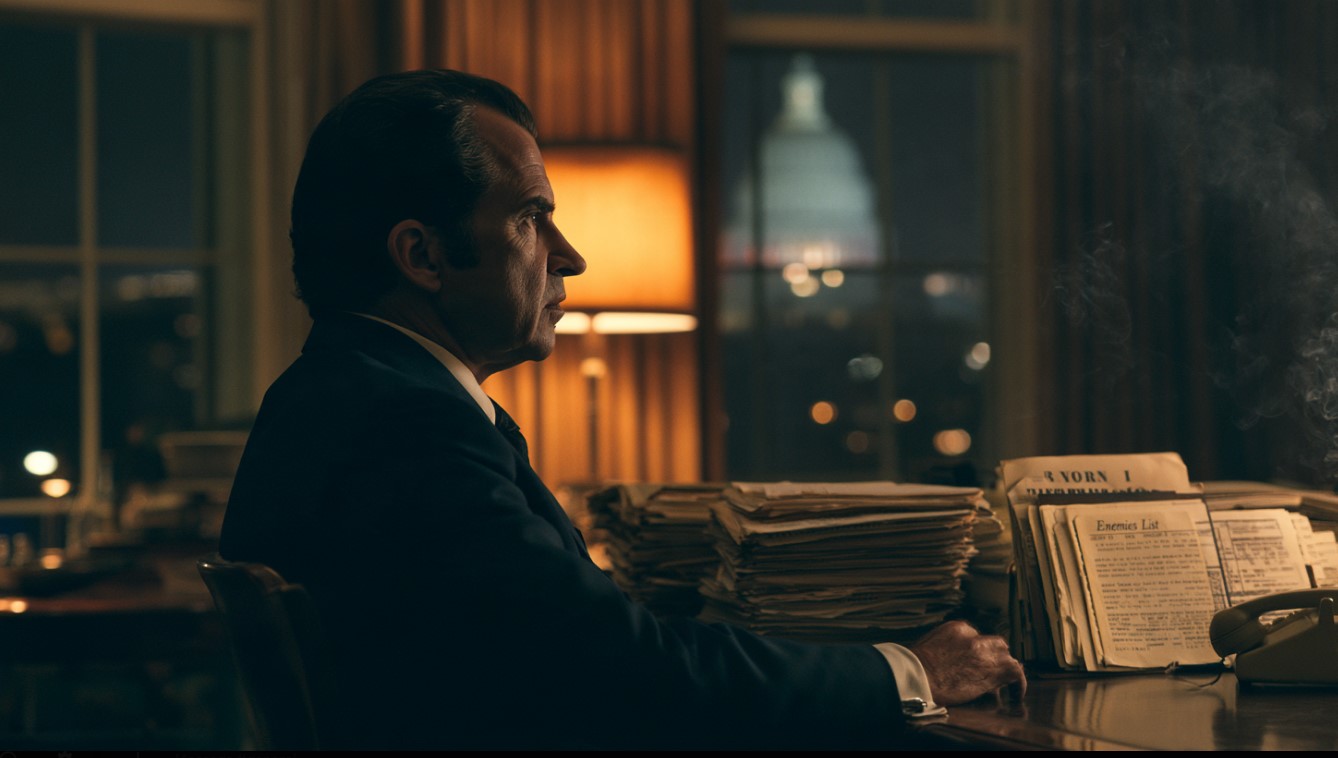
The Nixon White House developed a remarkably systematic approach to identifying political opponents. John Dean, White House counsel, became involved in compiling lists of individuals and organizations regarded by administration officials as political enemies. The names included politicians, journalists, activists, businessmen, labor figures, entertainers, and other people considered hostile to the administration.
Maintaining a political enemies list was not, by itself, illegal. Political campaigns routinely gather information about opponents, critics, journalists, donors, activists, and organizations. Campaigns also conduct opposition research, monitor public statements, and keep records of individuals who may influence elections.
The important question was what happened after the names had been collected.
The National Archives preserves extensive Watergate-era records concerning the enemies lists, proposed investigations, IRS matters, and efforts involving political opponents. The records provide evidence that White House political concerns sometimes moved beyond ordinary campaign research and into discussions about using federal agencies.
Once a person’s name appeared on a political list, the temptation was to find a governmental mechanism that could make the person uncomfortable. The IRS was particularly attractive because tax investigations could be intrusive without requiring the government to accuse someone publicly of being a criminal. An investigation could consume time, money, and legal resources while remaining largely invisible to the public.
The federal government did not have to announce that someone was being punished.
The paperwork could do the work.
| The Mafia’s Favorite President? Richard Nixon and the Politics of Enemies: The Huston Plan |
The IRS: The Agency Nobody Wanted to Fight
The Internal Revenue Service possessed something political operatives understood very well: information. Tax records could reveal income, business relationships, charitable contributions, financial transactions, and other details that were normally shielded from public view. An IRS investigation could also be expensive and disruptive even when it ultimately produced no criminal prosecution or additional tax liability.
The Nixon White House therefore looked at the IRS as a potential instrument against political opponents. In 1971, White House officials discussed the possibility of using the tax system against people regarded as enemies of the administration. John Dean became involved in developing lists of individuals for possible IRS scrutiny, and a substantially expanded list was eventually presented to IRS Commissioner Johnnie M. Walters.
The story, however, becomes considerably more complicated than the image of Nixon simply ordering the IRS to punish his enemies.
Walters resisted.
Treasury Secretary George Shultz also resisted efforts to turn the tax agency into a political instrument. According to National Archives documentation, Walters and Shultz refused to initiate proposed audits because they regarded the effort as an improper use of IRS authority. The House Judiciary Committee later considered the administration’s attempt to use the tax system against political opponents as part of its impeachment inquiry.
That resistance is an important part of the story because it demonstrates that federal agencies were not simply extensions of the Oval Office. Officials inside the government could object, refuse requests, or insist that normal procedures be followed.
The White House nevertheless continued looking for ways to make the tax system more responsive to its political concerns. A Senate Finance Committee historical report documented administration efforts concerning IRS enforcement and cited a 1971 White House document complaining that the administration had been unable to obtain information about political enemies or stimulate audits of individuals it believed deserved IRS attention.
The significance of the episode lies not merely in whether every proposed audit occurred. The documents reveal the mindset inside parts of the administration: political opponents were being discussed in connection with the government’s extraordinary investigative powers, and the perceived problem was sometimes that federal officials were refusing to act.
That distinction matters.
The issue was not simply whether the IRS had the legal authority to conduct an audit. The issue was whether the government was being asked to exercise that authority because of legitimate tax concerns or because the White House wanted to make political opponents pay a price.
| The Mafia’s Favorite President? Richard Nixon and the Politics of Enemies: Daniel Ellsberg and the Pentagon Papers |
The FBI: Information as Political Currency
The FBI presented a different problem. It was a federal law-enforcement agency with enormous investigative capabilities, and its files could contain information that would be extremely valuable to a White House concerned about political opponents, demonstrations, leaks, or the press.
The Nixon administration inherited a long history of domestic intelligence operations. The FBI had conducted investigations involving civil-rights organizations, antiwar activists, suspected subversives, and other political groups under previous administrations. Consequently, it would be inaccurate to portray federal political surveillance as something that suddenly appeared when Nixon entered the White House.
The Nixon years nevertheless intensified the political importance of intelligence information.
The administration was deeply concerned about leaks and demonstrations, particularly during the Vietnam War. Officials frequently viewed political opposition through the lens of national security, foreign influence, or internal disruption. Those concerns sometimes created an environment in which political activity could become entangled with intelligence gathering.
The later Senate investigation known as the Church Committee examined a much broader history of intelligence abuses involving agencies including the FBI and CIA. Its work demonstrated that questionable domestic intelligence practices extended beyond Nixon and involved several administrations.
That broader history is important because it puts Nixon’s actions into context without excusing them. The federal government’s ability to gather information about Americans already existed. The central question was how those powers were being directed and what safeguards existed when political considerations entered the picture.
In Washington, information was power. A file could be more useful than a speech, and an investigation could accomplish things that a campaign advertisement never could. Once government intelligence became intertwined with political strategy, the distinction between investigating a threat and investigating an opponent could become dangerously difficult to maintain.
| How ’bout a Perdon, Mr. President? |
The CIA and the Watergate Firewall
The CIA was not supposed to function as a domestic political police force. Its principal mission concerned foreign intelligence, and that distinction became critical after the Watergate burglary.
On June 17, 1972, five men were arrested inside Democratic National Committee offices at the Watergate complex. Several of the burglars had backgrounds connected to the CIA, while others had ties to Nixon’s reelection organization. The FBI immediately began investigating the break-in, and the investigation threatened to expose connections between the burglars, political operatives, and the White House.
Then the White House became concerned about where the investigation might lead.
According to National Archives records, senior White House officials attempted to impede the FBI investigation by suggesting that continued inquiry could expose sensitive CIA operations. H. R. Haldeman and John Ehrlichman were among the senior officials involved in discussions concerning the investigation, while White House efforts sought CIA assistance in limiting what the FBI was pursuing.
The episode created a remarkable institutional conflict. The FBI was investigating a crime, while White House officials were attempting to persuade another federal agency to help restrict that investigation because of concerns about national-security information and political consequences.
The Senate’s historical account of Watergate documented the administration’s efforts to use the CIA to interfere with the FBI investigation.
The irony was profound. The CIA’s secrecy, which normally protected sensitive intelligence operations from public disclosure, could potentially become a shield against a criminal investigation. The language of national security provided an extraordinarily powerful argument in Washington, particularly when officials were reluctant to ask what might happen if the FBI continued following the evidence.
But the FBI did continue.
The federal machinery had begun moving in a direction the White House could not completely control.
The Justice Department Was Not Supposed to Be the President’s Law Firm
The Justice Department created another problem for a White House engaged in political warfare. The president appoints the attorney general, and the department operates within the executive branch, but federal prosecutors are expected to enforce the law rather than serve as political investigators for the president.
The Watergate years tested that principle repeatedly.
As the scandal developed, prosecutors and investigators increasingly pursued the conduct of individuals connected to the administration itself. The National Archives preserves the records of the Watergate Special Prosecution Force, including investigations involving the White House, the Plumbers, the Watergate cover-up, and related criminal matters.
This created one of the central reversals of Watergate.
The administration had attempted to influence the machinery of government, but once prosecutors and investigators began following evidence independently, that machinery started moving toward the White House.
Political power had not disappeared. It had simply lost its monopoly over the investigation.
The Special Prosecutor’s office, congressional investigators, federal courts, and career officials all became part of a process that was increasingly difficult for the president to control. The scandal became larger precisely because the institutions involved did not all respond to presidential pressure in the same way.
The FCC and Pressure on the Press
The Federal Communications Commission presented another potential avenue of pressure. Radio and television stations operated under federal licensing rules, making the FCC an especially important institution in an era when broadcast television dominated political communication.
Nixon was famously hostile toward portions of the press and believed some journalists and broadcasters were unfairly attacking his administration. White House officials explored ways to pressure media organizations and to make regulatory power relevant to the administration’s political concerns. The significance of this episode is not that every proposed action against a broadcaster became an actual government punishment. The larger issue was the possibility that regulatory authority could become part of political strategy.
A television station did not necessarily have to lose its license to understand that the government possessed the power to make its business life more difficult.
Regulatory power could operate through pressure as much as through formal punishment. The mere possibility of scrutiny could influence behavior, especially when the target knew that the government possessed information, licensing authority, and bureaucratic resources unavailable to an ordinary political opponent.
This was one of the recurring themes of the Nixon era. Government power did not always have to be exercised openly to have an effect.
Sometimes the threat was enough.
The Plumbers: When the Government Wasn’t Enough
The most revealing development came when the administration decided that established government channels were not sufficient.
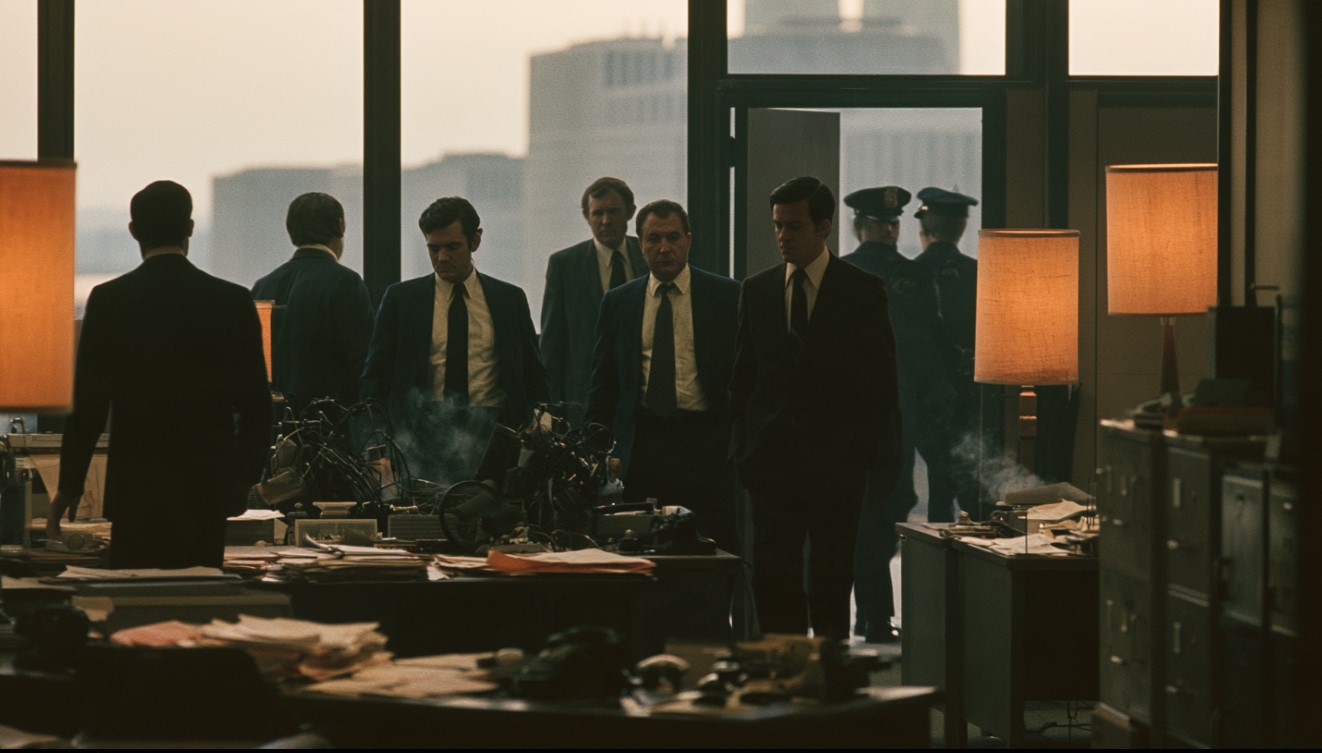
The White House Plumbers emerged in 1971 after the publication of the Pentagon Papers created a crisis inside the Nixon administration. Their stated purpose involved stopping leaks and investigating the unauthorized disclosure of sensitive information. But the operation quickly moved beyond ordinary governmental procedures.
- Howard Hunt and G. Gordon Liddy became central figures in the group. Their activities included the September 1971 burglary of the Beverly Hills office of Daniel Ellsberg’s psychiatrist, Dr. Lewis Fielding, in an effort to obtain information about the Pentagon Papers leaker.
The National Archives identifies the Plumbers records as relating to the investigation and prosecution of individuals associated with the White House unit involved in the burglary.
The Plumbers represented something fundamentally different from using the IRS or FBI. The White House was no longer merely trying to influence an existing agency.
It was creating its own operation.
The group drew personnel and techniques from the intelligence and law-enforcement worlds but operated within the political environment of the White House. That arrangement created a dangerous hybrid: an intelligence-style organization motivated by political objectives and operating without the same institutional structure associated with established federal agencies.
The Plumbers’ activities eventually became connected to the broader Watergate scandal. Some of the same people, techniques, and political objectives that had appeared in the Ellsberg operation would later surface in the Watergate investigation.
The government had become dissatisfied with what its own agencies would do. So a parallel structure emerged.
The Difference Between an Agency and a Political Weapon
The Nixon story is sometimes reduced to the simple proposition that the president used the government against his enemies. The historical record is more complicated and, in some respects, more revealing.
Nixon did not control every federal agency absolutely. IRS Commissioner Johnnie Walters resisted political pressure. Treasury Secretary George Shultz supported that resistance. Investigators continued pursuing Watergate despite efforts to limit the inquiry, and prosecutors ultimately investigated people inside the president’s own political organization.
At the same time, the documentation is extensive enough to establish that the White House sought to influence federal agencies for political purposes. The National Archives preserves separate bodies of records concerning the enemies lists, IRS matters, FBI information, CIA activities, the Plumbers, and other investigations involving political opponents.
The House Judiciary Committee eventually approved three articles of impeachment against Nixon: obstruction of justice, abuse of presidential power, and contempt of Congress. The second article addressed a pattern of conduct involving the use of presidential authority in ways the committee considered abusive.
The distinction between an agency acting lawfully and an agency being manipulated for political purposes therefore became one of the central questions of the Nixon presidency.
An IRS audit could be legitimate. An FBI investigation could be legitimate. A Justice Department prosecution could be legitimate. Intelligence collection could be legitimate when conducted within the agency’s lawful mission.
But the purpose behind the action mattered.
If someone was investigated because evidence suggested criminal activity, that was one thing. If the same investigative authority was directed at someone because that person had become a political enemy, the constitutional and ethical implications were entirely different.
The paperwork might look identical. The motive behind it was not.
When the System Turned Around
Watergate ultimately demonstrated something that Nixon’s political operation had failed to appreciate: the president might influence federal agencies, but he could not guarantee that every person inside the federal government would remain politically loyal.
The FBI continued investigating. Congressional investigators kept asking questions. Federal prosecutors pursued cases. Courts demanded evidence. The Supreme Court eventually rejected Nixon’s claim of absolute executive privilege and ordered him to surrender subpoenaed recordings in United States v. Nixon.
The June 23, 1972 recording became particularly damaging because it documented an effort to have the CIA interfere with the FBI’s investigation. The National Archives identifies the recording as the “smoking gun” demonstrating Nixon’s involvement in efforts to obstruct the Watergate investigation.
By that point, the direction of governmental power had changed.
The institutions that the administration had attempted to influence were now investigating the administration itself. That reversal was at the heart of Watergate.
The federal government was not simply a collection of agencies controlled from the Oval Office. It was also a collection of institutions with competing responsibilities, career personnel, legal obligations, congressional oversight, courts, investigators, and internal rules.
Those barriers did not always work. But they worked often enough to matter.
The Government After Nixon
Watergate did not end with Nixon’s resignation on August 9, 1974. Congress continued examining how federal power had been used, particularly within the intelligence agencies.
The Senate Select Committee to Study Governmental Operations with Respect to Intelligence Activities, commonly known as the Church Committee, began its work in 1975. Its investigations examined the FBI, CIA, NSA, IRS, and other components of the federal government and uncovered a much broader history of questionable intelligence practices extending across several presidential administrations.
That broader investigation changed the historical meaning of Watergate.
The scandal was no longer simply a story about five burglars caught inside Democratic headquarters. It became part of a larger examination of how presidential power, intelligence agencies, law enforcement, and political activity could collide.
Nixon did not create every practice that the Church Committee uncovered. Many of the intelligence abuses investigated by the committee predated his presidency. Nevertheless, the Nixon years demonstrated how quickly established governmental powers could become entangled with a president’s political concerns.
The danger was not necessarily that every federal employee would obey every presidential request.
The danger was that enough people might.
Federal agencies possessed extraordinary authority. They could investigate, subpoena, audit, surveil, prosecute, regulate, and collect information. Those powers existed for legitimate governmental purposes, but their legitimacy depended partly upon the reasons for which they were used.
That distinction is easy to overlook when the machinery is operating quietly.
An IRS letter looks like an IRS letter. An FBI file looks like an FBI file. A Justice Department investigation looks like a Justice Department investigation. A regulatory inquiry looks like a regulatory inquiry.
From the outside, the government document may reveal nothing about the political conversation that preceded it.
That was the unsettling lesson of the Nixon years. Political power did not always need to order an opponent arrested or publicly denounce an opponent as an enemy. It could work through institutions that appeared ordinary and legitimate, using the enormous authority of the federal government to make an individual answer questions, produce records, defend against an investigation, or simply wonder what might happen next.
The institutional safeguards were supposed to prevent that power from becoming personal.
Sometimes they did. Sometimes they did not.
And when the safeguards failed, the difference between governing and retaliation could become almost impossible to see until the paperwork reached a congressional investigator, a prosecutor, a judge, or eventually the public.
That is what made the Nixon era so consequential. The most powerful political weapon in Washington did not necessarily look like a weapon at all.
Sometimes it looked like an audit. Sometimes it looked like an investigation. Sometimes it arrived in a government envelope.
References:
- National Archives and Records Administration. “Misuse of IRS.” Records of the Watergate Special Prosecution Force. National Archives.
- National Archives and Records Administration. “Exhibit: Nixon and Watergate.” National Archives and Records Administration.
- National Archives and Records Administration. “Attempted Use of CIA to Block the FBI Investigation.” Watergate Investigation Records.
- National Archives and Records Administration. “Records of the Watergate Special Prosecution Force.” Record Group 460.
- U.S. Senate Historical Office. “Select Committee on Presidential Campaign Activities.” United States Senate.
- U.S. Senate Historical Office. “Senate Select Committee to Study Governmental Operations with Respect to Intelligence Activities.” United States Senate.
- U.S. Senate Committee on Finance. Tax Administration: IRS and Political Activities. Historical congressional materials concerning the Nixon administration and the Internal Revenue Service.
- U.S. House of Representatives, Committee on the Judiciary. Impeachment of Richard M. Nixon: Constitutional Grounds for Presidential Impeachment. 93rd Congress, 1974.
- Kutler, Stanley I. The Wars of Watergate: The Last Crisis of Richard Nixon. New York: W. W. Norton, 1990.
- Ambrose, Stephen E. Nixon: The Triumph of a Politician, 1962–1972. New York: Simon & Schuster, 1989.
- Ambrose, Stephen E. Nixon: Ruin and Recovery, 1973–1990. New York: Simon & Schuster, 1991.
- United States Senate. Final Report of the Select Committee on Presidential Campaign Activities. 93rd Congress, 1974.