The Mafia’s Favorite President? Richard Nixon and the Politics of Enemies: Watergate: The Crime That Brought Down a President
Five Men, a Hotel, and a Secret That Would Not Stay Buried
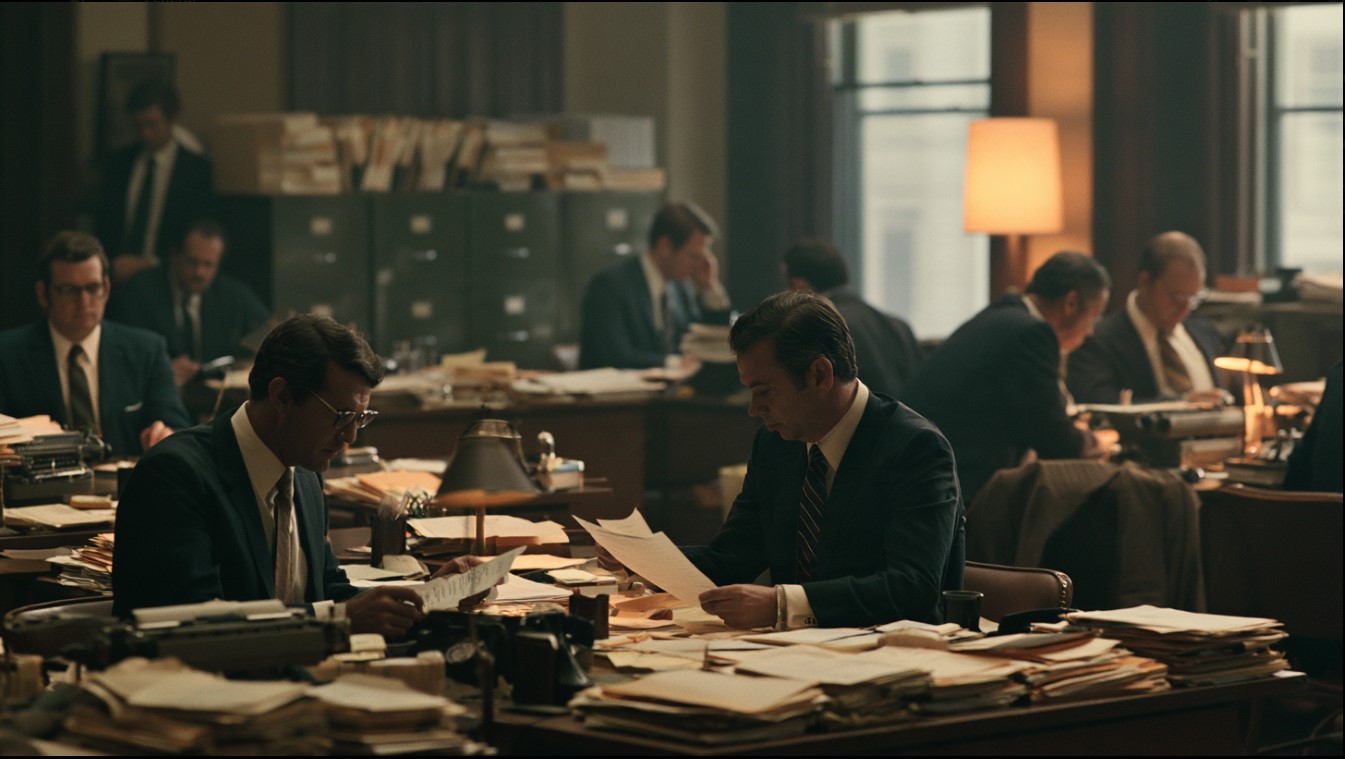
It began in the darkness of a Washington office complex. In the early morning hours of June 17, 1972, five men were caught inside the Democratic National Committee headquarters at the Watergate complex carrying surveillance equipment, burglary tools and thousands of dollars in cash. They were not supposed to be there, and the security guard who noticed something suspicious had no idea that his decision to call the police would eventually set in motion one of the greatest political scandals in American history.
At first, the incident looked like a political burglary that had gone badly. The presidential campaign was underway, the Democrats occupied offices in the Watergate complex, and political espionage was hardly unknown in Washington. What made this burglary different was the identity of the men involved and the connections that investigators would gradually uncover between the burglars, the Committee to Re-elect the President and people operating inside the Nixon White House.
The burglars were arrested, but the real story was only beginning. Within months, the investigation would move from a Washington police station to federal courtrooms, congressional hearing rooms and eventually the Oval Office itself. Along the way, investigators would uncover secret campaign operations, illegal intelligence gathering, political espionage, attempts to obstruct the investigation, secret presidential recordings and a struggle over whether the president of the United States could refuse to surrender evidence demanded by the courts.
The National Archives describes Watergate as a series of revelations that exposed abuses reaching into the highest levels of the Nixon administration and ultimately resulted in Nixon’s resignation on August 9, 1974.
Watergate was never simply about five burglars caught in a Democratic office.
It was about what happened after they were caught.
| The Mafia’s Favorite President? Richard Nixon and the Politics of Enemies: Daniel Ellsberg and the Pentagon Papers |
The Break-In
The Watergate complex was an unusual setting for a crime that would eventually change the course of American political history. Located along the Potomac River in Washington, D.C., the sprawling complex contained a hotel, offices and residences, and the Democratic National Committee had established its headquarters there during the 1972 presidential campaign.
Shortly after 2 a.m. on June 17, five men were discovered inside the DNC offices. Police found them with electronic surveillance equipment and other burglary tools, and the investigation quickly revealed that these were not ordinary burglars looking for cash or valuables. Several of the men had intelligence backgrounds, and connections soon emerged between the defendants and the Nixon campaign organization.
The five arrested men were Bernard Barker, James McCord, Virgilio González, Eugenio Martínez and Frank Sturgis. James McCord was particularly significant because he had worked both as a former CIA officer and as a security official for the Committee to Re-elect the President. That combination made the burglary considerably harder for the Nixon campaign to dismiss as the work of random political extremists.
The campaign organization itself had enormous resources and a reputation for aggressive political tactics. Known officially as the Committee to Re-elect the President, it was often referred to by its acronym, CREEP, a nickname that became increasingly appropriate as the scandal developed.
The men had been caught.
The next question was much more dangerous: who had sent them?
| How ’bout a Perdon, Mr. President? |
The White House Says Nothing
The Nixon administration immediately faced a political crisis, although few people yet understood how large it would become. The president’s reelection campaign was in full operation, and the burglars had been caught inside the headquarters of his opponent’s political organization. Any connection between the break-in and the White House could transform an embarrassing criminal incident into a national scandal.
The administration denied that the White House had any connection to the burglary. Nixon himself would later tell the nation that no one connected to his administration was involved in the Watergate break-in. At the time, however, the FBI investigation was already beginning to uncover connections that made the denials increasingly difficult to sustain.
Nixon’s political position appeared secure. He went on to defeat Democratic nominee George McGovern in November 1972, winning 49 states and receiving more than 60 percent of the popular vote. The Watergate story had not yet become the political catastrophe it would eventually become.
Behind the scenes, however, the situation was becoming more complicated. The burglars faced prosecution, journalists were digging into their backgrounds, investigators were following financial transactions, and people associated with the Nixon campaign were beginning to understand that the most dangerous part of the Watergate operation might not have been the burglary itself.
It was the question of who knew about it.
And what they were willing to do to keep that knowledge from becoming public.
| The Mafia’s Favorite President? Richard Nixon and the Politics of Enemies: The ‘Enemies List’ and the IRS |
The Men Behind the Men
The Watergate burglars were connected to a much larger political intelligence operation. Several had intelligence backgrounds, while others had worked on covert political activities associated with the Nixon campaign.
Two names would become particularly important: G. Gordon Liddy and E. Howard Hunt.
Neither man was a stranger to secret operations.
Hunt had previously worked for the CIA and had become involved with the White House’s secret Plumbers operation following the publication of the Pentagon Papers. Liddy, a former FBI agent and political operative, was also deeply involved in the covert activities surrounding the Nixon campaign.
Their appearance in the Watergate story therefore connected the burglary to an earlier chapter in the Nixon administration’s history.
The Pentagon Papers had frightened the White House because classified information had escaped into the hands of the press. The administration responded by creating a secret operation designed to investigate leaks and gather information about Daniel Ellsberg. That operation eventually produced the burglary of Ellsberg’s psychiatrist’s office.
Watergate involved a different target and a different immediate objective, but some of the personnel and habits were familiar.
The government had already experimented with political intelligence operating in the shadows.
Now the shadows had moved into an election campaign.
| The Mafia’s Favorite President? Richard Nixon and the Politics of Enemies: The Huston Plan |
The Washington Post Pulls the Thread
The Watergate burglary might have remained a relatively contained criminal case if journalists had not continued digging.
Two reporters at The Washington Post, Bob Woodward and Carl Bernstein, began investigating the men arrested at the DNC headquarters. Their reporting gradually established connections between the burglars, political operatives and a network of campaign funds.
The work was rarely glamorous. Much of it involved checking names, following money, confirming telephone conversations and persuading reluctant sources to talk. One piece of information led to another, and another led somewhere else.
The story began to resemble a financial ledger more than a political thriller. But every ledger has a trail.
The reporters discovered that money connected to the Nixon reelection organization had reached people associated with the Watergate operation. The financial connections made it increasingly difficult to describe the burglary as an isolated act committed by a handful of rogue individuals.
The question became larger than the break-in. How far up did the operation go? And who was paying for it?
Follow the Money
The financial trail became one of the most important elements in the investigation. Campaign money had moved through various channels, and investigators began examining payments associated with the people involved in the Watergate operation.
Money rarely speaks loudly. It leaves receipts.
The investigation into campaign finances helped establish connections between the burglars and Nixon’s reelection organization. The Senate Watergate Committee later examined the financial operations of the campaign and the broader political intelligence activities surrounding the 1972 election.
The significance of the money trail went beyond proving that political operatives had been involved. It demonstrated that the burglary existed within a larger organization with resources, personnel and objectives.
That meant somebody had to know.
The more investigators looked, the harder it became to believe that the people arrested inside the DNC headquarters had simply wandered into the building on their own.
Judge Sirica Smells a Rat
The criminal trial of the Watergate burglars began in January 1973, and Federal District Judge John Sirica quickly became an important figure in the story. Sirica was not satisfied with the idea that the defendants had acted entirely on their own. He pressed them about the circumstances surrounding the burglary and encouraged them to cooperate with investigators.
Several defendants pleaded guilty, while others were convicted. Sirica’s skepticism helped keep attention focused on the possibility that the burglary was only the visible portion of a much larger operation.
The judge had reason to be suspicious.
The men before him had intelligence backgrounds. They were connected to political organizations. They had been carrying sophisticated surveillance equipment. Their operation had involved a major political party’s headquarters during a presidential election.
The pieces did not fit the idea of an ordinary burglary. Sirica understood that. And he kept pulling at the loose thread.
The Senate Opens the Door
By early 1973, Watergate had become too large for the criminal courts alone. Congress wanted answers.
On February 7, 1973, the Senate established the Select Committee on Presidential Campaign Activities, commonly known as the Senate Watergate Committee. North Carolina Senator Sam J. Ervin Jr. became chairman, while Republican Senator Howard Baker served as vice chairman.
The hearings soon became national television. That changed everything.
Millions of Americans watched senators question witnesses who had previously operated behind closed doors. Former White House officials appeared before the committee and described campaign activities, intelligence operations and efforts to control the fallout from Watergate.
Washington had always conducted much of its business privately. Now the secrets were being discussed in front of cameras.
The hearings transformed Watergate from a Washington scandal into a national drama. Americans could watch the testimony themselves and decide how seriously to take the allegations. The political machinery that had once operated behind closed doors was suddenly sitting beneath congressional lights.
And then came one of the most consequential revelations of the entire investigation.
The Tapes
Alexander Butterfield had served as a senior White House aide. When Senate investigators questioned him about presidential record-keeping in July 1973, they were looking for information about how the White House documented important conversations.
Butterfield gave them something they were not expecting. The president had a secret recording system.
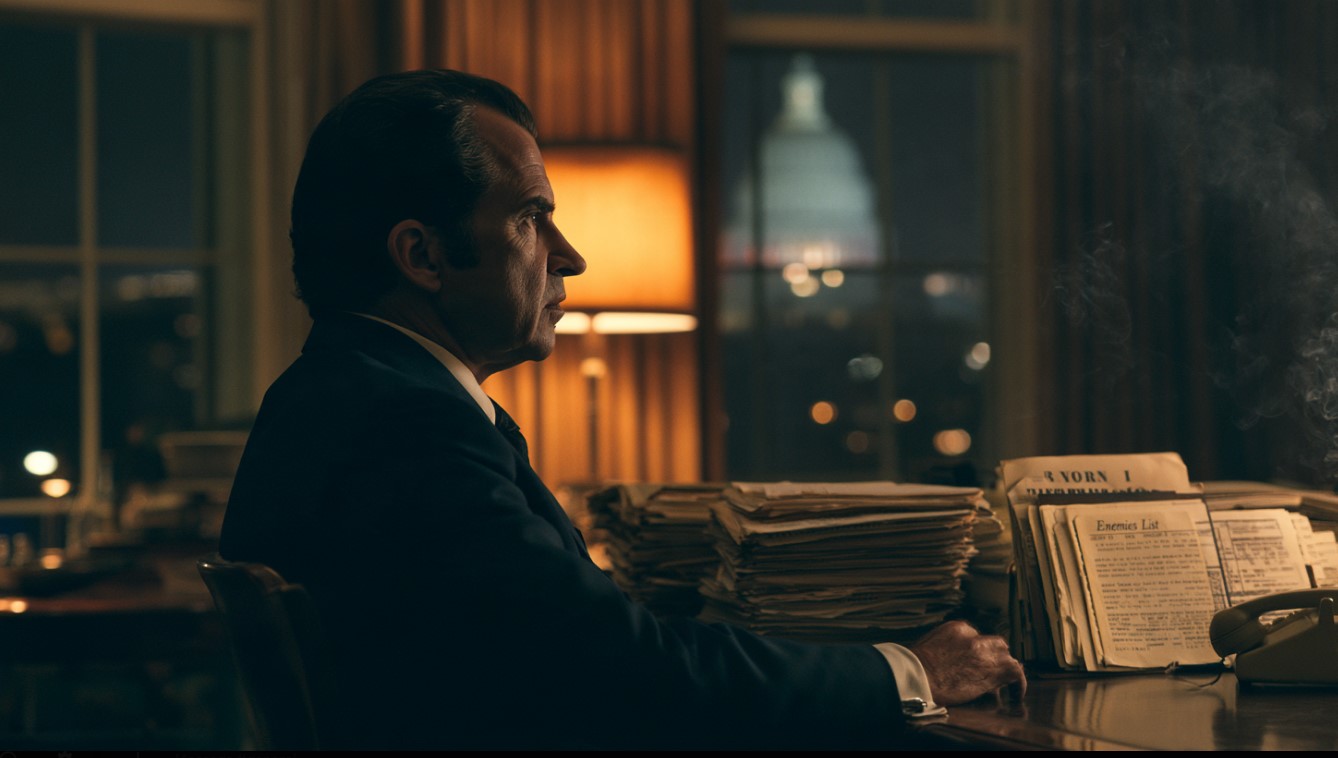
Nixon had authorized a system that automatically recorded conversations in locations including the Oval Office. The recordings had been made without the knowledge of most people who spoke with the president. The discovery changed the entire investigation.
Until that moment, investigators often had to rely on competing memories. One witness could say that a conversation happened one way while another could remember it differently. Now there was a possibility that the White House itself had preserved the conversations that investigators needed.
The tapes were sitting inside the presidential office.
And the president did not want to give them up.
Nixon Claims Executive Privilege
The struggle over the tapes became a constitutional confrontation. Investigators demanded access to recordings that they believed contained evidence relevant to the Watergate investigation. Nixon resisted, invoking executive privilege and arguing that confidential presidential conversations deserved protection.
The dispute eventually reached the Supreme Court. On July 24, 1974, the Court issued its decision in United States v. Nixon, 418 U.S. 683.
The ruling was unanimous.
The Court recognized that presidents possess legitimate interests in confidential communications, but it rejected the idea of an absolute presidential privilege that could prevent a court from obtaining evidence needed in a criminal proceeding. Nixon was ordered to surrender the subpoenaed recordings.
For the White House, this was a devastating moment. The president had lost the legal battle over the tapes.
The most important evidence in the Watergate investigation was coming out.
The Smoking Gun
One recording was particularly damaging. It was a conversation from June 23, 1972, only six days after the Watergate burglary. The recording became known as the “smoking gun” tape because it demonstrated that Nixon and his advisers had discussed ways to limit the FBI’s investigation into the burglary.
The tape was released publicly on August 5, 1974, and its contents destroyed what remained of Nixon’s political support. National Archives materials identify the June 23 conversation as evidence of Nixon’s involvement in efforts to obstruct the investigation.
The significance was enormous.
Until then, there had still been room for arguments about what Nixon knew and when he knew it. The tape placed his own voice into the historical record. The cover-up was no longer simply something other people had done.
The president himself had been recorded discussing it.
Impeachment
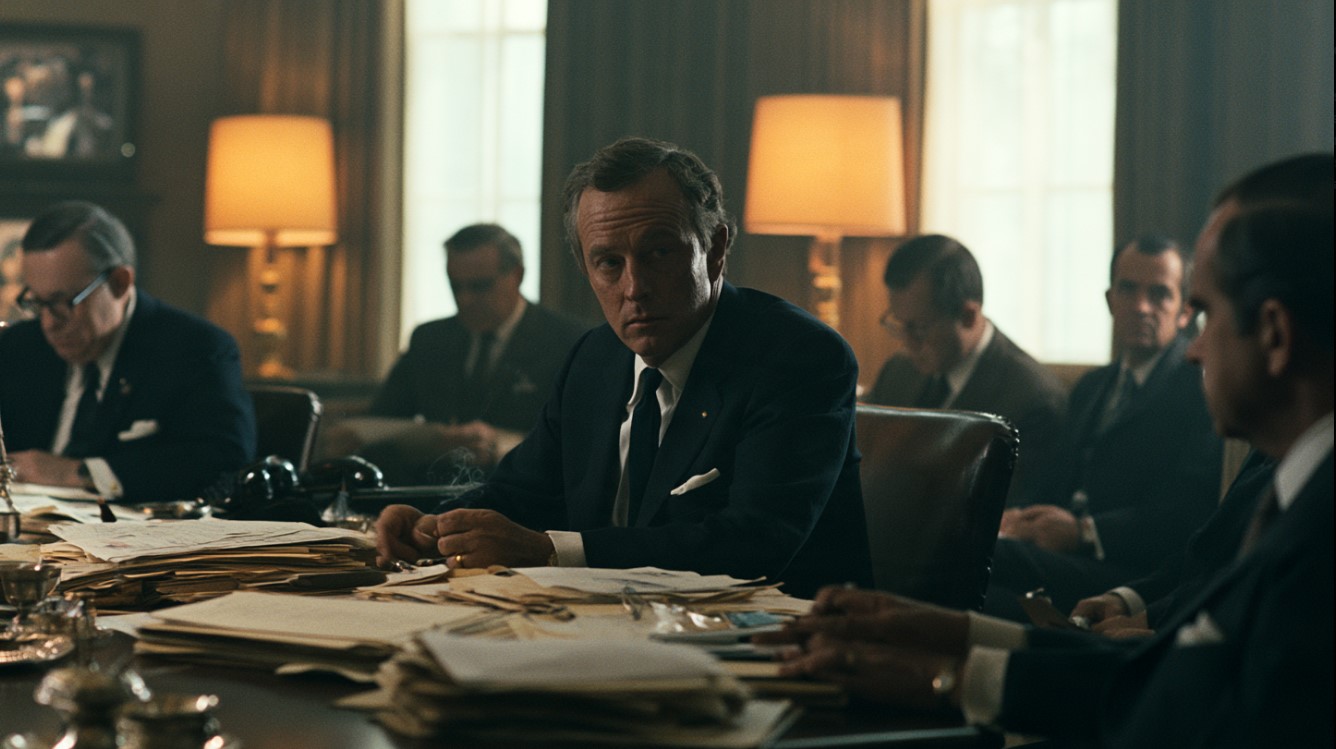
By 1974, Watergate had moved beyond criminal investigation and into constitutional territory. The House Judiciary Committee began examining whether Nixon should be impeached. The committee ultimately approved three articles of impeachment: obstruction of justice, abuse of presidential power and contempt of Congress.
The first article concerned efforts to interfere with the Watergate investigation and the broader effort to conceal information about the scandal. The second addressed the use of presidential authority in ways the committee regarded as an abuse of power, including efforts involving federal agencies and political opponents.
The third concerned Nixon’s refusal to comply with congressional subpoenas. The impeachment process was moving forward, but Nixon’s political support was collapsing even faster.
The president had survived elections. He could not survive the tapes.
August 1974
The final weeks moved quickly. On August 5, the White House released transcripts of the June 23, 1972 conversation. The contents made it increasingly clear that Nixon had participated in discussions about limiting the FBI’s investigation shortly after the burglary.
Republican congressional leaders traveled to the White House and informed Nixon that he no longer had sufficient support to avoid impeachment and likely conviction in the Senate.
The president had spent years building political power. Now members of his own party were telling him that the numbers were gone. On August 8, 1974, Nixon addressed the nation and announced that he would resign the presidency.
The following morning, August 9, he left the White House. Gerald Ford was sworn in as the thirty-eighth president later that day.
Richard Nixon became the first American president to resign from office. The scandal that had begun with five men inside a Democratic office had reached the Oval Office.
The President’s Own Record
There was an extraordinary irony in the final chapter. The tapes that Nixon had authorized as a method of preserving presidential history became part of the evidence that destroyed his presidency.
The recording system had been intended to document conversations and preserve an internal record of presidential decision-making. Instead, those recordings preserved conversations that investigators would eventually use to reconstruct the Watergate cover-up.
The evidence had been created by the presidency itself. And it could not simply be erased.
In December 1974, Congress passed the Presidential Recordings and Materials Preservation Act, giving the federal government custody of Nixon’s presidential records and materials. The law reflected the extraordinary legal and historical importance of the Nixon records and recordings.
The secret archive had become public evidence.
Watergate Was Bigger Than the Burglary
The word Watergate eventually became shorthand for the entire scandal, but the original burglary was only the first visible piece of a much larger story.
Behind it were political intelligence operations, secret campaign financing, surveillance, covert activities, attempts to control investigations and an administration increasingly concerned with political enemies and damaging information.
The scandal also exposed the complicated relationship between the White House and federal law-enforcement and intelligence agencies. The administration had enormous institutional power, but the FBI, courts, Congress and eventually the Supreme Court all played roles in preventing that power from completely controlling the investigation.
That is what makes Watergate historically significant. The story was not simply that one group of political operatives broke into an office.
It was that the institutions around them refused to let the burglary remain buried.
The Underworld in Washington
There is an almost noir quality to Watergate, but the comparison needs to be made carefully. Watergate was not a Mafia operation, and the Nixon administration should not be described as a criminal organization. The historical record is far more complicated than that.
But the mechanics of the scandal sometimes resembled the darker machinery associated with organized crime: secret payments, intermediaries, political fixers, surveillance, covert assignments, men operating under aliases and an insistence that nothing happening below should be connected to anyone above.
There were also people whose job descriptions seemed increasingly difficult to explain in ordinary political language.
The Plumbers had been created to deal with leaks. Liddy and Hunt became involved in covert political intelligence. The burglars entered the DNC headquarters. The cover-up attempted to keep the connection from reaching the White House. The analogy ends there.
But the atmosphere remains striking.
A political organization had developed a hidden machinery of intelligence and secrecy, and once that machinery was running, controlling it became increasingly difficult.
The Loose Thread
Watergate did not collapse because of one heroic moment. It collapsed because one investigation led to another.
A security guard noticed something wrong with a door. Police arrived. Five men were arrested. Reporters investigated their backgrounds. Financial records revealed connections. Judge Sirica refused to accept the idea that the burglars were acting alone. Congress established a committee. Television brought the hearings into American homes.
Then Alexander Butterfield revealed the tapes. The courts demanded the tapes. The tapes exposed the cover-up. Congress moved toward impeachment. Nixon resigned.
Each event created the conditions for the next.
That is why Watergate remains such a powerful historical story. The scandal was not simply about what happened inside the Watergate building on June 17, 1972. It was about what happened afterward, when a political system began examining itself and discovered how much had been hidden behind the doors of the White House.
The Final File
Watergate changed American politics, but its deeper legacy was institutional.
It strengthened congressional investigations, reshaped public expectations about presidential accountability and contributed to new laws governing campaign finance, intelligence activities and presidential records. It also changed the relationship between journalists and political power, creating a mythology around investigative reporting that remains influential decades later.
Most importantly, Watergate established a historical reminder that presidential authority has limits. Nixon had won reelection in 1972 with an overwhelming electoral mandate. Less than two years later, he was gone.
The distance between those two moments is the story.
A president can command the government, but he does not command the Constitution. A White House can classify information, control access and invoke executive privilege, but it cannot necessarily keep evidence hidden forever.
And a secret recorded on tape is a particularly dangerous thing. The burglars had entered the Watergate offices in the darkness. The investigation began slowly, almost quietly. Then the doors opened one after another.
The campaign. The White House. The tapes. The courts. Congress. Finally, the presidency itself. Watergate had begun as a burglary.
It ended as a constitutional crisis.
And somewhere between those two points, the most powerful man in Washington discovered that the secret machinery built to protect political power could become the evidence that destroyed it.
References:
- National Archives and Records Administration. “Watergate.” American Originals. Washington, D.C.
- National Archives and Records Administration. “Watergate and the Constitution.” National Archives, Washington, D.C.
- National Archives and Records Administration. “Listening to Nixon.” Prologue: Pieces of History. National Archives, Washington, D.C.
- National Archives and Records Administration. “The Presidential Recordings and Materials Preservation Act.” National Archives, Washington, D.C.
- National Archives and Records Administration. Records of the Watergate Special Prosecution Force, Record Group 460. Washington, D.C.
- United States Senate. “Watergate Investigation.” Senate Historical Office. Washington, D.C.
- United States Senate Select Committee on Presidential Campaign Activities. Final Report of the Select Committee on Presidential Campaign Activities. 93rd Cong., 2d sess. Washington, D.C.: U.S. Government Printing Office, 1974.
- United States House of Representatives, Committee on the Judiciary. Constitutional Grounds for Presidential Impeachment. 93rd Cong., 2d sess. Washington, D.C.: U.S. Government Printing Office, 1974.
- United States v. Nixon, 418 U.S. 683 (1974).
- Nixon v. United States, 978 F.2d 1269 (D.C. Cir. 1992), concerning preservation and access issues involving presidential records.
- Woodward, Bob, and Carl Bernstein. All the President’s Men. New York: Simon & Schuster, 1974.
- Woodward, Bob, and Carl Bernstein. The Final Days. New York: Simon & Schuster, 1976.
- Kutler, Stanley I. The Wars of Watergate: The Last Crisis of Richard Nixon. New York: W. W. Norton & Company, 1990.
- Ambrose, Stephen E. Nixon: The Triumph of a Politician, 1962–1972. New York: Simon & Schuster, 1989.
- Ambrose, Stephen E. Nixon: Ruin and Recovery, 1973–1990. New York: Simon & Schuster, 1991.