Ruby Stein: The Millionaire Who Made the Mistake of Crossing Jimmy Coonan
In Hell’s Kitchen, money could buy a lot of things. It could buy silence. It could buy loyalty. It could buy protection, information and, sometimes, another week of life.
Ruby Stein had plenty of it.
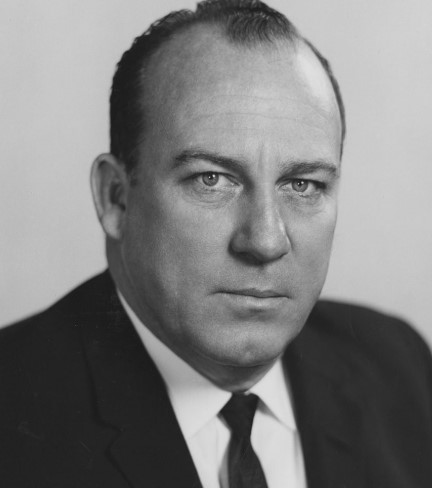
Charles “Ruby” Stein was a major loansharking financier with deep connections to New York’s criminal underworld. By the late 1960s, his name had appeared in investigations into organized loansharking, and the Congressional Record described Stein and his partner Nicholas “Jiggs” Forlano as among New York’s largest loan sharks, with direct connections to the Mafia.
Stein was not some neighborhood hustler with a few bookmakers working for him. He operated on a much larger scale. And one of the younger men who came into his orbit was Jimmy Coonan.
That relationship would end with Stein dead, his body dismembered, and his murder becoming one of the defining episodes in the rise of the Westies.
The Loan Shark and the Young Gangster
Coonan was ambitious, violent and impatient. Stein was established. For a time, the arrangement worked. Coonan operated in Hell’s Kitchen, where gambling, loansharking and other rackets generated money. Stein had access to capital and connections that a young street gangster could not easily acquire on his own. The relationship gave Coonan an education in the business side of organized crime.
But loansharking has one rule that never changes. Debt must be paid. According to the later federal case against Coonan and members of the Westies, Stein was a loansharking financier to whom Coonan owed a substantial amount of money. In May 1977, Coonan, William “Billie” Beattie and other Westies murdered and dismembered Stein.
The debt was about to disappear. So was the man who held the ledger.
| The Westies and the Javits Center: How a Manhattan Megaproject Became a Mob Battleground |
The Black Book
The most sinister part of the Stein story was not simply the money. It was the information. Later accounts describe Stein as maintaining records of his customers and their debts. One modern historical account identifies his records as a “black book,” while other retellings have emphasized the importance of the names contained within it.
That detail matters because a loan shark’s book could be more valuable than cash. It could contain businessmen. Bookmakers. Criminals. People with political connections. People who could not afford to have their names associated with a loanshark.
For a young gangster trying to build a criminal organization, control of that information could be extraordinarily useful.
But there is an important distinction between the colorful later accounts and the evidence established in federal court. The Second Circuit’s opinion confirms Stein’s status as a loansharking financier and confirms that Coonan owed him a substantial sum, but it does not establish every detail later attributed to the contents or fate of Stein’s records.
The myth grew. The body was real.
The 596 Club
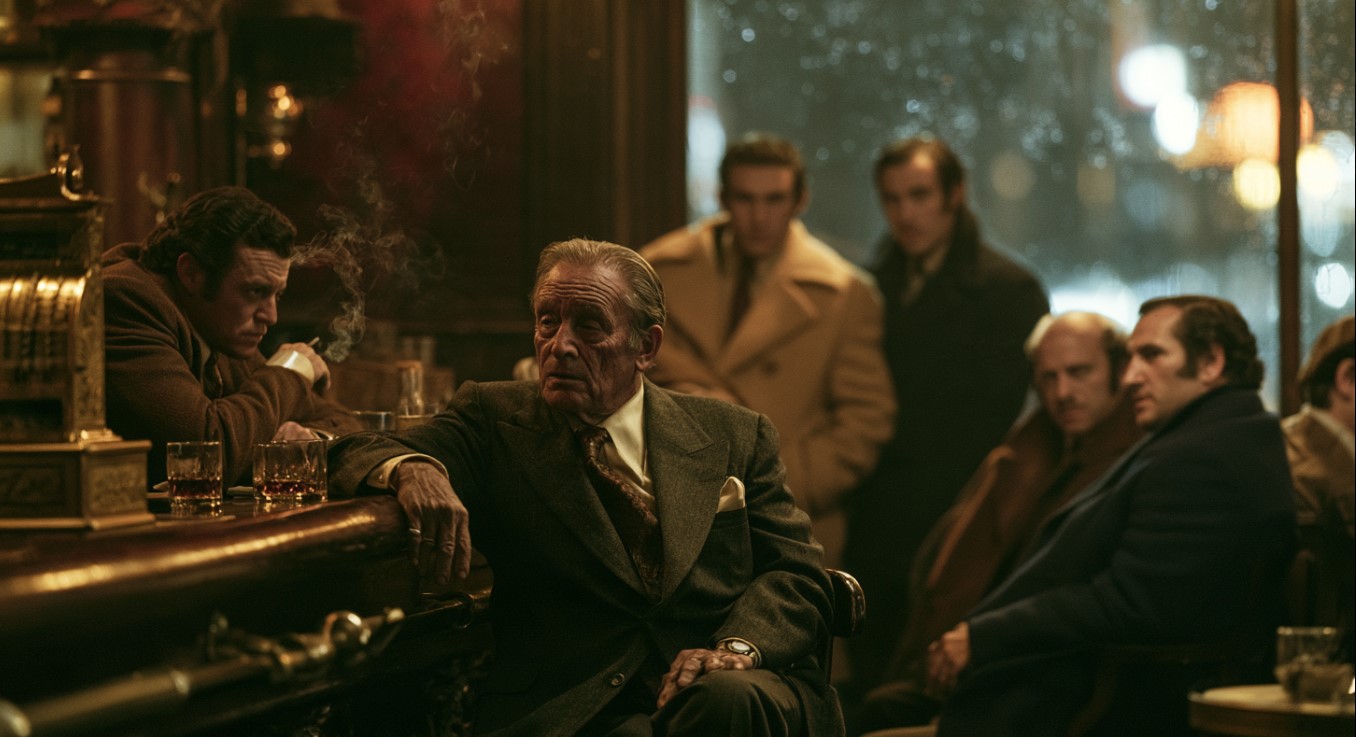
The final scene unfolded at the 596 Club on Tenth Avenue in Hell’s Kitchen. The bar belonged to Coonan. It was the kind of place where neighborhood criminals could drink, make deals and disappear into the crowd. In the violent world Coonan was building, it also became something more sinister. A killing ground.
Contemporary photographs and later reporting identify the location as 596 Tenth Avenue at West 43rd Street. The site was later occupied by another bar, but in 1977 it was the 596 Club, associated with Coonan and the Westies.
Stein was brought there. He would not leave alive. The federal record later established that Coonan, Beattie and other Westies murdered Stein and dismembered his body. The brutality was deliberate. The Westies were not merely eliminating a creditor. They were sending a message.
| The Loyalty Test: How Mickey Featherstone Destroyed the Westies |
A Debt Written in Blood
Coonan reportedly owed Stein a substantial amount of money. That fact gives the murder its coldest dimension. In most criminal organizations, killing the man who financed your operation would be suicidal. Stein had connections to the Italian Mafia and was a major figure in the New York loansharking world.
Coonan did it anyway.
The Second Circuit later described Stein as a “loansharking financier” and specifically noted that Coonan owed him a substantial sum. The same court described the Westies’ broader pattern of extreme violence and their use of dismemberment in disposing of victims.
Coonan was gambling that the murder would accomplish several things at once. It would erase his debt. It could eliminate a powerful financial rival. It could potentially give him access to Stein’s business. And, perhaps most importantly, it would establish something about Jimmy Coonan that everyone in Hell’s Kitchen needed to understand.
He was no longer asking permission. He was taking.
The Body Comes Back
The Westies had a problem. Getting rid of a body was one thing. Keeping it gone was another. According to later accounts, Stein’s remains were placed in bags and dumped into the river. But the disposal failed to remain invisible. His torso eventually surfaced, turning what might have been a secret murder into an unmistakable message to law enforcement and the criminal underworld.
The Westies had wanted Stein to disappear. Instead, the river gave him back. That was particularly dangerous because Stein was not an unknown neighborhood victim. He had established relationships with powerful figures in organized crime.
Now questions had to be answered. Who killed Ruby Stein? Why? And where was his money?
| Roy DeMeo and the Westie: The Partnership Built on Murder |
The Italians Come Calling
Coonan had just crossed an invisible line. He had murdered a man with Italian Mafia connections. That meant the Irish street gang of Hell’s Kitchen was suddenly facing a much larger criminal world.
According to later accounts, Coonan and Mickey Featherstone were summoned to a meeting with representatives of the Italian Mafia after Stein’s murder. The episode became an important part of the traditional account of how Coonan’s gang moved from being an independent Irish street organization toward an alliance with the Gambino family.
The danger was obvious. Coonan had killed a connected loanshark. The Italians could kill him. Instead, something very different happened. They saw an opportunity.
From Outlaw Gang to Mafia Ally
Coonan’s violence had gotten attention. Now it could become an asset. The later alliance between the Westies and the Gambino crime family transformed the gang’s position in Hell’s Kitchen. The Second Circuit’s 1991 opinion found that the Gambinos eventually financed the Westies’ loansharking operation and allowed them to use the Gambino name and reputation in their illicit businesses. In return, the Westies paid the Gambino family a percentage of their proceeds.
That arrangement gave Coonan something he had never possessed before. Protection. Money.
Connections. And legitimacy inside the criminal hierarchy. The murder of Ruby Stein had nearly gotten the Westies killed.
Instead, it helped introduce them to the Mafia.
The Man Who Changed the Westies
This is why Ruby Stein’s murder matters far beyond the killing itself. It was one of the moments when Jimmy Coonan stopped being merely a young Hell’s Kitchen gangster and started becoming the architect of a larger criminal organization.
The murder demonstrated his willingness to eliminate a man who was financially and politically better connected than he was. It demonstrated the Westies’ emerging reputation for extreme violence. And it helped bring Coonan into contact with the Italian Mafia.
The Westies would eventually become notorious for loansharking, narcotics trafficking, labor racketeering and control of parts of Manhattan’s West Side. The federal court that later reviewed the organization’s history described Coonan’s crew as the dominant organized-crime group in Hell’s Kitchen during the 1970s and early 1980s.
Ruby Stein was part of the transformation. He was also one of its victims.
The Millionaire Who Became a Warning
Calling Stein a “millionaire” has become part of the colorful mythology surrounding him, although the strongest primary sources located for this article establish him more firmly as a major loansharking financier than they establish a specific personal net worth.
What is not mythology is his importance.
The 1968 Congressional Record identified Stein as one of New York’s largest loan sharks and connected him to major underworld figures. Nearly a decade later, the federal court record identified him as the financier murdered by Coonan and his associates. That is enough to explain why killing him was such a dangerous move.
Coonan did not murder a nobody. He murdered a man with money, connections and a place in New York’s organized-crime economy. Then he walked away from the killing with his debt erased and his reputation enhanced. At least temporarily.
The Price of Becoming King
There is a dark irony in the story of Ruby Stein. Stein had helped men like Coonan enter the world of serious criminal finance. Coonan eventually killed him. The student destroyed the banker. And the murder helped create the gangster who would rule Hell’s Kitchen.
Within days of Stein’s death, another event would change the neighborhood forever. On May 13, 1977, Mickey Spillane—the old Irish boss Coonan had spent years challenging—was murdered in Queens.
The Westies’ new era was beginning. Coonan had removed a creditor. He was about to inherit a neighborhood. And somewhere between the dim barroom of the 596 Club and the dark waters of the Hudson, the old Hell’s Kitchen had crossed a line.
There was no going back. Ruby Stein had money. He had connections. He had information. But Jimmy Coonan had something more dangerous.
He had decided that the rules belonged to whoever was willing to break them.
References:
United States Court of Appeals for the Second Circuit. United States v. Coonan, 938 F.2d 1553 (2d Cir. 1991).
English, T. J. The Westies: Inside New York’s Irish Mob. New York: St. Martin’s Press, 1990.
Capeci, Jerry. Murder Machine: A True Story of Murder, Madness, and the Mafia. New York: Dell Publishing, 1992.
English, T. J. Paddy Whacked: The Untold Story of the Irish American Gangster. New York: HarperCollins, 2005.
United States Congress. Congressional Record, 90th Congress, 2nd Session, January 30, 1968. Discussion of organized loansharking and the activities of Charles “Ruby” Stein and Nicholas “Jiggs” Forlano.
Leon, Harmon. “Haunted Photos of Famous New York Crime Scenes Then and Now.” VICE, April 26, 2018.
The Mob Museum. “In 1980s New York, the Mob Had Its Hands in Everything—Even a Museum.” The Mob Museum, May 22, 2024.
CrimeReads. “A Food Tour Through the New York City Crime World.” CrimeReads. Discussion of the 596 Club and Ruby Stein’s murder.