The Irish Mob War: Mickey Spillane, Jimmy Coonan and the Battle for Hell’s Kitchen
Before the Westies became synonymous with murder, dismemberment and the dark side of Hell’s Kitchen, there was another Irish gangster sitting at the top of the neighborhood.
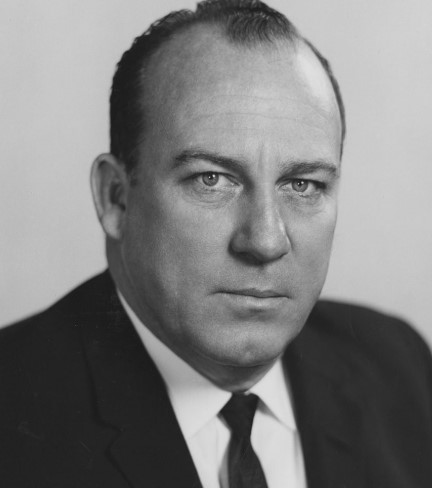
His name was Mickey Spillane.
For years, Spillane controlled much of Hell’s Kitchen through gambling, loansharking, labor connections and the kind of neighborhood influence that could not be measured by money alone. He was the old guard: an Irish street boss who understood that power came from controlling the neighborhood, knowing who owed you money, knowing which doors to knock on, and knowing when to use a fist instead of a gun.
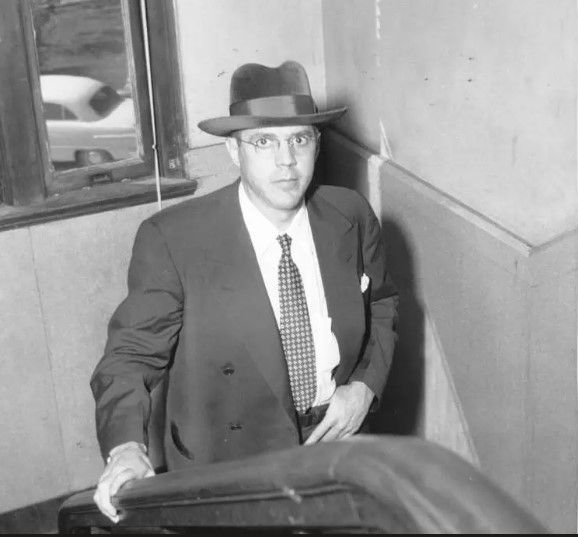
Then a younger generation came looking for his throne. At the center of that generation was Jimmy Coonan.
The conflict between Spillane and Coonan was more than a personal feud. It was a changing of the guard. The old Irish mob was being challenged by younger men who were more reckless, more ambitious and increasingly willing to work with the Italian Mafia.
By the time the war was over, Mickey Spillane was dead, Jimmy Coonan controlled Hell’s Kitchen, and the organization that would become known as the Westies had found its place in New York’s criminal underworld.
Mickey Spillane’s Hell’s Kitchen
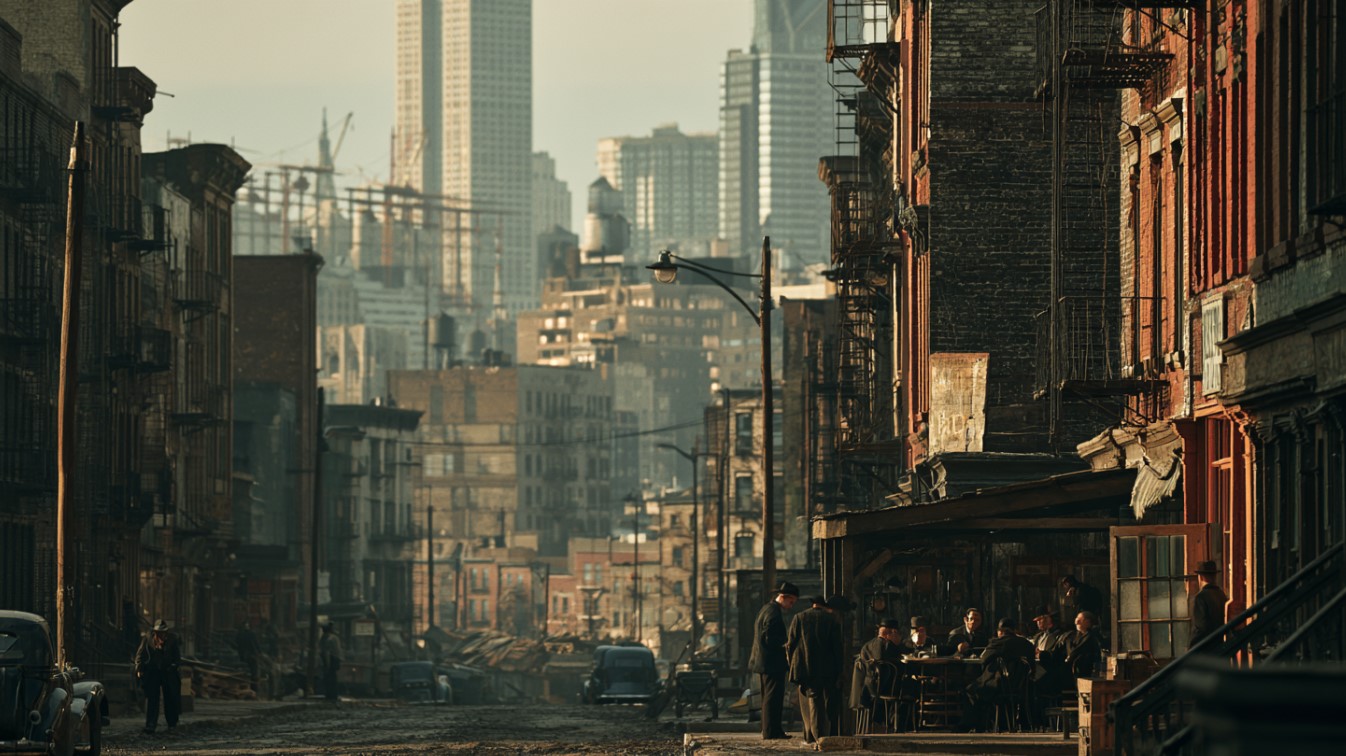
Hell’s Kitchen was not simply a neighborhood to Spillane. It was his territory. By the 1960s, he had emerged as one of the most powerful Irish-American gangsters on Manhattan’s West Side. His operations included gambling and loansharking, and his influence extended into the neighborhood’s political and labor networks.
Spillane also cultivated an image that was useful in a place like Hell’s Kitchen. He could be generous to neighborhood residents while remaining ruthless toward competitors. That combination—part local benefactor, part criminal boss—was an old formula in New York’s immigrant neighborhoods. But Hell’s Kitchen was changing.
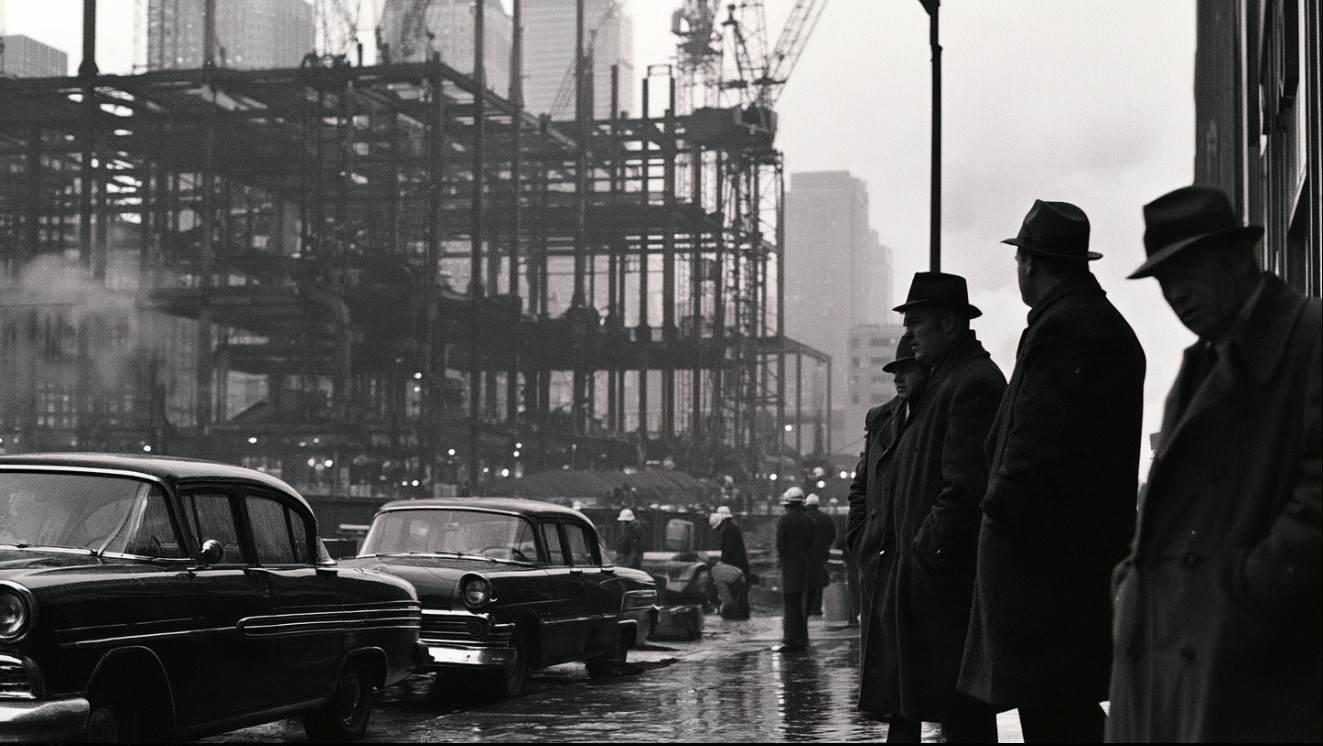
The waterfront economy was declining, while construction and redevelopment were bringing enormous amounts of money into Manhattan. Union jobs, construction contracts, kickbacks and no-show positions were becoming more valuable than some of the traditional street rackets.
Spillane understood the opportunity. So did the men coming after him.
The Kid Who Wanted the Throne
Jimmy Coonan was much younger than Spillane, and he had something that could be dangerous in the underworld: a long memory.
The feud reportedly began after Spillane’s men kidnapped and pistol-whipped Coonan’s father. Coonan was only a teenager, but the incident left an impression. He would not forget it. In 1966, the young Coonan made his answer unmistakable. He fired a machine gun from a rooftop at Spillane and several associates.
He missed. But missing the target did not mean the message was lost.
Spillane now knew that the young man from Hell’s Kitchen was willing to challenge him. The conflict would eventually send Coonan to prison, but incarceration did not erase his ambitions. When he returned to the neighborhood in the early 1970s, the old rivalry was still alive.
The difference was that Coonan was no longer simply an angry young gangster. He was building an organization.
Contemporary accounts and later histories describe Coonan and Mickey Featherstone as central figures in the violent consolidation of Hell’s Kitchen rackets during the 1970s. Their methods were considerably darker than those associated with the old neighborhood machine.
The Westies were beginning to take shape.
Gambling, Loansharking and the Price of Territory
The fight for Hell’s Kitchen was ultimately about money. Gambling generated cash. Loansharking created debt. Debt created leverage. And leverage could be converted into control over businesses, labor and people.
Coonan began establishing relationships with other criminals who could help him penetrate Spillane’s territory. One particularly important connection was Ruby Stein, a loan shark who had ties to the Genovese crime family. That relationship would end in blood. Coonan’s rise was no longer simply a neighborhood rebellion against Spillane. The battle was becoming entangled with the larger New York Mafia.
The Italian families had their own interests in Hell’s Kitchen, particularly as Manhattan redevelopment promised enormous profits. The neighborhood’s future was being poured in concrete, and everyone wanted a piece of the money.
That meant Coonan’s war with Spillane was about to become much bigger than two Irish gangsters fighting over a few blocks.
The Javits Center Changes Everything
One of the biggest prizes was the construction boom that would eventually produce the Jacob K. Javits Convention Center. The convention center itself was not completed until the 1980s, but the struggle for influence surrounding the project reflected something much larger: control over Manhattan construction and the unions connected to it.
For organized crime, a major construction project could mean kickbacks, inflated contracts, union influence, no-show jobs and control over who worked—and who didn’t. Spillane had every reason to defend his territory. The Italian Mafia had every reason to challenge him.
The future construction site sat on the edge of Hell’s Kitchen, and the criminal value of that real estate was obvious long before the building was finished. The dispute helped expose a fundamental weakness in the old Irish organization. Spillane could dominate his neighborhood, but the Italian Mafia possessed something he did not: a larger regional network and enormous resources.
The Genovese family in particular wanted influence over the construction operation. According to later accounts, Anthony “Fat Tony” Salerno became involved in the struggle, while Coonan’s position increasingly intersected with Italian Mafia interests.
The war was becoming an alliance waiting to happen.
The Old Guard Starts Falling
Spillane’s position deteriorated rapidly in the mid-1970s. Several of his key associates were murdered, including Eddie “the Butcher” Cummiskey, who was shot at the Sunbrite Bar in August 1976. The Mob Museum notes that Spillane was already beginning to retreat from some of his rackets as Coonan moved into the vacuum.
Other Spillane loyalists—including Tom Devaney and Tom “the Greek” Kapatos—were also killed during the escalating struggle. The message was becoming impossible to ignore. Spillane’s organization was being dismantled piece by piece.
And Coonan was still standing.
What made the situation particularly dangerous was that Coonan was no longer operating alone. He had recruited Mickey Featherstone, a volatile Vietnam veteran who would eventually become one of the most infamous figures associated with the Westies.
The younger generation was replacing the old one. But there was still one problem. Mickey Spillane was alive.
The Gambino Connection
Coonan’s most important move may have been the relationship he developed with Roy DeMeo. DeMeo was a Gambino crime family soldier who would become notorious for the extraordinary violence of his crew. The Mob Museum describes DeMeo’s organization as one of the most violent criminal crews ever prosecuted in federal court, with investigators eventually tying its members to numerous murders.
For Coonan, DeMeo represented something Spillane did not have: access to the machinery of the Italian Mafia. The relationship changed the balance of power. Coonan could bring the Irish muscle. DeMeo could bring Gambino connections. The Italians could bring a much larger criminal network. Together, they could reshape Hell’s Kitchen.
The alliance was not necessarily based on friendship. It was business. And in the Mafia, business has often been conducted at gunpoint.
| The Westies and the Javits Center: How a Manhattan Megaproject Became a Mob Battleground |
The Death of Mickey Spillane
On May 13, 1977, Mickey Spillane was shot and killed outside his apartment in Queens. He was 43 years old.
The identity of the killer has long been attributed to Roy DeMeo, with the killing described in later accounts as a favor to Coonan. The Mob Museum, citing T.J. English’s The Westies, says DeMeo killed Spillane as a “present” to Coonan. Because the historical record includes competing accounts and the killing did not result in a conviction of DeMeo for the murder, it is more accurate to describe this as the established account in major Westies histories rather than an uncontested courtroom fact.
Either way, the result was unmistakable. Spillane was gone. Coonan had won.
The old boss who had ruled Hell’s Kitchen for years was dead, and the younger gangster who had once attacked him from a rooftop now stood at the center of the neighborhood’s underworld.
The throne was empty. Jimmy Coonan took it.
| The Loyalty Test: How Mickey Featherstone Destroyed the Westies |
From Irish Street Gang to Mafia Partner
The irony was that Coonan’s victory did not make Hell’s Kitchen independent of the Italian Mafia. It did the opposite.
Coonan had fought to take control of an Irish neighborhood, but his success depended increasingly on cooperation with the Italian crime families. His relationship with Roy DeMeo helped open the door to the Gambino family, and the Westies became partners rather than simple competitors.
That alliance would become the defining characteristic of the Westies. They were Irish. They operated in Hell’s Kitchen. But they were now connected to one of the most powerful Mafia families in America.
The arrangement allowed the Westies to retain control of their neighborhood while providing the Italians with an Irish enforcement arm and access to valuable rackets.
For Coonan, it was the ultimate payoff. He had not defeated the old order merely to become another street gangster. He had positioned himself inside the larger New York underworld.
The Birth of the Westies
This is where the story of the Westies truly begins.
The name would eventually become associated with some of the most brutal organized crime in modern New York history. The gang became notorious for murder, extortion, loansharking, gambling and the disposal of victims’ bodies. Their grisly reputation was reinforced by what became known as the “Houdini” method—making victims disappear so that investigators had no body to work with.
But the Westies did not emerge from nowhere. They were forged in a neighborhood war.
Mickey Spillane represented the old Hell’s Kitchen: territorial, Irish, deeply rooted in the neighborhood and connected to traditional street rackets. Jimmy Coonan represented something newer and more dangerous—a generation prepared to use extreme violence while forming alliances with the Italian Mafia.
Spillane had ruled Hell’s Kitchen. Coonan learned how to take it from him. And Roy DeMeo helped open the door to the Gambino family. The result was one of the strangest partnerships in New York criminal history: an Irish gang controlling a Manhattan neighborhood while operating in the shadow of the Italian Mafia. The battle for Hell’s Kitchen had ended.
The Westies’ reign was just beginning.
References:
English, T. J. The Westies: Inside New York’s Irish Mob. New York: St. Martin’s Press, 1990.
English, T. J. Paddy Whacked: The Untold Story of the Irish American Gangster. New York: HarperCollins, 2005.
Capeci, Jerry. Murder Machine: A True Story of Murder, Madness, and the Mafia. New York: Dell Publishing, 1992.
The Mob Museum. “In 1980s New York, the Mob Had Its Hands in Everything—Even a Museum.” The Mob Museum, May 22, 2024.
The Mob Museum. “Roy DeMeo: No. 3 on List of Top 5 Most Notorious Mob Hitmen.” The Mob Museum, February 12, 2020.
Quirk, Rory. “The Guts Gore of an Irish Gang.” The Washington Post, March 29, 1990. Review of T. J. English’s The Westies: Inside the Hell’s Kitchen Irish Mob.
Traub, James. “The Lords of Hell’s Kitchen.” The New York Times, April 5, 1987.