The New Jersey School Construction Scandals and the Cost of Corruption
Article 2 in series “How Mafia-Controlled Construction Turned Safety into a Negotiable Expense”
The Mafia has always understood a simple truth: the safest crime is the one hidden inside a legitimate business.
A hijacked truck attracts attention. A body in a vacant lot invites questions. But a construction contract buried inside thousands of pages of government paperwork can hide millions of dollars in theft while appearing perfectly legal.
For decades, organized crime recognized that the construction industry offered opportunities far beyond traditional extortion and labor racketeering. Public building projects came with enormous budgets, endless subcontractors, complicated bidding procedures, and one particularly attractive source of revenue: taxpayers footing the bill.
Schools, roads, bridges, and government facilities became targets not because they represented public service, but because they represented rivers of money flowing through systems vulnerable to manipulation.
New Jersey proved particularly fertile ground for that kind of corruption.
The state had a long history involving the intersection of politics, labor unions, construction, and organized crime. Investigations into public construction projects revealed a troubling pattern involving inflated contracts, corrupt contractors, questionable bidding practices, and associations with Mafia-connected figures.
Unlike traditional Mafia stories involving rival gangsters, gambling operations, or waterfront extortion, the victims here were ordinary citizens. They were parents sending their children to school, taxpayers financing public projects, and communities expecting safe buildings in return for their money.
The consequences were not always dramatic. Buildings did not necessarily collapse overnight. Instead, the damage could emerge slowly, hidden behind walls and ceilings—and buried in accounting ledgers.
That was what made the problem so disturbing. Corruption could transform safety from a requirement into a negotiable expense.
When the Mafia Moved Into Legitimate Business
The relationship between organized crime and construction did not develop by accident.
Throughout the twentieth century, Mafia families expanded beyond traditional criminal enterprises and established influence in labor unions, trucking companies, waste management, and construction-related businesses. Control over unions provided leverage. Control over suppliers created influence. Control over contractors opened doors to government contracts worth millions.
Once criminal organizations established themselves inside these industries, the opportunities multiplied.
Contractors seeking to win bids could be pressured into using approved suppliers. Companies connected to organized crime could receive favorable treatment. Competitors unwilling to participate could face intimidation, labor disruptions, or exclusion from lucrative projects.
The result was a marketplace where competition could become secondary to connections.
For organized crime, that was the attraction. The money was substantial, the legitimate appearance was useful, and the complexity of the construction industry created layers between the criminal influence and the final victim.
New Jersey’s Construction Money Machine
New Jersey was particularly vulnerable because of its rapid development, extensive public infrastructure projects, and longstanding organized crime presence.
Federal and state investigators repeatedly examined allegations involving contractors connected to corruption schemes, bid-rigging operations, and relationships with criminal figures. While individual investigations differed, the underlying pattern was remarkably consistent.
Public money flowed into construction projects while insiders found ways to siphon profits from nearly every stage. In many cases, the corruption began before the first shovel touched the ground.
Contract specifications could be manipulated. Bid estimates could be inflated. Subcontractors could be selected because of relationships rather than qualifications. By the time construction began, portions of a project’s budget could already have been diverted toward individuals more interested in personal enrichment than public service.
The building had not even started, but the money had already begun disappearing.
The Bid Was Only the Beginning
Once construction was underway, additional opportunities emerged. Materials represented one of the easiest places to increase profits. Every construction project depends on thousands of individual decisions involving concrete, steel, insulation, electrical systems, roofing materials, plumbing, and countless other components.
Cutting costs on one item might save a contractor thousands of dollars. Cutting costs throughout an entire project could generate enormous illegal profits. This is where corruption becomes dangerous.
A contractor who wins a project honestly has an incentive to protect the company’s reputation and meet contractual standards. A contractor operating inside a corrupt system faces different incentives.
If a contract was obtained through favoritism, kickbacks, or criminal influence, maximizing returns could become more important than maintaining quality.
Every dollar saved through inferior materials or reduced oversight could become another dollar of profit. And every dollar saved that way potentially shifted the risk onto the people who would eventually occupy the building.
Where Corruption Meets Construction Quality
Investigators examining various New Jersey public construction projects occasionally discovered workmanship deficiencies, code violations, and construction flaws that required expensive repairs.
Those findings did not necessarily establish direct Mafia involvement in every defective project or every instance of poor workmanship. That distinction matters. But the problems illustrated a larger danger.
When corruption weakens oversight and accountability, opportunities increase for poor decisions to survive inspection and become somebody else’s problem. Every corner cut during construction carries potential consequences.
A missed inspection may appear insignificant until structural problems emerge years later. Inferior materials may perform adequately when a building first opens but deteriorate prematurely. Improper installation can remain hidden until leaks, cracks, electrical problems, or other safety concerns finally expose it.
By then, the contractor may have been paid and moved on. The taxpayers remain.
Schools: The Most Troubling Target
School construction presents an especially disturbing example because schools house society’s most vulnerable population. Children have no control over the quality of the buildings they enter every morning. Parents assume classrooms meet safety standards. Taxpayers trust public officials to make certain that contractors and inspectors are doing their jobs.
When corruption enters school construction, that trust becomes another casualty. Unlike casinos, gambling dens, or mob-controlled nightclubs, schools exist to serve entire communities. They are symbols of investment in the future.
Every dollar wasted through corruption represents money diverted from education. Every construction defect creates potential safety concerns. Every inflated contract can reduce the resources available for teachers, programs, maintenance, and future improvements.
The irony is difficult to miss. The people paying for the corruption are often the same people least capable of doing anything about it.
How the System Could Be Exploited
Organized crime has historically thrived wherever complexity obscures accountability. Public construction projects offered precisely that environment.
Large budgets created opportunities. Multiple layers of subcontractors created confusion. Political relationships created influence. Bureaucratic procedures created cover. The Mafia did not necessarily need to control every aspect of a project to profit from it.
Influence over a single contractor, supplier, or union local could be enough to generate substantial revenue. In other cases, cultivating relationships with corrupt officials could provide access to opportunities that legitimate competitors could never obtain.
That was the genius of the system. The criminal organization did not have to own everything. It only had to control enough.
The Crime Hidden in the Paperwork
This was what separated construction corruption from the traditional image of organized crime. There were no dramatic shootouts in the street. No getaway cars screamed away from the scene. No rival gangsters were found dead in an alley.
Instead, there were contracts, invoices, bid specifications, inspection reports, subcontractors, union relationships, and government paperwork. The crime could look remarkably ordinary.
That was precisely why it could be so effective.
Construction corruption could produce enormous profits while remaining largely invisible to the public. A project could appear successful from the outside while financial manipulation and questionable decisions were taking place behind the scenes.
The ribbon-cutting ceremony might look perfect. The accounting might tell a different story.
When the Damage Appears Years Later
The public rarely notices questionable decisions when a new building opens. Fresh paint, clean hallways, new classrooms, and a ribbon-cutting ceremony create an immediate impression of success. Politicians pose for photographs. Contractors collect their checks. Officials praise the completed project.
Then time begins doing what corruption cannot hide forever. Weather exposes weaknesses. Daily use takes its toll. Materials deteriorate. Repairs become necessary.
A building that appeared perfectly acceptable when it opened may eventually reveal the consequences of decisions made years earlier. By that point, the individuals responsible may have moved on. The taxpayers have not.
They are left with repair bills, budget overruns, construction problems, and questions about how a project that was supposed to serve the community became a financial burden.
The Damage Goes Beyond Bricks and Mortar
The consequences of construction corruption extend far beyond individual projects.
Corruption undermines confidence in public institutions. Citizens begin questioning whether contracts are awarded fairly. Honest contractors become reluctant to compete in environments they believe are rigged. Costs increase as fraud and inefficiency become normalized.
Eventually, corruption can stop looking like an isolated crime and start becoming part of the system itself.
That is one reason organized crime found construction so attractive.
Street-level criminal activity carries obvious risks. Construction corruption can operate behind legitimate businesses and complicated financial transactions. The money can be enormous, while the criminal conduct remains buried beneath layers of paperwork.
The Mafia does not always need violence when influence will accomplish the same objective.
The New Face of Organized Crime
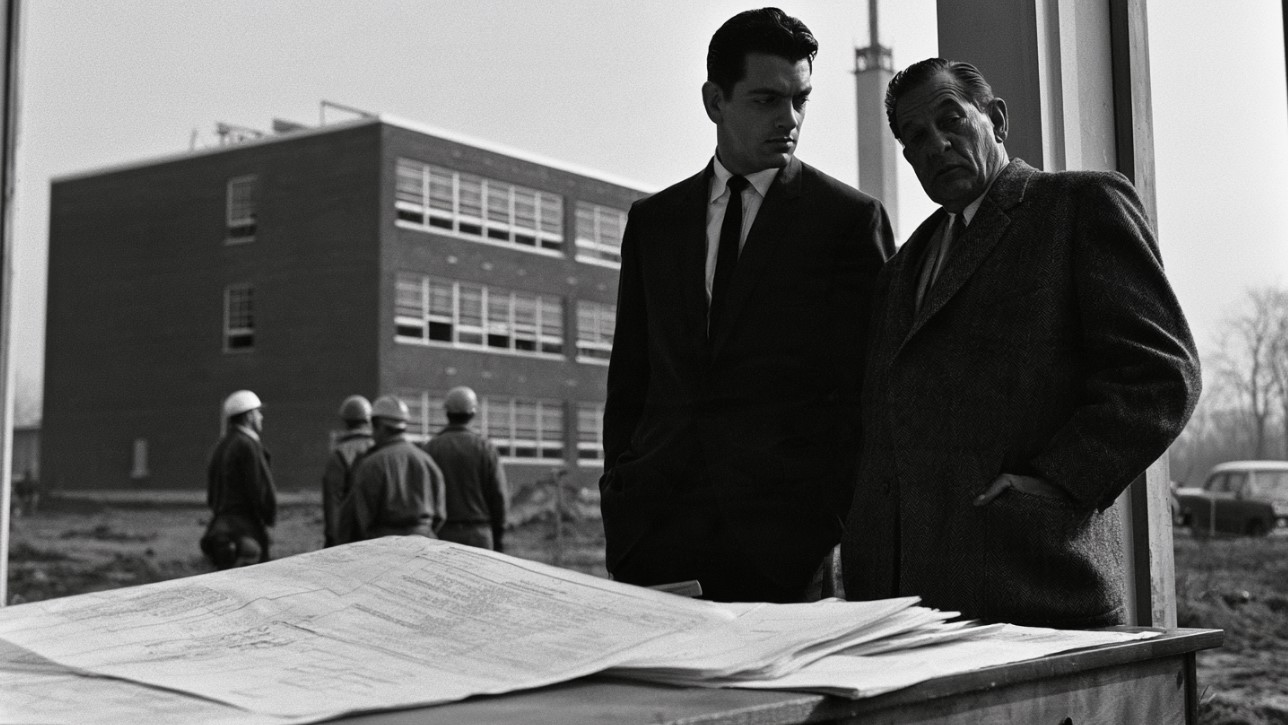
The New Jersey investigations served as reminders that organized crime operates most effectively when it can appear legitimate. Criminal influence does not always arrive wearing a fedora and carrying a revolver. Sometimes it arrives wearing a hard hat, carrying blueprints, and attending public meetings.
That reality makes construction corruption uniquely dangerous.
When a gambling operation is shut down, the consequences are generally limited to the people directly involved. When corruption infiltrates public construction, the effects can linger for decades.
Buildings require repairs. Budgets face overruns. Taxpayers absorb the costs. Communities inherit problems they never agreed to purchase.
And the people who made the decisions may be long gone.
| Blood in the Concrete: Fat Tony Salerno’s Empire |
The Quiet Crime With a Long Memory
Perhaps the most troubling aspect is how ordinary the process can appear.
Contracts are signed. Buildings are constructed. Politicians hold press conferences. Officials praise the project. Children walk through the doors and begin their school day.
Everything looks normal. Then inspectors discover deficiencies. Repairs become necessary. Questions begin to emerge about where the money went and who benefited.
By then, the trail may be cold and the people responsible may have moved on to their next project. That is the particular danger of corruption buried inside legitimate institutions. The crime can be committed today while the consequences may not become visible for years.
| The JFK Airport Cargo Facilities Investigations and the Corruption Hidden Beneath the Runways |
The Real Victims
The New Jersey school construction investigations reveal an uncomfortable truth about organized crime.
The greatest threat is not always violence. Sometimes it is the quiet corruption of the systems people depend upon every day. A rigged card game affects a handful of players. A compromised construction project can affect an entire community.
In the world of Mafia-controlled construction, safety was not always treated as an absolute requirement. Too often, it could become another line on a spreadsheet—a cost to be minimized, negotiated, or ignored.
The concrete still hardened. The walls still went up. The ribbon was still cut. But behind the finished building could stand a darker reality. When corruption enters construction, the damage extends far beyond bricks and mortar. It erodes trust, wastes public money, undermines legitimate competition, and can place communities at risk.
The true victims were never rival gangsters or competing contractors.
They were the people who believed the building was safe.
References:
Asbury, Herbert. The Gangs of New York. New York: Thunder’s Mouth Press, 2001.
Block, Alan A. East Side–West Side: Organizing Crime in New York, 1930–1950. New Brunswick, NJ: Transaction Publishers, 1983.
Jacobs, James B. Mobsters, Unions, and Feds: The Mafia and the American Labor Movement. New York: New York University Press, 2006.
Kelly, Robert J. Encyclopedia of Organized Crime in the United States. Westport, CT: Greenwood Press, 2000.
New Jersey Commission of Investigation. Reports on Public Corruption and Organized Crime Influence in New Jersey Construction and Public Contracting. Trenton, NJ: State of New Jersey, various years.
President’s Commission on Organized Crime. The Impact: Organized Crime Today. Washington, DC: U.S. Government Printing Office, 1986.
Raab, Selwyn. Five Families: The Rise, Decline, and Resurgence of America’s Most Powerful Mafia Empires. New York: Thomas Dunne Books, 2005.
United States Senate Permanent Subcommittee on Investigations. Organized Crime Influence in Labor-Management Relations and Construction Industries. Washington, DC: U.S. Government Printing Office, various hearings.
Woodiwiss, Michael. Organized Crime and American Power: A History. Toronto: University of Toronto Press, 2001.