The JFK Airport Cargo Facilities Investigations and the Corruption Hidden Beneath the Runways
Article 1 in series: “How Mafia-Controlled Construction Turned Safety into a Negotiable Expense”
The Corruption Hidden Beneath the Runways
Every day, thousands of tons of cargo move through New York’s airports. Electronics, pharmaceuticals, machinery, luxury goods, and countless other products pass through warehouses and freight terminals before continuing their journeys around the world.
To travelers, those facilities are largely invisible. They sit beyond the passenger terminals and security checkpoints, operating around the clock as arteries of global commerce. But beneath that movement of goods was another world—one built from concrete, steel, contracts, labor agreements, and millions of dollars.
And wherever that much money changed hands, organized crime saw opportunity.
The massive construction projects required to build and maintain airport cargo facilities depended on contractors, suppliers, inspectors, engineers, labor unions, and project managers. Every link in that chain was supposed to operate independently and honestly.
Federal investigators, however, worried that the Mafia viewed these projects not as infrastructure, but as another revenue stream.
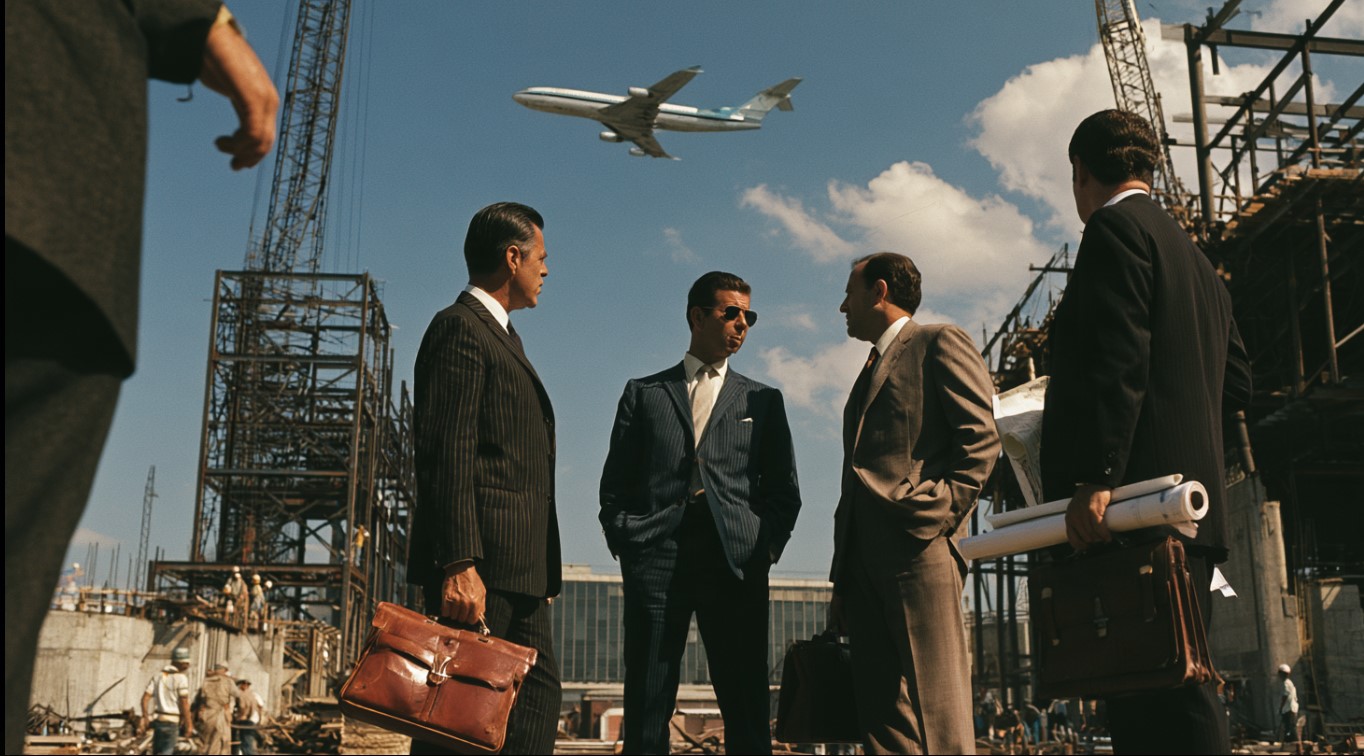
Investigations connected to construction projects at John F. Kennedy International Airport uncovered allegations involving bid-rigging, extortion, and corrupt relationships between contractors and organized crime figures. More disturbing was the possibility that corruption could undermine the very safeguards designed to protect public safety.
The threat wasn’t necessarily a building suddenly collapsing.
The greater threat was that nobody could be certain the building had been constructed according to the standards everyone assumed were being followed.
JFK Was More Than an Airport
JFK represented one of the most valuable pieces of infrastructure in the country.
Millions of passengers moved through the airport, while billions of dollars in cargo passed through its freight facilities. Every expansion created lucrative contracts. Every new warehouse required suppliers and contractors. Every public dollar spent on construction created another opportunity for someone to take a cut. The Mafia understood the economics immediately.
Street crime required risk. Construction corruption offered something considerably more attractive: enormous profits hidden behind legitimate business transactions. There were no stolen trucks to conceal. No bank robberies to plan. No gunmen standing outside a bank demanding cash.
Instead, money could move through contracts, subcontractors, invoices, labor agreements, suppliers, and consulting arrangements. It could look legitimate on paper.
That was precisely what made it so valuable.
The Perfect Business Model for Organized Crime
A contractor who secured a multimillion-dollar project could generate profits for years. A supplier receiving preferential treatment could dominate an entire segment of the marketplace. A labor union influenced by corrupt officials could affect which companies obtained workers and which companies struggled to operate.
Organized crime didn’t always need to own the companies involved. Influence could be enough. The result was an environment in which criminal organizations could exert power without their names ever appearing on official documents.
One of the most important allegations investigators encountered was bid-rigging. Competitive bidding is supposed to protect taxpayers and project owners. Contractors submit proposals, prices are compared, qualifications are evaluated, and the most suitable company receives the work.
Competition keeps prices honest. It also gives legitimate businesses a chance to compete. Corruption destroys both principles.
When the Winner Is Chosen Before the Bids Arrive
When contractors secretly coordinate bids, competition becomes theater. The winning company may already have been selected before proposals are submitted. Prices can be artificially inflated, while honest contractors discover that their qualifications mean little.
Investigators examining construction activities connected to JFK Airport encountered concerns that bid-rigging had distorted the normal marketplace. But the financial consequences were only part of the problem. A rigged contract could create a chain reaction.
Once a contractor obtained work through favoritism, kickbacks, bribes, or criminal obligations, there was pressure to recover those costs. The project still had to make money.
That could change the priorities of everyone involved. The goal was no longer simply to build the best facility possible. The goal became maximizing profit.
And when profit is squeezed hard enough, quality can become expendable.
When Safety Becomes a Line Item
Construction depends upon layers of protection. Engineers review designs. Inspectors verify compliance. Materials are tested. Contractors document their work. Supervisors monitor progress. Each layer exists because mistakes happen and accountability matters.
Corruption attacks those layers one at a time.
Materials can be substituted. Labor costs can be reduced. Inspection requirements can become obstacles rather than safeguards. Small shortcuts that might appear insignificant individually can accumulate throughout a project.
The danger is not necessarily dramatic. It can be hidden inside a wall. It can exist beneath concrete. It can be buried beneath a runway or concealed behind the doors of a cargo warehouse.
That was the deeper concern surrounding the JFK-related investigations. The issue was not necessarily proof that a particular building was unsafe. The larger concern was that corruption weakened the mechanisms intended to ensure that construction was safe in the first place.
Once those mechanisms are compromised, certainty disappears.
Extortion: The Other Side of the Deal
Bid-rigging offered money. Extortion offered control. For decades, organized crime used intimidation to influence construction activity throughout the New York metropolitan area. Contractors who refused to cooperate could face labor disruptions, vandalism, delayed deliveries, or other forms of economic pressure.
The message didn’t always have to be spoken. Businesses understood what resistance could cost. For some contractors, cooperation became easier than confrontation. But extortion creates a second problem beyond the money being demanded. It discourages honesty.
A contractor operating under criminal pressure may hesitate to report misconduct. Employees may be reluctant to raise concerns. Suppliers may avoid asking questions. Problems that should be identified and corrected can remain hidden.
Silence becomes part of the construction process.
Why Airports Were Such Attractive Targets
Airport construction presented organized crime with an unusually attractive combination of circumstances.
The projects were enormous. The contracts were complicated. Deadlines mattered. Commerce depended upon completion. Political pressure could favor speed, and delays could become extraordinarily expensive.
That created opportunities.
Organized crime has historically flourished where urgency collides with complexity. Construction projects contain both in abundance. Tight deadlines can encourage shortcuts. Complex contractual relationships can obscure responsibility. Massive budgets create incentives for misconduct. JFK’s cargo facilities embodied all three conditions.
For criminals looking for opportunities inside legitimate industries, it was fertile ground.
The Mafia Didn’t Have to Own the Project
One of the most important aspects of construction corruption was that criminal influence didn’t necessarily appear through direct ownership. It could emerge through relationships.
A contractor knew a union official. A supplier knew a contractor. A subcontractor owed favors to a politically connected intermediary. A consultant maintained relationships with organized crime figures. Individually, those connections might appear harmless.
Collectively, they could form a network capable of influencing major public projects. That was what made the system so difficult to identify and dismantle.
There might be no Mafia company. No gangster listed as the owner. No obvious criminal standing in the construction office. Instead, influence moved quietly from one person to another until legitimate business decisions were no longer entirely legitimate.
Independence Was the First Line of Defense
Construction quality depends upon independence.
Inspectors must be independent from contractors. Contractors must be free from criminal pressure. Procurement officials must be protected from outside influence. When those boundaries blur, accountability begins to disappear. And when accountability disappears, corruption becomes easier to conceal.
The JFK investigations illustrated that danger clearly. Criminal influence did not have to produce an immediate catastrophe to create a serious threat.
The damage could accumulate quietly. A compromised inspection here. A questionable material there. A contractor who looks the other way. A supplier who receives preferential treatment. A union official who applies pressure. Each individual act might seem insignificant.
Together, they can weaken the entire system.
The Problems That Appear Years Later
Construction corruption is particularly dangerous because its consequences don’t always appear immediately. Inferior materials may perform adequately for years before deterioration becomes obvious. Poor workmanship can remain hidden behind walls or beneath finished surfaces. Improper installations can create maintenance problems long after the original contractors have disappeared.
Water infiltration can damage structures. Corrosion can weaken supports. Substandard work can become someone else’s problem decades later. The ribbon-cutting ceremony ends. The politicians move on. The contractors collect their profits.
The bill eventually arrives for someone else.
Taxpayers may inherit repair costs. Businesses can suffer disruptions. Public agencies can be forced to deal with expensive maintenance problems whose origins lie years in the past. That delayed timeline makes construction corruption particularly difficult to trace—and particularly dangerous.
The Real Threat Was What Corruption Made Possible
Federal investigators were concerned about more than isolated acts of bid-rigging or extortion. The larger issue was the cumulative impact of corruption on infrastructure. Every compromised safeguard increased the possibility that defective or unsafe work could escape detection. That distinction matters.
The story was not necessarily one of dramatic building collapses or sensational disasters. The buildings remained standing. No spectacular catastrophe dominated the headlines. But that did not mean the system was healthy.
The danger was that corruption had compromised the mechanisms designed to protect the public. The true threat wasn’t necessarily what happened during construction.
The true threat was what corruption made possible.
| Blood in the Concrete: Fat Tony Salerno’s Empire |
Beneath the Runways, the Money Moved
The cargo facilities at JFK represented more than warehouses, loading docks, and freight terminals. They represented a larger struggle between legitimate commerce and criminal influence. The airport was a gateway to the world. Behind the scenes, however, investigators encountered evidence suggesting that organized crime continued looking for opportunities within the construction process.
That pursuit reflected one of the central truths about the American Mafia.
Its greatest successes often occurred far away from the stereotypical image of gangsters carrying guns and meeting in smoke-filled rooms. The real money could be found in legitimate industries.
Construction offered almost everything organized crime wanted: enormous budgets, complicated contracts, political connections, labor relationships, and layers of paperwork capable of concealing corruption. The Mafia didn’t always need to steal the building.
Sometimes it only needed to control who built it.
| Five Families: Blood, Power, and the Empire Beneath New York |
When Public Trust Becomes the Casualty
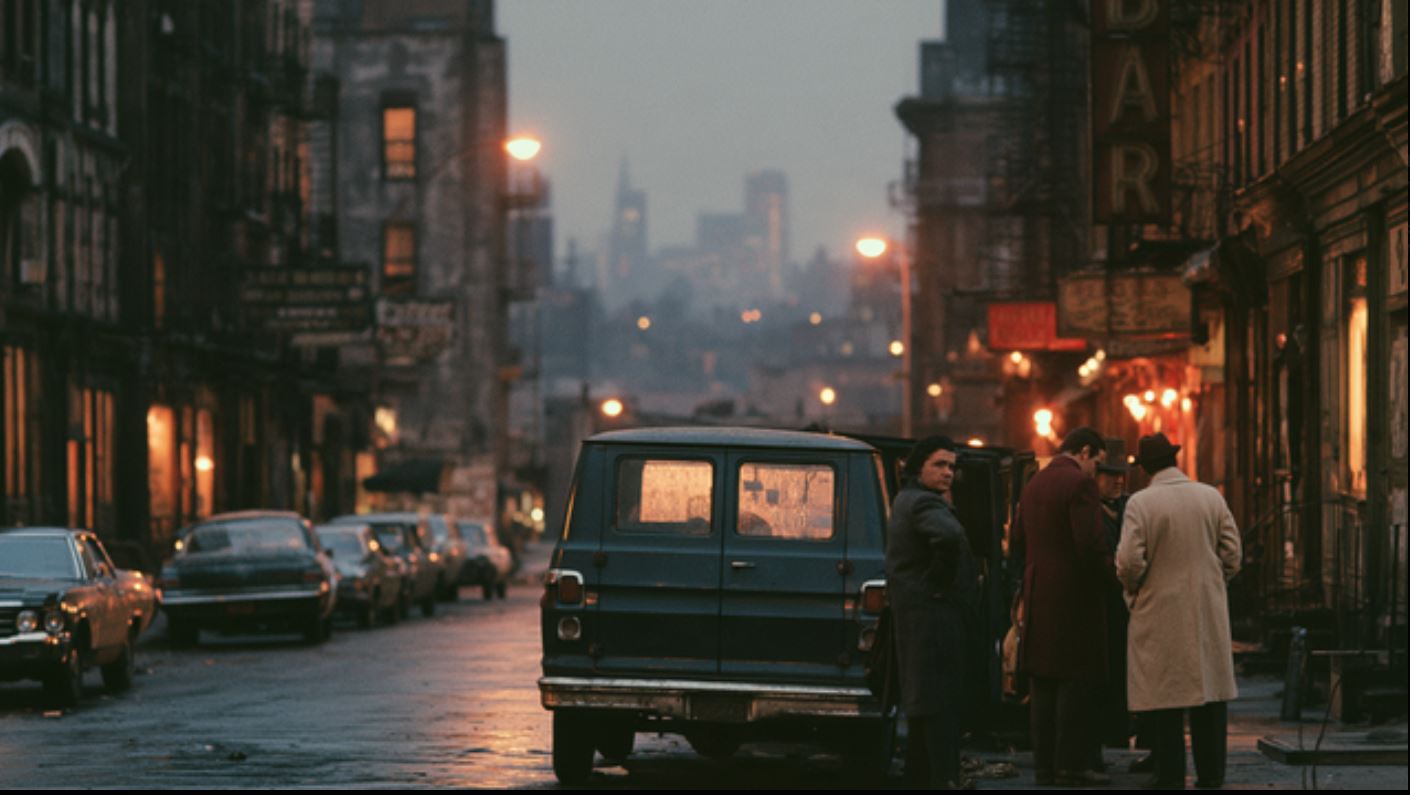
In the noir shadows surrounding New York’s construction industry, safety became vulnerable whenever organized crime gained influence.
Concrete could still be poured. Steel could still be erected. Warehouses could still open. Planes could still take off. To the public, everything could appear perfectly normal. But every compromised inspection, every rigged bid, and every act of extortion weakened the foundation upon which public trust depended.
That trust was supposed to be stronger than concrete. For a time, corruption threatened to prove otherwise.
The lesson of the JFK Airport investigations reaches beyond one airport or one era. Organized crime does not always announce itself with violence. Sometimes it arrives disguised as a contract, a subcontract, a labor agreement, a favorable bid, or a quiet favor between people who officially have nothing to do with one another.
That is what made the construction rackets so dangerous. The Mafia didn’t have to bring down the building.
It only had to make sure nobody was looking too closely at how it was built.
References:
Goldstock, Ronald, Martin Marcus, and I. Robert Blakey. Corruption and Racketeering in the New York City Construction Industry: The Final Report of the New York State Organized Crime Task Force. New York: New York University Press, 1990.
Jacobs, James B. Mobsters, Unions, and Feds: The Mafia and the American Labor Movement. New York: New York University Press, 2006.
Jacobs, James B., Christopher Panarella, and Jay Worthington. Busting the Mob: United States v. Cosa Nostra. New York: New York University Press, 1994.
President’s Commission on Organized Crime. The Impact: Organized Crime Today. Washington, DC: U.S. Government Printing Office, 1986.
Raab, Selwyn. Five Families: The Rise, Decline, and Resurgence of America’s Most Powerful Mafia Empires. New York: Thomas Dunne Books, 2005.
New York State Organized Crime Task Force. Corruption and Racketeering in the Construction Industry. New York: State of New York, various reports, 1980s.
United States Department of Justice. Organized Crime Influence in Construction and Public Contracting Investigations. Washington, DC: U.S. Department of Justice, various filings and proceedings.
United States Senate Permanent Subcommittee on Investigations. Hearings on Organized Crime Influence in Labor, Construction, and Public Works Projects. Washington, DC: U.S. Government Printing Office, various hearings.
Kelly, Robert J. Encyclopedia of Organized Crime in the United States. Westport, CT: Greenwood Press, 2000.