The Old Fashioned — Controlled Power
Signal: Confidence, trust in the house
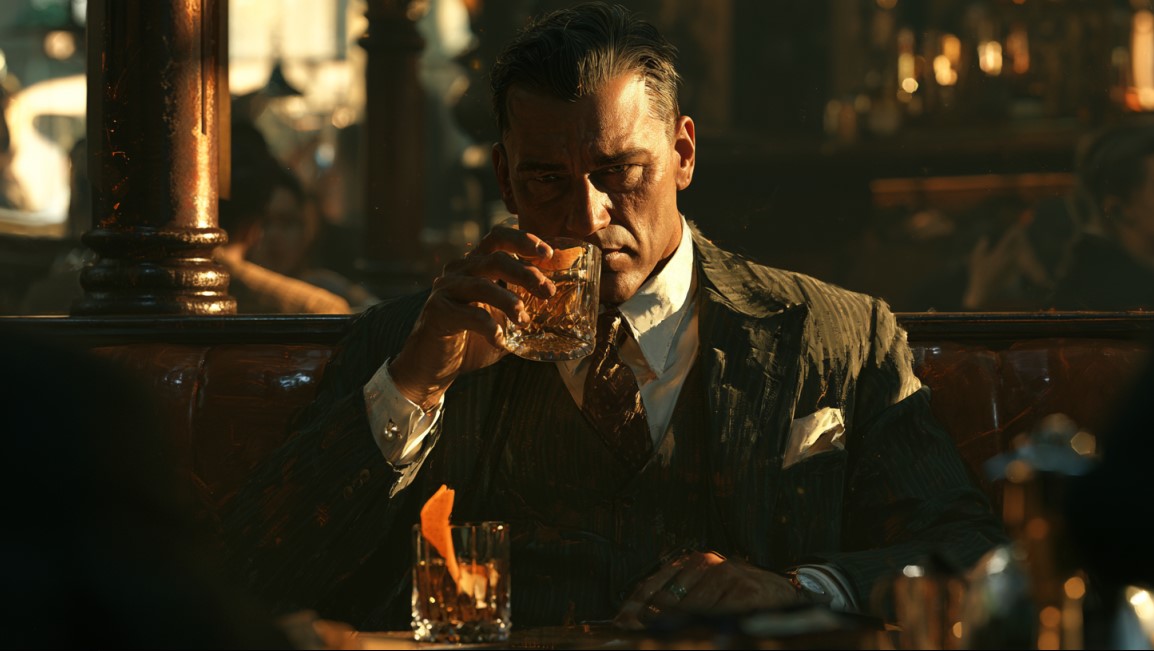
The Old Fashioned was a drink without much interest in showing off. It did not need a towering glass, a parade of ingredients, or a theatrical presentation to make its point. Whiskey, sugar, bitters, and ice were enough. That simplicity could work in a gangster’s favor. Ordering an Old Fashioned suggested that the drinker knew exactly what he wanted and had no need to impress the bartender—or anyone else at the table—with an elaborate order. It was a drink built around confidence rather than spectacle.
More importantly, the Old Fashioned was a slow drink. It rewarded patience. The whiskey was meant to be sipped rather than swallowed, allowing the drinker to remain at the table while conversation developed around him. In a back room, private club, or favored restaurant, that mattered. A man who intended to conduct business did not necessarily want to finish his drink and leave. He wanted time. Time to listen, time to judge, and time to allow someone else to reveal what they were thinking.
There was another message hidden in the order: I trust this place. An Old Fashioned depended on the bartender getting the proportions right. The drinker was allowing someone else to prepare something he intended to consume slowly. In a familiar establishment, that could be significant. Gangsters often operated within tightly controlled networks of bars, restaurants, clubs, and private rooms where the staff knew who belonged and who did not. A regular could order without explanation because the room already understood him.
The Old Fashioned also fit the psychology of a man who believed he controlled the pace of the evening. He did not need to rush his drink, his conversation, or his decisions. Other men could become impatient. Other men could start talking too much. He could sit back, take another measured sip, and wait. In that setting, patience became a form of dominance.
The drink therefore projected a very particular kind of power. It was not the explosive power of a man demanding attention. It was the quieter authority of someone who assumed attention would eventually come to him. The Old Fashioned belonged to the man who expected the room to wait.