Roy DeMeo and the Westies: The Partnership Built on Murder
There are criminal partnerships built on profit, and there are criminal partnerships built on fear. Then there was the alliance between Roy DeMeo’s Gambino crew and the Westies of Hell’s Kitchen—a relationship forged in blood, maintained through intimidation, and destined to end in betrayal. It was not simply an arrangement between organized crime groups. It was a meeting of two organizations that viewed murder not as a last resort, but as another business expense.
For a brief period during the late 1970s and early 1980s, New York City witnessed one of the most lethal collaborations in American organized crime history. On one side stood Roy DeMeo, the Gambino captain whose crew became synonymous with industrial-scale homicide. On the other stood Jimmy Coonan’s Westies, an Irish gang whose reputation for reckless violence made even hardened Mafia figures uneasy.
Together, they represented a perfect storm. The Mafia supplied influence, connections, and access to lucrative rackets. The Westies supplied fearless street soldiers who understood that terror itself could be a form of currency. Their alliance transformed contract killing into a service business and extended the reach of both organizations far beyond their traditional neighborhoods.
Like nearly every criminal empire, however, the partnership contained the seeds of its own destruction.
| The Westies vs. the Mafia: Why the Five Families Feared a Small Irish Gang |
Roy DeMeo’s Murder Factory
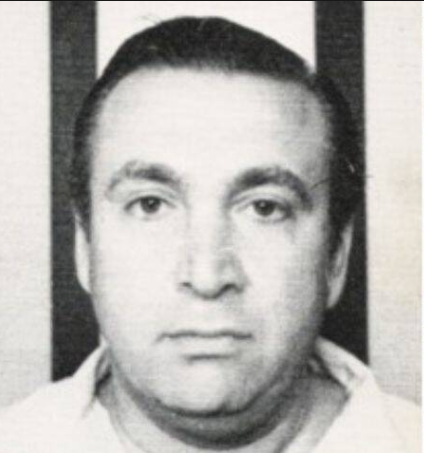
Roy DeMeo did not fit the romanticized image of the Mafia boss. He was intelligent, disciplined, and remarkably organized. Behind the appearance of a successful businessman operated one of the most efficient murder crews New York had ever seen.
A powerful member of the Gambino crime family, DeMeo oversaw an expanding portfolio of criminal enterprises that included auto theft, loansharking, extortion, pornography, drug trafficking, and labor racketeering. Violence protected every one of those businesses, and DeMeo surrounded himself with men who viewed killing as routine labor.
His crew included future underworld figures such as Chris Rosenberg, Joseph Testa, Anthony Senter, Joey Testa, Henry Borelli, and Richard Kuklinski, although Kuklinski’s claimed role within the DeMeo crew remains heavily disputed by many historians and law enforcement officials. What is beyond dispute is that the crew’s body count became staggering. Investigators eventually connected DeMeo’s organization to dozens of murders, while some estimates placed the total significantly higher.
Unlike impulsive street gangs, DeMeo’s operation functioned with chilling efficiency. Murders were planned. Victims were selected carefully. Bodies disappeared.
The process became infamous.
The Gemini Method
The Gemini Lounge, a seemingly ordinary neighborhood bar in Brooklyn, became one of the darkest symbols of organized crime during the late twentieth century. According to investigators and cooperating witnesses, numerous victims were lured into a back room where they believed they were attending meetings or collecting money.
Instead, they entered a death chamber.
The technique later became known as the Gemini Method. A victim would be surprised by a gunshot to the head, followed immediately by a knife thrust into the heart to reduce blood pressure and minimize bleeding. The body would then be suspended, drained of blood, dismembered, wrapped, and transported for disposal.
The method was horrifying, but it reflected cold practicality rather than theatrical cruelty. Bodies that vanished were difficult to investigate. Murders without corpses often produced fewer witnesses, less forensic evidence, and more uncertainty for detectives.
Just as important, disappearing victims spread fear.
No funeral. No grave. No answers. People simply vanished.
| Gemini Judgment: How Roy DeMeo’s Crew Silenced a Predator (The) |
Hell’s Kitchen’s Most Dangerous Sons
Across the East River, Jimmy Coonan was building his own criminal kingdom.
Unlike DeMeo, Coonan did not inherit a sophisticated Mafia structure. He inherited Hell’s Kitchen—a neighborhood where violence settled disputes long before lawyers or politicians became involved. The Westies evolved from generations of Irish street gangs that survived by controlling bars, bookmakers, labor unions, waterfront jobs, and protection rackets.
Coonan’s leadership style differed sharply from the disciplined traditions of the Italian Mafia. He encouraged aggression, rewarded intimidation, and cultivated a reputation for unpredictability. Rivals could negotiate with Mafia captains because they generally understood the rules. The Westies frequently ignored those rules altogether.
Among Coonan’s most feared associates was Mickey Featherstone. A decorated Marine turned career criminal, Featherstone possessed the toughness and willingness to use violence that made him indispensable to the gang. He became both an enforcer and one of the public faces of the Westies’ growing legend.
The combination of Coonan’s ambition and Featherstone’s brutality transformed the gang into far more than a neighborhood crew. They became valuable partners for anyone needing fearless contract killers.
That included Roy DeMeo.
A Partnership of Convenience
The relationship between DeMeo and the Westies was never a merger. Neither side surrendered its independence. Instead, they recognized something simple.
Each possessed capabilities the other lacked.
The Gambino family commanded influence throughout New York’s criminal economy. It maintained relationships with corrupt union officials, bookmakers, fencing operations, and legitimate businesses willing to look the other way. Those connections generated enormous profits, but they also created problems requiring discreet violence.
The Westies specialized in precisely that kind of violence.
Meanwhile, Coonan understood that aligning himself with powerful Gambino figures elevated his own status. Association with Roy DeMeo gave the Westies access to lucrative contracts, greater earning opportunities, and a degree of protection that ordinary street gangs could never expect.
Money flowed in both directions.
So did corpses.
The partnership blurred the traditional line separating Mafia crime families from independent ethnic gangs. Business mattered more than heritage. If someone could eliminate a problem efficiently, criminal organizations rarely cared whether his surname ended in a vowel.
| Five Families: Blood, Power, and the Empire Beneath New York |
Murder for Hire
Contract killings became one of the alliance’s most valuable commodities.
Victims included debtors, informants, rival gangsters, troublesome associates, and individuals whose continued existence threatened profitable criminal enterprises. Some murders served financial purposes. Others reinforced reputations. In organized crime, reputation often determined whether threats needed to be carried out at all.
The possibility of violence could be as profitable as violence itself.
Witnesses later described an atmosphere in which discussing murder resembled discussing construction work. Assignments were delegated. Logistics were considered. Payment was negotiated. Emotion rarely entered the conversation.
This businesslike approach distinguished DeMeo’s crew from many traditional street gangs. Murder was not simply revenge. It was project management.
The Westies adapted easily because Hell’s Kitchen had taught them similar lessons. Their methods tended to be less polished, but the objective remained identical: remove obstacles permanently.
Fear as a Business Model
The greatest benefit each organization gained from the alliance was not financial.
It was psychological.
Roy DeMeo’s crew acquired additional street muscle capable of operating outside Brooklyn while preserving Mafia deniability. If investigators struggled to determine who committed a homicide, uncertainty itself became an advantage.
The Westies gained something even more valuable.
Legitimacy within New York’s organized crime hierarchy.
Although never inducted into the Mafia, Jimmy Coonan became a respected figure because powerful Gambino members found him useful. The Five Families generally preferred controlling neighborhood gangs rather than fighting them. As long as the Westies remained profitable and manageable, cooperation made better business sense than war.
Fear multiplied through reputation. Every unsolved disappearance, every whispered execution, and every rumor surrounding the Gemini Lounge enhanced both organizations’ mystique.
In the underworld, legends often earned more money than guns.
The Beginning of the End
No criminal partnership survives unchecked forever.
Federal prosecutors, FBI investigators, and local detectives spent years assembling evidence against both organizations. The Racketeer Influenced and Corrupt Organizations Act—better known as RICO—allowed prosecutors to attack entire criminal enterprises rather than isolated offenses. Murders that once seemed impossible to prosecute became interconnected pieces of a much larger conspiracy.
The alliance also suffered from internal fractures.
Chris Rosenberg’s unauthorized murder of a Colombian drug dealer nearly sparked a deadly conflict with international narcotics traffickers and created enormous pressure on DeMeo. Within the Westies, personal rivalries deepened. Distrust spread through the ranks.
Then came the oldest enemy of organized crime.
Self-preservation.
Mickey Featherstone Breaks the Code
Mickey Featherstone had built his reputation through unwavering loyalty to Jimmy Coonan. That loyalty dissolved after Featherstone concluded he had been abandoned by the very organization he had helped strengthen.
Convicted of a murder he insisted he did not commit, Featherstone eventually chose cooperation over silence. His testimony exposed murders, extortion schemes, labor racketeering, and the inner workings of the Westies. Years of whispered suspicions suddenly became courtroom evidence.
His cooperation devastated Coonan’s organization.
Meanwhile, Roy DeMeo never faced trial for the full scope of his crew’s activities. In January 1983, he was discovered murdered inside the trunk of his Cadillac, riddled with bullets. Investigators have long believed his death was ordered by members of the Gambino family who feared DeMeo’s increasing legal exposure and the possibility that he might eventually cooperate with authorities.
Whether that order came directly from Gambino leadership remains one of organized crime’s enduring mysteries.
Murder Never Builds Forever
The alliance between Roy DeMeo and the Westies demonstrated both the strength and weakness of organized crime.
For a time, fear proved profitable. Murder solved problems. Bodies disappeared. Witnesses remained silent. Entire neighborhoods learned to avoid asking dangerous questions.
Yet violence possesses a fatal flaw.
It attracts attention.
Every execution generated investigators. Every disappearance created grieving families. Every act of intimidation motivated another informant willing to trade loyalty for survival. Criminal organizations can control neighborhoods, corrupt officials, and silence witnesses, but they cannot permanently outrun time.
The partnership between Roy DeMeo and the Westies ultimately collapsed beneath the weight of its own brutality. One leader ended up in a car trunk. Another spent the rest of his life behind bars. Their soldiers either died violently, entered witness protection, or faded into obscurity.
The Gemini Lounge closed. Hell’s Kitchen changed. Brooklyn moved on.
Only the stories remain, echoing through New York’s darker history as reminders that the most terrifying alliances are often built not on trust, but on the shared belief that murder is simply another line item in the ledger.
References:
Capeci, Jerry. The Complete Idiot’s Guide to the Mafia. 2nd ed. New York: Alpha Books, 2005.
Capeci, Jerry, and Gene Mustain. Murder Machine: A True Story of Murder, Madness, and the Mafia. New York: Penguin Books, 1992.
English, T. J. The Westies: Inside New York’s Irish Mob. New York: St. Martin’s Press, 1990.
Federal Bureau of Investigation. The Vault: Roy DeMeo. Washington, DC: Federal Bureau of Investigation. https://vault.fbi.gov/roy-demeo
Jacobs, James B. Mobsters, Unions, and Feds: The Mafia and the American Labor Movement. New York: New York University Press, 2006.
Jacobs, James B., Coleen Friel, and Robert Radick. Gotham Unbound: How New York City Was Liberated from the Grip of Organized Crime. New York: New York University Press, 1999.
Maas, Peter. Underboss: Sammy the Bull Gravano’s Story of Life in the Mafia. New York: HarperCollins, 1997.