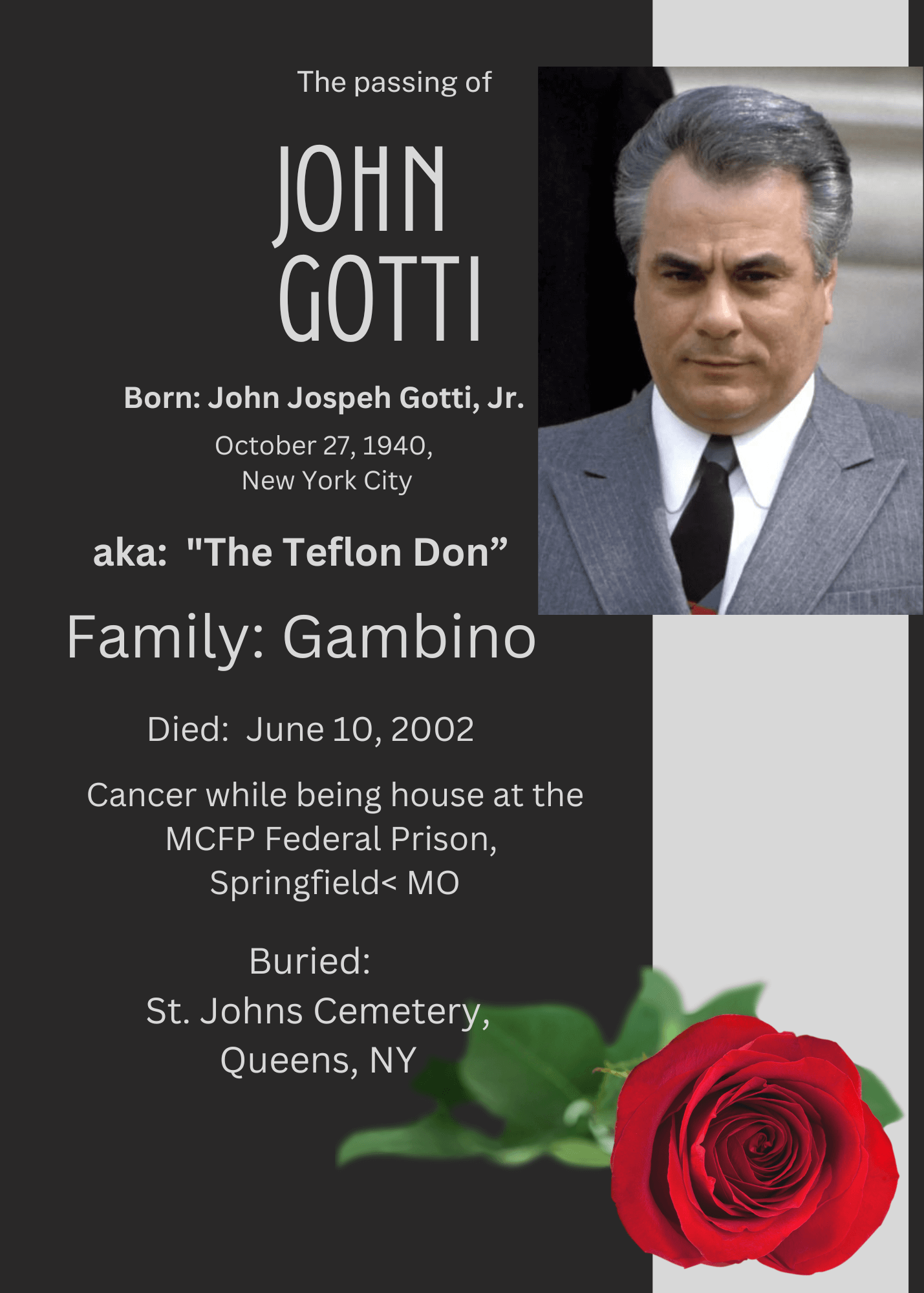
John Gotti: The Dapper Don Who Brought the Mafia Into the Spotlight
John Gotti did not hide from attention.
He chased it.
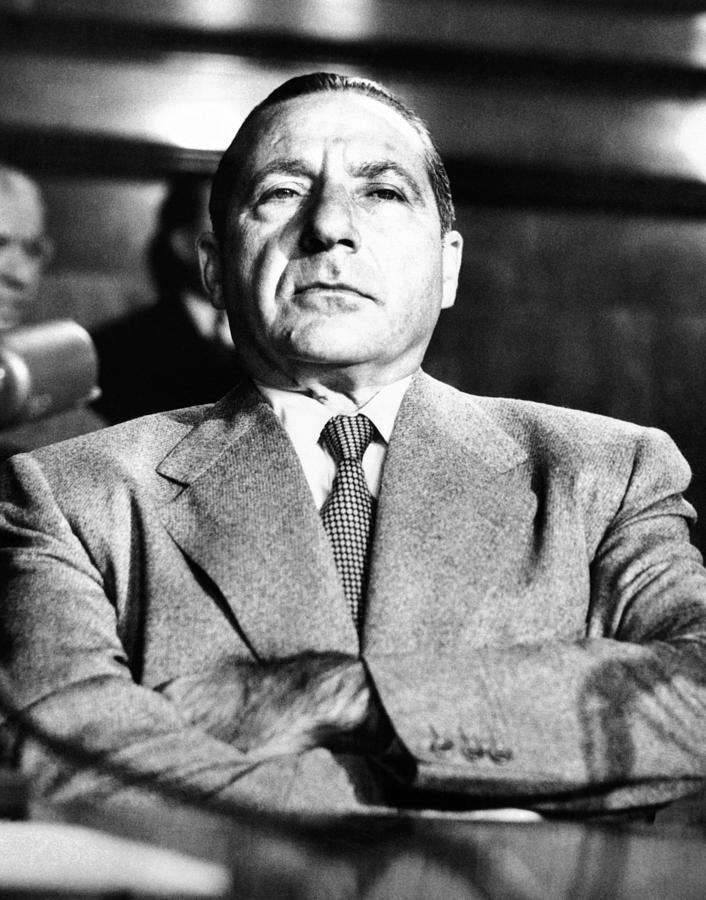
While older Mafia bosses operated quietly through back rooms, social clubs, and whispered conversations, Gotti walked directly into cameras wearing thousand-dollar suits and a grin that suggested he believed himself untouchable. Reporters followed him through Manhattan streets like celebrities followed movie stars. Tabloids adored him. Crowds gathered outside courthouses hoping to catch a glimpse of the man newspapers called “The Dapper Don.”
To some Americans, Gotti looked charismatic, confident, even glamorous.
To federal prosecutors, he represented something else entirely: a violent Mafia boss whose ego endangered the secrecy that had protected organized crime for generations.
John Gotti became the public face of the American Mafia during the 1980s and early 1990s, a period when traditional organized crime was already beginning to weaken under federal investigations, wiretaps, informants, and RICO prosecutions. Ironically, the publicity Gotti loved helped accelerate that collapse.
He wanted to be seen.
The government used that visibility to destroy him.
From the Bronx to Brooklyn
John Gotti was born in the Bronx in 1940 to a poor Italian-American family struggling through economic hardship. One of thirteen children, Gotti grew up in overcrowded neighborhoods where street gangs often provided more opportunity than school or legal employment.
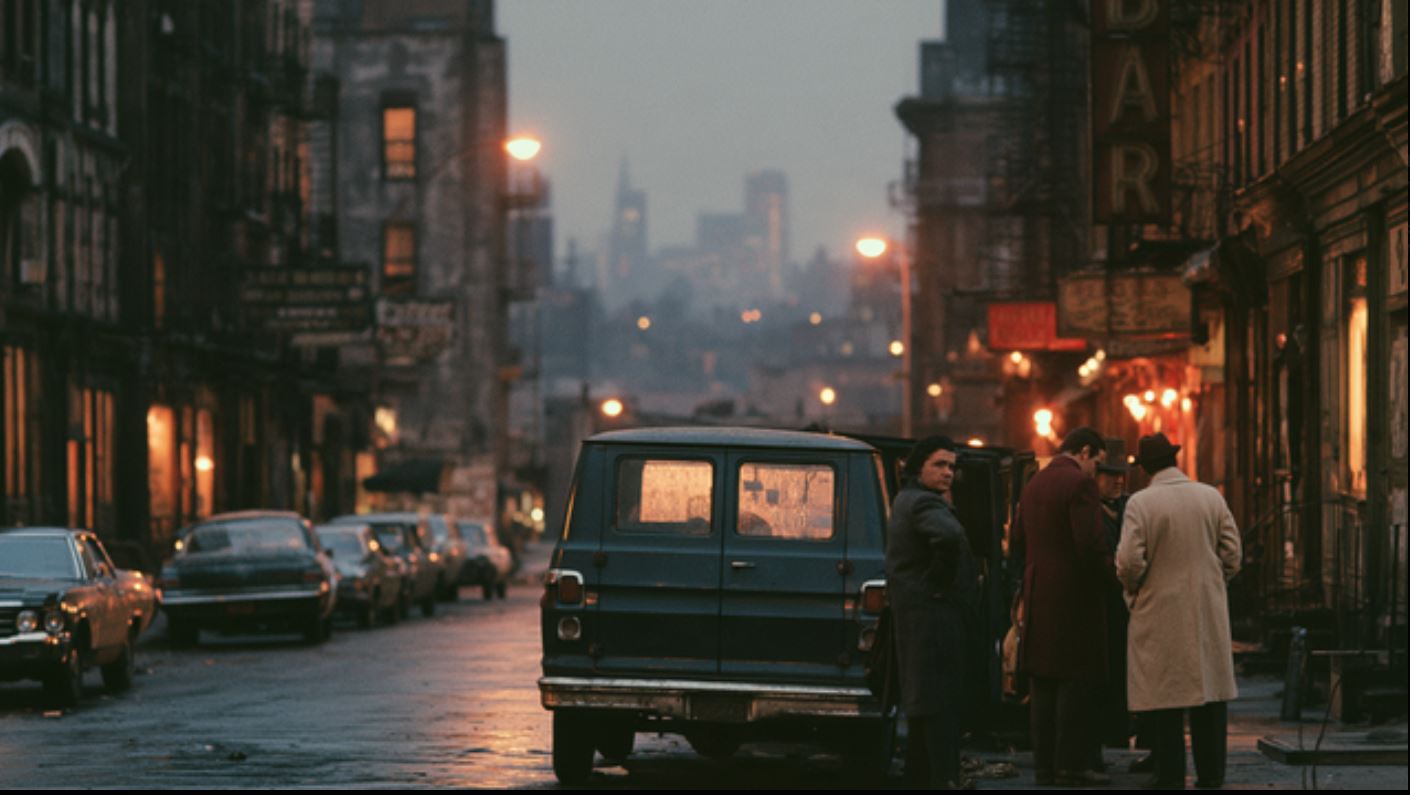
The family eventually settled in East New York, Brooklyn, an area heavily influenced by organized crime during the postwar years.
Gotti admired gangsters early.
To him, they represented power, money, respect, and escape from poverty. While legitimate workers struggled endlessly for modest lives, mobsters drove expensive cars, wore tailored clothing, and commanded fear effortlessly.
Young Gotti gravitated naturally toward street crime.
As a teenager, he joined local gangs involved in theft, hijacking, gambling, and loan-sharking. He quickly built a reputation for aggression and fearlessness. Injuries from street fights and criminal activity became part of his identity, including a limp caused by a crushed foot after a stolen cement mixer accident.
Pain never seemed to slow him down.
By the 1960s, Gotti became associated with the powerful Gambino crime family under boss Carlo Gambino.
That connection shaped the rest of his life.
Rising Through the Gambino Family
Unlike some Mafia leaders who cultivated diplomacy or financial sophistication, Gotti rose through traditional street-level organized crime.
He specialized in hijacking cargo at New York airports, illegal gambling, extortion, loansharking, and labor racketeering. Kennedy Airport became particularly important to Gambino operations during this era, generating enormous profits through stolen merchandise and corruption.
Gotti excelled because he combined charisma with intimidation.
People liked him until they crossed him.
Associates described him as funny, loyal to friends, and highly protective of his crew. Enemies described him as explosive, vindictive, and dangerous. He cultivated loyalty aggressively, rewarding obedience while punishing betrayal ruthlessly.
His crew operated largely out of the Bergin Hunt and Fish Club in Queens, which became both a neighborhood headquarters and a symbol of Gotti’s growing influence.
By the late 1970s, Gotti had become a rising captain within the Gambino organization. But ambition pushed him toward something larger.
He did not want influence.
He wanted the throne.
The Murder of Paul Castellano
When Carlo Gambino died in 1976, leadership of the Gambino family eventually passed to Paul Castellano.
Castellano represented a more corporate style of Mafia leadership. He preferred white-collar rackets, political connections, and financial operations over street violence. Many traditional gangsters inside the family viewed him as distant, arrogant, and disconnected from the crews earning money on the streets.
Gotti especially despised him.
The tension intensified after federal narcotics investigations threatened Gambino operations. Castellano reportedly blamed certain street crews for attracting law enforcement pressure, and Gotti increasingly feared marginalization or worse.
Then came the decision that changed Mafia history.
On December 16, 1985, Castellano arrived outside Sparks Steak House in Manhattan for a meeting. As he exited his car, gunmen opened fire and killed him publicly on the sidewalk.
The assassination stunned both organized crime and law enforcement.
The hit violated Mafia tradition because The Commission had not formally approved the murder of a sitting boss. Yet the killing succeeded politically.
Within weeks, John Gotti emerged as the new leader of the Gambino crime family.
He had taken power the old-fashioned way.
With bullets.
The Dapper Don Era
Most Mafia bosses would have avoided publicity after such a controversial rise.
Gotti embraced it completely.
He wore expensive Brioni suits, silk ties, and perfectly styled hair. Reporters crowded outside courthouses hoping for comments. Tabloids celebrated him as a swaggering antihero who mocked federal prosecutors openly.
After several acquittals during the late 1980s, newspapers dubbed him “The Teflon Don” because charges never seemed to stick.
The nickname fed his ego enormously.
Gotti projected confidence constantly. He laughed with reporters, insulted prosecutors publicly, and treated court appearances like performances. Crowds sometimes applauded him outside legal proceedings.
But behind the celebrity image, the Gambino organization remained deeply violent.
Murders, extortion, labor corruption, gambling operations, and intimidation continued under Gotti’s leadership. Federal authorities considered him one of the most dangerous organized crime figures in America despite the glamorous media portrayal.
Inside the Mafia itself, some bosses grew uncomfortable with Gotti’s visibility. Traditional organized crime survived through secrecy. Gotti made secrecy impossible.
Wiretaps, Betrayal, and the Fall
The federal government eventually adapted.
Using aggressive RICO prosecutions, surveillance, and electronic monitoring, prosecutors built a massive case against Gotti and the Gambino organization. One crucial breakthrough came through hidden FBI microphones placed inside the Ravenite Social Club, Gotti’s headquarters in Manhattan.
The recordings proved devastating.
Agents captured Gotti discussing criminal activities, criticizing associates, and speaking recklessly about Mafia business. Even more damaging, several Gambino members grew increasingly resentful of Gotti’s leadership style.
Then came the ultimate Mafia nightmare: An informant.
Salvatore “Sammy the Bull” Gravano, Gotti’s underboss and longtime ally, agreed to cooperate with federal authorities in 1991. The betrayal shattered organized crime.
Gravano provided detailed testimony linking Gotti directly to murders, racketeering operations, extortion schemes, and Mafia hierarchy. For decades, Mafia culture had depended on omertà—the code of silence. A high-ranking underboss cooperating against a sitting boss represented a historic collapse of that code.
In 1992, Gotti was convicted on multiple charges including murder and racketeering. The sentence was life imprisonment without parole.
The Dapper Don finally lost.
Prison and Death
Gotti spent his remaining years inside federal prison under extremely restrictive conditions. Isolated from direct control over the Gambino family, he watched the Mafia era he embodied continue declining under relentless federal pressure.
Cancer eventually weakened him physically, but even in prison he remained a cultural obsession. Books, documentaries, newspaper stories, and television programs continued turning him into a symbol of American organized crime.
He died in 2002 at a federal prison hospital in Missouri.
Crowds attended his funeral in New York despite law enforcement efforts to minimize public spectacle. For many admirers, Gotti remained the last old-school Mafia celebrity—a man who carried himself with swagger in an era increasingly dominated by hidden corporate crime rather than visible gangsters.
The Legacy of John Gotti
John Gotti transformed the Mafia boss into a media figure.
That transformation helped destroy the very culture he represented.
Earlier Mafia leaders like Frank Costello and Carlo Gambino understood that invisibility protected power. Gotti believed charisma could protect him instead.
For a while, it worked.
His confidence, style, and courtroom victories made him one of the most recognizable gangsters in American history. But fame attracted surveillance, resentment, informants, and political pressure. The Mafia could survive quietly in America’s shadows.
It struggled to survive under television lights.
Gotti became both the peak and the beginning of the end of the celebrity gangster era. He represented old-school street power colliding with modern federal law enforcement in an age of wiretaps and televised trials.
He wanted to rule like a king in public.
The government turned that visibility into a target.
Click below to see where he is buried.
Buried at:
St. Johns Cemetery (Queens, NY)
|