How Lucky Luciano, Frank Costello, and Albert Marinelli Positioned Themselves for a Roosevelt or Smith Victory
In 1932, America was running on fear.
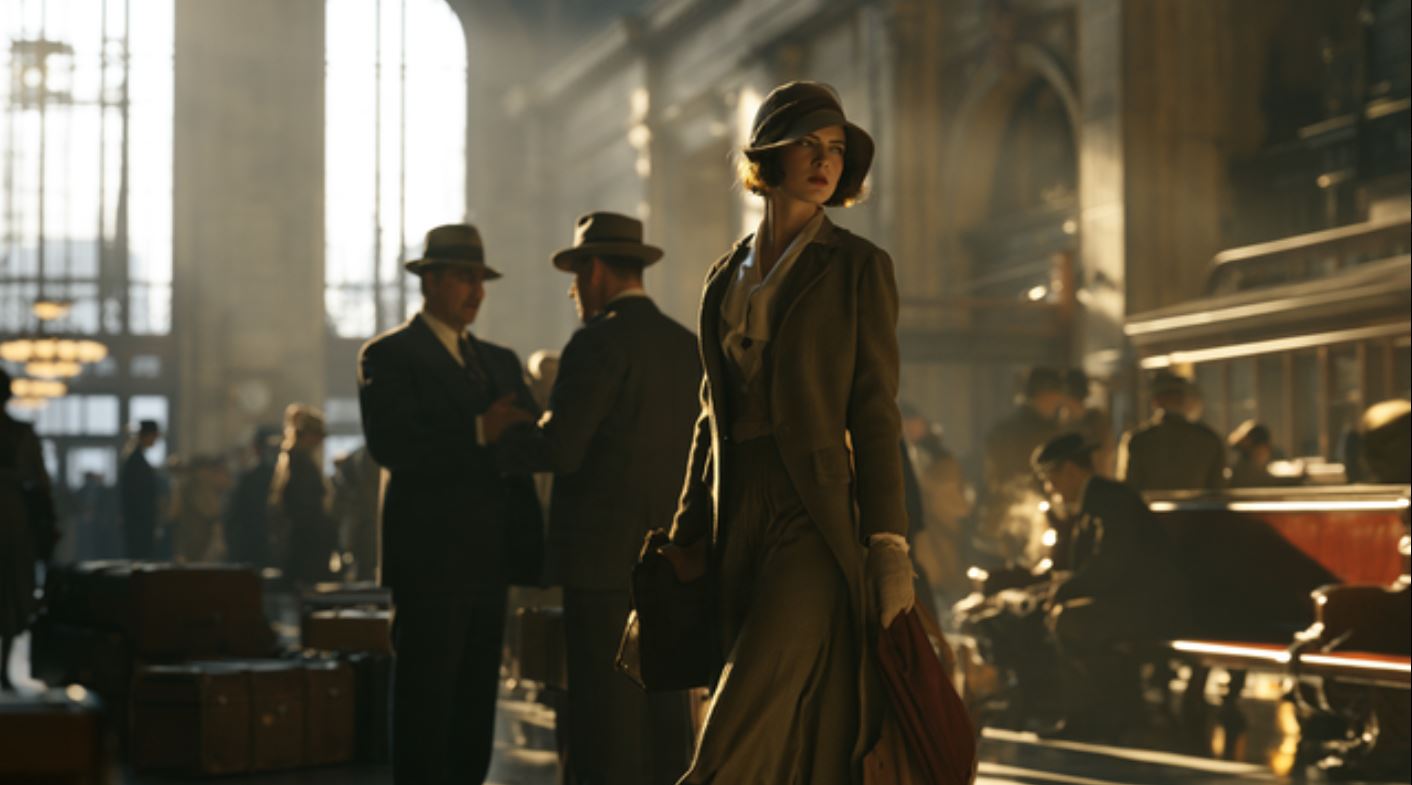
The Great Depression had turned prosperity into memory. Banks collapsed without warning. Families lost homes they had spent decades building. Breadlines stretched through city streets while politicians promised solutions that seemed increasingly disconnected from the desperation of ordinary citizens. As the nation searched for a political savior, another group was studying the election with a very different objective.
They were not concerned with ideology.
They were concerned with access.
Inside Manhattan hotel suites, private social clubs, and smoke-filled political headquarters, organized crime figures were carefully evaluating the Democratic presidential primary. The names dominating the conversation were former New York Governor Al Smith and the state’s sitting governor, Franklin Delano Roosevelt. One represented the established order of urban machine politics. The other represented a new political force rapidly gathering momentum across the country.
For Charles “Lucky” Luciano, Frank Costello, and political operative Albert Marinelli, the election was never about choosing between the two men.
It was about making sure they remained connected to both.
The strategy reflected a lesson that organized crime had learned long before many legitimate businessmen: elections produce winners and losers, but influence survives regardless of the outcome.
The Underworld Discovers Politics
By the early 1930s, organized crime was undergoing a transformation.
The violence of Prohibition had created enormous fortunes. Bootlegging networks generated millions of dollars, while gang wars eliminated competitors and consolidated power. Yet many criminal leaders understood that Prohibition itself was nearing its end. Public support for repeal was growing, and political winds were shifting.
The smartest gangsters were already planning for the future.
They knew that the next phase of organized crime would depend less on hijacked whiskey shipments and more on political protection. Licenses, government contracts, labor unions, gambling operations, and law enforcement relationships would determine who thrived after repeal. The men who controlled political access would possess a valuable commodity that could not be stolen at gunpoint.
Lucky Luciano understood this reality better than most.
Unlike many older Mafia bosses, Luciano viewed crime as a business rather than a tradition. He admired efficiency, organization, and long-term planning. Violence remained a tool, but it was no longer the primary instrument of power. Political relationships offered something far more valuable than intimidation: stability.
Frank Costello embraced that philosophy completely.
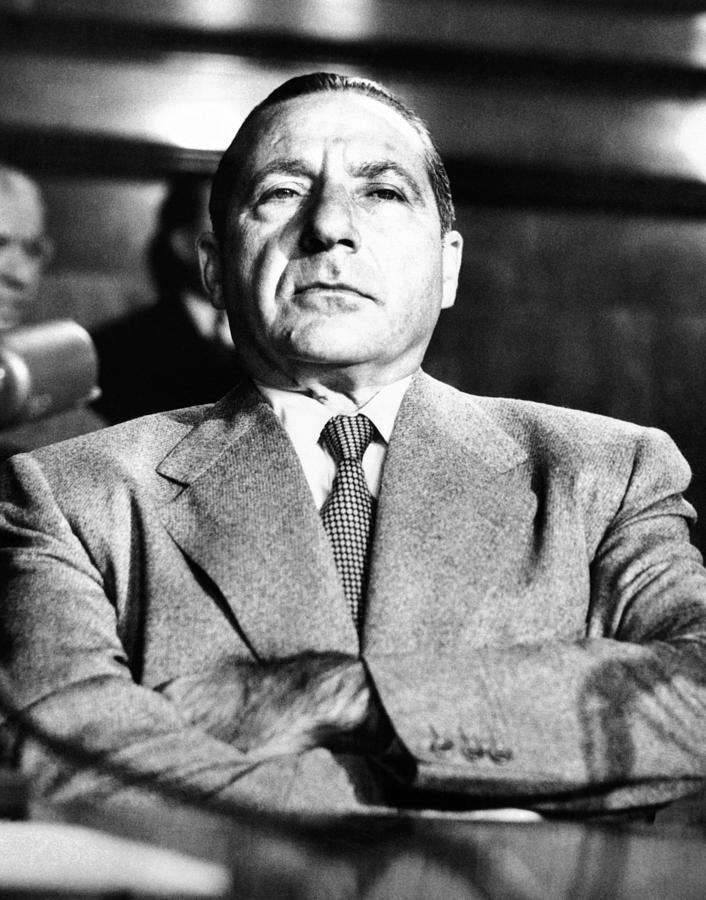
Where other gangsters cultivated reputations for brutality, Costello cultivated relationships. He spent less time with gunmen and more time with politicians. He attended dinners, funded campaigns, and developed friendships with individuals who possessed influence inside city halls and state capitols. Years later, he would earn the nickname “The Prime Minister of the Underworld” because his greatest weapon was neither a revolver nor a bodyguard.
It was a telephone.
Albert Marinelli: The Man Between Two Worlds
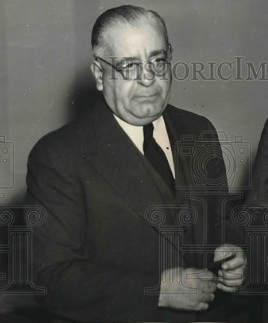
No figure better represented the intersection of politics and organized crime than Albert Marinelli.
A powerful Democratic leader in New York politics, Marinelli moved comfortably through environments that rarely appeared in newspapers. He understood how political organizations operated behind closed doors. Campaigns required money. Political machines required loyal supporters. Elections required organization. Men like Marinelli occupied the space where those needs converged.
That made him invaluable.
For ambitious politicians, he was a fundraiser and strategist. For organized crime figures, he was a doorway into legitimate power structures. The relationship was not always direct, nor was it always illegal. The reality was more subtle and therefore more dangerous.
Influence rarely arrives carrying a gun.
More often, it arrives carrying invitations, introductions, and promises.
Marinelli operated in precisely that environment. His connections extended throughout New York’s Democratic establishment, allowing him to serve as a bridge between political power and those who sought access to it. For Luciano and Costello, maintaining strong relationships with figures like Marinelli was not optional.
It was essential.
Al Smith: The Safe Investment
For much of the underworld, Al Smith represented a familiar landscape.
Born into the political culture of New York City, Smith rose through the machinery of urban Democratic politics. He understood ward leaders, ethnic voting blocs, and the complicated alliances that fueled political machines. His career had been built among the same neighborhoods where organized crime frequently operated.
There was comfort in that familiarity.
Smith was not an outsider. He understood how power functioned in New York. He understood compromise, negotiation, and the realities of urban governance. Political operators throughout the city knew him personally or knew someone who did.
For men like Costello and Marinelli, that predictability carried tremendous value.
Criminal enterprises, despite popular myth, dislike uncertainty. Stability allows money to flow. Stability allows investments to grow. Stability reduces risk. A Smith presidency promised a continuation of political relationships that had existed for years.
From the underworld’s perspective, Smith looked like a safe investment.
Roosevelt: The Future Arrives
The problem was that Franklin Roosevelt looked increasingly like the future.
As the Depression deepened, Roosevelt’s message gained momentum. His optimism contrasted sharply with the despair spreading across the nation. Voters responded to his promises of bold government action. Democratic leaders who initially supported Smith began shifting toward Roosevelt as his chances improved.
Political momentum can be difficult to measure, but experienced operators know it when they see it.
Luciano saw it. Costello saw it. Marinelli certainly saw it. Roosevelt was becoming more than a candidate. He was becoming inevitable.
That reality forced a strategic adjustment. Supporting Smith remained important, but ignoring Roosevelt would have been reckless. If Roosevelt captured the nomination and won the presidency, relationships established during the campaign could become extraordinarily valuable.
The underworld’s answer was elegantly simple. Support both.
| The Big Lie: The Mafia Doesn’t Exist – The Code of Denial |
Betting on Every Outcome
The public viewed politics as a contest between competing visions for America’s future.
The mob viewed it as risk management.
Professional gamblers rarely place everything on a single outcome. They spread exposure, protect investments, and create opportunities regardless of how events unfold. Luciano and Costello applied the same logic to politics.
Backing Smith preserved existing relationships.
Backing Roosevelt created new ones.
The approach required money, contacts, and careful coordination, but the rewards justified the effort. Political influence was an investment capable of generating returns for years. A favorable appointment, a cooperative official, or a useful introduction could prove more profitable than an entire gambling operation.
This was not about loyalty.
It was about leverage.
The men shaping organized crime’s future understood that political power would become increasingly important in the decades ahead. The primary objective was not to control government but to ensure access to whoever controlled it.
| The Machine That Never Slept: New York, Downstate Politics, and the Art of Looking Through |
Chicago: The Convention Battlefield
When Democrats gathered in Chicago during the summer of 1932, the convention resembled a giant poker game.
Delegates negotiated alliances in hotel rooms. Party leaders traded promises behind closed doors. Every ballot altered the political landscape. Every conversation carried consequences.
Smith fought aggressively for the nomination, relying on long-established relationships and machine support. Roosevelt entered as the frontrunner but struggled to secure enough delegates immediately. The contest became a marathon of negotiations, compromises, and strategic maneuvering.
The atmosphere would have felt familiar to organized crime figures.
Deals were being made.
Favors were being exchanged.
Power was changing hands.
Eventually Roosevelt secured the nomination and positioned himself for the general election against Herbert Hoover. The decision altered the course of American history and launched the New Deal era.
For Luciano, Costello, and Marinelli, however, the outcome represented something much simpler.
Their investment had matured.
| Five Families: Blood, Power, and the Empire Beneath New York |
The Shadow Vote
The official story of the 1932 Democratic primary focuses on economic crisis, party politics, and Roosevelt’s rise to power.
The unofficial story unfolds in the shadows.
It is the story of organized crime leaders recognizing that political influence could become more valuable than bootlegging profits. It is the story of Frank Costello building relationships that would eventually make him one of the most politically connected gangsters in American history. It is the story of Albert Marinelli operating in the murky territory where political ambition and private interests frequently intersected.
Most importantly, it is the story of a changing underworld.
The gangsters of the future would not rely solely on violence. They would rely on connections, influence, and access. They would attend fundraisers instead of shootouts when circumstances demanded it. They would invest in politicians the same way they invested in gambling operations.
The 1932 Democratic primary offered a glimpse of that future.
While Americans cast ballots believing they were choosing between Al Smith and Franklin Roosevelt, another election was taking place behind closed doors. In private rooms lit by cigar smoke and guarded by discretion, men like Lucky Luciano, Frank Costello, and Albert Marinelli were conducting their own campaign.
They were not voting for a candidate.
They were voting for continued access to power, no matter who won.
References:
Allen, Oliver E. The Tiger: The Rise and Fall of Tammany Hall. Reading, MA: Addison-Wesley Publishing Company, 1993.
Marciano, C.F. Power, Pimps, and Politics: The Corrupt Rise of Albert Marinelli. Fort Lauderdale. Tin Roof Publications, 2026
Gage, Nicholas. The Mafia Is Not an Equal Opportunity Employer. New York: Warner Books, 1972.
Lacey, Robert. Little Man: Meyer Lansky and the Gangster Life. New York: G.P. Putnam’s Sons, 1991.
Maas, Peter. The Valachi Papers. New York: G.P. Putnam’s Sons, 1968.
Nash, Jay Robert. World Encyclopedia of Organized Crime. New York: Da Capo Press, 1993.
O’Brien, Michael. John F. Kennedy: A Biography. New York: St. Martin’s Press, 2005.
Pecora, Ferdinand. Wall Street Under Oath: The Story of Our Modern Money Changers. New York: Simon & Schuster, 1939.
Powell, Michael. The New York Times Book of New York: 365 Days. New York: Black Dog & Leventhal, 2009.
Roosevelt, Franklin D. The Public Papers and Addresses of Franklin D. Roosevelt, Volume One: The Genesis of the New Deal. New York: Random House, 1938.
Smith, Alfred E. Up to Now: An Autobiography. New York: Viking Press, 1929.
United States Senate. Investigation of Organized Crime in Interstate Commerce (Kefauver Committee Hearings). Washington, DC: U.S. Government Printing Office, 1950–1951.
Wolfinger, Raymond E. “The Development and Persistence of Urban Political Machines.” American Political Science Review 65, no. 2 (1971): 365–382.