Some stories begin with a newspaper clipping. Others begin with a police file gathering dust in an archive.
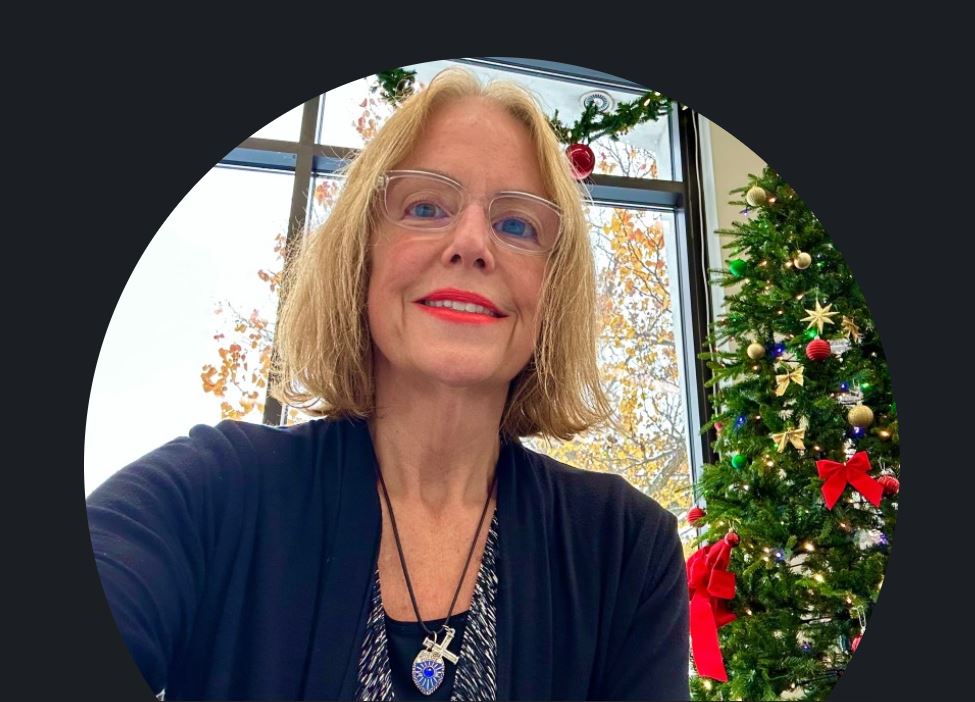
For author Chriss Lyon, it began with her grandmother.
When Lyon was only seven years old, her grandmother, Grandma Kline, told her about a notorious gangster who had murdered a police officer in the quiet lakeside town of St. Joseph, Michigan. Like many childhood stories, it lingered somewhere in the back of her mind—waiting patiently for decades until life, fate, and history all collided.
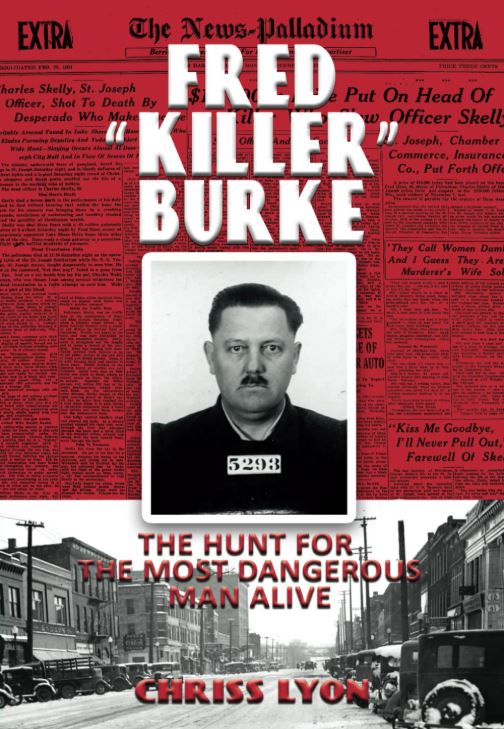
That childhood memory has become one of the most thoroughly researched books ever written about one of America’s most dangerous fugitives: Fred “Killer” Burke: The Hunt for the Most Dangerous Man Alive.
During a recent interview for Crime and Cocktails, Lyon explained that writing the book wasn’t simply a career choice. It felt more like answering a persistent calling.
The Name That Wouldn’t Leave Her Alone
Ironically, it wasn’t Fred Burke who first captured Lyon’s attention. It was Officer Charles Skelly.
In 1995, while working for the Berrien County Sheriff’s Department, Lyon attended the dedication of the county’s Law Enforcement Memorial. As the names of officers killed in the line of duty were read aloud, one stood out.
Officer Charles Skelly.
The name echoed. Who was he? What happened to him? Why had history largely forgotten him? Those questions refused to disappear.
Several years later, Michigan officials planned a statewide history book that would feature every county. Knowing Lyon loved local history, her sheriff asked her to explain why St. Joseph possessed the two Thompson submachine guns connected to the infamous St. Valentine’s Day Massacre.
She completed the article, submitted it, but sadly, the State never published the book. But something unexpected happened. The research kept growing. The story became larger than a magazine article, larger than a county history, and far larger than one gangster. It became the story of an entire community standing up to organized crime. Lyon decided there was only one thing left to do. Write the book herself.
Opening Files That No One Had Touched
Every historian dreams of discovering forgotten documents. Few actually do. Lyon filed a Freedom of Information Act request with the Michigan State Police asking for every document they possessed concerning Officer Skelly’s murder and the massive hunt for Fred Burke. The response surprised even the archivists. She was told that no one had ever requested the material. Soon, roughly 300 pages arrived.
Inside were aging witness statements, police reports, FBI reports, Secret Service documents, interview transcripts, testimony, addresses of witnesses, investigative notes, and evidence that had sat untouched for generations. Many pages faded. Some were barely readable. But together they formed the backbone of a story waiting nearly a century to be told.
Lyon also reached out to descendants of the people involved in the case. Family members opened doors that official records never could, while historians, firearms experts, and forensic specialists volunteered their knowledge. One expert even walked her through the mechanics of the Thompson submachine guns, helping her accurately describe the weapons and the terminology surrounding them.
Then came one final coincidence. Her beloved Grandma Kline passed away on Valentine’s Day. For Lyon, whose grandmother first planted the seed decades earlier, the timing felt deeply symbolic. It reinforced the feeling that this wasn’t simply another history project. She was supposed to write this book.
The Al Capone Surprise
Every student of organized crime thinks they know Al Capone. Violent. Ruthless. Feared. Lyon certainly expected that. Instead, her research introduced her to a far more complicated figure.
When Capone visited St. Joseph during the 1920s, he wasn’t treated like an invading criminal. He was welcomed.
At first, Lyon admitted this made her angry. Why would respectable citizens embrace one of America’s most notorious gangsters? The answer was surprisingly practical.
Capone was unfailingly courteous. He tipped generously. Very generously.
During the darkest years of the Great Depression, hotel workers hoped they would be assigned to him because they knew extraordinary tips were coming. Lyon recounted one story claiming Capone once left $10,000 to be divided among hotel employees—a staggering sum during an era when many families struggled simply to survive. (A $10,000 gratuity, worth about $190,000 today
Capone also maintained an understanding with local law enforcement. As Lyon described it, the arrangement was straightforward: “You don’t bother me, and I won’t bother you.” When he left town, even the sheriff reportedly received gifts of beer.
Perhaps the most fascinating story involved a nearby Italian restaurant. The owners had one uncompromising rule. NO GUNS inside the restaurant. Not even for Al Capone. Remarkably, Capone respected it. His armed bodyguards waited outside while he dined peacefully inside the restaurant. According to Lyon, he was so fond of the establishment that he even shared his family’s spaghetti sauce (gravy) recipe with the owners.
It is one of those wonderfully human moments that remind us history is rarely as black-and-white as movies portray it. Even notorious gangsters lived by certain personal rules.
Everything Changed with One Murder
That uneasy coexistence ended on December 14, 1929 when Officer Charles Skelly was murdered. The killing transformed the community almost overnight. Church leaders demanded action. Residents no longer wanted criminals using their town as a refuge.
Capone’s comfortable visits to St. Joseph effectively came to an end.
More importantly, the town united behind one mission: Find Fred Burke. According to Lyon, what followed became an extraordinary example of community determination. Citizens shared information. Neighbors watched for suspicious strangers. People spoke up. Instead of surrendering to fear, the town collectively decided that Burke would not escape justice.
The case also intensified national attention on organized crime, bringing renewed scrutiny to Capone and his associates.
Seeing Capone Through Different Eyes
One question produced Lyon’s most unexpected answer. “Was there anyone she found herself seeing differently?”
Without hesitation, she answered: “Al Capone.” Not because she excused his crimes. Far from it. Instead, she admired something else entirely. His ability to market himself. Lyon described Capone as someone who could “sell you anything.” He understood image. He understood public relations long before the phrase existed.
He built influence through generosity, charm, and carefully cultivated goodwill—tools every bit as effective as intimidation. It serves as an important reminder that history’s greatest criminals often possess extraordinary charisma. Sometimes that’s precisely what makes them so dangerous.
One Lesson Worth Remembering
Asked what readers should ultimately take away from the book, Lyon didn’t mention gangsters. She talked about ordinary people.
Officer Skelly’s murder united an entire community.
People who otherwise had little in common worked together toward a shared purpose. Their collective determination ensured Skelly would never be forgotten. Just as importantly, it demonstrated that organized crime—even at its height—could be challenged when ordinary citizens refused to look away. As Lyon put it, there is tremendous power in numbers.
One small town helped bring down one of America’s most wanted criminals. That may be the book’s greatest lesson.
Crime and Cocktails
Since no interview with Crime And Cocktails would be complete without discussing drinks, Lyon was asked, “What cocktail—or beverage—best represents her book?”
Her answer surprised me.
Not whiskey.
Not bourbon.
Not a Prohibition-era gin concoction.
Just a glass of red wine.
Why?
Because Fred Burke himself reportedly claimed that St. Joseph produced the finest grape wine he had ever tasted. Nestled within Michigan’s fruit belt, the region has long been known for its vineyards and wineries.
Lyon smiled before delivering the perfect closing line.
“Even bad guys can have good taste.”
It is an observation that captures both the irony of history and the spirit of her remarkable book. Behind every infamous gangster lies a human story. Behind every forgotten police officer lies a sacrifice worth remembering.
Thanks to Chriss Lyon’s years of relentless research, Officer Charles Skelly’s story—and the extraordinary hunt for Fred “Killer” Burke—will no longer remain buried in forgotten police files.
They have finally received the justice of being remembered.
To get your copy of Fred “Killer Burke: The Hunt for the Most Dangerous Man Alive, click here: Fred “Killer” Burke: The Hunt for the Most Dangerous Man Alive
References:
Lyon, Chriss. Fred “Killer” Burke: The Hunt for the Most Dangerous Man Alive. Self-published.
Personal interview with Chriss Lyon conducted for CrimeAndCocktails.net, June 2026.
Federal Bureau of Investigation. Fred “Killer” Burke investigative records.
Michigan State Police. Investigative files relating to the murder of Officer Charles Skelly and the search for Fred Burke (obtained through the Michigan Freedom of Information Act).
Chriss Lyons other book Final Call: Fallen Law Enforcement Officers of Berrien County, Michigan
Final Call: Fallen Law Enforcement Officers of Berrien County, Michigan
About Chriss Lyon
Few authors are as uniquely qualified to write about the Prohibition era as Chriss Lyon. A public safety professional, historian, and longtime researcher of organized crime, Lyon has spent decades investigating the people, places, and events that shaped one of America’s most turbulent periods. Her work combines meticulous archival research with forensic genealogy, allowing her to uncover overlooked details surrounding the St. Valentine’s Day Massacre and the figures connected to it.
Lyon’s fascination with the Roaring Twenties has taken her far beyond the library. She has had the rare opportunity to handle and fire the historic Thompson submachine guns linked to the St. Valentine’s Day Massacre, giving her firsthand insight into some of the era’s most infamous weapons. She frequently shares her research through presentations at museums, schools, historical societies, and genealogical organizations, helping bring this remarkable period of American history to life.
A graduate of Grand Valley State University’s Film and Video program, Lyon began her career working behind the scenes at CNN Headline News before becoming a familiar face in historical documentaries. She has appeared on PBS’s History Detectives and has contributed to programs produced for the National Geographic Channel, Travel Channel, and Investigation Discovery. She has also been featured on the Joey Miami Podcast, Former Hangouts, and Natural Born Outlaws.
In addition to authoring books, Lyon has written articles for magazines and historical journals while assisting fellow researchers and authors with investigations into organized crime and Prohibition-era history. Her passion for preserving forgotten stories, combined with a law enforcement background and an investigator’s eye for detail, has earned her a respected reputation among historians and true crime enthusiasts alike.