Long before sunrise touched the East River, before Wall Street traders sipped their first coffee, the real commerce of New York moved in the dark. It moved on wet floors slick with melted ice and fish guts, beneath buzzing bulbs and shouted prices. This was the kingdom of the Fulton Fish Market—a place where seafood changed hands by the ton, and power changed hands just as quietly.
The market smelled like salt and decay, but beneath that was something sharper: control. Not the kind written into law, but the kind enforced with nods, silence, and occasionally violence. For decades, the market was less a marketplace than a machine, and one man helped keep it running—Joseph “Socks” Lanza.
A Market Built Before the Law Caught Up
The Fulton Fish Market dates back to 1822, making it one of the oldest continuously operating fish markets in the United States. By the early 20th century, it had become the largest wholesale fish market in the country. Ships docked nearby unloaded their cargo straight into a chaotic ecosystem of wholesalers, buyers, and middlemen.
But where there is chaos, there is opportunity.
By the 1920s and 1930s, organized crime had already infiltrated key industries across New York—garment, construction, garbage hauling. The fish market was no different. Its structure made it vulnerable: early hours, cash-heavy transactions, and a workforce that depended on daily access to earn a living. There were no clean lines between legal and illegal. Only access mattered.
And access could be controlled.
| Don’t Touch That Route: How the Mafia Turned Garbage into Blood Money |
Enter Joseph “Socks” Lanza
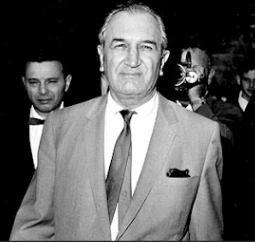
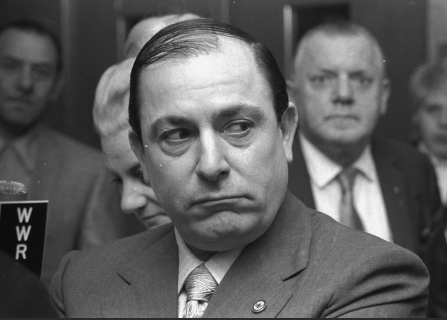
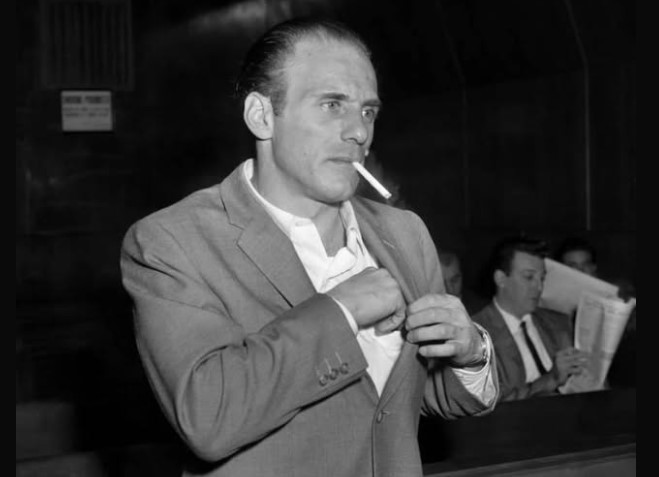
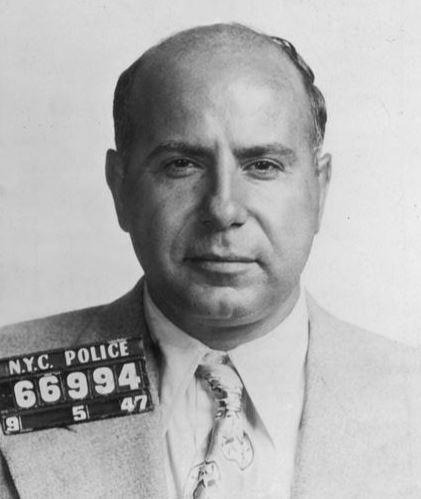
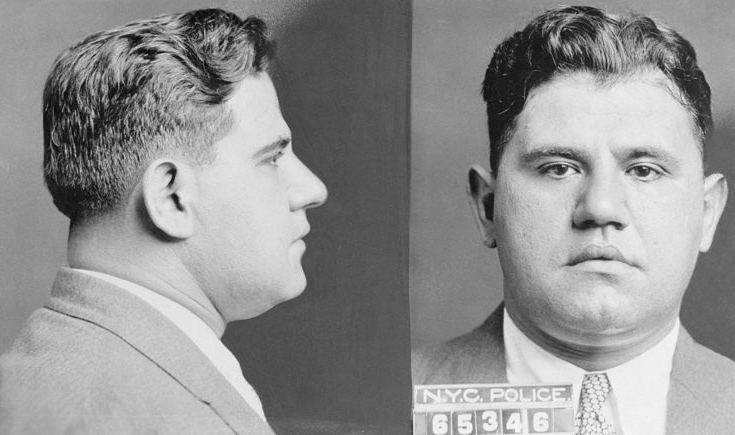
Joseph Lanza didn’t look like a kingpin. He wasn’t flashy, didn’t cultivate a myth the way some mob figures did. But appearances were misleading. Lanza operated with quiet efficiency under the umbrella of the Genovese crime family, one of the most powerful crime syndicates in the country.
He earned the nickname “Socks” for his habit of walking around in sock feet to avoid slipping on the market’s perpetually wet floors. It was a small detail, almost absurd, but it captured something essential about him: he adapted to the environment, and then he mastered it.
By the 1930s, Lanza had established near-total control over the Fulton Fish Market. His authority wasn’t announced—it was understood.
The System Beneath the Scales
Lanza didn’t invent extortion at the market. He refined it.
Vendors paid for protection, but protection meant more than avoiding violence. It meant access to the best fish, the best locations, the best buyers. Refuse to pay, and suddenly deliveries were delayed. Ice didn’t arrive. Trucks broke down. Customers disappeared.
Nothing was random. Everything was coordinated.
The mechanics were simple but devastatingly effective:
- Vendors paid a fee to operate without interference.
- Workers joined unions influenced—or outright controlled—by mob interests.
- Supply chains were manipulated to reward loyalty and punish defiance.
It wasn’t just extortion; it was governance.
Lanza’s influence extended into the labor unions that operated within the market. Control the unions, and you controlled who worked, who unloaded shipments, and how quickly goods moved. A delay of even an hour could mean thousands of dollars lost. That leverage made resistance rare and short-lived.
| Blood in the Concrete: Fat Tony Salerno’s Empire |
Violence as a Whisper, Not a Roar
Unlike more flamboyant mobsters, Lanza preferred subtlety. Violence existed, but it wasn’t theatrical. There were no headline-grabbing massacres tied directly to the market’s operations. Instead, enforcement came in quieter forms—threats, beatings, and the occasional disappearance.
The message didn’t need to be repeated often.
This was part of a broader philosophy shared by figures like Frank Costello, who valued stability over chaos. A functioning racket was more profitable than a battlefield. Lanza understood that fear worked best when it lingered in the background, never fully surfacing but never entirely gone.
The market became a place where everyone knew the rules, even if no one spoke them aloud.
The Golden Age of Control
By the 1940s and 1950s, the Fulton Fish Market was a model of organized crime efficiency. Millions of pounds of seafood passed through its stalls annually, generating enormous profits—not just for legitimate businesses, but for the mob.
The market operated like a closed system. New vendors couldn’t simply arrive and set up shop. They needed approval, and approval came at a price. Existing vendors who stepped out of line found themselves squeezed out through a combination of economic pressure and intimidation.
It wasn’t just about money. It was about dominance.
Lanza’s control made him indispensable within the Genovese family. While others dealt in narcotics or gambling, he controlled something more stable: food. Fish might seem mundane, but in a city like New York, it was essential. And essentials generate reliable income.
The Law Takes Notice
For years, law enforcement struggled to penetrate the market’s operations. The code of silence held firm. Witnesses were reluctant, evidence was scarce, and the system was designed to obscure itself.
But by the 1950s, the federal government began to take a more aggressive stance against organized crime. Investigations intensified, and the market drew increasing scrutiny.
In 1953, Lanza was convicted of extortion and sentenced to prison. It was a significant blow, but not a fatal one. The system he built didn’t collapse with his absence. It adapted.
That was the genius—and the danger—of his approach. He hadn’t just created a racket; he had institutionalized it.
| Five Families: Blood, Power, and the Empire Beneath New York |
After Lanza: The Machine Keeps Running
Even after Lanza’s conviction, the Fulton Fish Market remained under mob influence for decades. Control shifted, alliances changed, but the underlying structure persisted.
The market had become too valuable to relinquish.
Subsequent investigations in the 1970s and 1980s revealed that organized crime still exerted significant influence over pricing, labor, and distribution. Attempts at reform were met with resistance, both overt and covert.
It wasn’t until the late 20th century that serious efforts were made to dismantle the system entirely. Increased regulation, undercover operations, and the use of racketeering laws began to chip away at the market’s underworld connections.
But even then, progress was slow.
A Market Transformed
By the early 2000s, the Fulton Fish Market had outgrown its original location. Congestion, sanitation concerns, and the lingering shadow of organized crime made change inevitable.
In 2005, the market relocated to the Bronx, becoming the New Fulton Fish Market. The move was more than geographical; it was symbolic. A new space offered the possibility of a new system—one less susceptible to the entrenched control that had defined the original market.
Modernization brought increased oversight, improved facilities, and greater transparency. While no system is entirely immune to corruption, the conditions that allowed Lanza to thrive were significantly reduced.
The Fulton Fish Market Today
Today, the New Fulton Fish Market is one of the largest seafood distribution centers in the world. It operates with a level of professionalism and regulation that would have been unimaginable during Lanza’s era.
The chaos remains, in a sense—the early hours, the rapid transactions, the sheer volume of goods—but it is a different kind of chaos. Structured. Observed. Accountable.
The ghosts of the past haven’t entirely vanished. They linger in stories, in old habits, in the institutional memory of a place that once operated beyond the reach of the law. But they no longer define it.
What was once a stronghold of organized crime is now a testament to its decline—at least in this corner of the city.
Harbor of Shadows: Joseph “Socks” Lanza and the Corruption Beneath the Waves
Conclusion: Power in the Shadows
The story of the Fulton Fish Market is not just about fish. It’s about power—how it’s built, how it’s maintained, and how it eventually erodes.
Joseph “Socks” Lanza didn’t need headlines or mythology. He built something quieter and, in many ways, more enduring. A system that turned a chaotic marketplace into a controlled empire, where every transaction carried an unseen cost.
For decades, that system thrived in the shadows, sustained by fear, loyalty, and the simple economics of supply and demand.
Today, the market stands as both a relic and a reinvention. The ice still melts, the deals still happen before dawn, but the rules have changed.
And somewhere in that transformation is the echo of a man in sock feet, walking carefully across a wet floor, making sure nothing slipped—especially his grip on power.
References:
Block, Alan A. East Side–West Side: Organizing Crime in New York 1930–1950. Transaction Publishers, 1980.
Jacobs, James B. Gotham Unbound: How New York City Was Liberated from the Grip of Organized Crime. NYU Press, 1999.
Kelly, Robert J. The Upperworld and the Underworld: Case Studies of Racketeering and Business Infiltrations in the United States. Springer, 1999.
Maas, Peter. The Valachi Papers. G.P. Putnam’s Sons, 1968.
New York State Organized Crime Task Force. Corruption and Racketeering in the New York City Fulton Fish Market. 1981.
Raab, Selwyn. Five Families: The Rise, Decline, and Resurgence of America’s Most Powerful Mafia Empires. Thomas Dunne Books, 2005.