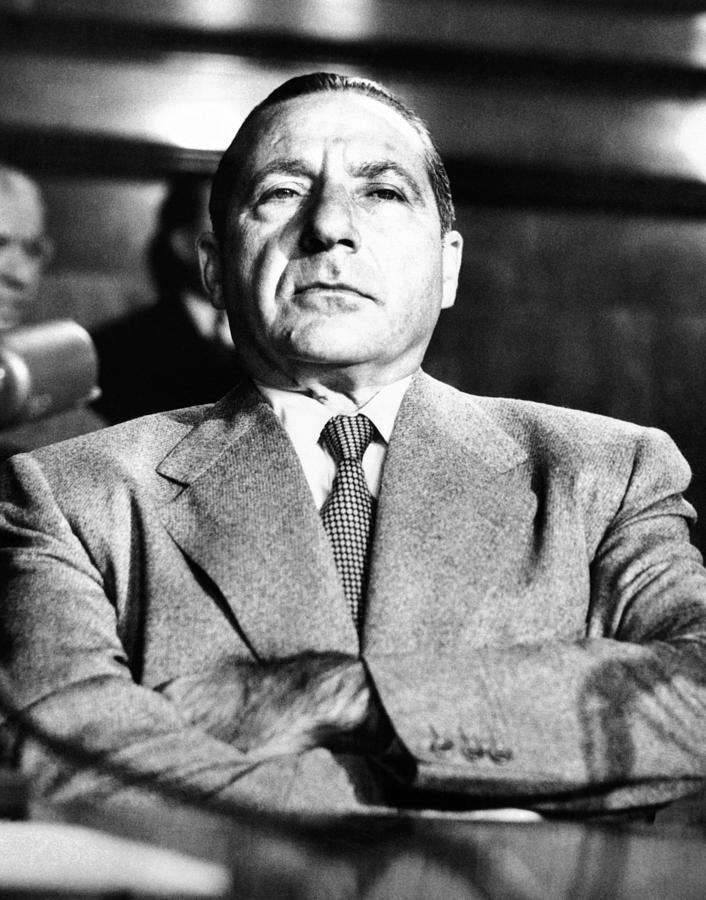
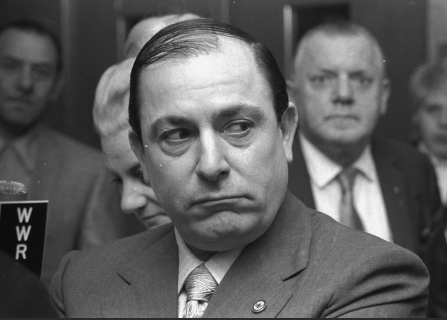
By 1970, America had learned to televise everything. War. Riots. Elections. Assassinations. The camera had become a second government, shaping reality one frame at a time. Into that glare stepped Joseph Colombo, a Mafia boss who understood something most gangsters feared: publicity could be power.
He smiled for reporters like a politician. He shook hands beneath giant Italian flags. He stood before microphones and spoke the language of civil rights, dignity, and ethnic pride. For a brief and dangerous moment, he transformed himself from an underworld figure into something that looked almost respectable.
But Colombo’s world was built on extortion, fear, and silence. Men like him were supposed to exist in whispers, not headlines. The Mafia survived because nobody looked too closely. Colombo broke that rule in broad daylight, and the daylight eventually broke him.
The Italian-American Civil Rights League was never just a civic organization. It was theater draped over organized crime. A banner stretched across a crime scene. And like most performances in the underworld, it ended with gunfire.
A Mob Boss Discovers Public Relations
Colombo launched the League in April 1970 while federal prosecutors were circling his family and his son faced criminal charges. Officially, the organization existed to combat negative stereotypes against Italian-Americans. The League protested television programs, newspaper coverage, and films that used the word “Mafia” or portrayed Italians as criminals.
On paper, it sounded legitimate. Ethnic pride organizations were flourishing across America during the era. Irish, Black, Latino, and Jewish advocacy groups all pushed back against caricatures and discrimination. Colombo understood the climate perfectly. He wrapped himself in the language of activism and dared critics to challenge him without appearing prejudiced.
But behind the speeches sat a more practical motive: pressure.
The League targeted networks, advertisers, and studios with the same tactics Colombo’s world had always used—intimidation disguised as negotiation. Boycotts were threatened. Demonstrations appeared overnight. Executives suddenly discovered that offending Italian-Americans might become expensive.
And somehow, it worked.
Celebrities attended rallies. Politicians offered cautious support. Television cameras devoured the spectacle. Colombo became a recognizable face in New York, no longer confined to FBI surveillance photos and whispered law-enforcement briefings. He was reinventing himself in real time, turning a Mafia don into a public spokesman.
To many Italian-Americans, frustrated by lazy stereotypes and casual bigotry, the message resonated. That was the genius of Colombo’s operation. He attached a real grievance to a deeply compromised messenger. The cause had legitimacy. The man leading it did not.
The distinction blurred under the lights.
Columbus Circle
The first Unity Day rally in June 1970 transformed Manhattan into Colombo’s personal stage.
Crowds flooded Columbus Circle carrying banners and Italian flags while music echoed through the streets. Estimates ranged wildly—from tens of thousands to nearly one hundred thousand attendees depending on whose version of history you believed. What mattered wasn’t the exact number. What mattered was visibility.
New York stopped and looked.
The rally felt less like a protest than a coronation. Colombo stood elevated above the crowd, soaking in applause that no Mafia boss was ever supposed to receive publicly. In another life he might have become a borough politician or labor leader. He had the instincts for it. He understood symbolism, understood grievance, understood cameras.
But organized crime has always operated on an ancient principle: attention attracts prosecutors.
Old-school bosses watched Colombo’s rise with growing discomfort. Men like Carlo Gambino preferred quiet corruption to celebrity. Gambino’s power came from invisibility. He cultivated politicians behind closed doors, not in front of television crews. To him, Colombo’s rallies looked reckless—an invitation for federal agencies to examine relationships best left buried.
For decades, the Mafia survived by maintaining a contradiction. Everybody knew it existed, but nobody important acknowledged it publicly. Colombo shattered that arrangement every time he stepped in front of a microphone.
The spotlight made him feel untouchable.
It also made him easier to target.
The League Becomes a Problem
Success intoxicated Colombo. The rallies grew louder. The demands became more aggressive. He challenged newspapers, advertisers, and government officials with increasing confidence, convinced he could force institutions to bend through sheer public pressure.
Behind the scenes, patience inside the underworld was evaporating.
The Commission—the Mafia’s loose governing structure—had long understood that visibility created instability. Public scrutiny meant surveillance. Surveillance meant indictments. Colombo was turning a secret society into front-page entertainment.
At first, other bosses tolerated the League because it seemed useful. It generated goodwill in some neighborhoods and distracted from investigations. But Colombo’s appetite for exposure kept expanding. He was no longer merely defending Italian-Americans; he was building a public identity larger than his own crime family.
That made him dangerous.
By 1971, support within organized crime had cooled dramatically. Reports later suggested that associates connected to Gambino quietly worked to suppress turnout for the second Unity Day rally. The message circulating through Mafia channels was unmistakable: Colombo needed to scale back.
He refused.
The second rally arrived under darker skies. Attendance was smaller. Energy felt strained. The illusion was beginning to crack. Colombo still played the role of triumphant leader, but the machinery behind the spectacle had started grinding against itself.
In the Mafia, arrogance is rarely punished immediately. It’s punished suddenly.
Gunfire at the Podium
On June 28, 1971, the performance ended.
As Colombo approached the podium at the second Unity Day rally in Columbus Circle, a young Black man named Jerome A. Johnson moved through the crowd carrying a handgun.
Then came the shots.
Three bullets tore into Colombo’s head and neck before bodyguards swarmed Johnson and killed him almost instantly. Panic ripped through the rally. Flags dropped to the pavement. Screams replaced speeches. Television cameras captured the chaos while blood spread across the stage where Colombo had planned another public display of power.
The imagery was brutally symbolic. A Mafia boss who had built a movement around visibility was destroyed in full public view.
Colombo survived the attack technically, but only barely. The shooting left him paralyzed and mentally devastated. For the remainder of his life, he existed in hospitals and nursing facilities, physically alive yet politically and criminally finished.
The League collapsed almost immediately afterward.
Without Colombo’s charisma and intimidation, the organization dissolved into confusion, rumor, and abandonment. Politicians disappeared. Celebrity supporters quietly distanced themselves. Public enthusiasm evaporated. The banners came down as quickly as they had gone up.
And almost overnight, the League transformed from movement to embarrassment.
Theories, Rumors, and Ghosts
The assassination generated decades of speculation because nothing in Colombo’s world was ever simple.
Some investigators believed the attack pointed toward Gambino interests angered by Colombo’s recklessness. Others suspected involvement from rivals tied to Joseph Gallo, whose conflict with Colombo had already turned violent. Additional theories suggested betrayal from within Colombo’s own family, where resentment toward his grandstanding had grown steadily.
Jerome Johnson himself became a ghostly figure in the story. His motives were never fully explained. His connections remained murky. Every faction involved had reasons to shape the narrative toward its own advantage.
That ambiguity became part of the mythology.
But the deeper truth may be simpler than the conspiracy theories. Colombo violated the culture that protected organized crime for generations. He confused notoriety with security. He believed public affection could shield him from the old rules of the underworld.
It could not.
The Mafia tolerates greed, brutality, and corruption. What it rarely tolerates is unnecessary attention.
Colombo brought cameras into places where cameras were never meant to go.
The Mirage Collapses
Joseph Colombo died in 1978 from complications related to the shooting, though in reality the bullets had ended his life seven years earlier.
The League faded into historical oddity—a strange collision of ethnic activism, organized crime, media manipulation, and political theater. For a fleeting moment, Colombo managed something extraordinary: he convinced thousands of ordinary people to march behind a Mafia boss while believing they were defending cultural dignity.
That illusion could never last.
The Italian-American Civil Rights League was built like a movie set. From the street, it looked solid: banners, speeches, celebrities, applause. But behind the painted walls stood the same machinery that had always powered organized crime—fear, leverage, violence, and ambition.
Colombo mistook the applause for legitimacy. That was his fatal error.
In noir stories, men rarely fall because they lack intelligence. They fall because they believe they can rewrite the rules governing their world. Colombo believed he could turn a Mafia don into a civil-rights icon without paying the price demanded by either identity.
But the old underworld had its own constitution, written not in law books but in blood.
Stay quiet. Stay hidden. Stay alive.
Joe Colombo broke all three rules.
The crowd cheered him anyway—right up until the gunfire started.
References:
- Wikipedia – Joseph Colombo
- Wikipedia – Italian-American Civil Rights League
- TIME – “The Mafia: Back to the Bad Old Days?”
- American Mafia – “Joe Colombo & The Italian American Civil Rights League”
- CrimeReads – “Soul Assassin: The Brief Life and Death of Jerome Johnson” by Michael Gonzales
- Encyclopaedia Britannica – Joseph Colombo
- The Mob Museum – “The Life and Death of Joe Colombo”